In the production of food powder, such as seasoning blends, baking premixes, and powdered beverages, the uniform mixing of ingredients directly determines the product's texture, color, and quality stability. As the food powder mixer machine manufacturer, we recommend four types of mixers widely utilized in the food powder industry: the v mixer, rotary drum mixer, ribbon mixer and 3D mixer. This article will outline the specific features of each machine and its suitability for various applications within the food powder sector, helping you make the optimal choice for your needs.
These four types of powder mixer share certain similarities, yet each possesses its own distinct characteristics. Each type has garnered a dedicated following among food manufacturers, with the choice of equipment ultimately depending on specific production scenarios and requirements. In the following sections, we will provide a detailed analysis and explanation of these devices.
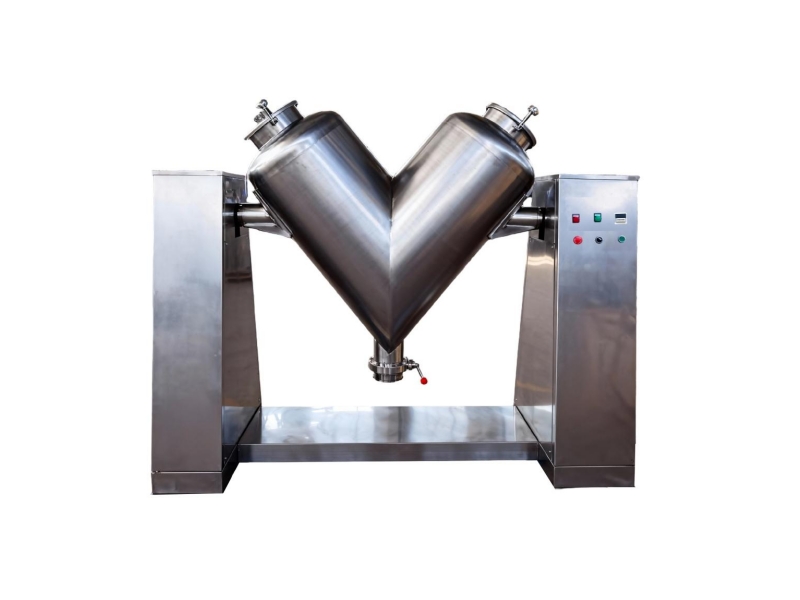
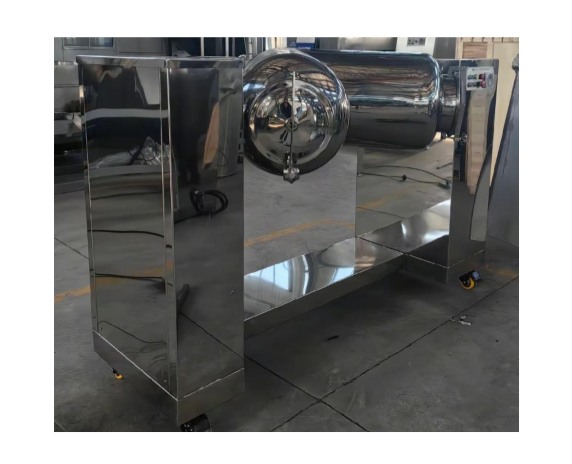
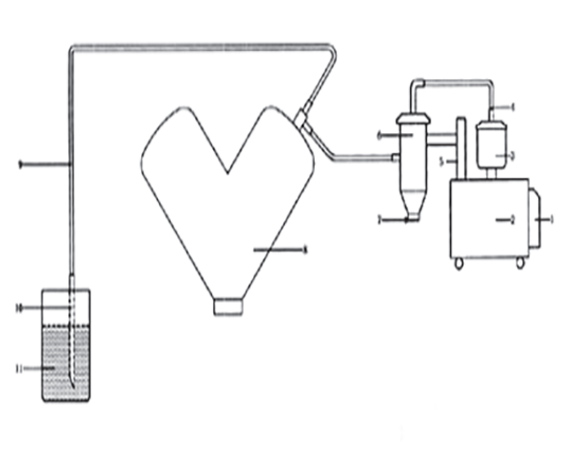
Our SLV series v mixer machine has its unique V-shaped drum structure. Usually the design features no internal mixing components, it is highly favored for blending food powders with exceptionally strict hygiene requirements.
Flexible Design: The standard version, featuring no internal agitator, meets stringent hygiene requirements; an optional configuration equipped with an internal agitator is available to accommodate materials that are difficult to mix.
Mirror-Polished Interior: The inner walls of the drum undergo a mirror-polishing treatment, minimizing powder residue and preventing material buildup.
High Sanitary Standards: Particularly suitable for foods requiring strict control over microbial and foreign matter contamination.
Uniform Mixing: As the V-shaped vessel rotates, the materials undergo repeated splitting and recombining.
Thorough Discharge: With a quick-opening bottom discharge valve that minimizes residual material.
Coffee powder, milk powder
Protein powder, meal replacement powder
Food additives, vitamin premixes
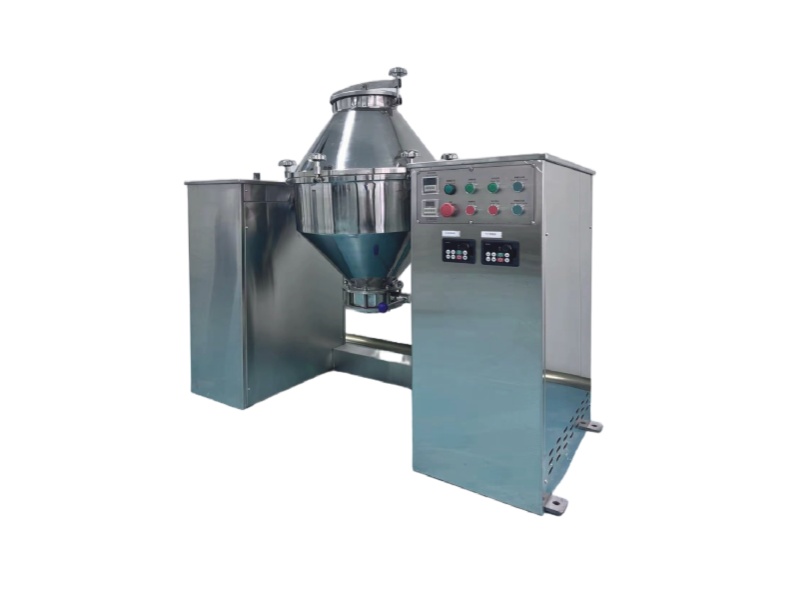
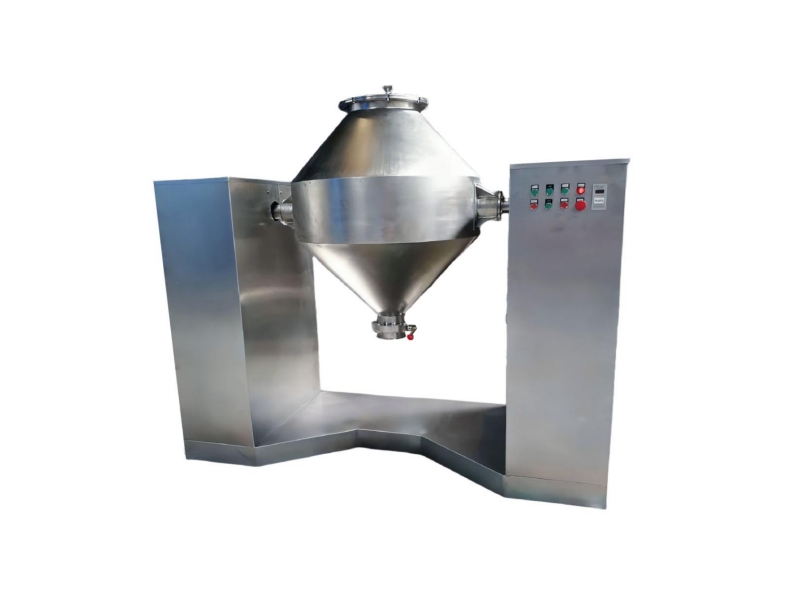
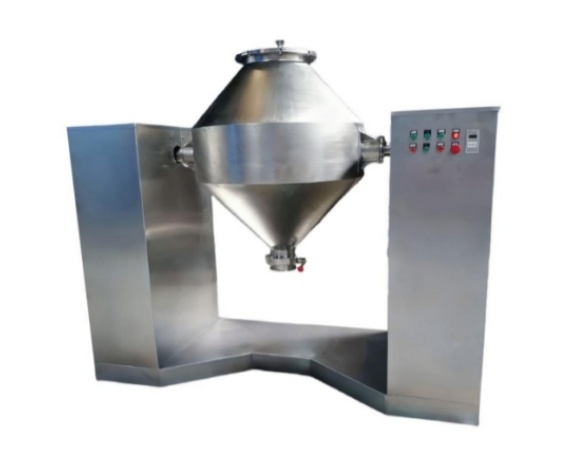
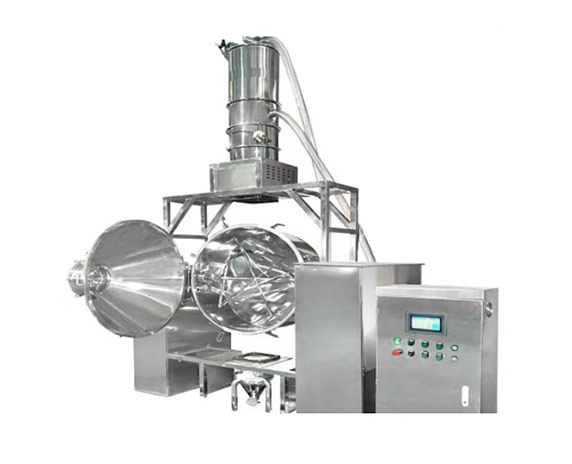
Our SLW series features a rotay cone drum design; during rotation, materials flow reciprocally along the conical walls, thereby achieving highly efficient mixing.
Dual Design Options: Standard high-hygiene design, as well as an upgraded version with internal spiral ribbon and semi-open design, further enhancing both mixing efficiency and ease of cleaning.
Wide Material Adaptability: Capable of mixing a broad range of materials, from ultra fine powders to granular spices with minimal risk of stratification.
Wide Material Applicability: Capable of mixing a broad range of materials from ultra fine powders to granular spices.
Uniform Mixing: The vessel design facilitates a reciprocating flow of materials between the cones, ensuring there are no dead spots during mixing.
Enhanced Efficiency (Upgraded Version): Featured by an internal ribbon agitator for forced mixing, reducing mixing time by 30–50%.
Baking premixes (cake mix, muffin mix, sugar powder)
Spices (five-spice powder, curry powder)
Beverage powders (milk tea powder, fruit-flavored powder, matcha powder)
Dietary supplement powders (vitamin Powder, mineral premixes)
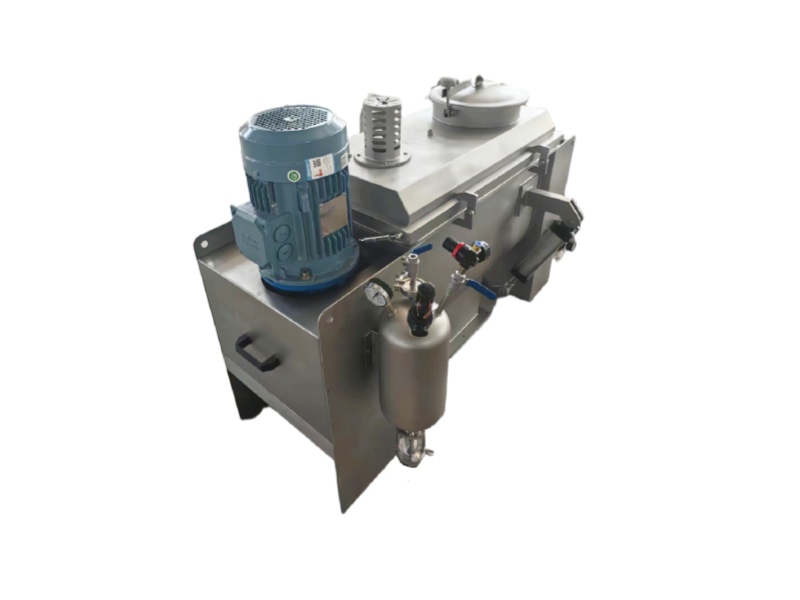
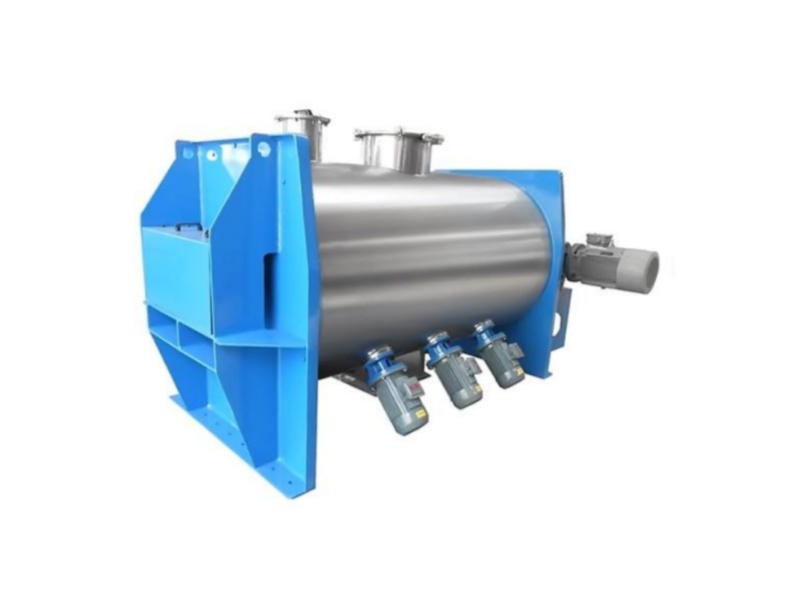
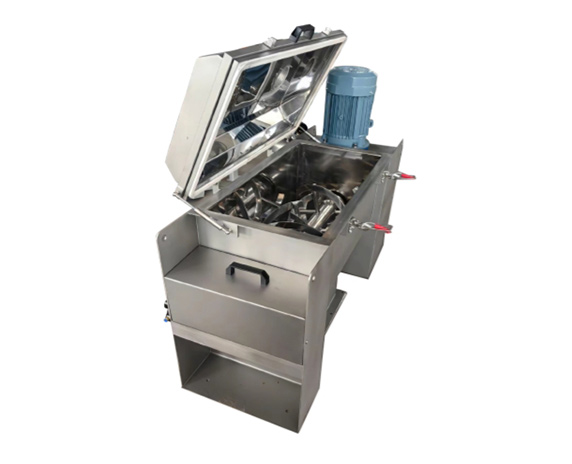
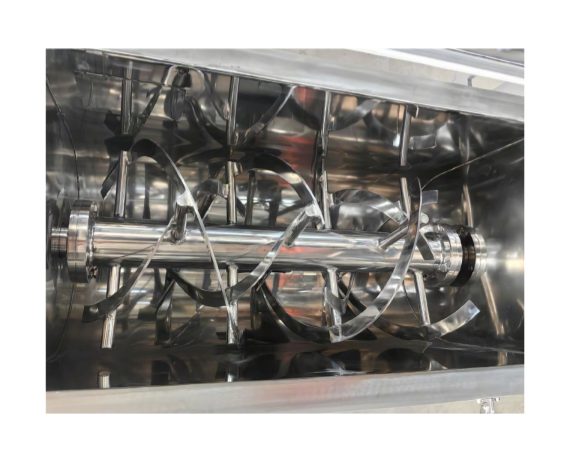
The SLR series ribbon mixer features a U-shaped vessel combined with a dual-layer inner and outer ribbon structure, achieving rapid and uniform mixing through forced convection.
Excellent Sealing: Features a fully enclosed design that prevents dust leakage and complies with food hygiene standards.
High Adaptability: Capable of processing a wide range of materials, from powders to granular substances, without prone to segregation.
High Loading Capacity: Achieve a loading coefficient of up to 60%, resulting in high unit throughput.
Forced Convective Mixing: The inner and outer spiral ribbons drive the material to create axial and radial circulation, ensuring the fastest possible mixing speed.
Short Mixing Time: For smaller models, a single batch can be completed in just 5–10 minutes. It can reach an efficiency level far superior to standard rotary mixers.
Optional Spraying Device: Suitable for the production of seasoned powders involving the addition of liquid flavorings, colorants, or oils.
Seasoning Powders (chili powder, pepper powder, turmeric powder, salt, etc)
Sugar powder, glucose powder, sweeteners
Milk powder, non-dairy creamer, coffee creamer
Powders requiring the addition of trace amounts of liquid flavorings or oils
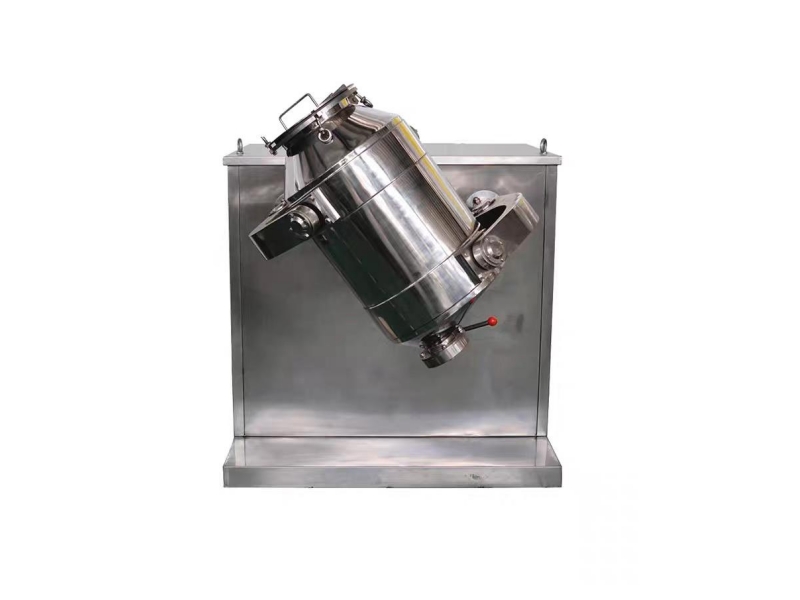
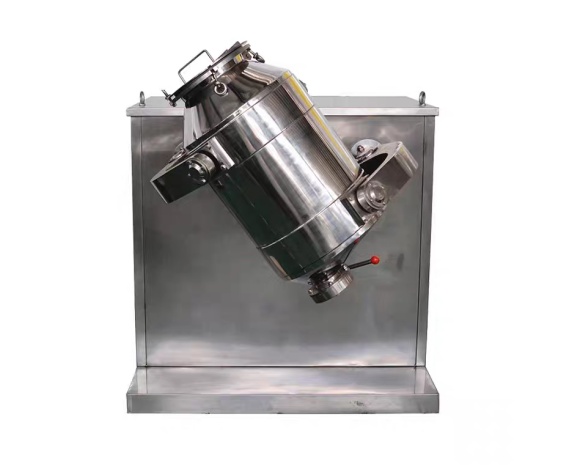
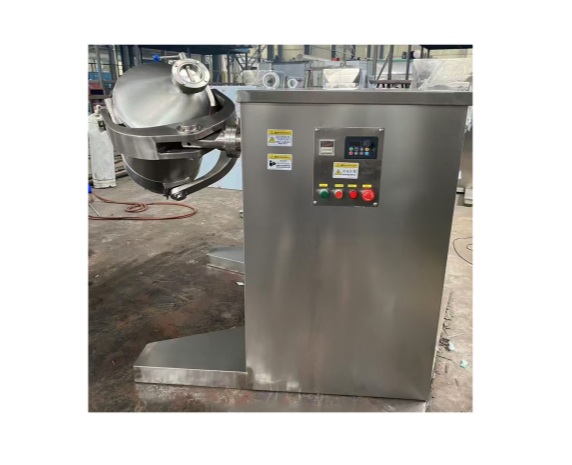
The SLT series 3D mixer achieves the blending of various powders through the compound motion of its drum in the X, Y, and Z directions (oscillation, translation, and rotation).
High-Uniformity Mixing: The material undergoes intense, irregular flow within a three-dimensional space, thereby achieving an exceptionally high degree of uniformity.
High Cost: This type mixer is charged a bit higher. Although the initial cost is relatively high, this technology offers irreplaceable advantages for processing high-value food powders or products requiring ultra-high uniformity.
Comprehensive Mixing: Utilizing three-dimensional compound motion, the material at every point within the drum is thoroughly agitated.
Internal Agitator-Free Design: Rely solely on drum rotation; free from metal-to-metal friction, ensuring no foreign contaminants are generated.
Gentle Processing: Inflict virtually no shear damage upon powder particles, thereby preserving their original particle size.
High-value nutritional supplement powders (e.g., spirulina powder, probiotic powder)
Health food powders requiring exceptionally high uniformity
Small-batch, multi-variety R&D and production
Heat-sensitive powders susceptible to mechanical shear
Based on the above information, it is evident that each of the recommended food powder mixers possesses its own distinct advantages and specific applications. The V mixer is ideally suited for applications where hygiene is paramount, such as with milk powder and coffee powder. The rotary drum mixer offers balanced performance across a range of products, including baking mixes, spices, and beverage powders; its upgraded version effectively balances both operational efficiency and hygienic standards. The ribbon mixer dominates the production of seasoning blends and powdered sugar, distinguished by its high mixing speed and integrated spray functionality. Finally, the 3D mixer serves the niche of high-value powders, delivering exceptionally high levels of mixing uniformity. So, how exactly should you make your selection? We have outlined several key criteria below to guide your decision-making process. We recommend selecting the model that best aligns with your specific material characteristics, production volume requirements, and budgetary constraints, etc.

Batch Loading Capacity
If a higher batch loading volume is required, we recommend the upgraded SLW and SLR series.
Spraying Mechanism
If the addition of a spraying function is required, the SLR series is highly recommended.
Agitation Mechanism
Do you have any objections to the presence of an internal agitation mechanism? If a clean internal structure is required, we recommend the standard SLV, SLW, or SLT.
Mixing Efficiency
Upgraded SLW > SLR > SLT > Standard SLV = SLW.
Hygiene Requirements
For applications with strict hygiene standards, select models SLV, SLW, or SLT.
Production Efficiency
The upgraded SLW and SLR series offer relatively higher production efficiency; the SLT model also performs well.
Budget Constraints
For low-budget projects, select the standard SLV or SLW models.
Material Compatibility
For mixtures where the bulk densities of the constituent materials differ significantly, the SLW model delivers the best results.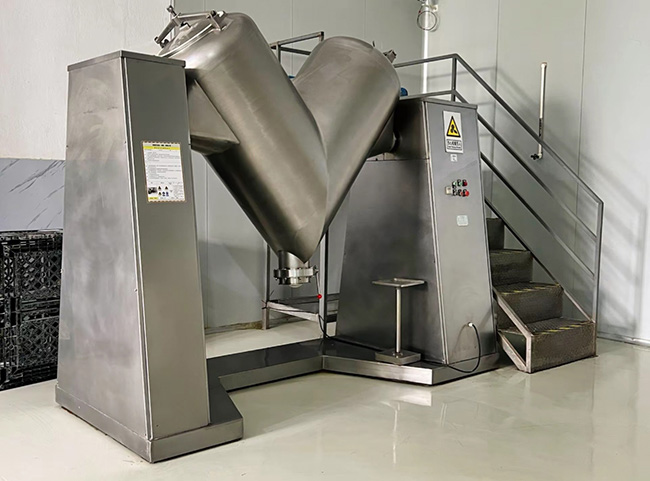
250L V-Type Mixer for Compound Protein Powder with a Mixing Chamber Free of Internal Agitators
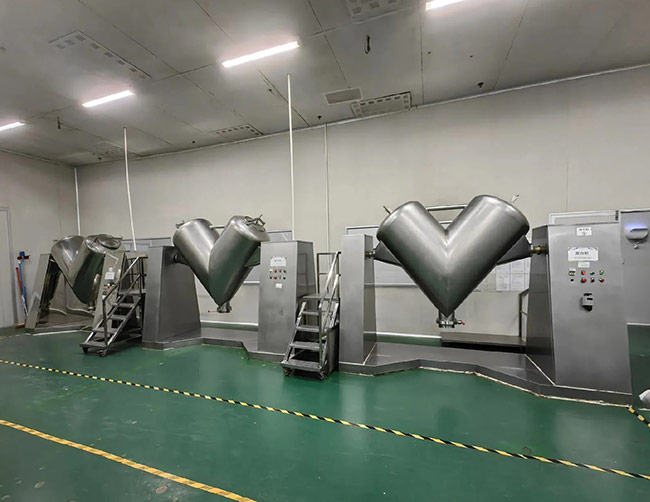
Cost-Effective Mixing Solution - V Blender Powder Mixer for Seasoning Factory
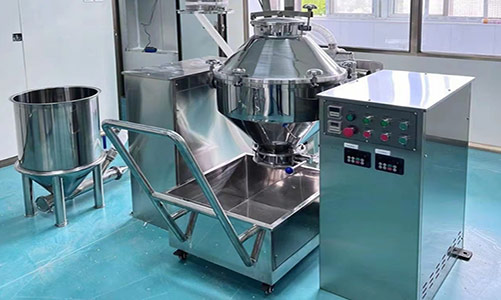
Case Study - 200L Mixer with 80% Loading Capacity for High Efficient Coffee Powder Mixing
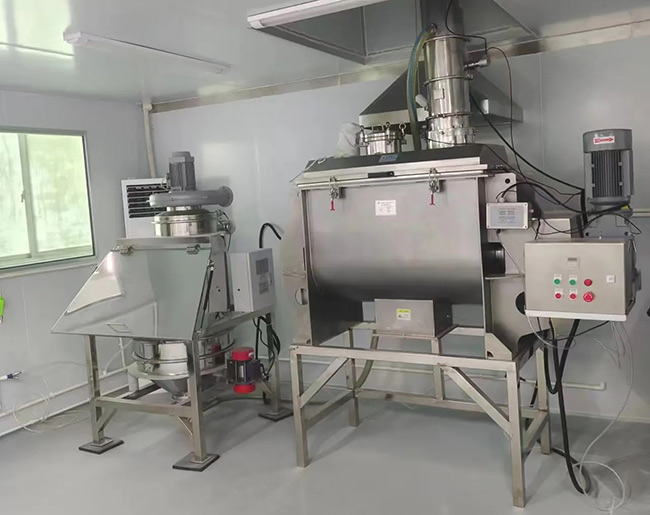
Ribbon Blade Mixer with Dust-Free Vacuum Feeder for Spice Factory
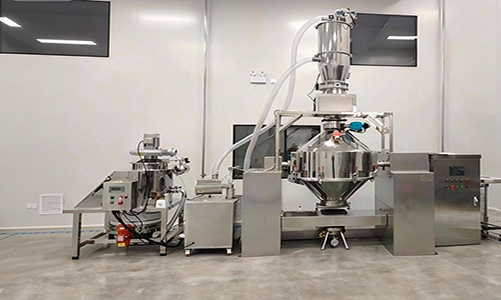
Supplement Powder High Efficient Mixer Case
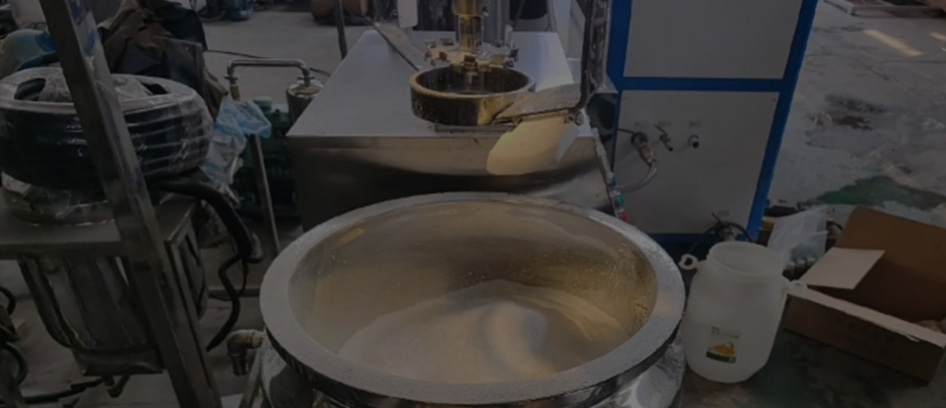
Provide you with the industry`s best solutions

Offer the pre-sales and after-sales technical support
Back to Top
We are devoted to the R&D, production and selling of the grinder machine, mixer machine and filling machine for the food factories. They work for the dry and wet food.
0086 150-5215-2936

 English
 French