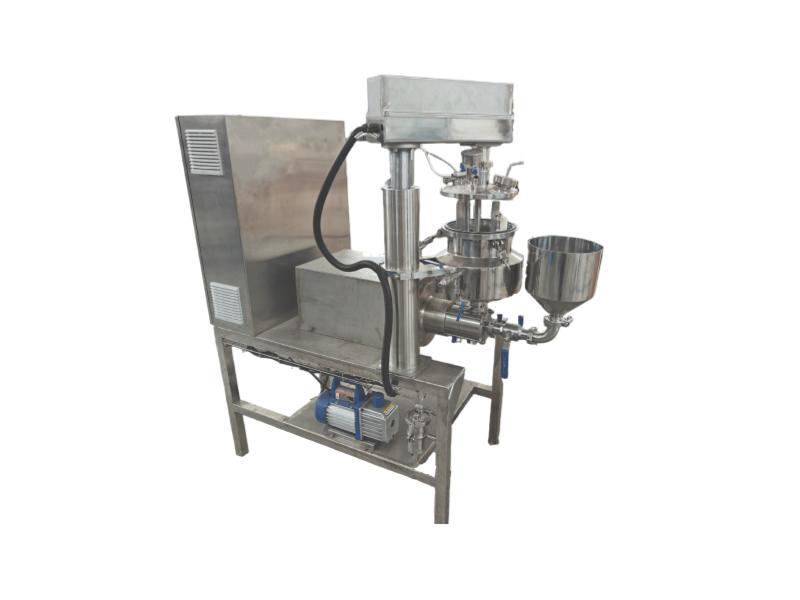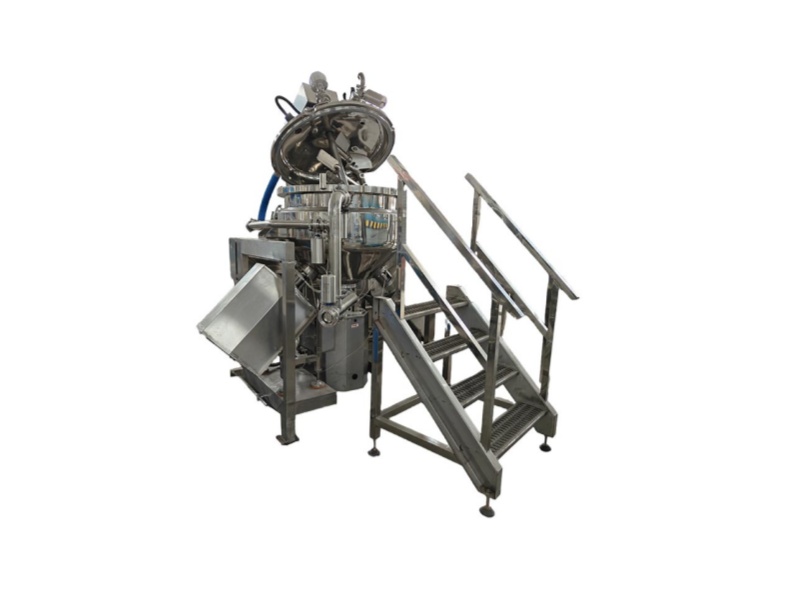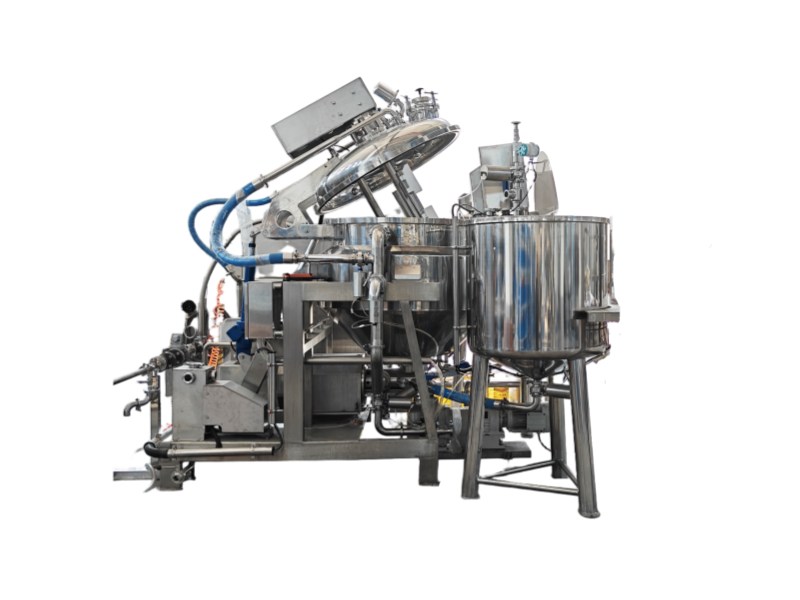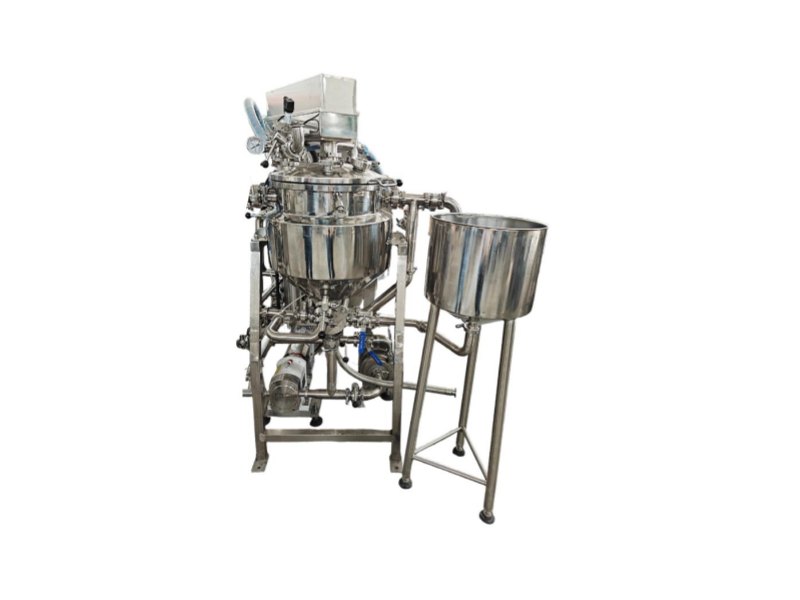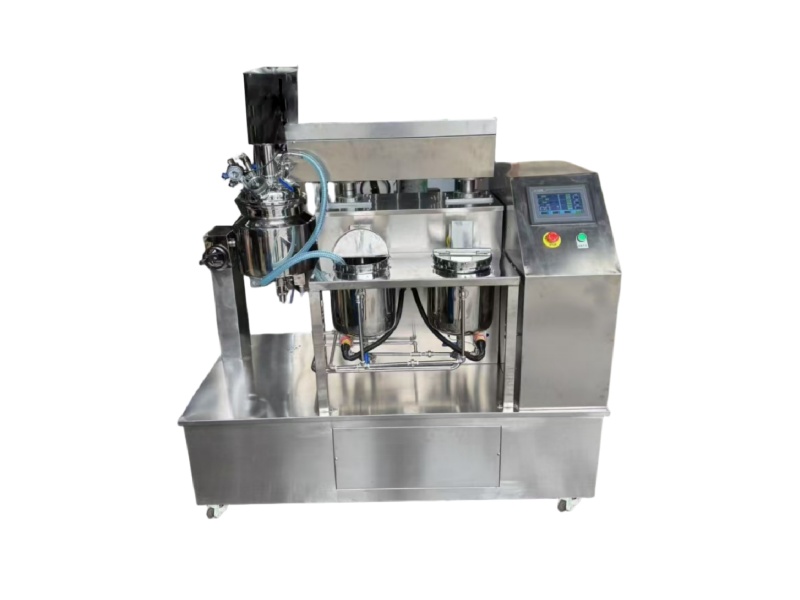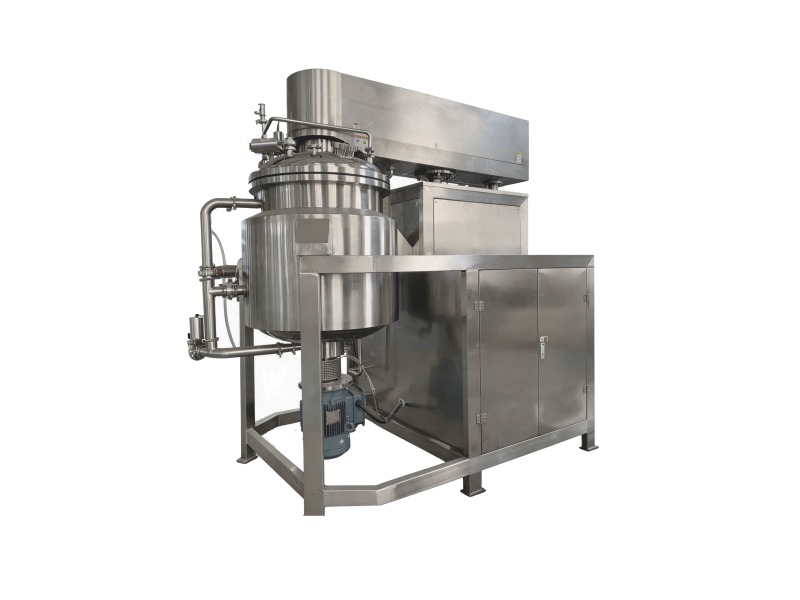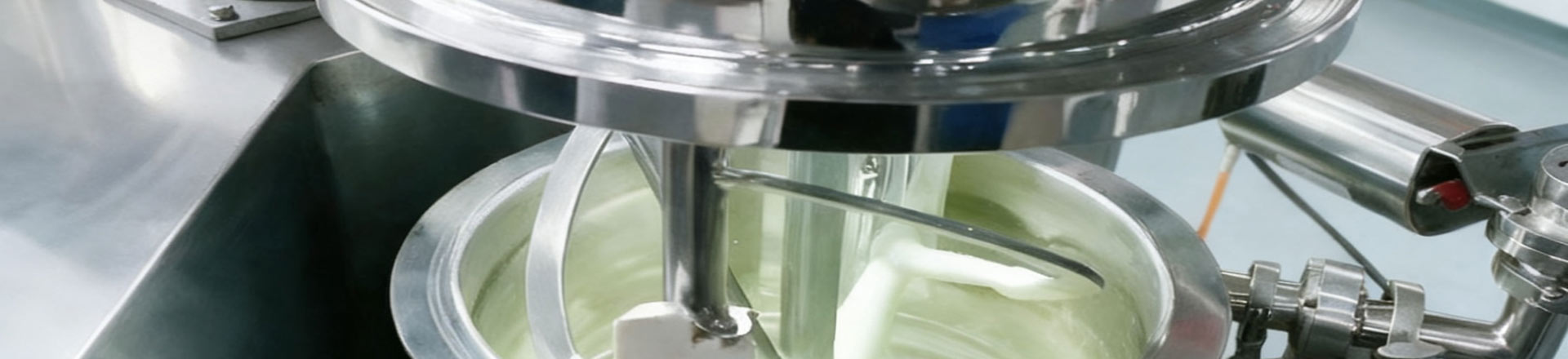
Salinovate supplies various vacuum emulsifying mixers to homogenize and emulsify the water and oil phase materials into micron size quality emulsions in a vacuum environment. Lab scale, pilot scale, medium to high scale emulsifying mixers are all in supply to meet diverse production need.
Feel free to write to us at any time to ask about our products or seek support. We`d be more than happy to help.
Talk to Our Expert NowA vacuum emulsifying mixer is an advanced emulsifying mixer machine, which is designed to mix, homogenize, and emulsify liquid and semi-solid materials under vacuum conditions. Except the common components such as mixing system, emulsifying system and processing tank, vacuum system is also the standard part of such mixer machine.
1)High shear homogenizing system: Spin at a high speed to break down solid and liquid particles, forcing oil and water phases to blend and homogenize to become an uniform emulsion.
2)Mixing system: Usually the mixing system adopts the scrapper agitator design to effectively disperse the solid and liquid materials in the pot and scrap down the materials stuck on the pot wall.
3)Processing tank: The tank body provides enough space for the mixing and homogenizing of the materials. Adopting triple layer design, the heating and cooling are also optional based on the production need of the emulsion.
4)Control system: Button control, PLC touch screen, etc control methods are optional to perform operations such as startup, homogenization, stirring, heating temperature control, and temperature monitoring.
The structural design of vacuum emulsifiers is not static; rather, we offer a diverse range of designs tailored to meet the varied emulsification requirements of customers across the market. Broadly speaking, these designs can be categorized into four main series.
1)SLVH series: Top installed homogenizer type vacuum emulsifying mixer, the common type on the market widely used for the food, cosmetic, pharmaceutical industries.
2)SLHB Series: The structure is similar as the SLVH series, the major difference is that the homogenizer is installed at the bottom. The application is basically same as the SLVH series.
3)SLFT Series: This series adopts the advanced emulsifying system, which is a combined high shear homogenizing system installed separately at the bottom of the mixer vessel. Except the homogenizing and emulsifying function, the emulsifying system also has the pump function to suck in the liquid and semi-liquid materials. Such series is often for the high-end food sauce production.
4)SLCM-P series: This series vacuum emulsifying mixer takes advantage of the high speed cutting and blending force of the bottom cutters to homogenize the solid, semi-solid and liquid materials. This is typically used in the food industry for producing various food sauces, such as cheese sauce, jams, chocolate sauce, hummus, vegetable purées, and similar products.
Vacuum emulsifier mixers are primarily used for the production of water-in-oil and oil-in-water creams and lotions. Whether in the food, cosmetics, pharmaceutical, or other industries, there are similar production requirements. The following is a brief overview of their industry applications:
1)Food Industry: Mayonnaise, salad dressing, custard, chocolate sauce, mustard, cheese sauce, ketchup, etc.
2)Cosmetics Industry: Lotions, eye creams, face creams, sunscreens, moisturizers, lipsticks.
3)Pharmaceutical Industry: Gels, burn creams, ointments, medicinal pastes, etc.
What advantages does this emulsifier mixer with vacuum functionality offer compared to standard emulsifier mixers?
1)Oxidation Resistance: The vacuum environment prevents air ingress; consequently, during the emulsification process, the materials are less susceptible to oxidation, and their color remains stable.
2)Enhanced Thermal Efficiency: The vacuum environment accelerates the heating rate, thereby boosting the overall efficiency of the emulsification process.
3)Defoaming: The vacuum treatment effectively minimizes the formation of air bubbles generated during the water-oil emulsification process, resulting in a finished product of superior quality.
What is the price of this equipment? The cost varies depending on factors such as production capacity, material requirements, design style, and electrical configuration. To provide you with an accurate quotation, please kindly provide the following information:
1)Name of the material to be emulsified
2)Required production capacity per batch
3)Equipment Material: Is Stainless Steel 304 sufficient, or is an upgrade to 316L for the contact parts required?
4)Electrical Control System: Do you prefer a button-operated interface or a PLC with a touchscreen?
Provide you with the industry`s best solutions

Offer the pre-sales and after-sales technical support
Back to Top
We are devoted to the R&D, production and selling of the grinder machine, mixer machine and filling machine for the food factories. They work for the dry and wet food.
0086 150-5215-2936

 English
 French