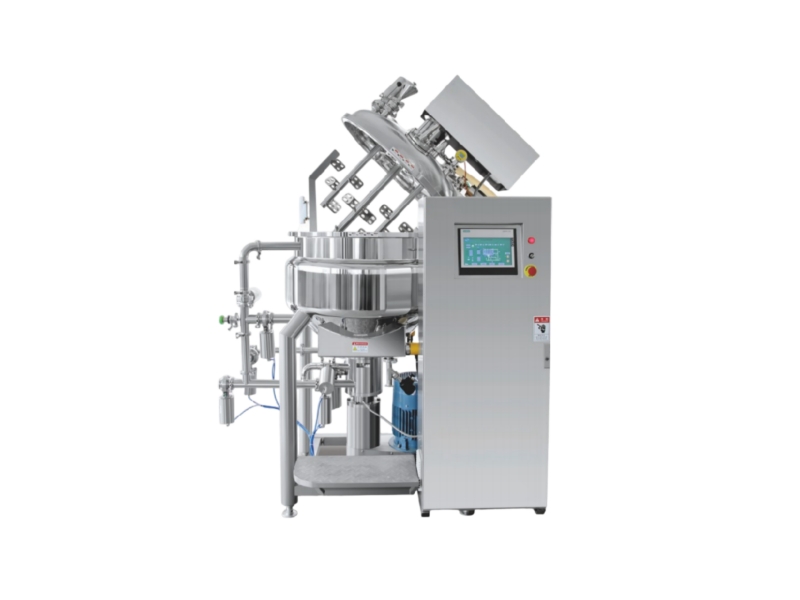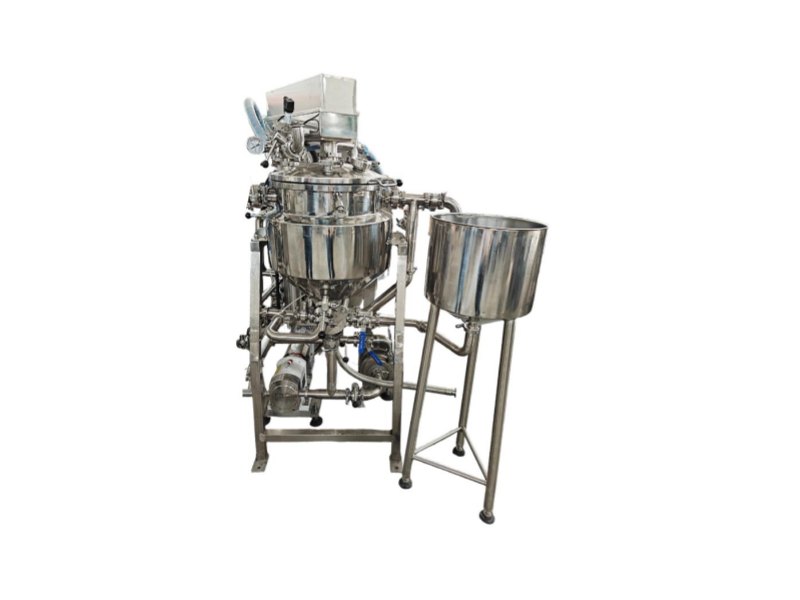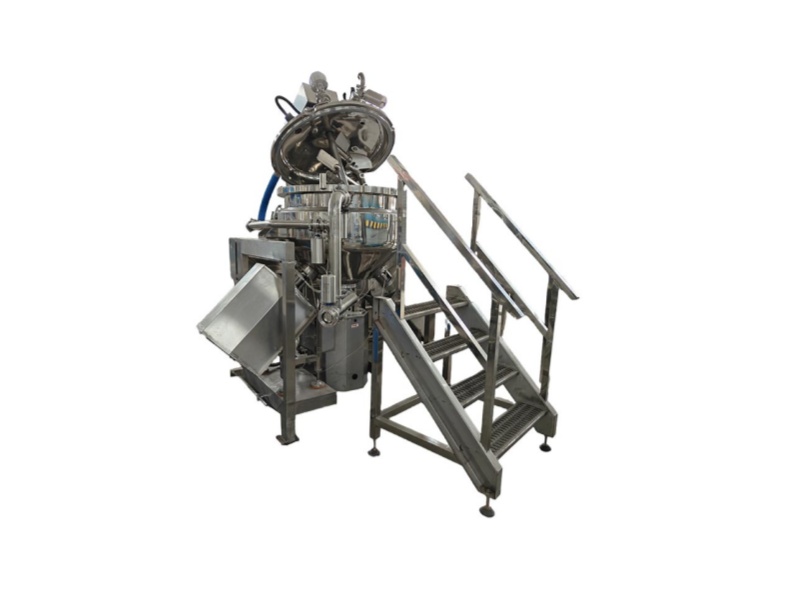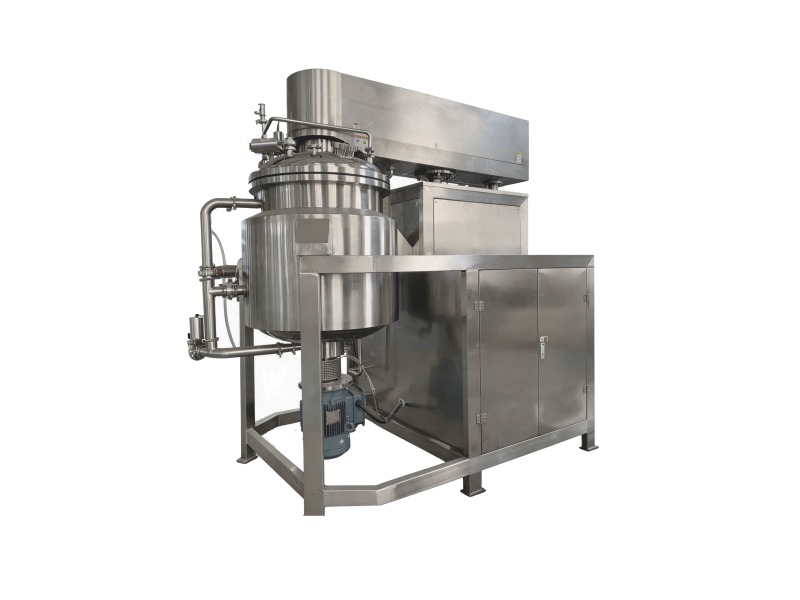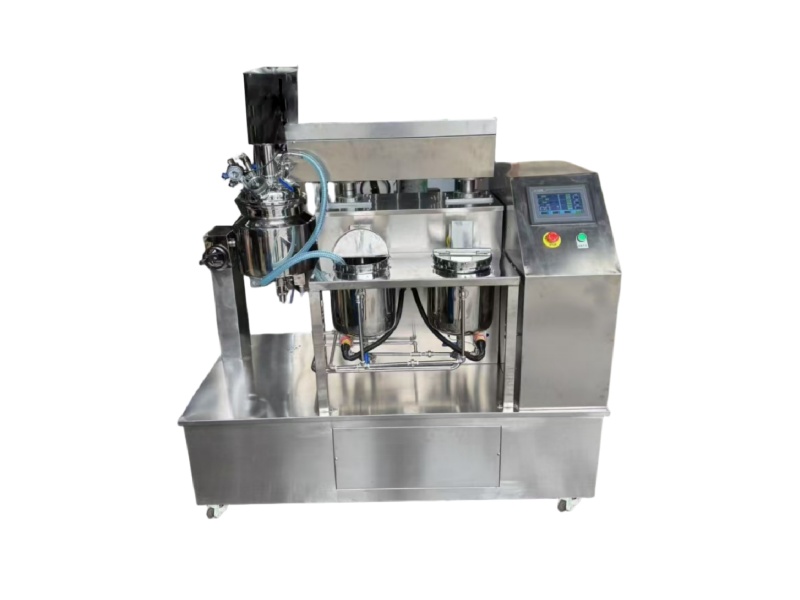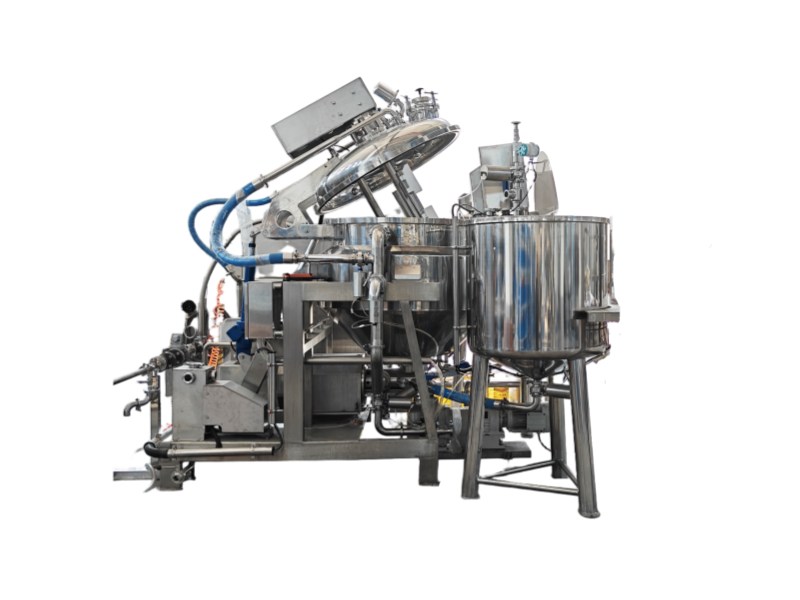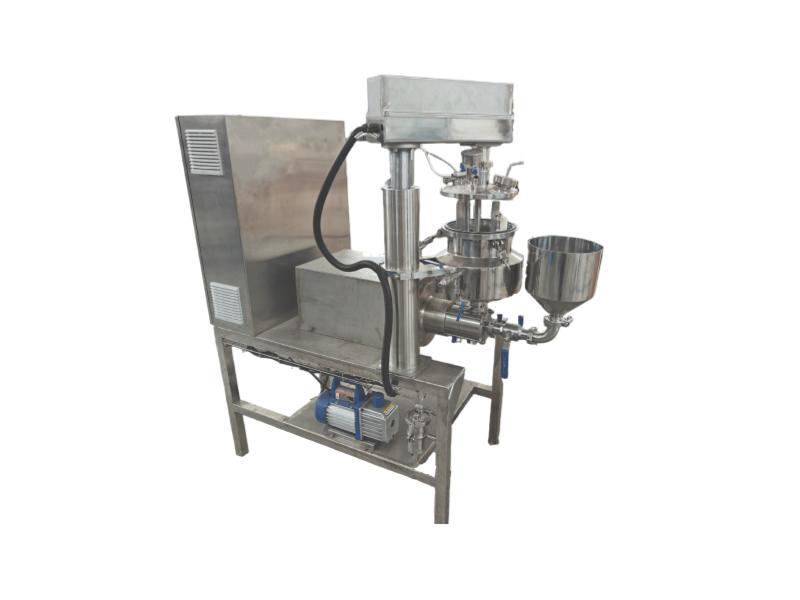



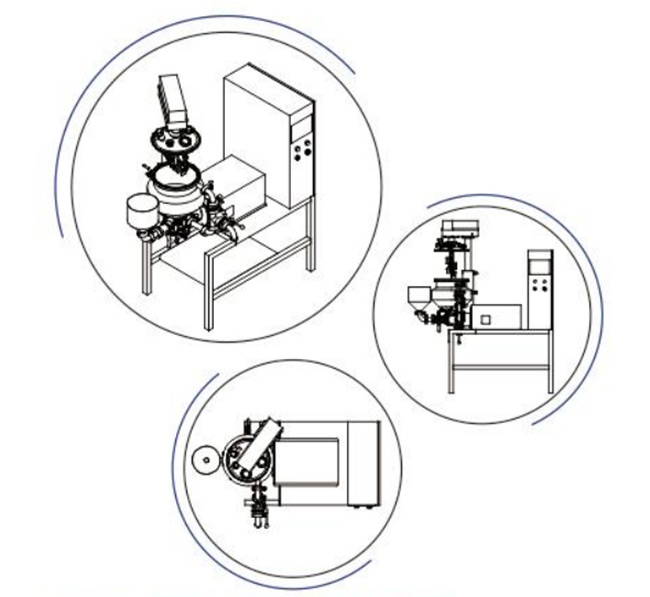
Mixer tank type: vacuum emulsifying mixer, three-stage emulsifying system
Machine model: SLFT-H5 and SLFT-H10
Structure: three-layer tank type with lifting mechanism
Function: emulsifying, homogenize, scrap, mix, cool, etc
Application: for mayonnaise production use
Unit price: about USD9,000
Machine other name: small mayonnaise making machine
Here we provide a detailed introduction to the 5L and 10L small mayonnaise making machine specifically designed for the R&D and small-batch production of mayonnaise. Equipped with a three-stage emulsification pump system, vacuum degassing capabilities, a cooling jacket, and PLC touchscreen controls, it serves as the ideal equipment for laboratory formula development and small-scale industrial manufacturing.
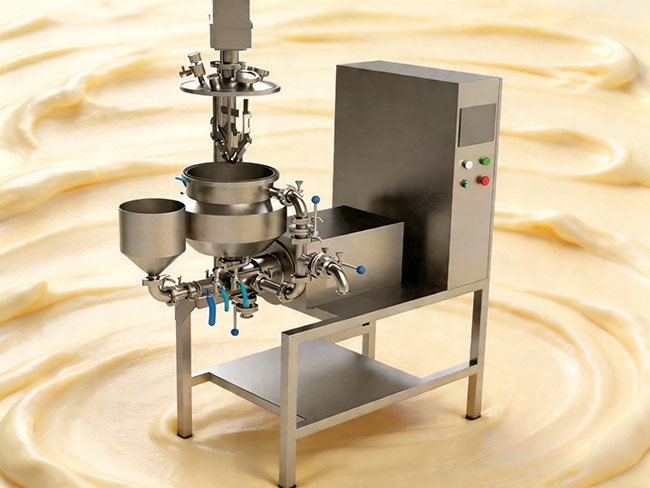
Unlike standard laboratory stirrers, this type small machine utilizes the same three-stage emulsification pump system found in large-scale production lines, enabling the production of stable mayonnaise products with a shelf life exceeding six months.
Available in 5L and 10L capacities, the equipment is particularly well-suited for:
● Food R&D Centers: Mayonnaise formula development and process optimization
● Small-Scale Food Factories: Small-batch mayonnaise production
● Central Kitchens for Restaurant Chains: In-house production of high-quality mayonnaise
● University Laboratories: Food science research and education
Core Value: Produce industrial-grade mayonnaise using laboratory-scale equipment.
Model | Batch Output | Applicable Scenarios | Hourly Capacity |
SLFT-H5 | Approx. 4–5 kg/batch | Laboratory R&D, Formula Testing | 12–20 kg/h |
SLFT-H10 | Approx. 8–10 kg/batch | Small-Batch Production, Central Kitchens | 20–40 kg/h |
The "small-scale" nature is reflected in three key aspects:
1. Compact Footprint: Occupies only 1–2 square meters, making it ideal for laboratories or small workshops.
2. Modest Output: Producing 4–10 kg per batch, it is well-suited for small-batch, multi-variety production.
3. Low Investment: Compared to large-scale production lines, the initial investment cost is significantly reduced.
However, its performance is anything but small: Although the equipment is compact, its core configuration includes a three-stage emulsification pump, vacuum system, cooling jacket, and PLC control. These working systems are absolutely identical to that of large-scale industrial equipment.
Regarding the core configuration of the small mayonnaise mixer, following are the detailed explanations.
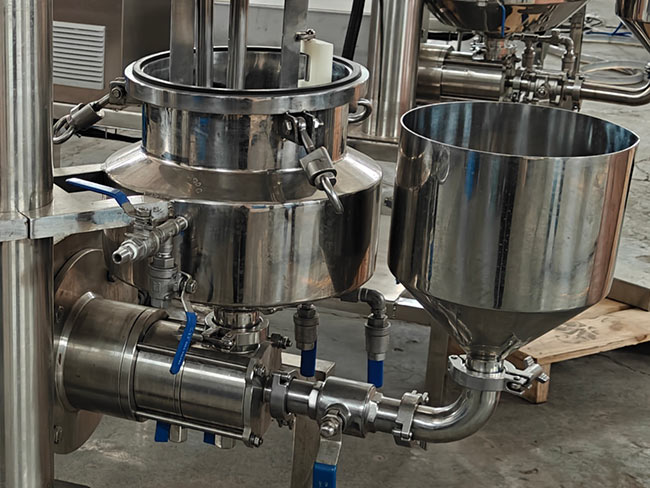
Item | Description |
Installation method | Bottom horizontal mounting |
Number of stages | Three-stage stator-rotor series |
Function | Break down the oil phase into extremely fine particle sizes |
Result | Stable emulsion; shelf life can reach over 6 months |
Why is the Three-Stage Emulsification Pump the Core Component in Mayonnaise Production?
Mayonnaise is a typical oil-in-water emulsion, with an oil content typically ranging from 60% to 80%. To stably disperse such a high proportion of oil within the aqueous phase, the oil droplets must be broken down to very fine size. The three-stage emulsifying pump can reach this breaking performance.
Layer | Structure | Function |
Inner Layer | Material Contact Layer | Hold the mayonnaise mixture; feature a mirror-polished finish. |
Middle Layer | Cooling Jacket | Circulate cooling water to regulate the emulsification temperature. |
Outer Layer | Thermal Insulation Layer | Provide thermal insulation to prevent condensation. |
Why is cooling necessary for mayonnaise production?
Frictional heat is generated during the mayonnaise emulsification process. If the temperature becomes excessively high (>30°C), it can lead to the following issues:
● Denaturation of egg proteins, resulting in reduced emulsification efficiency.
● Accelerated oxidation of fats and oils, compromising product shelf life.
● Deterioration of the product's texture and mouthfeel.
Through the circulation of cooling water within the middle cooling jacket, the three-layer tank enables precise control of the emulsification temperature within the 20–25°C range. Thereby, this emulsifying mixer can ensure the consistent quality of the mayonnaise in the production process.
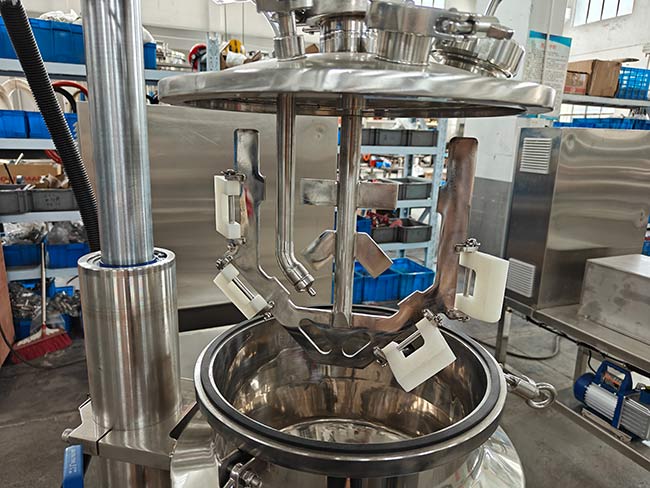
Component | Function |
Wall-scraping agitation system | Scrape the mixing pot walls to prevent material adhesion and ensure uniform mixing. |
Temperature probe | Monitor material temperature in real-time and feeds data to the PLC control system. |
Electric lifting mechanism | Enable one-touch lifting and lowering of the lid, facilitating material loading, cleaning, and maintenance |
Advantages of Electric Lifting:
● Eliminates the need for manual handling of heavy lids
● Adjustable lifting height to accommodate various operational requirements
● Facilitate more convenient material loading and cleaning
Item | Description |
Location | Independently configured, situated next to the main vessel |
Purpose | For adding oil-phase materials (e.g., vegetable oils) |
Control | Feature a valve design for easy opening and closing |
Advantage | Enables step-by-step addition for superior emulsification results |
During mayonnaise production, the oil phase must be added slowly and incrementally to the aqueous phase to form a stable emulsion. The design of the ingredient hopper makes this process significantly more precise and controllable.
Item | Description |
Vacuum Level | -0.08 to -0.09 MPa |
Function | Remove air bubbles entrained during the emulsification process |
Effect | Result in a finer product texture and a smoother appearance |
Item | SLFT-H5 | SLFT-H10 |
Effective volume | 5L (approx. 4–5 kg/batch) | 10L (approx. 8–10 kg/batch) |
Emulsification pump stage | Three-stage | Three-stage |
Emulsification pump mounting | Bottom-mounted (Horizontal) | Bottom-mounted (Horizontal) |
Homogenizing speed | 0-3000rpm | 0-3000rpm |
Mix speed | 10-60rpm | 10-60rpm |
Vacuum level | -0.08 to -0.09 MPa | -0.08 to -0.09 MPa |
Cooling method | Jacketed water cooling | Jacketed water cooling |
Main control system | PLC + touchscreen | PLC + touchscreen |
Such type small mayonnaise making use mixer has two major application scenarios as you can see below.
Application | Description |
Formula tuning | Conduct small-batch testing of various ingredient ratios for rapid validation. |
Process optimization | Adjust parameters such as emulsification speed, duration, and temperature. |
New product development | Develop new product varieties, such as flavored mayonnaise, low-fat mayonnaise, etc. |
Stability testing | Conduct accelerated shelf-life testing to validate formula stability. |
Advantages: Small batch sizes, low raw material costs, and the ability to conduct extensive experimentation.
Application | Description |
Small-scale food factories | Daily production capacity of 50–200 kg, meeting the demands of regional markets. |
Central kitchens for restaurant chains | In-house production of high-quality mayonnaise with controllable costs. |
The 5L and 10L small mayonnaise making machine serves as a bridging device connecting laboratory R&D with industrial-scale production:
Item | Description |
Specifications | Available in 5L and 10L models, meeting small-batch production requirements. |
Core configuration | Three-stage emulsification pump + Vacuum system + Cooling jacket + PLC control. |
Shelf life | 6 months or longer, consistent with results from large-scale production lines. |
Applications | Formula R&D, small-batch production |
Hourly Output | About 12-20kg/h(5L), 20-40kg/h(10L) |
In a word, it is the ideal choice for R&D centers and small-scale food manufacturing facilities to produce industrial grade mayonnaise with low cost. For further details or to schedule a sample test, please feel free to contact us.
Provide you with the industry`s best solutions

Offer the pre-sales and after-sales technical support
Back to Top
We are devoted to the R&D, production and selling of the grinder machine, mixer machine and filling machine for the food factories. They work for the dry and wet food.
0086 150-5215-2936

 English
 French