Salinovate provides industrial powder mixing machines for blending dry powders, granules, and selected powder-liquid mixtures. Our range includes ribbon mixers, V-type blenders, double cone mixers, three-dimensional mixers, plough mixers, and rotary drum mixers, each designed for different material characteristics and mixing requirements. Explore our powder mixer options below to compare their working principles, structural features, and typical applications.
Feel free to write to us at any time to ask about our products or seek support. We`d be more than happy to help.
Talk to Our Expert NowAn industrial powder mixer, also known as a powder blender or powder blending machine, is used to combine two or more powder or granular ingredients into a more uniform mixture. Depending on the equipment design, mixing is achieved through the rotation of a container, the movement of internal mixing elements, or a combination of both.
Powder mixing is widely used in food processing, seasoning production, nutritional ingredient preparation, chemical manufacturing, and other industries that require consistent blending of dry materials. Different mixers produce different material movement patterns. The appropriate choice depends on the physical properties of the ingredients, the required mixing uniformity, batch size, cleaning procedures, and whether liquids need to be added during processing.
For this reason, there is no single powder mixer that is ideal for every application. Understanding the differences between mixer designs is an important first step in selecting suitable equipment.
Salinovate offers several types of powder mixing equipment to accommodate different materials, production capacities, and process requirements.
1. Ribbon Mixer
A ribbon mixer uses an internal shaft fitted with spiral ribbon blades to move powder in different directions within a horizontal mixing trough. It is commonly considered for batch blending of dry powders and granules, particularly in industrial production where relatively large batches need to be processed. Optional configurations may include liquid spraying systems, different discharge arrangements, and customized contact-part materials, depending on the application.
Typical applications: Seasoning blends, food ingredient mixtures, and other dry powder formulations.
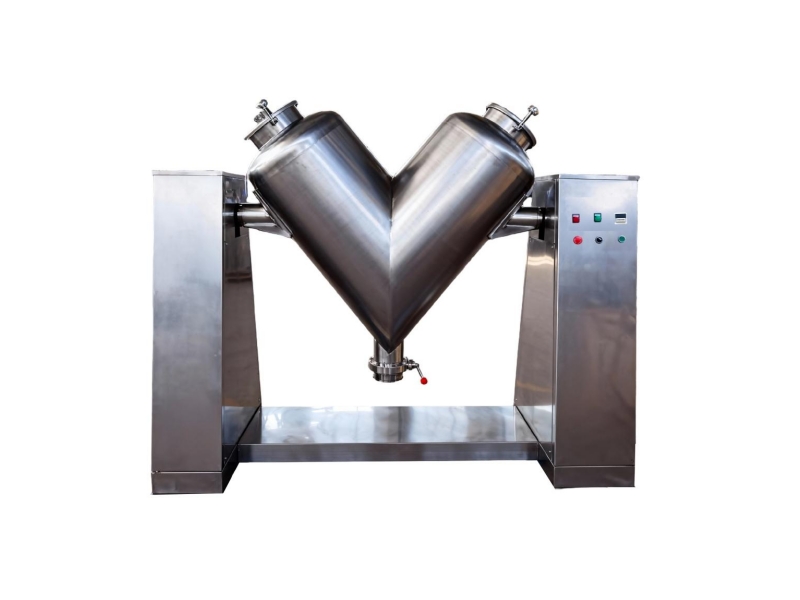
2. V-Type Powder Mixer
A V-type powder mixer uses a rotating V-shaped vessel to repeatedly divide and recombine the material during mixing. This tumbling action is suitable for many free-flowing powders and granules where relatively gentle mixing is preferred. The vessel can be designed without internal agitators, or an auxiliary intensifier bar may be considered for applications that require additional mixing action. The appropriate configuration depends on the material and process requirements.
Typical applications: Dry food ingredients, nutritional powder blends, and selected pharmaceutical or chemical powders, subject to the required hygiene and material specifications.
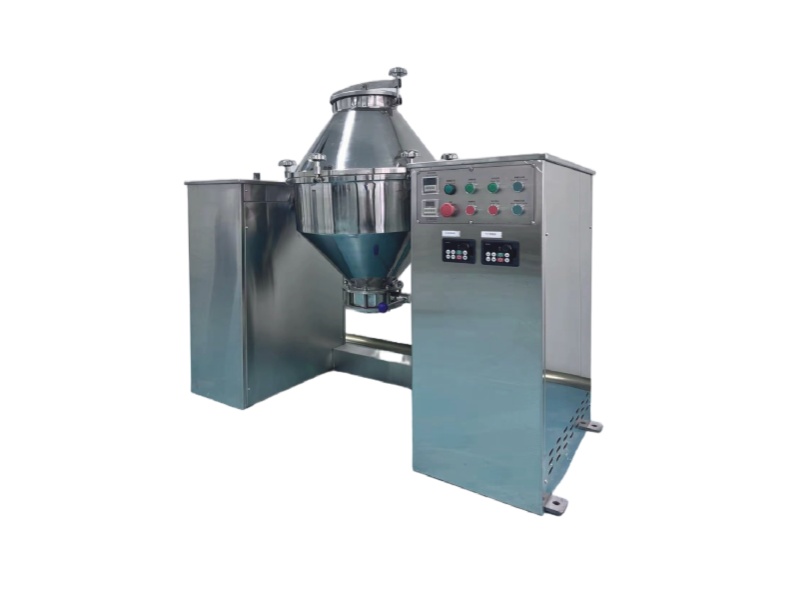
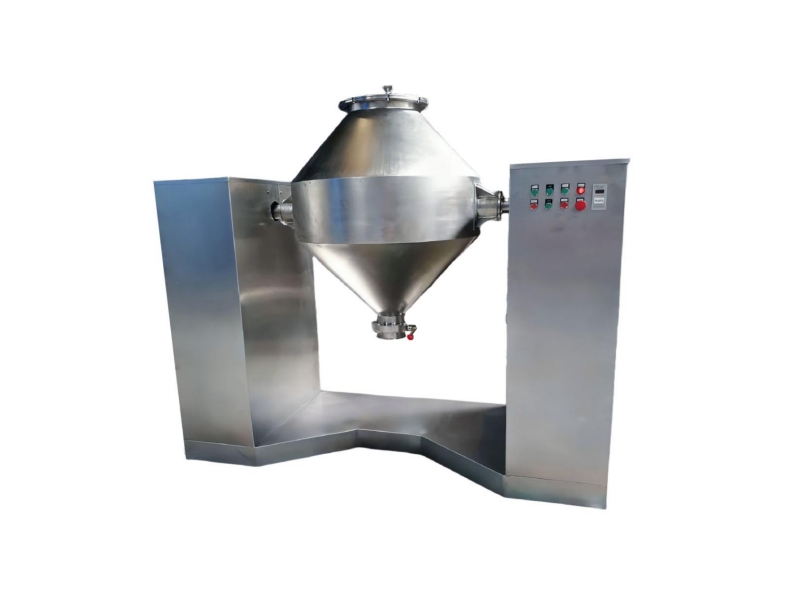
3. Double Cone Mixer
A double cone mixer uses a rotating vessel formed by two conical sections joined together. As the vessel rotates, the material tumbles and redistributes within the chamber. This design is commonly considered for blending free-flowing powders and granules when gentle material handling and a relatively simple internal structure are important.
Typical applications: Dry ingredient blends, granular materials, and selected industrial powder formulations.
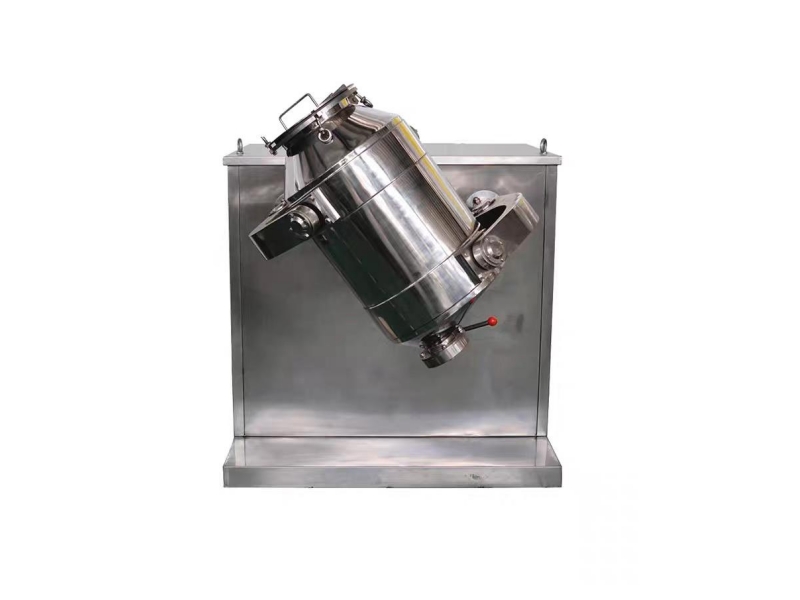
4. Three-Dimensional Powder Mixer
A three-dimensional mixer moves its mixing container through a combination of spatial motions rather than relying on rotation around a single fixed axis. This creates repeated changes in material orientation and can promote mixing of suitable powders and granules. Smaller models may be used for laboratory trials, formulation development, and small-batch production, while larger configurations can be considered for industrial applications.
Typical applications: Laboratory powder blending, small-batch formulations, and selected specialty ingredient mixtures.
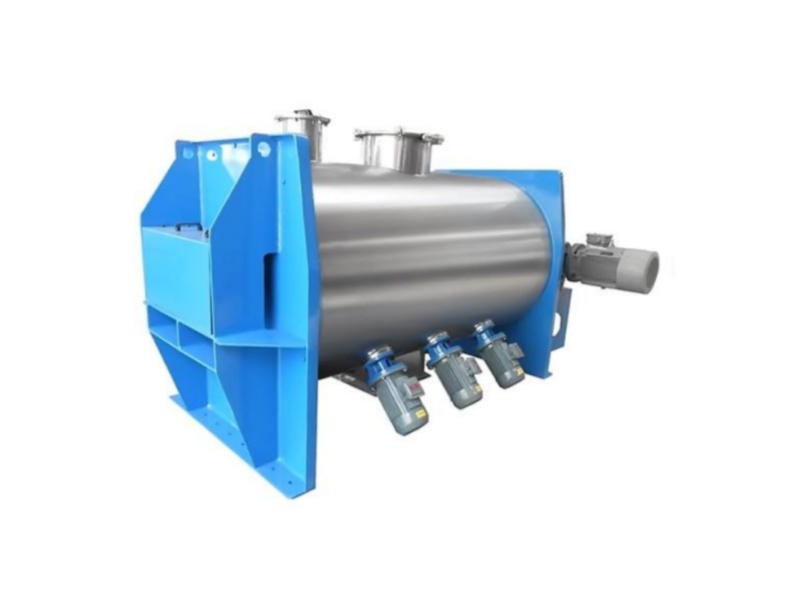
5. Horizontal Plough Mixer
A horizontal plough mixer uses plough-shaped mixing elements mounted on a horizontal shaft to create intensive material movement inside the mixing chamber. Depending on the configuration, high-speed choppers can also be installed to break down soft agglomerates and improve dispersion. Compared with conventional tumbling mixers, this design is often considered for materials that require more intensive mixing action, including certain cohesive powders and fibrous materials.
Typical applications: Cohesive powders, fibrous ingredients, and formulations that require intensive mixing or deagglomeration.
6. Rotary Drum Mixer
A rotary drum mixer blends materials through the rotation of a cylindrical mixing vessel. Depending on the model, the drum may operate independently or incorporate internal mixing elements to provide additional material movement. The final configuration should be selected according to the flow characteristics of the ingredients and the desired mixing result.
Typical applications: Suitable dry powders and granules, depending on the drum design and material properties.
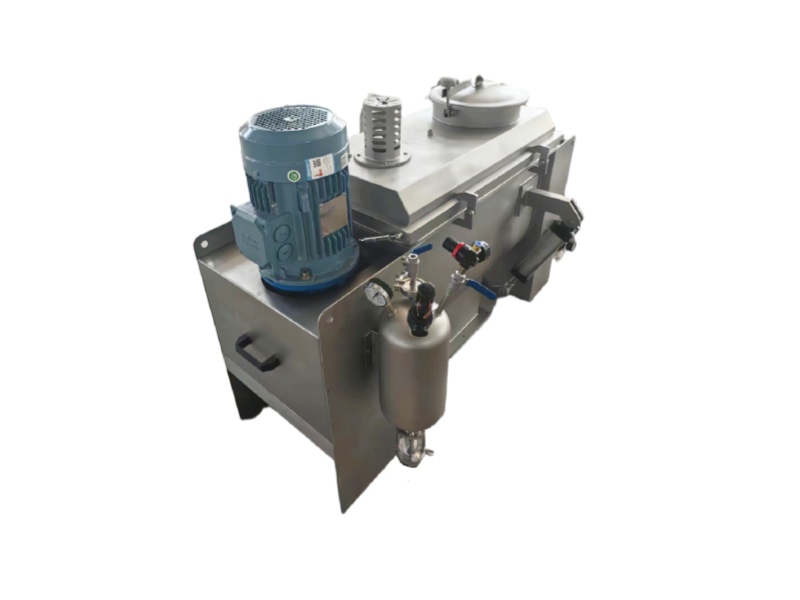
7. Powder Mixer with Liquid Spraying
Some powder mixing processes require a small proportion of liquid, such as oil or flavoring, to be distributed throughout a larger quantity of dry ingredients. In these applications, a compatible mixer can be equipped with a liquid spraying system. The mixer design, spray nozzle arrangement, and liquid addition rate should be evaluated together to minimize local over-wetting and agglomeration.
Typical applications: Seasoning powders with added oil, flavored food powders, and selected formulations requiring controlled liquid addition.
Selecting an industrial powder mixer requires evaluating the materials, mixing objectives, and production requirements together. The following factors can help narrow down the suitable equipment options.
1. Material Properties
Consider the bulk density, particle size, flowability, moisture content, and tendency to form agglomerates. Free-flowing powders may be suitable for tumbling mixers, while cohesive or fibrous materials may require a more intensive mixing mechanism.
2. Ingredient Ratios and Mixing Uniformity
The number of ingredients, their proportions, and differences in physical properties can affect the mixing process. Formulations containing small quantities of minor ingredients may require additional attention to ingredient distribution and mixing procedure.
3. Batch Capacity and Production Requirements
Mixer selection should distinguish between the vessel’s total volume, recommended working volume, and actual material weight per batch. The required batch size, bulk density, mixing time, and production schedule should all be considered when determining equipment capacity.
4. Cleaning and Hygiene Requirements
For food and nutritional powder applications, evaluate the materials of construction, product-contact surfaces, discharge design, accessibility for cleaning, and the need for frequent product changeovers. The appropriate hygienic design depends on the product and the customer’s applicable standards.
5. Liquid Addition Requirements
If oil, flavoring, or another liquid needs to be incorporated into a dry powder, consider whether the mixer can accommodate a suitable spraying system. The liquid properties, addition ratio, and risk of agglomeration should be assessed before finalizing the configuration.
6. Feeding, Discharging, and Automation
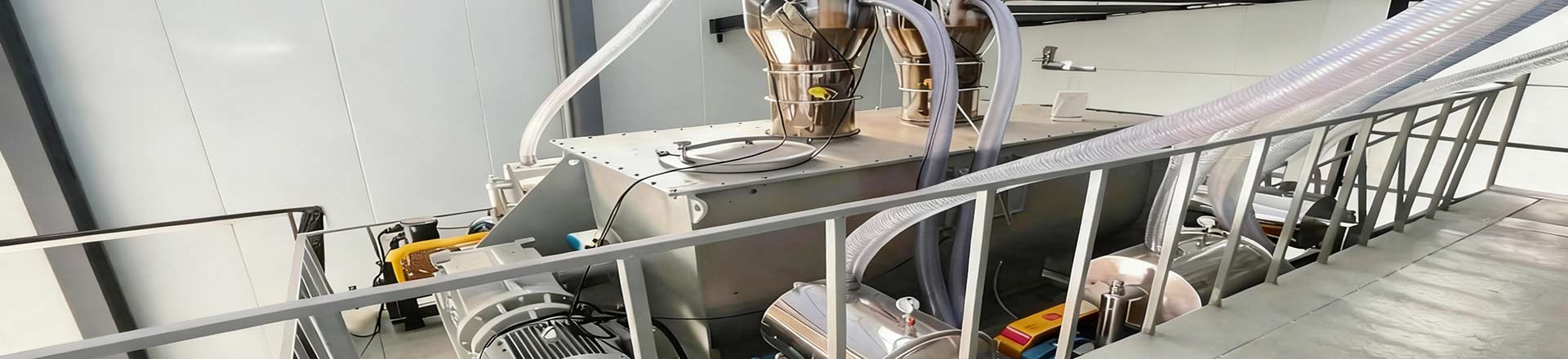
Depending on production scale and workshop layout, the system may include manual feeding, vacuum conveying, screw conveying, dust-control equipment, or automated discharge. These options can be evaluated as part of the overall mixing system.
To recommend a suitable powder mixer, Salinovate can review your material information, target batch size, required mixing result, and operating conditions before suggesting an equipment configuration.
The feeding and discharging configuration should match the mixer design, material characteristics, and production workflow. For smaller batches, manual feeding may be sufficient. For medium- or large-scale production, options such as vacuum conveying or screw conveying can help reduce manual handling and improve material transfer. Where dust control is important, the mixer can be evaluated together with suitable feeding equipment, enclosed transfer connections, and dust collection arrangements.
Discharge options depend on the machine design and process requirements. Manual or pneumatic discharge valves may be available on selected models. The appropriate configuration should be determined by considering the powder’s flowability, required throughput, cleaning procedures, and the desired level of automation.
The price of an industrial powder mixer depends on several factors, including the mixer type, working capacity, materials of construction, and optional configurations. Additional requirements, such as liquid spraying, automatic feeding, dust control, specialized discharge valves, and customized product-contact surfaces, may also affect the final equipment cost.
To receive a more relevant quotation, please provide the material name, bulk density if available, required batch size, target mixing result, and any special cleaning or automation requirements. Salinovate team can then evaluate the application and recommend a suitable configuration for quotation.
Choosing a powder mixer involves more than matching a machine model to a required batch size. The material properties, mixing objectives, cleaning requirements, and production layout all influence the final configuration. Salinovate supports customers through the following stages:
1.Application Assessment
We review the material characteristics, ingredient proportions, target batch size, and required mixing result to identify suitable mixer types.
2.Equipment Configuration
Depending on the application, the configuration may include customized mixing elements, product-contact materials, discharge arrangements, liquid spraying, feeding equipment, or dust-control solutions.
3.Production and Installation Planning
For projects requiring additional equipment, feeding, conveying, mixing, and discharging arrangements can be evaluated together to suit the available workshop space and production workflow.
4.Operating and Maintenance Guidance
Technical guidance can cover equipment operation, routine inspection, cleaning procedures, and maintenance requirements according to the selected machine and its configuration.
To help us assess your application, please share your material details, target batch size, required mixing result, and any special process requirements.
1.What is the difference between a powder mixer and a powder blender?
In industrial equipment terminology, the terms powder mixer and powder blender are often used interchangeably to describe machines that combine powders or granules. The exact equipment design and mixing mechanism are more important than the name alone.
2.Which powder mixer is suitable for food ingredients?
The choice depends on the ingredients, required mixing uniformity, batch size, cleaning requirements, and applicable food-contact standards. Ribbon mixers, V-type mixers, and double cone mixers may all be suitable for particular food powder applications, but the final selection should be based on the specific process.
3.How do I calculate the required powder mixer capacity?
Start with the required material weight per batch and the bulk density of the mixture to estimate the working volume. The vessel’s total volume is not the same as its recommended working volume, so the usable filling ratio must also be considered.
4.Can a powder mixer add liquid to dry ingredients?
Selected powder mixers can be configured with liquid spraying systems to incorporate limited amounts of oil, flavoring, or other liquids into dry ingredients. The suitability depends on the liquid properties, addition ratio, mixer design, and desired final product condition.
Provide you with the industry`s best solutions

Offer the pre-sales and after-sales technical support
Back to Top
We are devoted to the R&D, production and selling of the grinder machine, mixer machine and filling machine for the food factories. They work for the dry and wet food.
0086 150-5215-2936

 English
 French