


 English
 French
Case Study - 200L Mixer with 80% Loading Capacity for High Efficient Coffee Powder Mixing
By:Salinovate Team
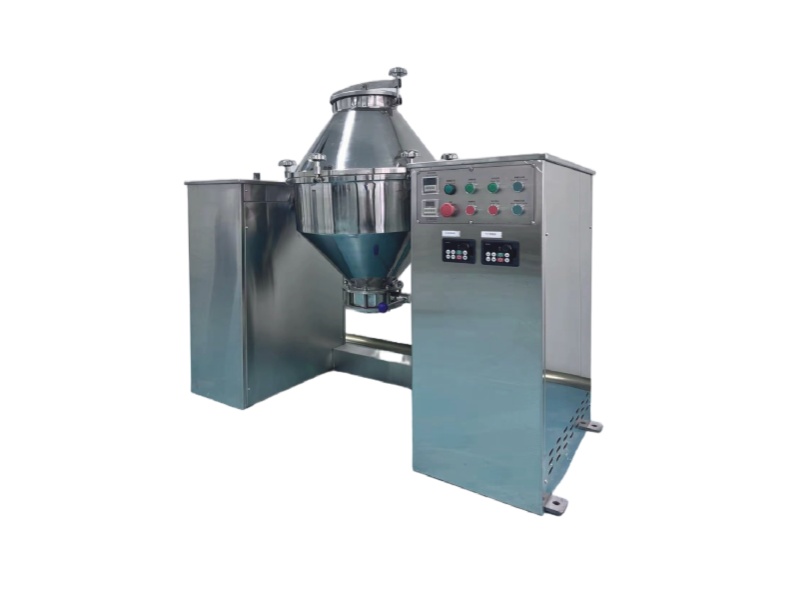
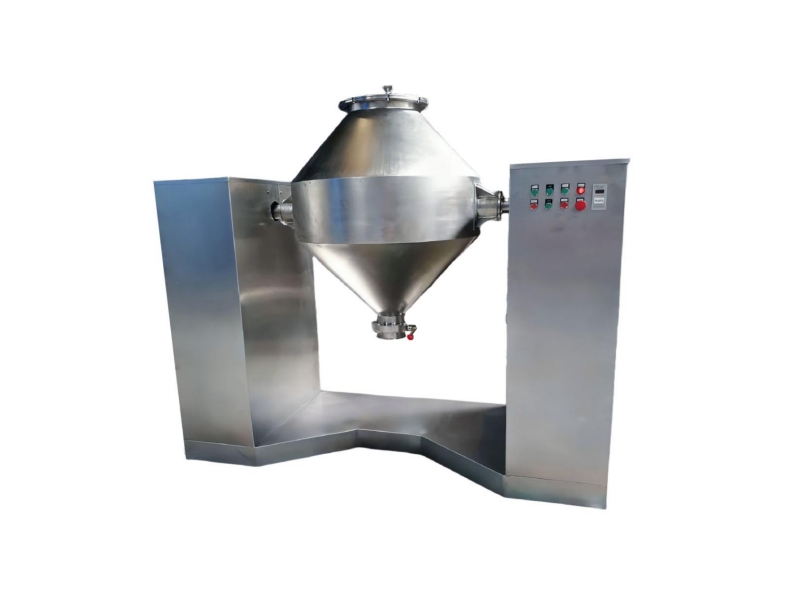
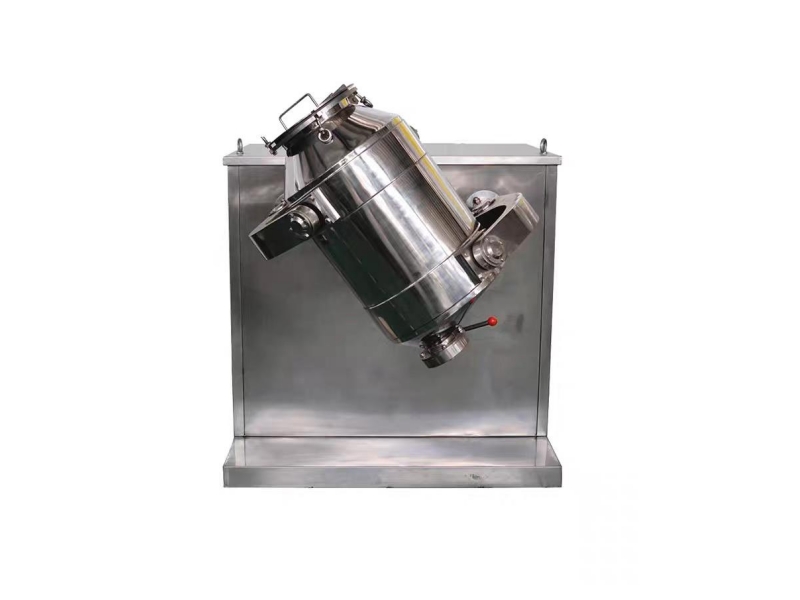
We here share a powder mixer selection case to you about the tea beverage company chose a 200L high efficient powder mixer(80% loading capacity) with a vacuum feeder for coffee powder mixing.
I. Project Background
To begin, let us introduce the general profile and production requirements of this tea beverage company.
1.1 Client Overview
The client featured in this case study is a beverage company with a product line encompassing milk teas, fruit teas, coffee beverages, and more. Driven by current production demands, the company plans to procure a powder blending system specifically for the production of coffee powder.
1.2 Raw Materials and Process

Raw Material | Form | Function |
Coffee powder | Dry powder | Main Ingredient |
Milk powder | Dry powder | Flavor enhancement & smoothness |
Sugar | Fine granulated | Sweetness adjustment |
All raw materials consist of dry powders that require uniform blending to produce a standardized coffee powder base.
1.3 Core Requirements
Requirement Dimension | Specific Requirements |
Equipment type | Powder Mixer (dry powder blending) |
Equipment specifications | Approx. 200L |
Mixing efficiency | High efficiency; large batch output |
Material requirements | Food-grade; easy to clean |
II. Proposal Consultation: Defining Volume and Confirming Model Selection
After gaining a thorough understanding of the client's powder mixing requirements, we proceeded to verify the relevant details with them before offering specific recommendations for powder mixing equipment.
2.1 Clarifying Volume: Total Vessel Volume vs. Actual Loading Volume
The client initially requested a "200L unit." During our proposal consultation, we proactively sought to clarify this point:
"When you refer to '200L,' are you referring to the total volume of the mixing vessel itself, or the actual volume of material loaded per batch? There is a fundamental distinction between these two figures when selecting the appropriate equipment model. We listed the SLW series 200L vessel volume one to make an explaination. "
Explanation of the Distinction:
Parameter | Standard Model | Upgraded Model (Selected by Client) |
Vessel volume | 200L | 200L |
Loading coefficient | 50% | 80% |
Actual loading volume | 100L | 160L |
Applicable scenario | General mixing | High-efficiency, large batch production |
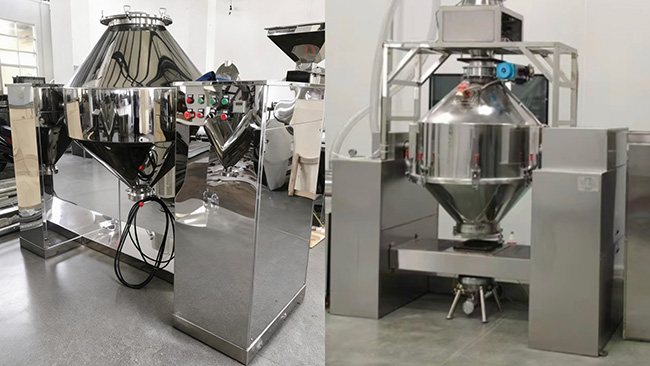
After comparing the options, the client explicitly selected the "Upgraded Model" featuring a 200L vessel volume and a 160L loading capacity in order to maximize their production output per batch.
2.2 Material Confirmation
The client inquired about material requirements. Based on the material characteristics of coffee powder, milk powder, and sugar (mildly acidic and non-corrosive), we recommended the use of 304 stainless steel, which meets food-grade hygiene standards while offering excellent cost-effectiveness. The client subsequently confirmed their acceptance of 304 stainless steel as the material of choice.
2.3 Final Equipment Configuration
Item | Specification |
Equipment type | Upgraded SLW series |
Vessel volume | 200L |
Loading capacity | 160 kg/batch (Loading coefficient: 80%) |
Material | Food grade SS304 |
Control method | Button control |
Mixing time | 5–6 minutes/batch |
III. Ancillary Upgrade
In many scenarios, powder mixer is paired with automated feeding systems to achieve more efficient and hygienic production. Consequently, we provided our client with corresponding recommendations.
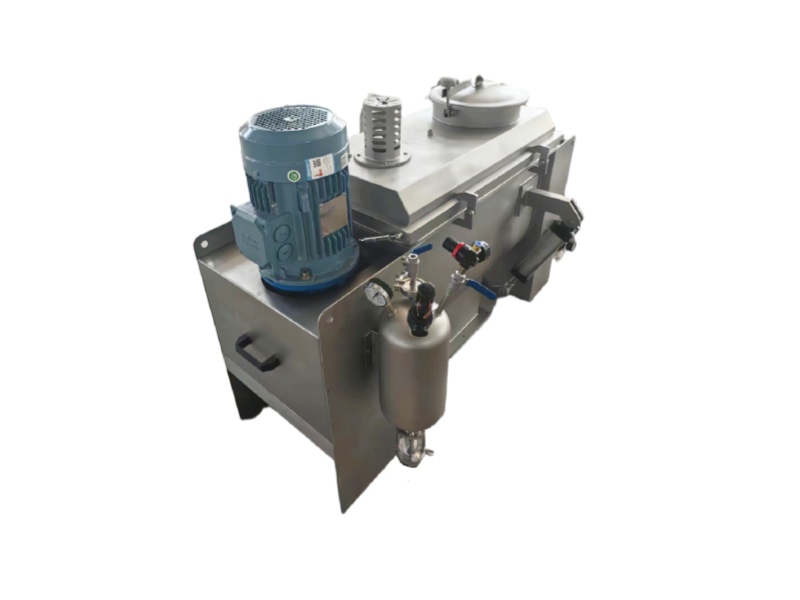
3.1 Vacuum Feeder Recommendation
When dry powder ingredients such as coffee powder, milk powder, and sugar are loaded manually, they are prone to the following issues:
● Airborne dust, which compromises the operational environment
● High physical strain associated with manual handling
● Inconsistent feeding rates, which negatively impact mixing efficiency
Therefore, we included the option of a vacuum feeder in our quotation proposal to enable automated feeding.
3.2 Client Decision
After careful evaluation, the client confirmed the purchase of the complete equipment package comprising both the mixer and the vacuum feeder.
IV. Equipment Delivery and Installation
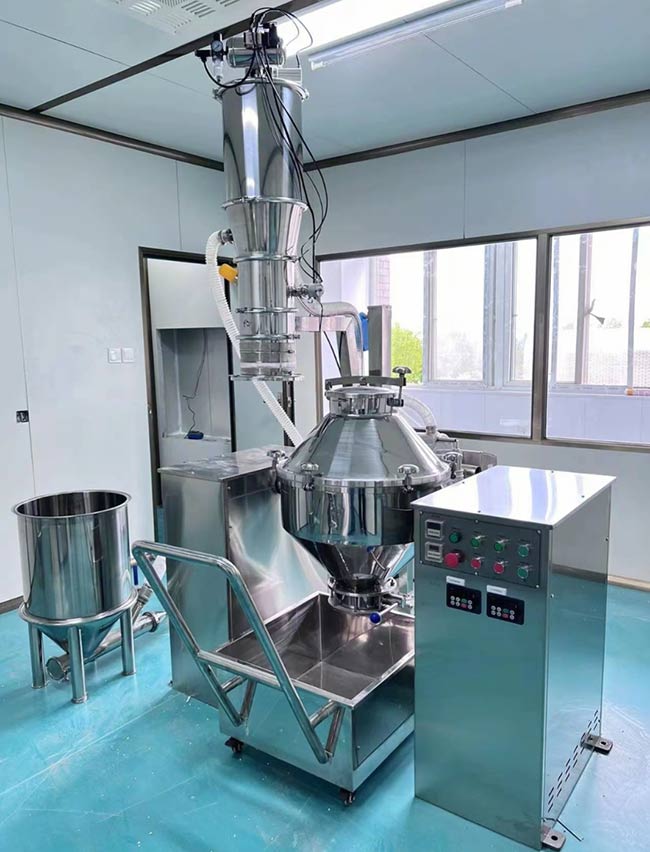
The equipment has now been manufactured and delivered to the client. The following section provides a detailed overview of the delivered equipment.
4.1 Equipment Features
Feature | Description |
Compact structure | The unit is compact in size and occupies a minimal footprint. |
Integrated assembly | Fully assembled prior to leaving the factory; no complex on-site assembly or splicing is required. |
Rapid positioning | Require only connecting the vacuum feeder hopper to the mixer's inlet port. |
Power & Air connection | Ready for operation simply by connecting to a power supply and compressed air source. |
4.2 On-Site Installation
Upon the equipment's arrival at the client's facility, our technical personnel will assist in completing the following steps:
Step | Operation | Estimated Time |
Equipment positioning | Placement in the designated production room | 15 minutes |
Piping connection | Connecting the vacuum feeder hopper to the mixer's inlet port | 5 minutes |
Electrical wiring | Connecting power and air supplies; verifying motor rotation direction | 0.5 hours |
Running test | Empty running | 5 minutes |
V. Conclusion
During the selection process for a coffee powder mixer, the client progressed from initially specifying a 200L requirement to clarifying the precise concept of working volume. Ultimately, they selected an upgraded mixer featuring a 200L vessel capacity with 80% loading capacity, paired with a vacuum feeder to enable automated material loading. The equipment has now been installed at the facility and is ready to commence formal production.
If you also have purchase needs for powder mixer, we invite you to contact us to receive expert recommendations on equipment selection.
Related Posts:
>>Food Powder Mixer Machine Recommendation