


 English
 French
Chickpea Grinding Test - SLA-30 Air Classifier Mill Achieves 100-200 Mesh Flour
By:Salinovate Team Sep 16,2026
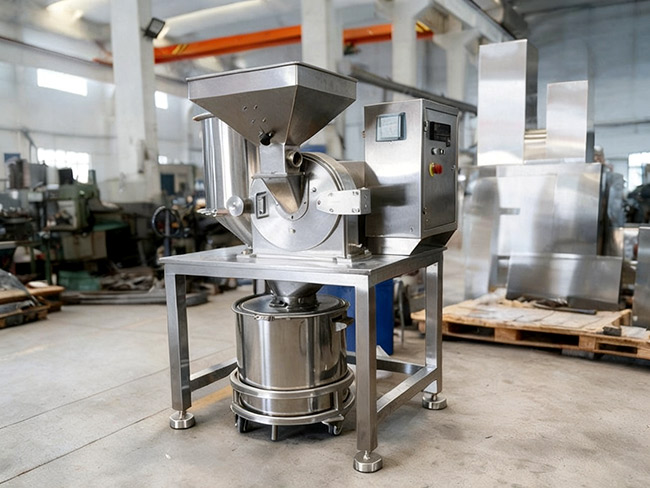
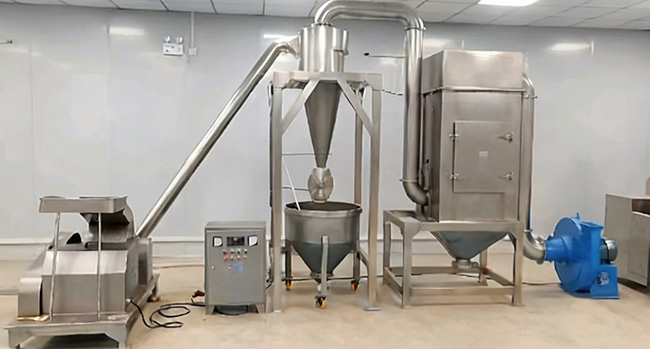
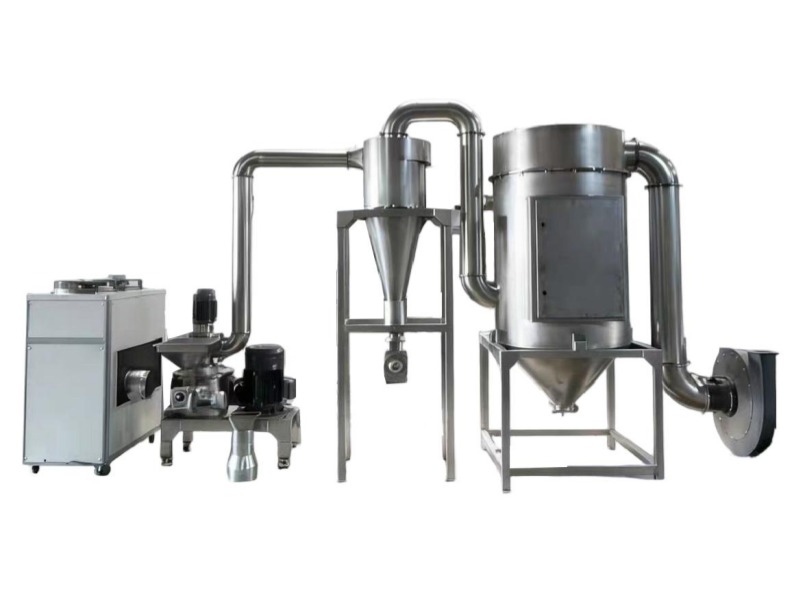
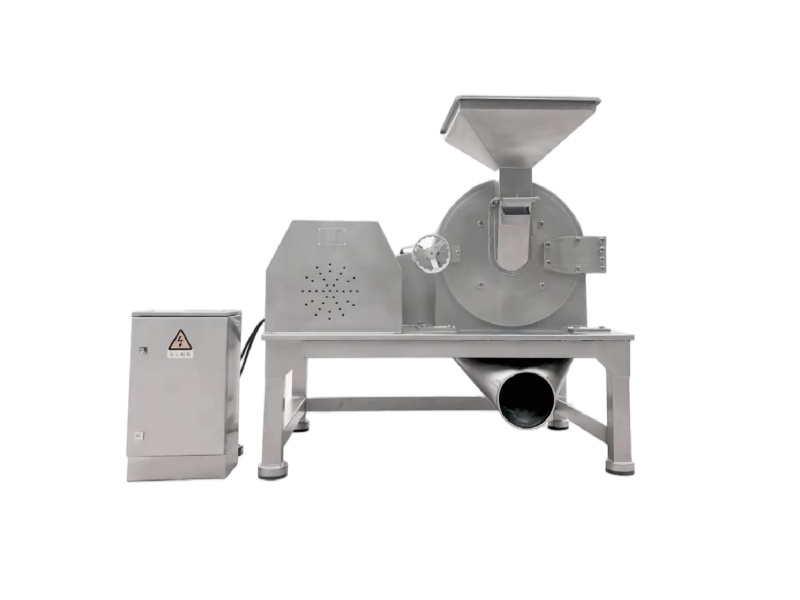
Fine chickpea flour is not simply a matter of increasing grinding intensity. When the required particle size becomes finer, the classification conditions also become more important, and the production capacity of the same machine can change accordingly. To help you understand the actual grinding performance of our SLA series air classifier mill, we recently carried out a chickpea grinding test using SLA-30 model.

I. Chickpea Grinding Test Conditions
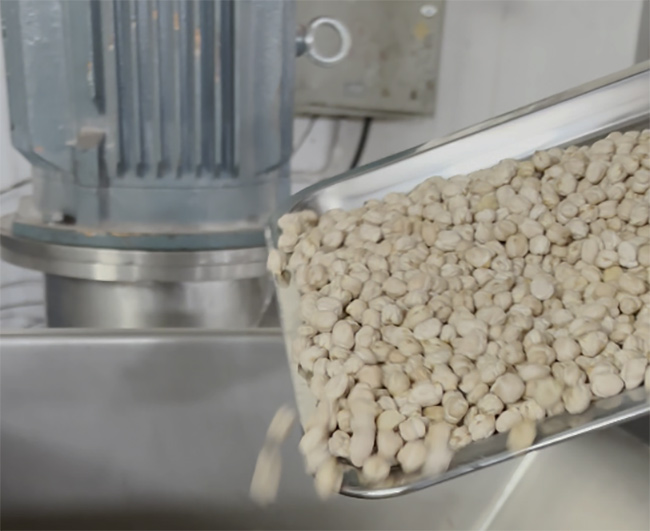
To carry out this test, we prepared 4 kilograms of dehulled whole chickpeas. With the classifier frequency set at around 20 Hz, the finished chickpea flour was mainly concentrated in the 100-200 mesh range, with an observed production capacity of approximately 600 kg/h under the tested conditions.
The test also showed the wider adjustment range of the SLA-30: when a much finer product is required, the classifier frequency can be increased up to approximately 40-50 Hz, with the potential fineness reaching around 300-400 mesh. However, finer grinding comes with a corresponding reduction in throughput. This relationship between fineness, classifier frequency and capacity is also key when it comes to the powder grinder selection step.
II. Testing Result with Testing Video
Test Item | Result |
Machine | SLA-30 model air classifier mill |
Raw material | Dehulled whole chickpeas |
Test sample | 4kg |
Classifier frequency | Approx. 20 Hz |
Main product fineness | Approx. 100-200 mesh |
Observed capacity | Approx. 600 kg/h |
Maximum tested/available classifier frequency | Approx. 50 Hz |
Finer achievable range | Approx. 300-400 mesh |
Remark: The 100-200 mesh range corresponds roughly to 75-150um, while 300-400 mesh represents a substantially finer powder range. Actual particle-size distribution can vary with raw material condition and operating parameters.
III. Why Does Capacity Decrease at Higher Fineness
An air classifier separates particles according to the balance between airflow and the centrifugal force generated by the classifier wheel. Increasing classifier speed increases the centrifugal force, making it more difficult for larger particles to pass through the classification zone. Coarser particles are therefore returned to the grinding zone for further size reduction. As the target particle size becomes finer, more particles need to remain in the grinding/classification system before they can become qualified product.
In practical terms: Higher classifier frequency → finer cut point → more coarse particles returned inside for grinding → longer residence → lower throughput. This is why the same SLA-30 can have significantly different production rates at different target fineness levels.
IV. Why This Chickpea Test Is Useful for Flour Mill Selection
A number of chickpea grinding systems on the market describe their machines in terms of a general fineness range, such as 100, 200 or 300 mesh. Some application information also confirms that air classifier mills can produce superfine chickpea/besan flour. However, these general specifications do not always show the relationship between classifier setting, actual product fineness and throughput.
Our SLA-30 test provides a more practical reference for customers:
• At approximately 20 Hz, the tested chickpea flour was mainly 100-200 mesh.
• The corresponding observed capacity was approximately 600 kg/h.
• For much finer requirements, the classifier frequency can be increased.
• At higher classification settings, the achievable fineness can extend toward approximately 300-400 mesh, while throughput decreases accordingly.
This gives customers a clearer starting point when evaluating which chickpea/besan flour mill is suitable for their chickpea flour project.
V. Testing Conclusion
This SLA-30 chickpea grinding test provides a practical reference for dehulled whole chickpeas rather than relying only on a general machine specification. With a classifier frequency of around 20 Hz, the test produced chickpea flour mainly in the 100-200 mesh range, with an observed capacity of approximately 600 kg/h under the tested conditions.
The SLA-30 can also be adjusted to a much higher classifier frequency, with fineness potentially reaching approximately 300-400 mesh. At the same time, the test confirms an important production principle: as the required fineness becomes finer, throughput decreases because more material requires additional grinding and classification before becoming qualified product. For customers planning a chickpea flour production line, the most meaningful equipment data is therefore not simply the maximum mesh size or maximum capacity. It is the actual relationship between raw material → target fineness → operating parameters → production capacity.
For any testing need for the chickpea flour grinding or other food material grinding, welcome to contact Salinovate team.