


 English
 French
White Sugar Grinding Test with SLU-20
By:Salinovate Team Oct 08,2026
When buying a sugar powder grinder, not every customer needs an industrial icing sugar production line or ultra-fine sugar powder. For small food factories, bakeries, ingredient workshops, and businesses with limited production requirements, a more practical question is often: How fine can an affordable small grinder make white sugar, and is the result good enough for my application?
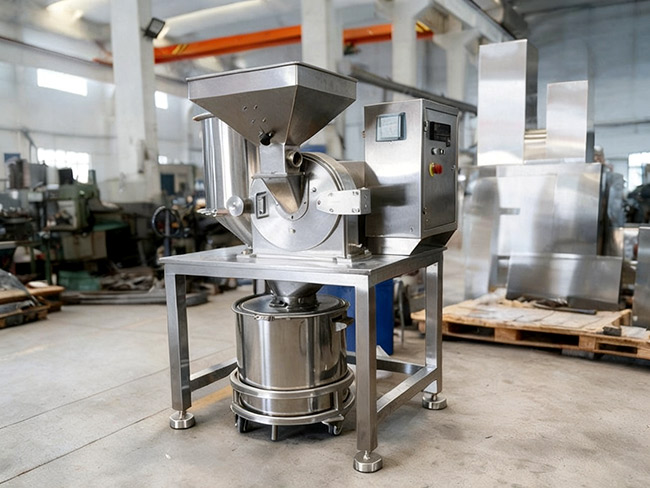
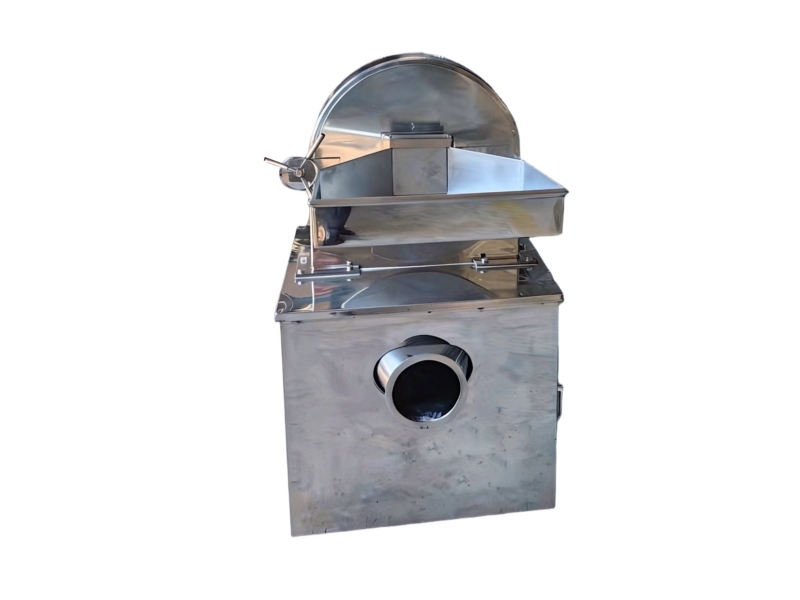
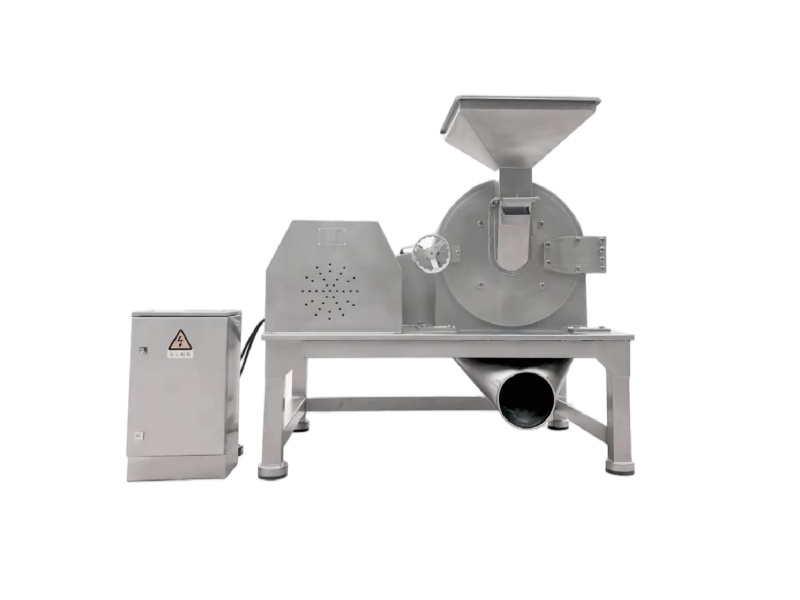
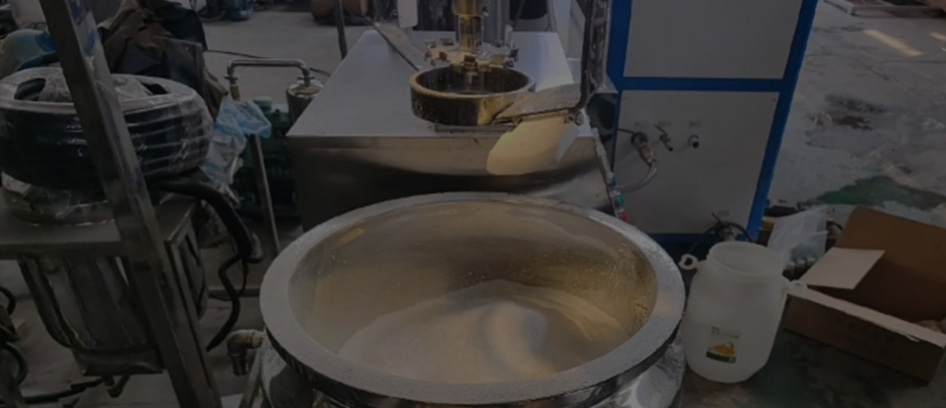
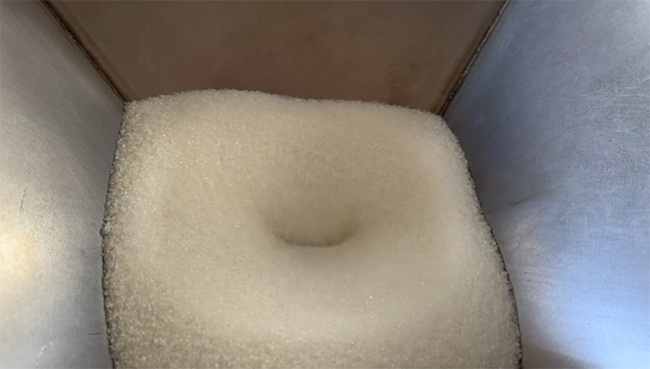
To answer this question, Salinovate previously conducted a white sugar grinding test using the SLU-20, one of our small standalone universal powder grinders. The SLU-20 uses a hammer-type blade and interchangeable screen to control the discharge fineness. In this test shown in the video below, an 80 mesh screen was used, and the resulting sugar powder was approximately within the 80-150 mesh range. The result illustrates an important selection principle: If the required sugar powder does not need extremely fine particle size or a tightly controlled particle-size distribution, a small screen-controlled grinder can be a practical and economical solution.
I. Test Overview: A Simple Machine for a Simple Sugar Powder Requirement
The purpose of this test was not to demonstrate the finest sugar powder possible. Instead, the test focused on a more practical question: Can a low-investment standalone grinder produce usable powdered sugar for applications that do not require an ultra-fine specification? The answer from this test was yes.
Test Item | Result / Configuration |
Material | White granulated sugar |
Machine | SLU-20 universal powder grinder |
Grinding type | Hammer-type blade |
Screen used | 80 mesh |
Observed powder range | Approx. 80-150 mesh |
Working capacity | Approx. 50-60 kg/h |
Collection method | Cloth bag |
Machine configuration | Standalone |
Production concept | Small-batch / batch-style production |
II. What Does an 80 Mesh Screen Actually Mean for Sugar Powder
The most important point in this test is that 80 mesh is the screen specification, not necessarily the exact particle size of every particle in the finished powder. The SLU-20 controls the discharge size primarily through the screen.
During grinding, the rotating hammer-type blade breaks the sugar crystals into smaller particles. Material passes through the screen once it reaches a sufficiently small size. Using an 80 mesh screen therefore establishes the main size-control point. However, the finished powder can still contain particles of different sizes. That is why the test result was described as approximately 80-150 mesh, rather than simply saying: “The sugar powder is exactly 80 mesh.”
This distinction is important for buyers. A mesh number on a machine specification sheet does not automatically mean that 100% of the finished powder will fall into exactly that mesh range. For commercial applications where particle-size distribution is critical, the actual powder should be tested and measured.
III. The SLU-20 Uses a Screen, So Why Is It Suitable for This Application
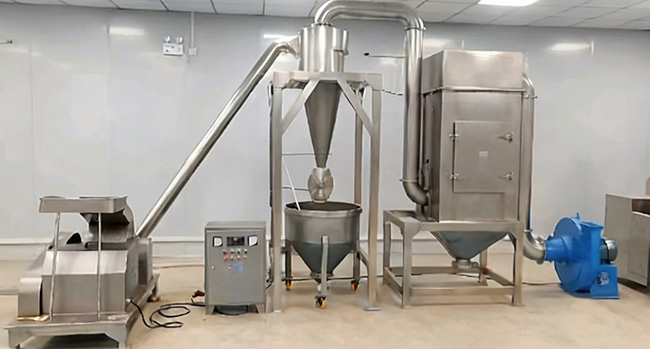
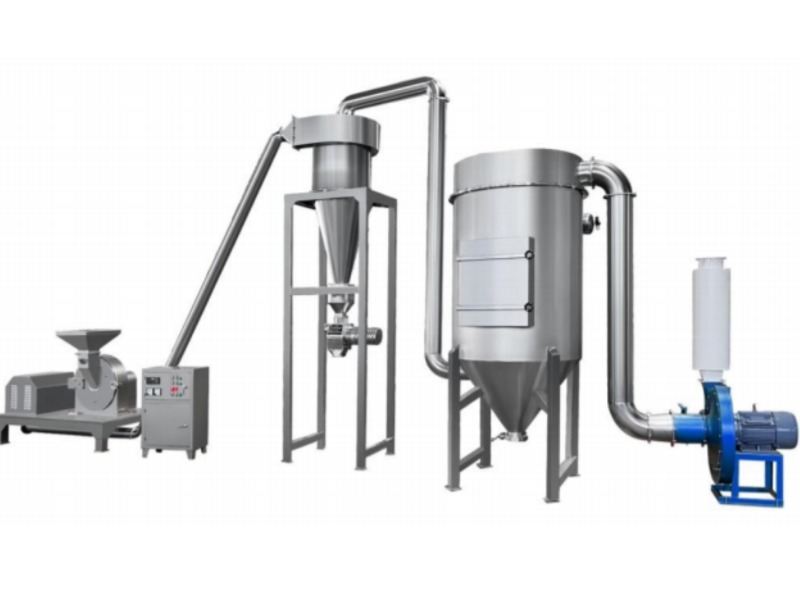
The SLU-20 is based on a relatively straightforward grinding principle: hammer grinding → screen separation → powder collection. Its simplicity is one of its advantages. There is no need for a separate air classifier, large dust-collection system, or complex continuous conveying system for this small standalone configuration.
The operator can feed the white sugar into the grinder, while the finished powder is collected directly in a cloth bag. This makes the machine particularly suitable when the customer has:
• Small production requirements
• Limited workshop space
• A limited equipment budget
• Relatively straightforward powder specifications
• No need for a tightly controlled ultra-fine product
IV. Is the SLU-20 Suitable for Every Type of Powdered Sugar
No. This is perhaps the most important conclusion from the test. The fact that the SLU-20 can produce approximately 80-150 mesh sugar powder does not mean it should be selected for every powdered-sugar application. The right machine depends on what the customer actually means by “powdered sugar.”
For example, a small bakery may only need sugar powder for:
• Sprinkling on pastries
• Cake decoration
• Simple baking applications
• General food preparation
A screen-controlled grinder may be adequate for these requirements.
But another customer may require:
• Very fine sugar powder
• Narrow particle-size distribution
• High continuous production
• Strict micron-level specifications
• Long continuous operating periods
• Controlled powder temperature
• Special anti-caking requirements
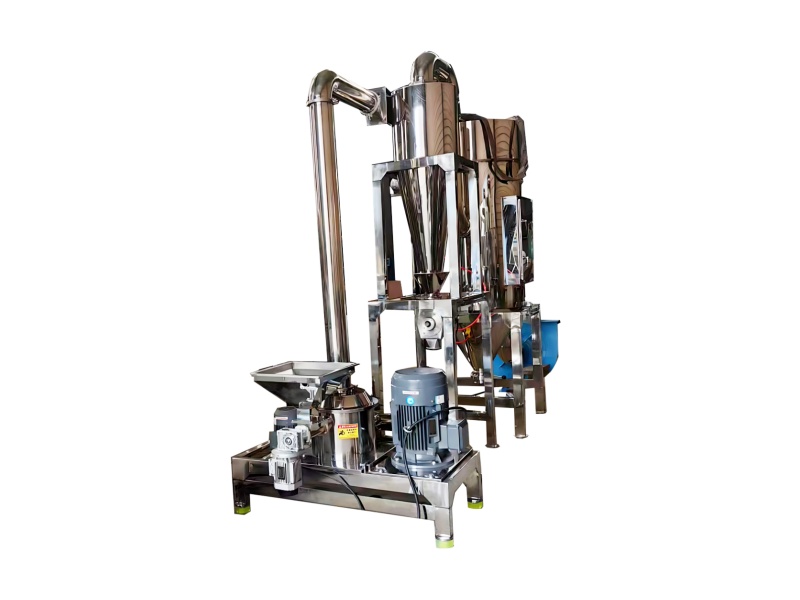
These are different production requirements. For more sugar grinding solutions, you can read Sugar Grinding Machine Options For Powder Making.
V. Conclusion
This white sugar grinding test provides a useful example of why the most expensive or most technically advanced grinder is not automatically the right choice. The SLU-20 is a small standalone universal powder grinder using a hammer-type blade and interchangeable screen. For a customer who needs a moderate-fineness sugar powder and has no strict requirement for an ultra-fine, narrow particle-size distribution, this may be enough. Also, this unit has the advantages of low equipment investment, small footprint and simple operation.
The key lesson is therefore simple: Do not choose a sugar grinder by machine size alone. Start with the required powder specification, production volume and collection method, then select the simplest grinding technology that can reliably meet those requirements. For a small and cost-sensitive sugar powder application, sometimes a simple screen-controlled grinder is exactly what is needed.