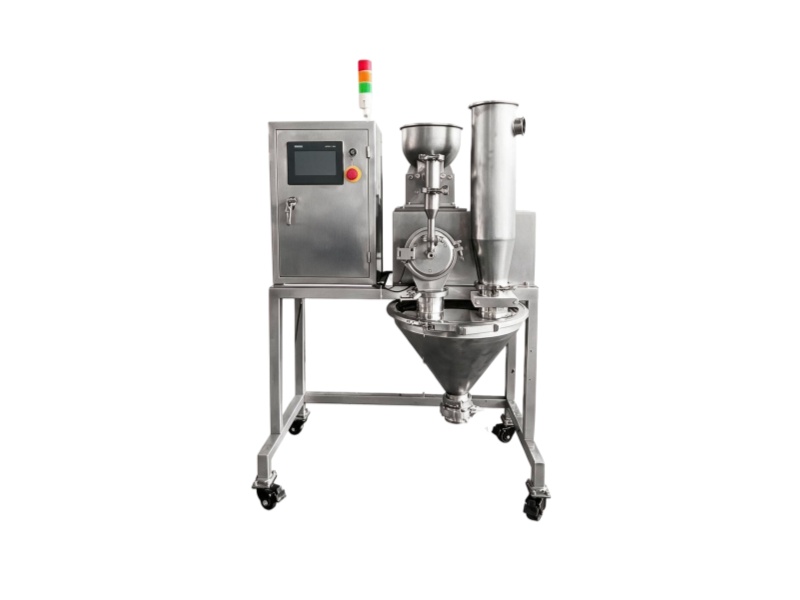



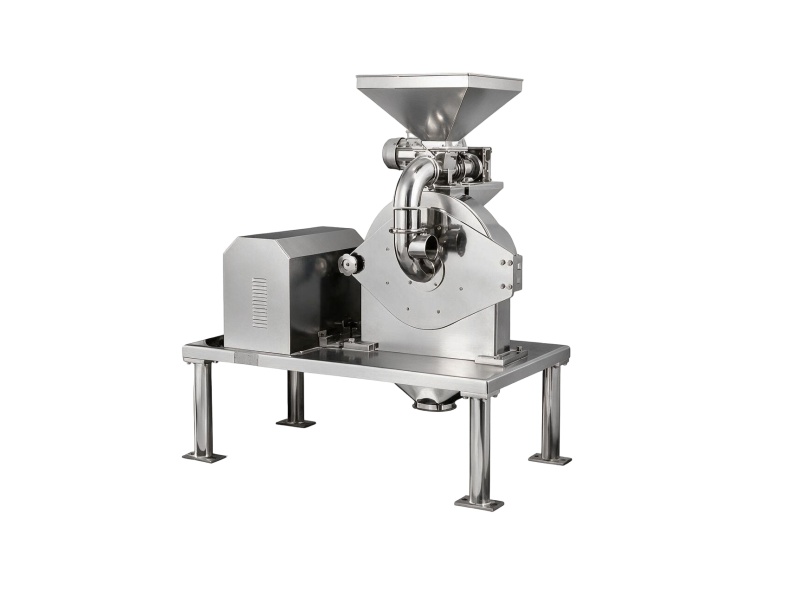
Industrial powder grinder type: pin mill grinder
Grinding method: impact grinding by the friction between the pins in single-drive or dual drive pin disc system
Powder grinder series: SLZM series
Grinding speed: 8000 rpm to 16,000 rpm
Output size: 20-500 mesh
Main application: food, pharmaceutical and chemical industries
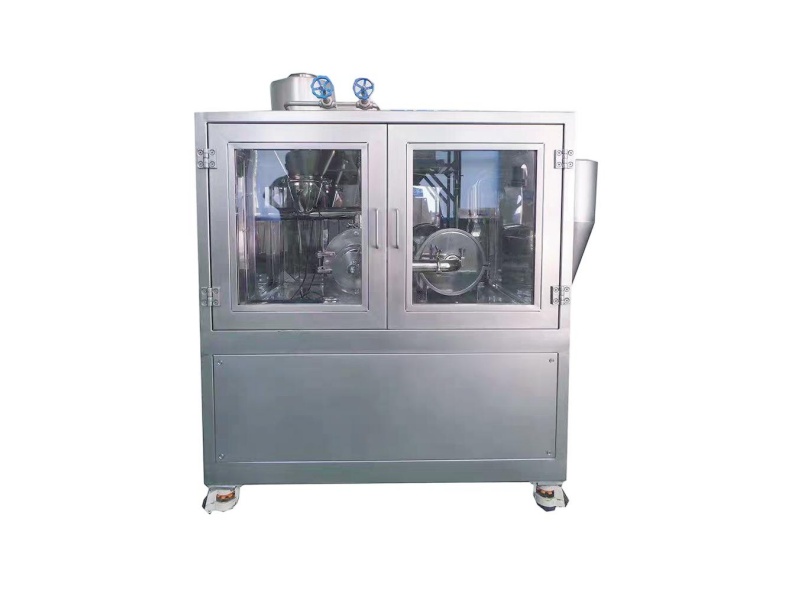
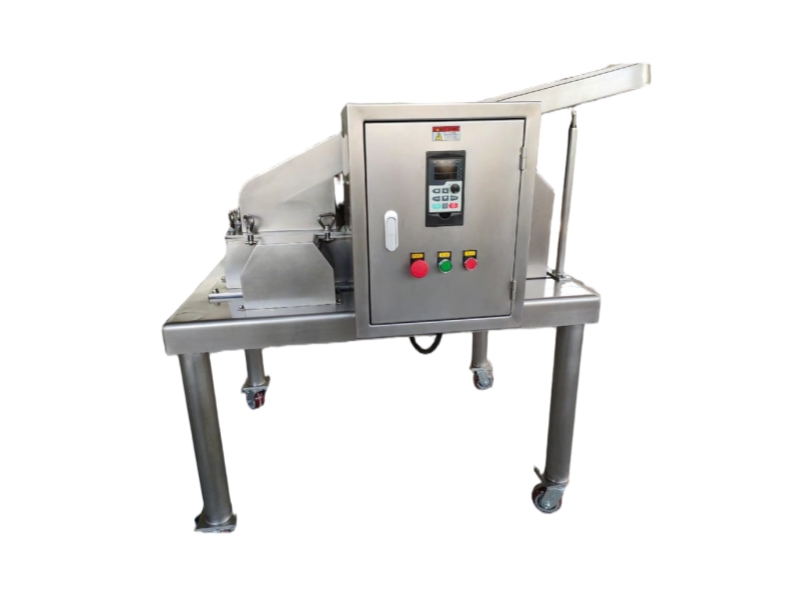
A pin mill grinder (also known as a centrifugal impact mill) is a high-speed impact milling device that uses opposing discs fitted with concentric rows of hardened steel pins to reduce dry bulk materials to medium-to-ultra-fine fineness. Unlike hammer mills and other screen-based grinders, the pin mill achieves size reduction purely through impact and shearing forces generated by hundreds of pins striking particles thousands of times as they travel from the center to the periphery of the grinding chamber. They are widely used across food, chemical, and pharmaceutical industries, offering a compact, cost-effective solution for medium-to-ultra-fine size reduction.
A pin mill grinder operates on a straightforward yet highly efficient principle:
1)Material Feed: Dry bulk material is screw-fed to the mill chamber at a certain feeding speed.
2)Centrifugal Acceleration: The high-speed rotation of the runner disc (rotor) creates strong centrifugal force, accelerating particles outward toward the disc edges.
3)Pin Impact Zone: Particles pass through alternating rows of pins on the rotating and stationary discs, experiencing thousands of high-energy impacts that break them down . The grinding speed of the pins can reach 8,000 to 16,000 rpm, basically the highest speed compared with the speed of other type grinders which are mostly between 1,000 rpm to 6,000 rpm.
4)Particle Reduction: Materials are reduced through high speed impact, shearing, and friction as they travel from the center to the periphery. By controlling the pin speed through inverter, you can control the output powder size in a certain range.
5)Discharge: Ground particles exit through the outlet port, with fineness controlled primarily by rotor speed rather than screen size .
Pin mills are customizable to suit specific material characteristics and production requirements.
Usually the housing disc is designed to be the active rotating pin disc, the door disc can be designed as fixed disc or active pin disc based on the specific production need. You can see the brief comparison shown in the table below:
Configuration | Peripheral Speed | Output Capability | Ideal Materials |
Single-Drive (one rotating disc) | Up to 150 m/s | 20-500 mesh | General food, chemical, pharmaceutical, etc |
Dual-Drive (counter-rotating discs) | Up to 250 m/s | 40-500 mesh | Grains, herbs, spices, etc |
The number and arrangement of pins significantly impact grinding efficiency and particle size distribution:
Application | Recommended Pin Configuration | Benefit |
General grinding | Standard pin rows | Balanced particle distribution |
Heat-sensitive materials | Narrow pin rows, large chamber clearance | Prevents material buildup, reduce heat generation |
Fine grinding | Dense pin rows | Maximum impact surface |
The right pin configuration minimizes material buildup, reduces wash down requirements, and prevents heat-related damage to sensitive particles .
Pin mills operate at extremely high speeds, generating significant heat through friction and impact. The intergrated cooling system can effectively handle the over-heating issues, which you can kindly see the three cooling systems listed below:
Cooling Type | Temperature Range | Best For |
Water Jacket Cooling | 0-20°C(adjustable) | Moderate heat sensitivity |
Cold Air Injection | -5°C to 10°C(adjustable) | Heat-sensitive materials |
Liquid Nitrogen Injection | -196°C | Extremely heat-sensitive, high-oil content materials |
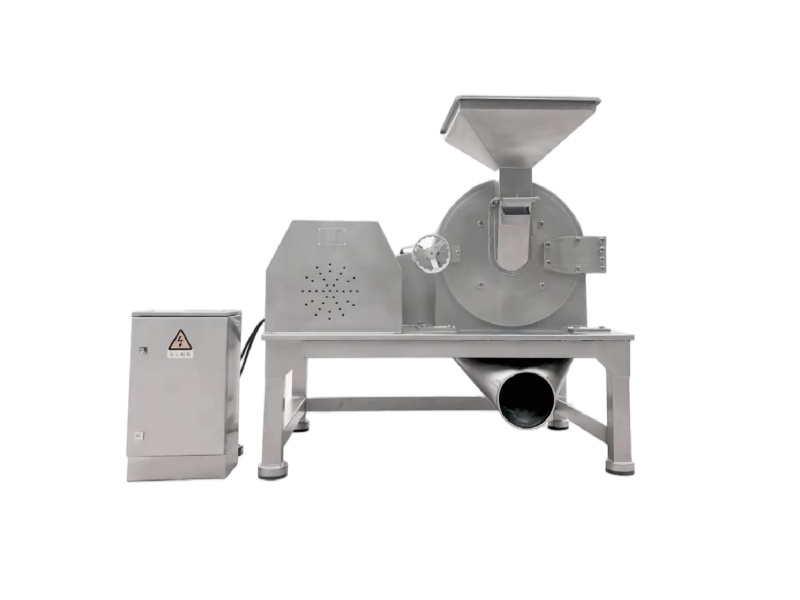
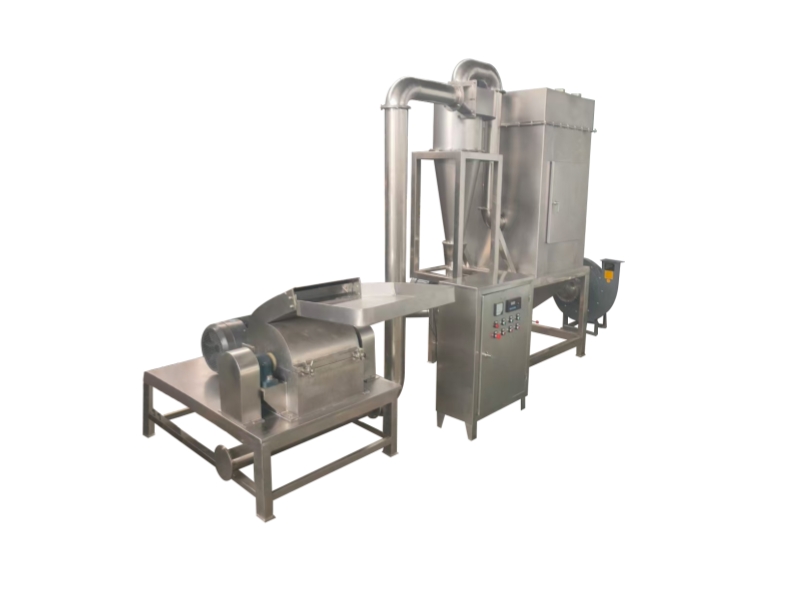
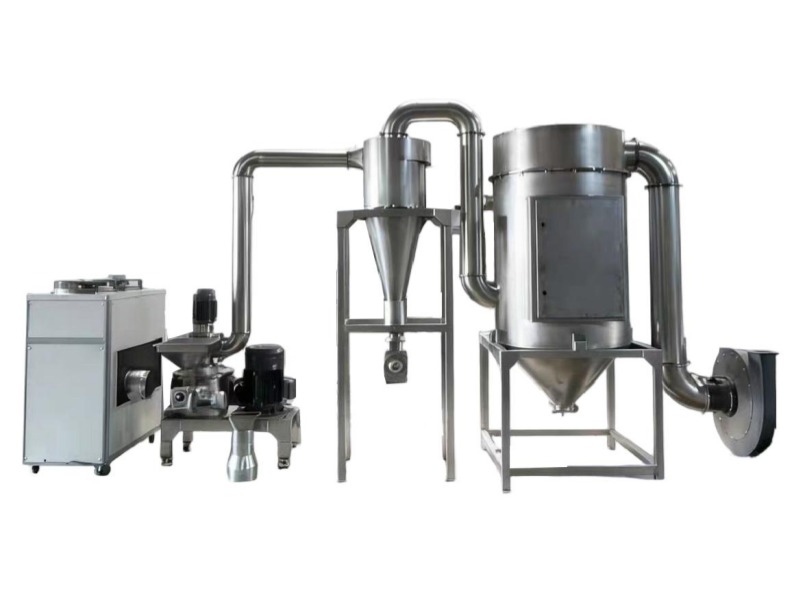
Beyond standard configurations, pin mills can be customized with alternative outlet designs, storage hopper, dust collector and cyclone, etc:
Integrated conical storage hopper: functions as both outlet and temporary storage, rather than a simple discharge port
Dust collector: Filters out dust generated during the grinding process, resulting in cleaner production.
Cyclone: Discharge is more convenient, and it allows for the simultaneous collection of the finished product and ultra fine powder dust.
We offer a range of machine models for customers to choose from, tailored to different production capacity needs. You can read the following technical information for reference.
Model | House Disc Speed | Door Disc Speed | Production Capacity | Output Size |
SLZM-100 | 16,000 rpm | / | About 5-30kg/h | 20-500 mesh |
SLZM-150 | 16,000 rpm | / | About 100-200kg/h | 20-500 mesh |
SLZM-350 | 8,000 rpm | 4,000 rpm | About 200-400kg/h | 20-500 mesh |
SLZM-400 | 8,000 rpm | 4,000 rpm | About 300-600kg/h | 20-500 mesh |
Pin mills are often compared with the disc mill and hammer mill. For you to clearly know the differences, we concluded the major differences for you in below tables.
Disc mills (sometimes called attrition mills) can be considered a lower-cost alternative to pin mills. However, key design differences significantly impact performance:
Feature | Pin Mill | Disc Mill |
Grinding Elements | High-density pin rows, hundreds of pins | Single disc, limited grinding surface |
Drive Configuration | Single-drive or dual drive | Single-drive |
Grinding Speed | 8,000 to 16,000 rpm | 1,000-6,000 rpm |
Pin Density Dense | Dense, concentric pin | Less dense, broader spacing |
Particle Size Control | Speed control by inverter | By sieving screen |
Output Size | 20-500 mesh | 10-120 mesh |
Verdict: Disc mills are a lower-cost alternative for less demanding applications. Where tight particle size control and high-speed processing are required, pin mills provide superior results.
Pin mills and hammer mills are often considered for similar applications, but they operate differently:
Feature | Pin Mill | Hammer Mill |
Grinding Mechanism | Impact between pins(impact + shear) | Hammer impact, chamber wall collision |
Grinding Speed | 8,000 to 16,000 rpm | 1,500-6,000 RPM |
Particle Size Control | No screen required | Screen-based size control |
Wear Sensitivity | Lower wear (no screen contact) | Higher wear (hammers, screens, chamber walls) |
Particle Size Distribution | Relatively narrow | Often wider distribution |
Applications | Medium to fine, ultra fine grinding | Coarse to fine grinding |
Key Difference: Pin mills are better suited for fine grinding of friable materials where narrow particle size distribution is important. Hammer mills excel at coarser grinding and applications where some size variation is acceptable .
The pin mill can be applied to many industries for powder grinding use, you can kindly check the examples listed in food, pharmaceutical and chemical industries.
Pin mills are widely used for grinding food ingredients where consistent particle size and minimal heat generation are critical:
• Spices & Seasonings: Pepper, cinnamon, turmeric, cumin, chili, coriander, clove
• Sugar & Sweeteners: Granulated sugar to icing sugar, glucose
• Grains & Beans: Rice, corn, wheat, green beans, soybeans
• Cocoa & Coffee: Cocoa beans, coffee beans, cocoa press cake
• Salt & Seasoning Blends: Sodium chloride, spice blends
• Bakery Ingredients: Flour, starch, powdered ingredients
Pin mills are ideal for pharmaceutical applications requiring sanitary design and precise particle size control:
• Herbal Medicines: Ginseng, astragalus, licorice, Chinese herbs
• Active Pharmaceutical Ingredients (APIs): Various pharmaceutical compounds
• Excipients: Lactose, microcrystalline cellulose, starches
• GMP-Compliant Production: Models available in GMP standard configurations with full washable construction
Pin mills excel at grinding industrial chemicals and minerals:
• Chemicals & Compounds: Resins, polymers, sodium bicarbonate, calcium carbonate
• Minerals: Gypsum, trona, hydrated lime
• Pesticides & Herbicides: Agricultural chemicals
• Specialty Chemicals: Fine chemicals, pigments
The pin mill grinder is the preferred solution for medium and fine and ultra fine grinding of dry, friable materials where narrow particle size distribution and high throughput are essential. Its high-speed design (over 10,000 RPM) delivers exceptional fineness with adjustable control via frequency inverter. Custom cooling options (water jacket, cold air, or liquid nitrogen) effectively address heat generation, which is the primary limitation of this otherwise highly efficient milling technology.
Need help selecting the right pin mill grinder for your specific material? Contact us with your material type, target fineness, and capacity requirements for a custom recommendation.
Provide you with the industry`s best solutions

Offer the pre-sales and after-sales technical support
Back to Top
We are devoted to the R&D, production and selling of the grinder machine, mixer machine and filling machine for the food factories. They work for the dry and wet food.
0086 150-5215-2936

 English
 French