


 English
 French
Self-Suction Feeding Design for Dry Powder Grinder - No Conveyor Needed
By:Salinovate Team Jul 21,2026
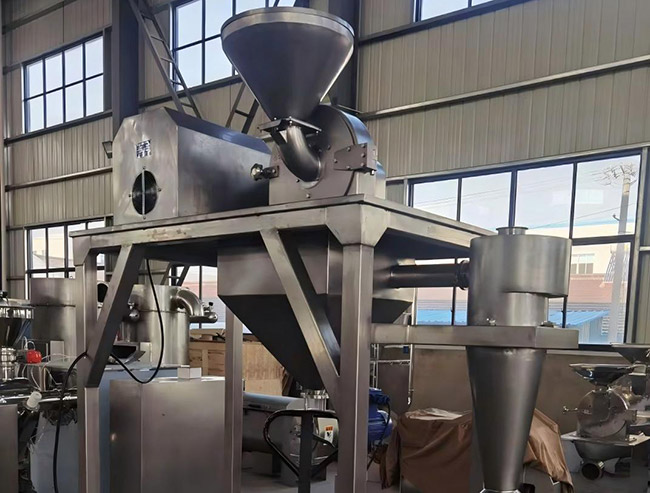
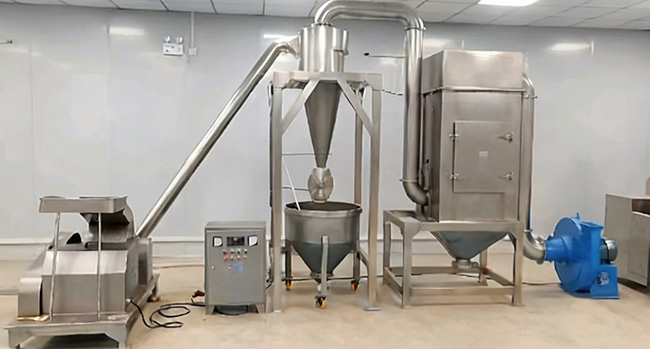
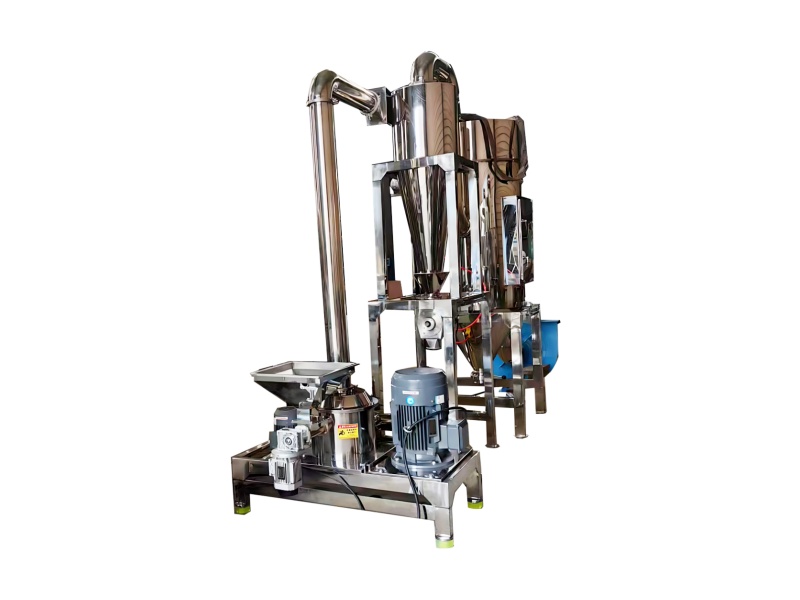
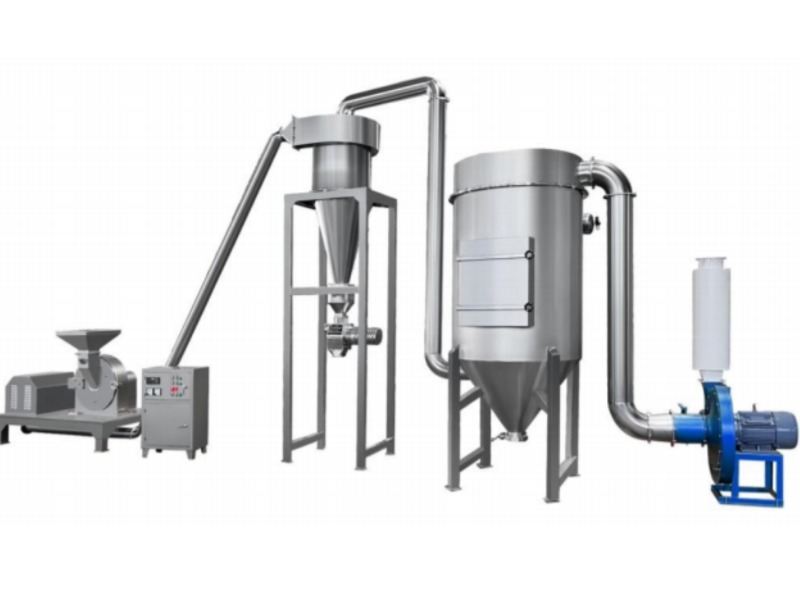
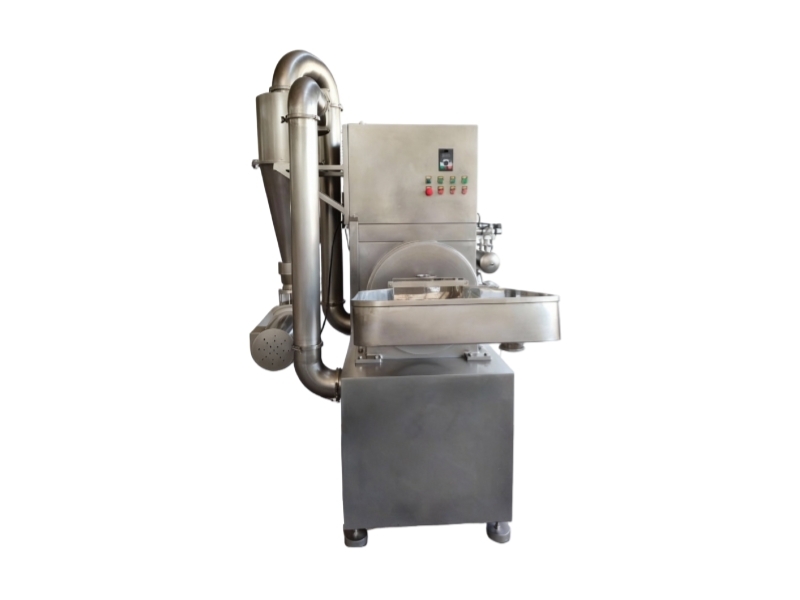
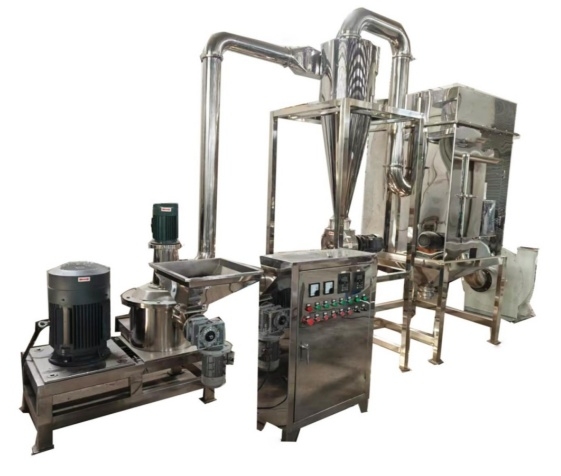
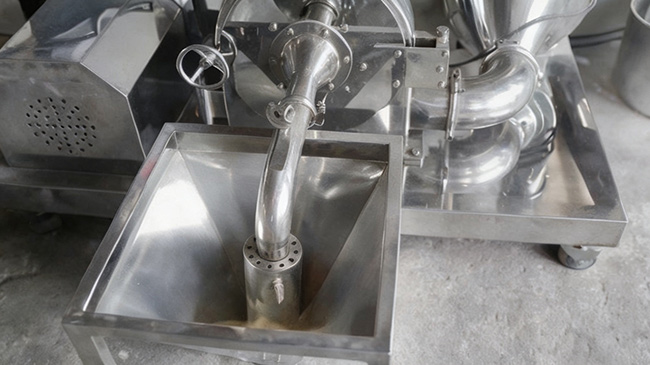
Salinovate team would like to introduce our new self-suction type feeding system for dry powder grinder machines. Such design is for efficiently conveying free-flowing granular materials and coarse powders to the grinder at a low cost. A specially designed feed rod with porous structure works with the rotary airlock valve to generate negative pressure, pulling materials directly into the grinding chamber. No additional screw feeder or vacuum conveyor needed.

I. The Limitations of Traditional Feeding Methods
In dry material grinding operations, the feeding method has always been a critical factor influencing production efficiency and equipment investment. There are two primary traditional feeding approaches:
Feeding Method | Working Principle | Limitations |
Gravity feeding | Materials fall into the grinding chamber from the hopper under its own weight or is pushed in by a feed screw. | Feeding speed is affected by material flow ability. |
Assisted conveying feeding | An additional screw or vacuum feeder or belt conveyor is used to transport material from the storage bin to the grinder's hopper. | Require additional investment in conveying equipment, increasing costs and the required footprint. |
These conventional approaches often prove either inefficient or excessively capital-intensive for the simplest yet most common application: processing free-flowing granular materials such as rice, millet, white sugar, and coarse herbal powders.
II. The Innovation: Self-Suction Feeding System
Facing by the limitations of the traditional conveying methods and the growing customer demands for low cost feeding method, our team developed the self-suction feeding system. This type new system offers the customers a cleaner, more efficient, and more cost-effective solution.
2.1 How It Works
The system features a specially designed porous feed rod working in tandem with the blower:
1. Negative Pressure Generation: The blower creates a suction force within the feed line during standard operation.
2. Material Induction: This negative pressure draws material through the porous feed rod.
3. Direct Chamber Entry: Material enters the grinding chamber immediately, no intermediate hopper required.
4. Continuous Operation: Feeding and pulverizing happen simultaneously, enabling true continuous production.
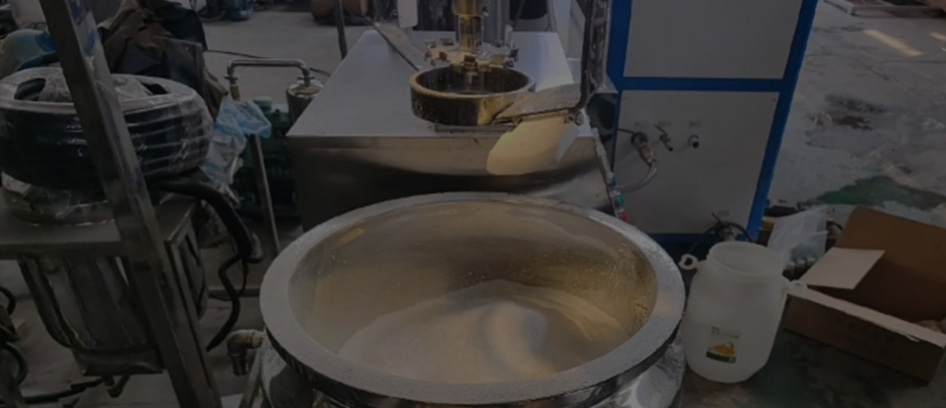
For you clearly see the work, following is the working video of the powder grinder with such new feeding design:
2.2 Technical Highlights
Feature | Benefit |
No additional power source | Utilize the existing blower’s negative pressure, basically zero extra energy consumption. |
No external conveying equipment | Eliminate need for screw feeders or vacuum feeders or belt conveyor. |
Good feed efficiency | High-speed suction ensures continuous, stable feeding for free-flowing materials. |
Reduced capital investment | Simplify equipment configuration, lowers initial expenditure. |
III. Comparative Advantage Analysis
This feed design is specifically tailored for granular or powdery materials with small particle sizes and good flow ability, offering improved feeding efficiency while reducing investment costs. It is unsuitable for fibrous or large-sized raw materials or materials with poor flow ability.
Comparison with Traditional Feeding Methods:
Comparison Criteria | Traditional Hopper(With/Without Screw) | New Self-Suction Feeding |
Additional conveying equipment required? | Depend on the customer need | No |
Power source for feeding | Gravity or screw motor | Negative pressure from the blower |
Equipment investment cost | Low; medium to high for the need of the additional conveyor | Low |
Feeding efficiency | Average; high when there is an extra feeder | High |
Suitable materials | Wide range | Free-flowing granules/coarse powder |
IV. Key Customer Benefits
Benefit | Impact |
Lower machine cost | No need of purchasing extra screw feeder/vacuum feeder/belt conveyor. |
Simplified line layout | Fewer auxiliary devices, cleaner workshop footprint. |
Easier operation | Single-point feed control, no extra conveyor to monitor. |
Lower maintenance costs | Fewer components mean less wear and fewer spare parts. |
V. Conclusion
The introduction of the innovative self-suction type feed design marks a significant advancement in the feeding mechanism of dry powder grinder machines. By leveraging the negative pressure generated by the blower to draw in materials, the equipment effectively "self-feeds," enabling automated material intake for customers at a low cost. This design has already been implemented across our series of dry material powder grinders. For any interest of such design or any enquiry for the powder grinder, please feel free to contact Salinovate team.