


 English
 French
White Sugar Grinding Test by SLA-15 Air Classifier Mill for 200-300 Mesh Sugar Powder
By:Salinovate Team Oct 13,2026
Fine powdered sugar production requires more than simply grinding sugar crystals into smaller particles. When the target fineness reaches 200-300 mesh, both the grinding process and particle classification become important. To evaluate its suitability for this application, Salinovate team conducted a white sugar grinding test using the SLA-15 air classifier mill.
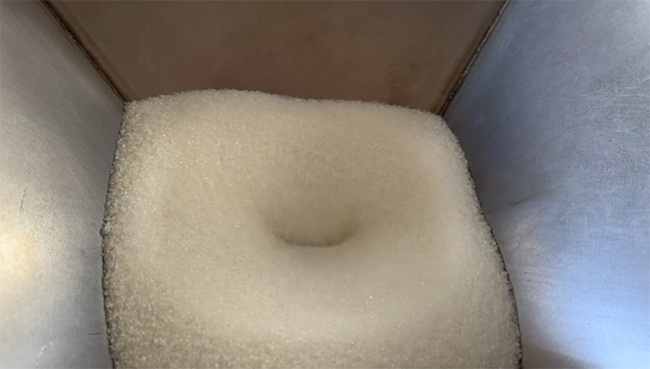
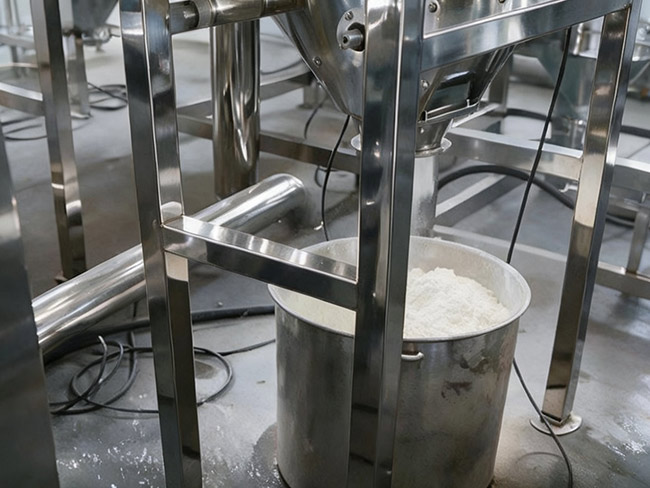
During the test, the machine processed purchased white granulated sugar and produced fine powder within the customer’s target range of 200-300 mesh. Some of the powder could reach approximately 500 mesh. Based on the model and the preliminary application estimate, the expected capacity is around 150 kg/h, subject to confirmation under the customer’s actual operating conditions.
I. White Sugar Grinding Test Overview
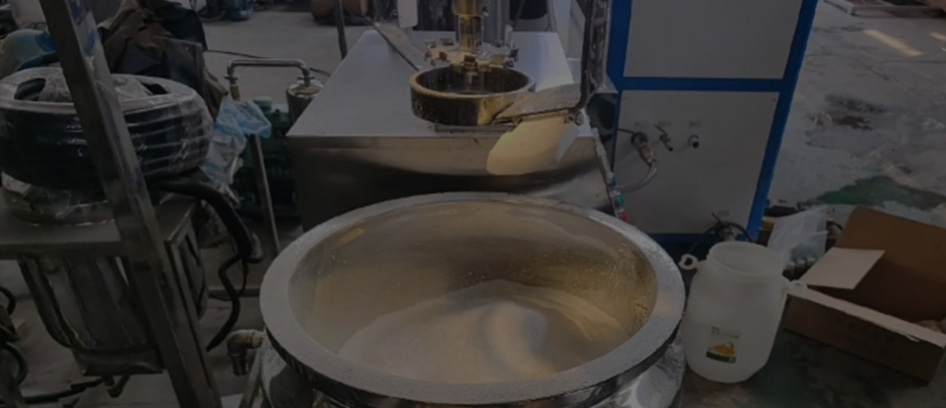
The SLA-15 test focused on three practical questions: whether the machine could achieve 200-300 mesh sugar powder, whether finer particles could be obtained, and what production capacity might be expected. The testing video and testing results are shown below to you for reference.
Testing Video:
Test Summary:
Item Name | Test Details |
Material | White granulated sugar |
Test machine | SLA-15 air classifier mill |
Grinding motor | 7.5 kw |
Classifier motor | 1.5 kw |
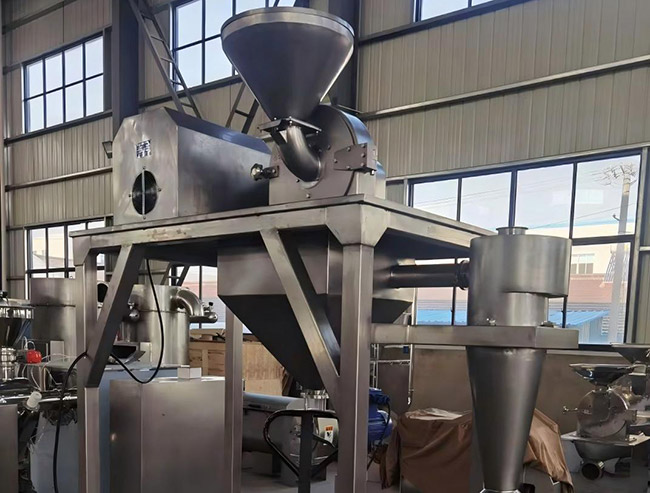
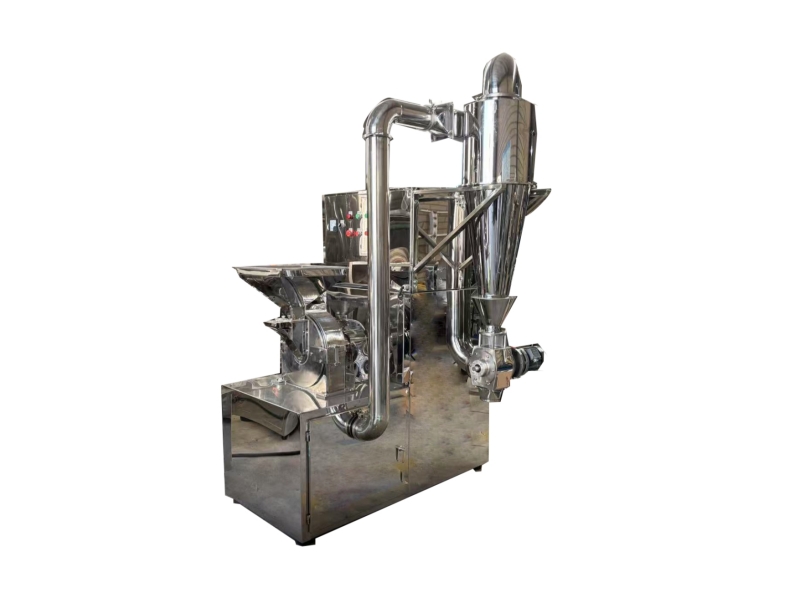
Auxiliary equipment | Blower, cyclone separator and dust collection system |
Customer’s target fineness | 200-300 mesh |
Observed grinding result | All pass 200 mesh and some even pass 500 mesh(18Hz grade speed) |
Estimated capacity | Around 150 kg/h |
The test indicates that the SLA-15 is a promising option for white sugar applications requiring finer powder than conventional screen-controlled grinding can typically provide. The estimated capacity should be treated as a reference value, the actual production rate may have a difference based on the sugar feed rate, sugar state, operation familiarity, etc.
II. How the SLA-15 Air Classification System Works
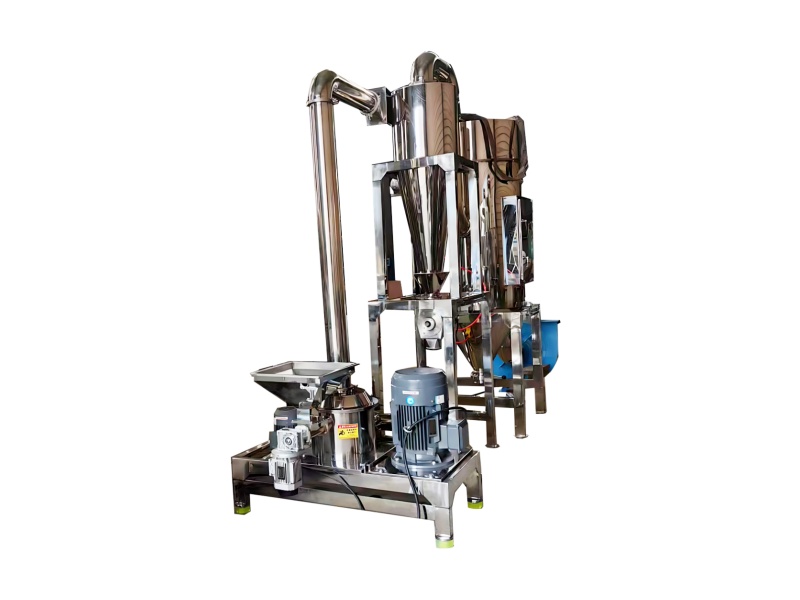
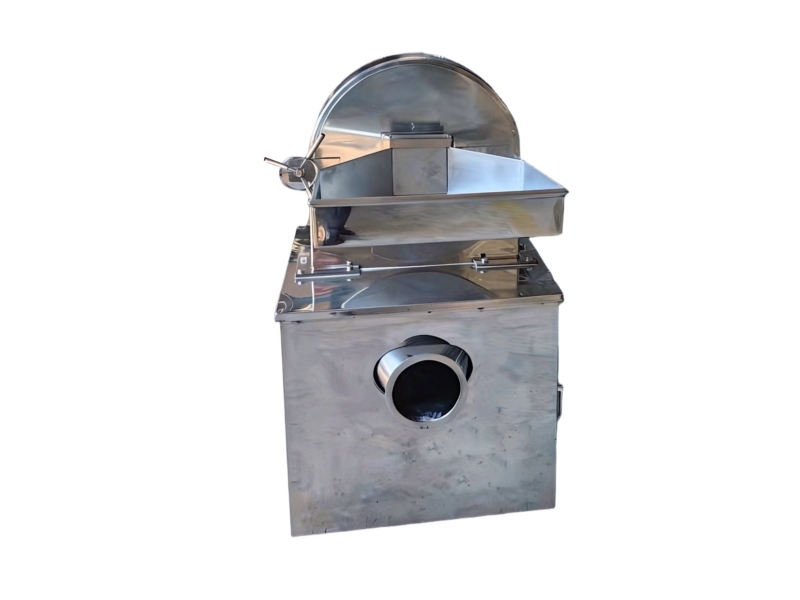
The SLA-15 combines mechanical impact grinding with air classification, see the inside structure in below picture. This arrangement helps control the fineness of the finished powder without relying on a conventional grinding screen. During operation, the grinding components reduce the size of the sugar crystals. The air classification system then separates particles according to their aerodynamic behavior. Particles that do not meet the required classification conditions can return for further grinding, while finer particles proceed toward discharge and collection.
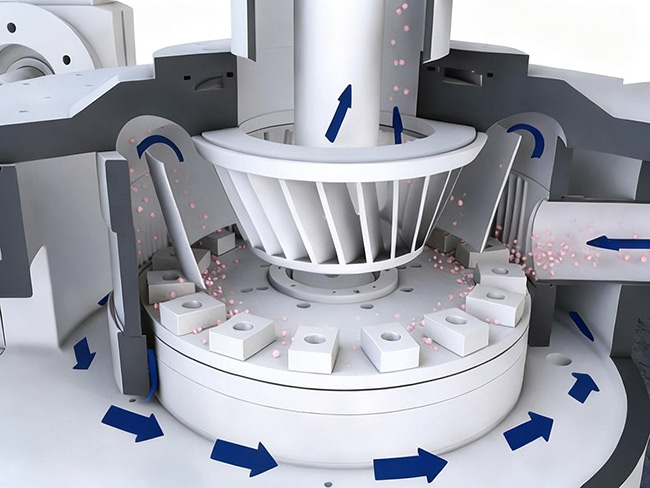
This process is particularly relevant when the target powder size is 200-300 mesh or finer. Compared with a screen-controlled grinder, an air classifier mill offers another way to adjust the finished particle size and manage the proportion of coarse particles. The classification settings, material feed rate and operating conditions all influence the final result. In this test, the air classifier speed/grade speed was set at 18Hz and the allowable maximum speed was close to 50Hz.
Increasing the fineness requirement also reduces throughput because more material need to remain in the grinding and classification process before it reaches the required size. For white sugar grinding, the air classifier mill can even produce 500 mesh to 1000 mesh fine size powdered sugar but the capacity will be much lower than 150kg/h. For this reason, sugar powder grinder machine selection should consider both the target particle size and the required hourly output. A machine that can produce very fine powder in a sample test is not automatically able to maintain the same capacity at every fineness setting.
III. Grinding System Configuration and Powder Collection
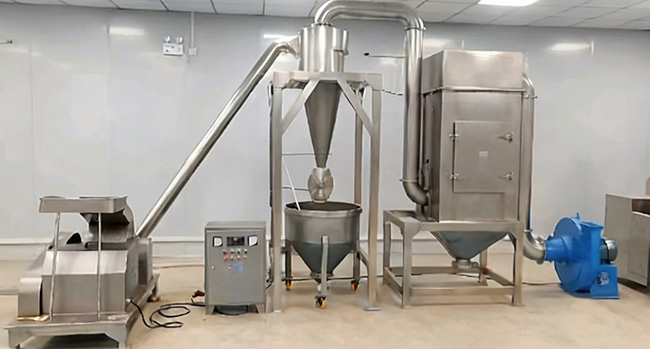
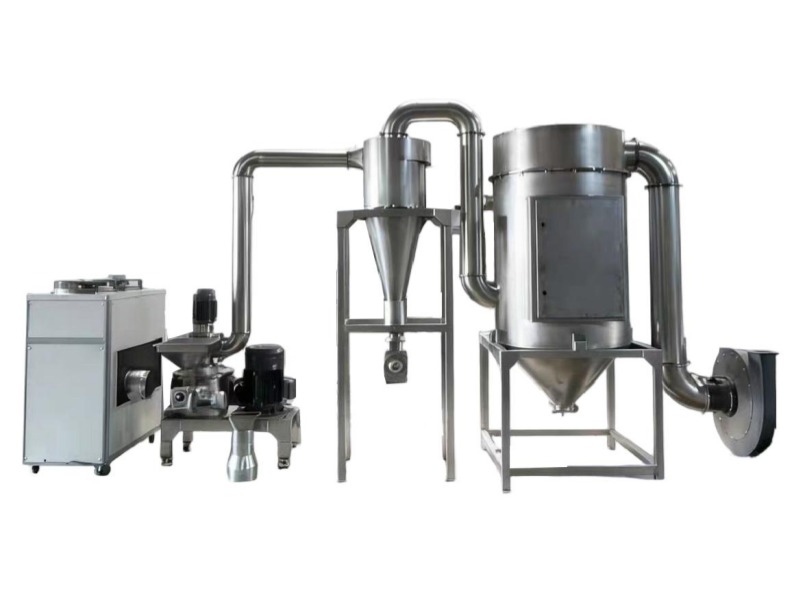
The SLA-15 air classifier mill is not an isolated grinding unit, the configuration included a blower, cyclone separator and dust collection system. Each component has a specific role in handling the fine sugar powder:
• Air classifier and grinding: Perform mechanical grinding and particle classification.
• Blower: Provide the airflow required by the system.
• Cyclone separator: Separate and collect a substantial portion of the conveyed powder.
• Dust collection system: Capture finer airborne particles carried beyond the cyclone.
This integrated configuration supports powder conveying and collection during operation. The actual collection efficiency and the proportion of material recovered at each collection point depend on the system design, airflow, powder characteristics and operating conditions. Because fine sugar powder can become airborne during processing, dust management should be considered when designing the complete system. Buyers should assess the working environment, collection requirements, cleaning procedures and applicable plant safety standards before production begins.
IV. Conclusion: Fine Sugar Powder Requires Both Grinding and Classification
The SLA-15 air classifier mill white sugar grinding test shows that the machine can produce 200-300 mesh fine sugar powder at an estimated capacity of 150kg/h. If you are planning to produce 200-300 mesh or finer powdered sugar, share your target particle size, required capacity and collection requirements with Salinovate team. A material test can help evaluate the most appropriate grinding configuration for your application.