


 English
 French
Air Classifier Mill with Hinged Top Cover for Easier Cleaning & Maintenance
By:Salinovate Team Aug 07,2026
When selecting an air classifier mill, buyers naturally pay attention to particle size, capacity, classifier speed, grinding performance and energy consumption. These are important specifications. But there is another question that is often overlooked during the purchasing stage: What happens when the grinding components need to be inspected, cleaned or replaced? Therefore, Salinovate team developed a new mill design with an upper classifier and hinged top cover. The purpose of this development is to make the internal components easier to access when maintenance, cleaning or component replacement.

I. Why Cleaning & Maintenance Accessibility Matter in Powder Processing
After production is completed, powder residues may remain inside the grinding chamber, around the grinding components or on product-contact surfaces. Depending on the material and the factory’s hygiene procedures, operators may need to open the machine and clean the relevant areas before the next production run. This becomes particularly important when:
• Different products are processed on the same machine
• Different colors, flavors or ingredients are produced
• Cross-contamination needs to be minimized
• The powder is fine and easily deposited inside the chamber
• The factory has strict cleaning procedures
• The equipment operates every day
At the same time, the grinding blades and grinding disc are wear components. Depending on the material, production frequency and operating conditions, their replacement cycle may range from approximately 6 months to 2 years. Periodically opening the mill chamber to inspect the condition of these parts and replacing them as necessary is crucial for ensuring stable, long-term powder production and preventing metal contamination caused by excessive wear.
II. Essential Cleaning and Maintenance Procedures
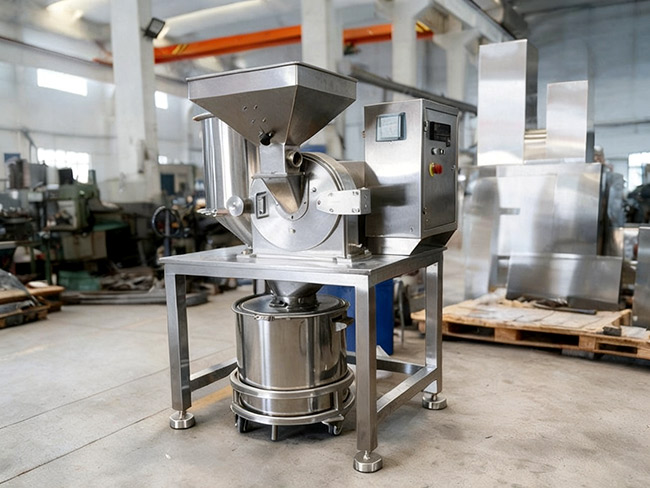
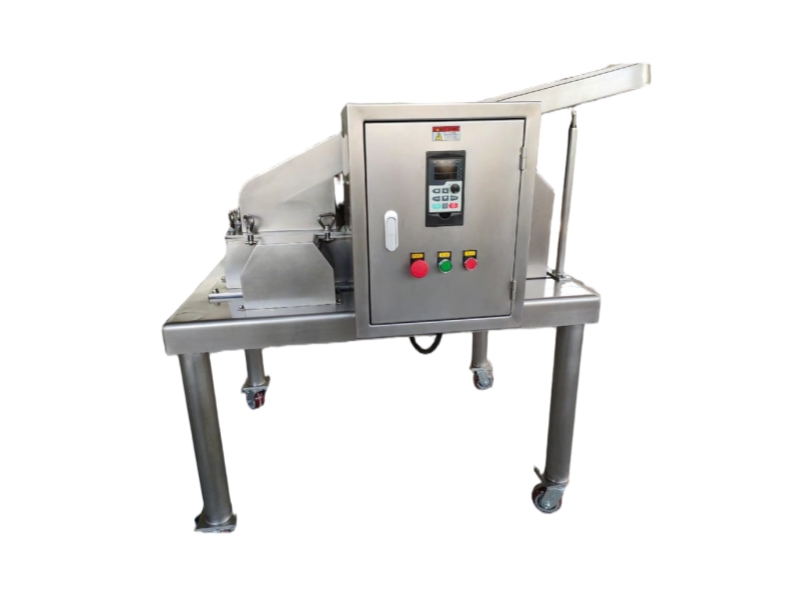
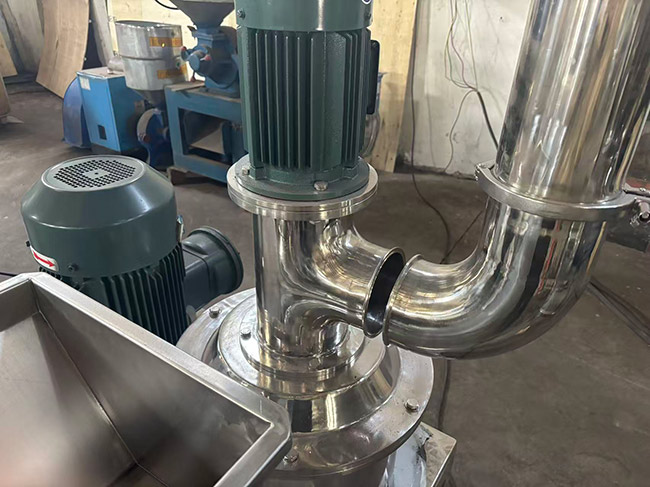
The basic step to do the cleaning and maintenance is to open the cover of the main grinding part, then you can see inside the mill chamber. The conventional design is fixed type cover by screws as shown in below picture. If the cover needs to be completely removed for cleaning or maintenance, operators may have to:
1. Stop the machine
2. Disconnect and secure the equipment
3. Remove the fixing components
4. Lift or move the heavy cover
5. Put the cover somewhere safely
6. Perform cleaning or maintenance
7. Reinstall the cover
8. Reassemble and secure the machine
Remark: Usually, the machine cover is a bit heavy. Manual handling is inconvenient and physically demanding. Some factories may use an overhead crane or other lifting equipment to remove the cover.
III. Advantages of New Hinged Top Cover Design
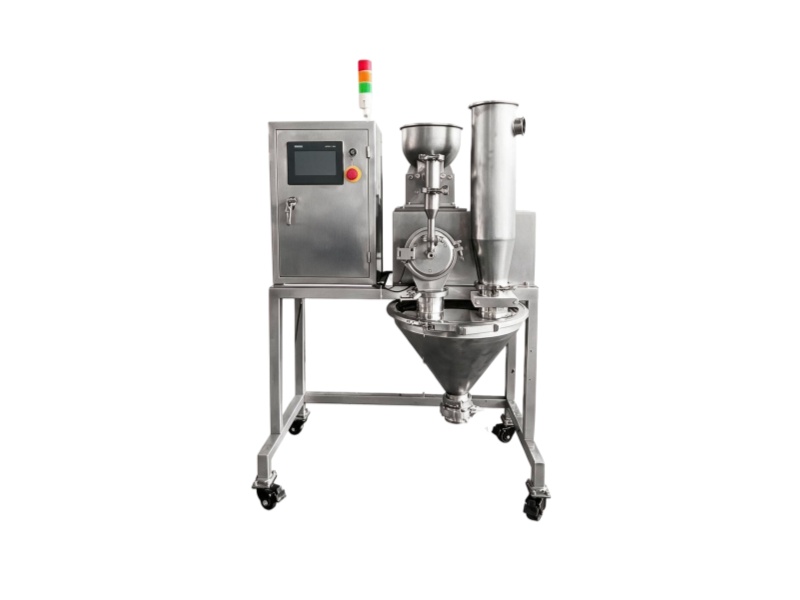
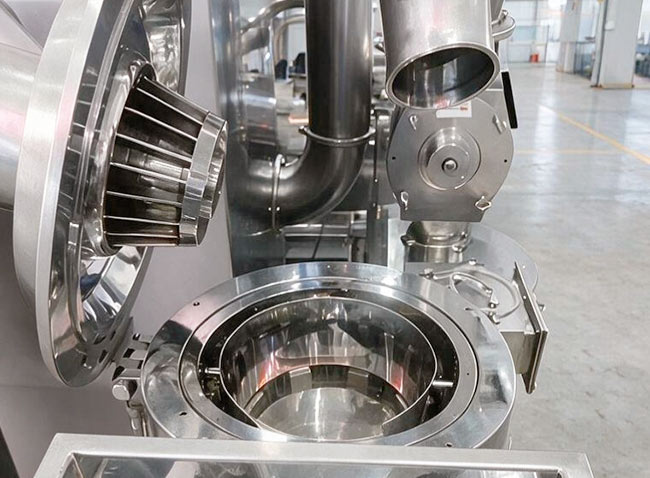
If operators need to open the machine frequently, why should opening the machine be unnecessarily difficult? This led to our new design: upper classifier + pneumatically assisted hinged top cover.
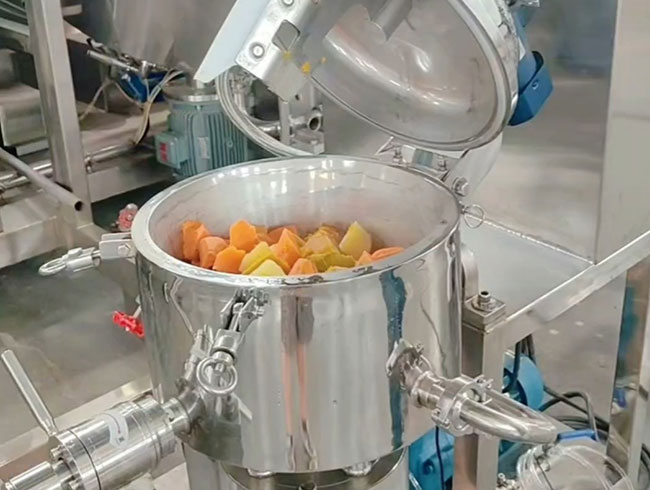
Instead of requiring the heavy cover to be completely removed and manually moved away from the machine, the new structure allows the upper cover to be opened upward with pneumatic assistance. The objective is simple: Open the machine more conveniently without repeatedly lifting and relocating a heavy cover. This provides easier access to the internal grinding area for:
• Daily cleaning
• Routine inspection
• Blade replacement
• Grinding-disc replacement
• Component inspection
• Maintenance work
IV. Final Thoughts
Our new air classifier mill design focuses on the more practical value for the customers’ needs in cleaning and maintenance. The combination of an upper classifier and hinged top cover provides more convenient access to the grinding and internal components inside the mill chamber. For food or pharmaceutical plants with high hygiene standards, we recommend this newly designed air classifier mill. If you are interested, please feel free to contact the Salinovate team.