


 English
 French
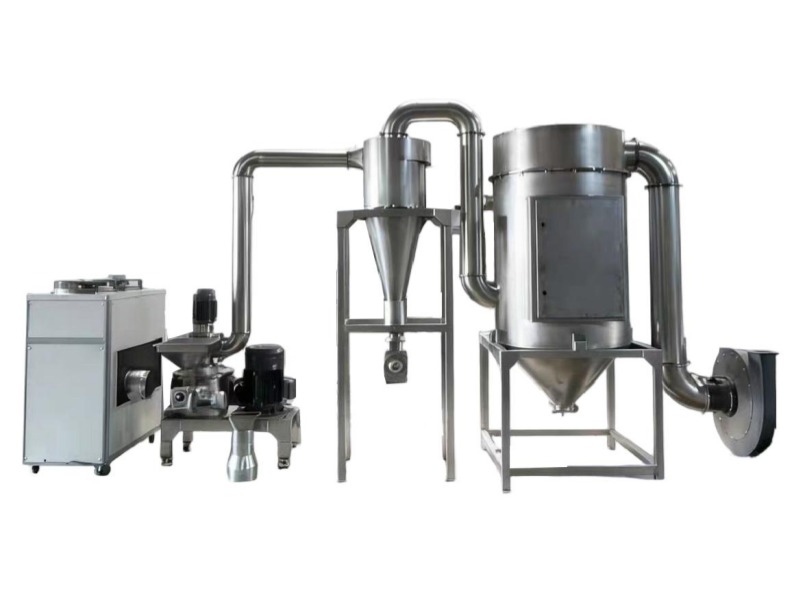
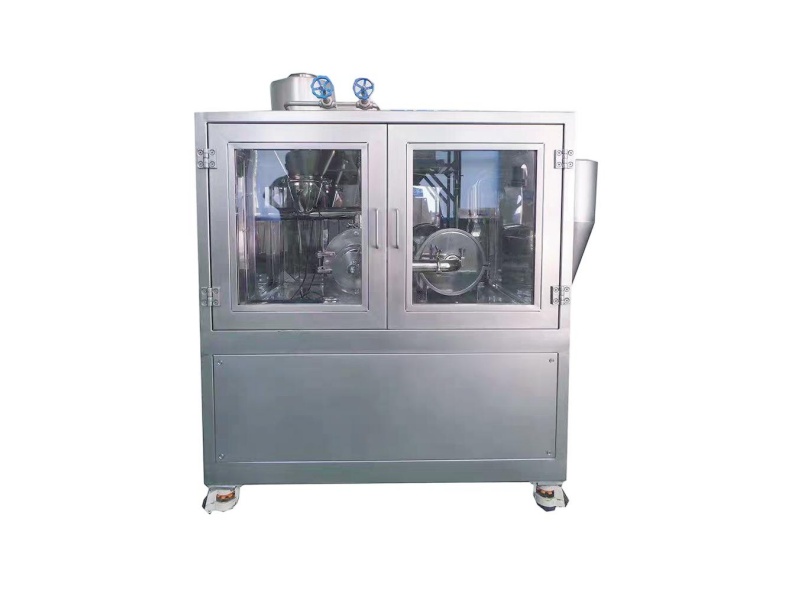
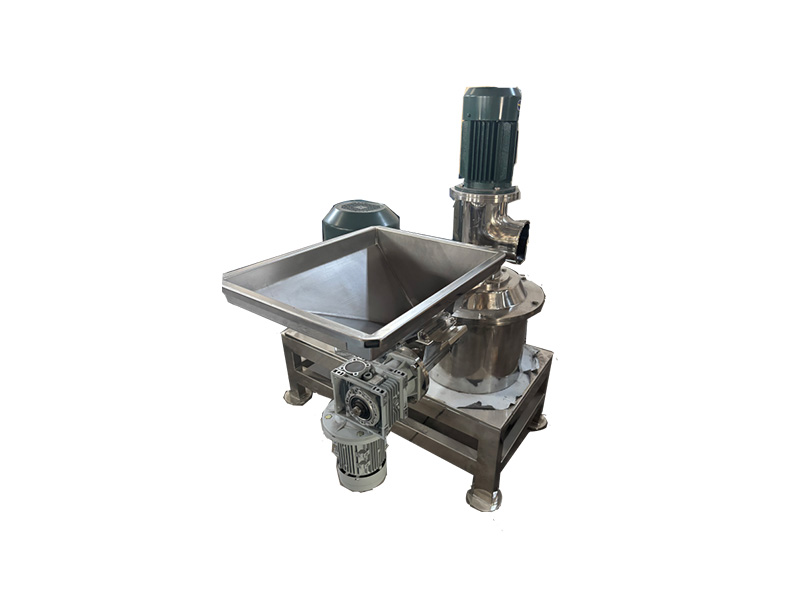
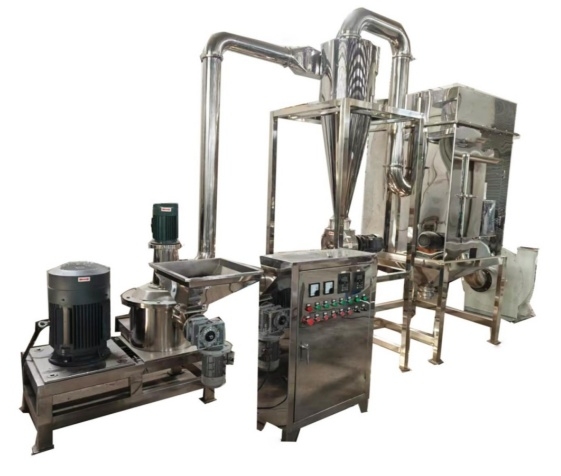
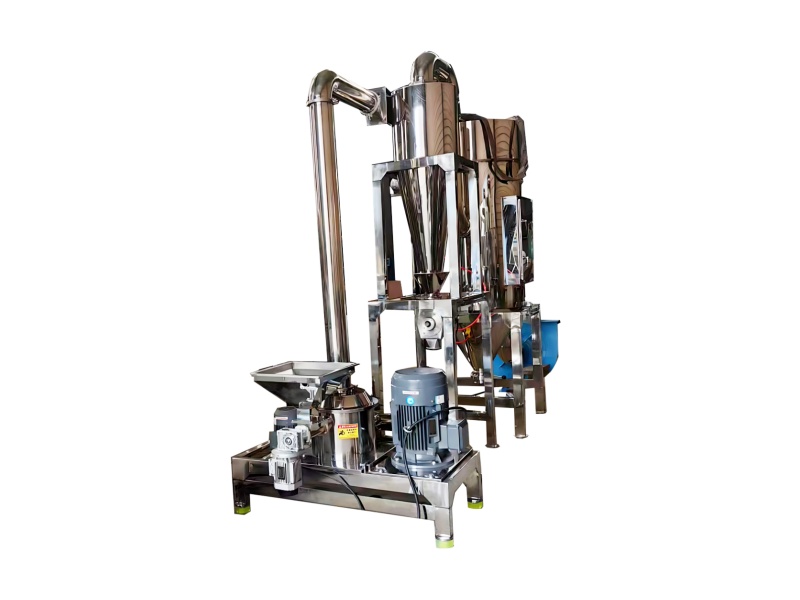
An air classifier mill works by combining two processes in one integrated system, which are mechanical size reduction and air-based particle classification. Unlike traditional grinders that only reduce particle size, an air classifier mill uses an internal classifier to separate particles according to their aerodynamic behavior. The basic working principle is: feeding→grinding→airflow classification→separation→powder collection.
During operation, raw material enters the grinding chamber and is accelerated by high-speed rotating components. At the same time, airflow carries the ground particles toward the classifier section. This continuous separation process allows the air classifier mill to produce more consistent fine powders.

I. How Does Grinding Occur Inside an Air Classifier Mill
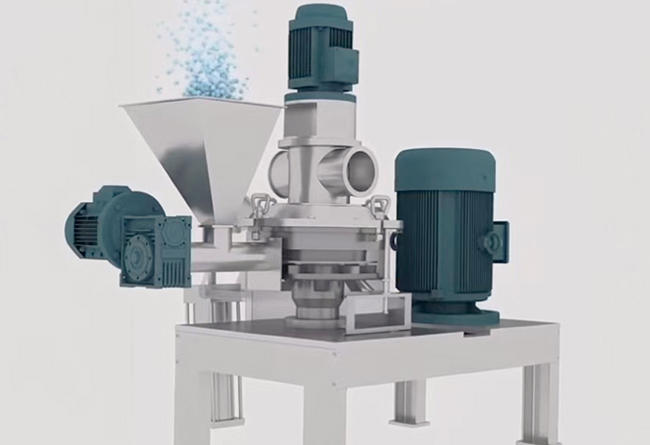
The grinding process mainly relies on impact and shear forces. You can watch the following video to see the impact grinding force inside the mill and read the step explanation below to get more details.
When material enters the grinding chamber:
1)The high-speed rotor creates strong centrifugal force.
2)Material particles accelerate and collide with grinding components.
3)The impact energy breaks particles into smaller sizes.
4)Airflow removes qualified fine particles.
The grinding efficiency depends on several factors:
• Rotor speed
• Material hardness
• Feed particle size
• Moisture content
• Grinding component design
For example: A brittle material such as starch or sugar requires less grinding energy compared with harder minerals such as dried turmeric slices. Therefore, the same air classifier mill may achieve different capacities depending on the processed material.
II. How Does the Air Classifier Control Particle Size
The classifier is the most important component that differentiates an air classifier mill from conventional grinding equipment. The classifier wheel rotates at high speed and creates a centrifugal force. At the same time, airflow creates an opposite drag force. The balance between these forces determines whether particles can pass through the classifier. Higher classifying speed you set, the finer particle size will be; lower the speed you set, the coarser particle size you will get.
Additionally, if a coarser powder is desired, a variable frequency drive (VFD) can be installed on the grinding unit to effectively adjust the grinding speed and thereby control the output particle size. This configuration is typically used when there is a requirement for coarse powder alongside the fine powder product. Otherwise, the grinding unit is generally designed for a fixed speed, with VFDs typically reserved for high-power equipment to prevent excessive starting current.
Fine particles: lower mass, easier to follow airflow, pass through classifier, become final product, etc
Coarse particles: higher mass, cannot overcome centrifugal force, return to grinding chamber, etc
III. Why Can Air Classifier Mills Produce Narrow Particle Size Distribution
One limitation of traditional grinding equipment is uncontrolled over-grinding. For example, in a hammer mill:
• Material enters
• Particles are reduced
• Product leaves through screen holes
However, some particles may become much finer than required.
An air classifier mill continuously removes particles according to size. This creates a closed-loop grinding process: grinding → classification → re-grinding of oversized particles
The result is:
• More uniform powder
• Less unwanted fine dust
• Better control of product quality
This is especially important for industries requiring consistent powder performance, such as:
• food ingredients
• pharmaceuticals
• chemicals
• specialty minerals
IV. What Factors Affect Air Classifier Mill Performance
Many customers focus only on machine specifications, but actual performance depends on the interaction between equipment and material.
1. Material Characteristics
Different materials behave differently during grinding. Important factors include: hardness, moisture, oil content, sugar content, etc. Hard materials require higher impact energy and stronger wear protection. High moisture materials may cause feeding problems, powder sticking and reduced classification efficiency. For high oil and sugar content materials, low temperature control is very important.
2. Target Particle Size
Particle size requirements strongly influence capacity. For example: producing 300mesh powder normally requires more energy than producing 100mesh powder.
Therefore, a machine rated at a certain capacity may achieve lower output when finer powder is required.
3. Airflow System Design
Airflow affects:
• powder transportation
• classification efficiency
• temperature control
An optimized airflow system helps achieve:
• stable production
• lower heat generation
• improved powder recovery
V. Why Does Air Classifier Mill Temperature Increase During Operation
Temperature control is an important consideration, especially for food and heat-sensitive materials.
Heat generation comes from:
• high-speed rotation
• particle collision
• friction
• motor energy
Factors that increase temperature:
• excessive feed rate
• insufficient airflow
• high rotor speed
• heat-sensitive materials
Possible solutions include:
• optimized airflow
• cooling jacket
• chilled air system
• cryogenic grinding for extremely sensitive materials
VI. Can an Air Classifier Mill Process Heat-Sensitive Materials
Yes, but the system configuration must match the material characteristics.
For heat-sensitive products, manufacturers may consider:
• cooling air supply
• water-cooled grinding chamber
• temperature monitoring system
Typical applications include:
• spices
• herbs
• food additives
• pharmaceutical powders
However, extremely temperature-sensitive materials may require cryogenic grinding technology instead.
VII. Conclusion
The working principle of an air classifier mill is based on the combination of efficient grinding and precise air classification. Its main advantage is not simply producing fine powder, but achieving:
• controlled particle size
• stable powder quality
• efficient continuous production
However, the best performance depends on correct equipment selection, airflow design, and matching the machine with the characteristics of the material. Understanding how an air classifier mill works is the first step toward selecting a grinding system that delivers reliable production results.