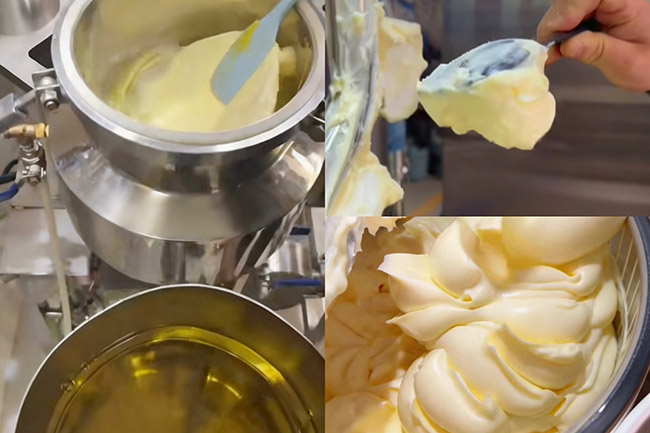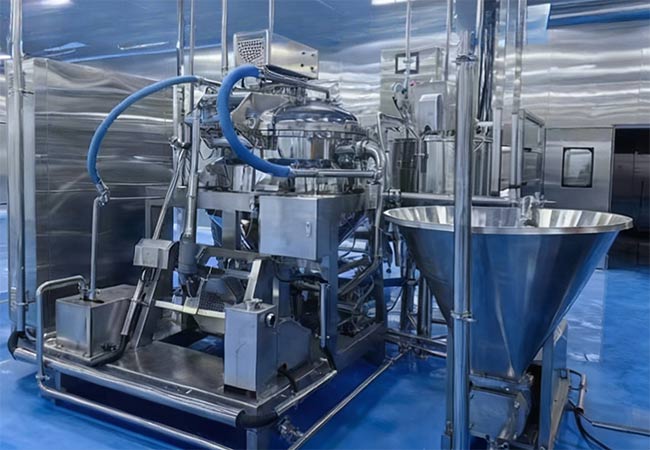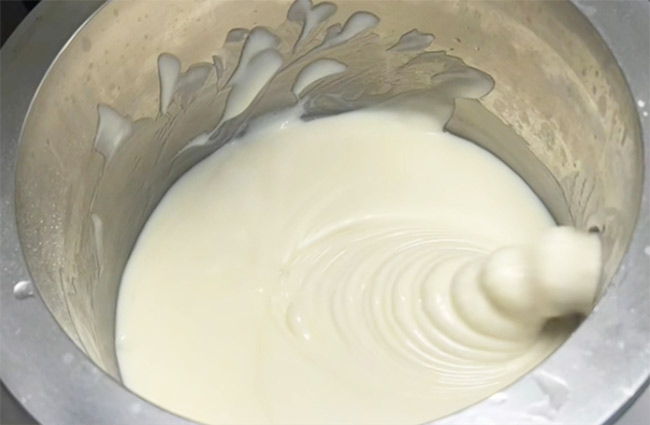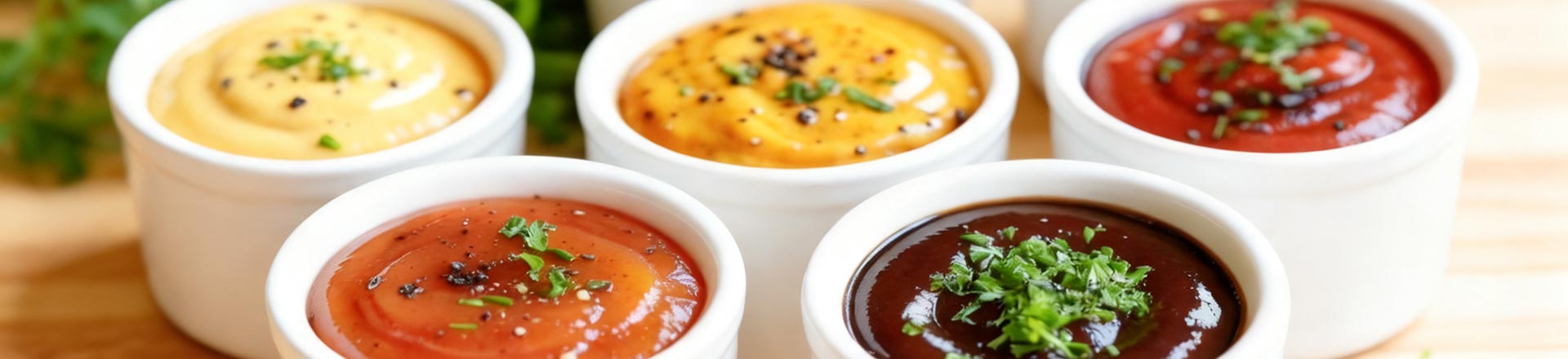
In the food processing industry, the production of water-in-oil emulsions (such as mayonnaise, salad dressings, and chocolate sauces) and smooth-textured sauces increasingly relies on vacuum emulsifying mixer. Operating in a vacuum environment eliminates air bubbles and prevents oxidation; when combined with a high-shear homogenization system, this ensures a product quality that is silky-smooth, stable, and resistant to separation. The specific characteristics of food ingredients, such as oil content, particle state, and requirements for cooking or chopping, determine the most suitable type of emulsifying mixer. This article introduces three options of food sauce production use vacuum emulsifying mixer to help you have a comparison before choosing.
The single-homogenizing-head vacuum emulsifier mixer (SLVH and SLHB series), bottom-integrated mixer(SLFT series), and cutter-type mixer(SLCM-P series) are the three vacuum emulsifying mixer options we recommend. They all can be used for the production of high-quality food sauces, but different in terms of structural design, emulsification principles, and application areas; we provide detailed introductions to each below.
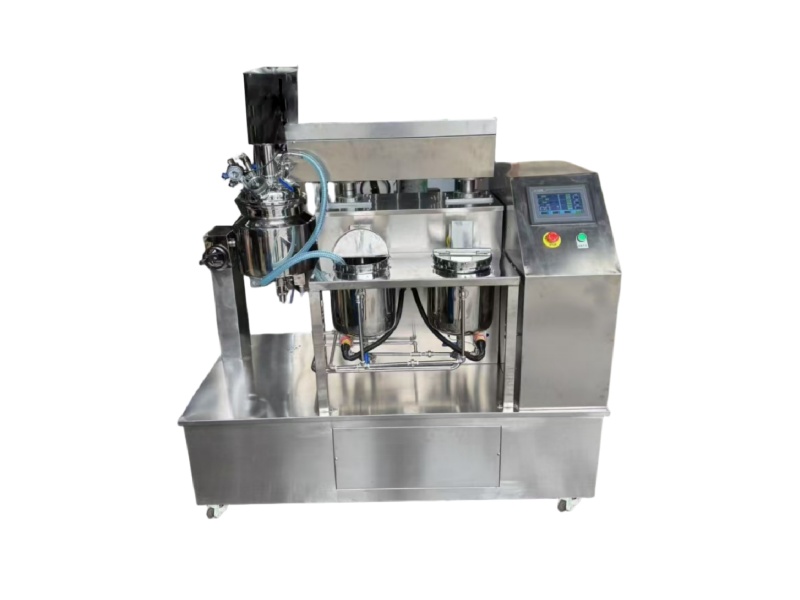
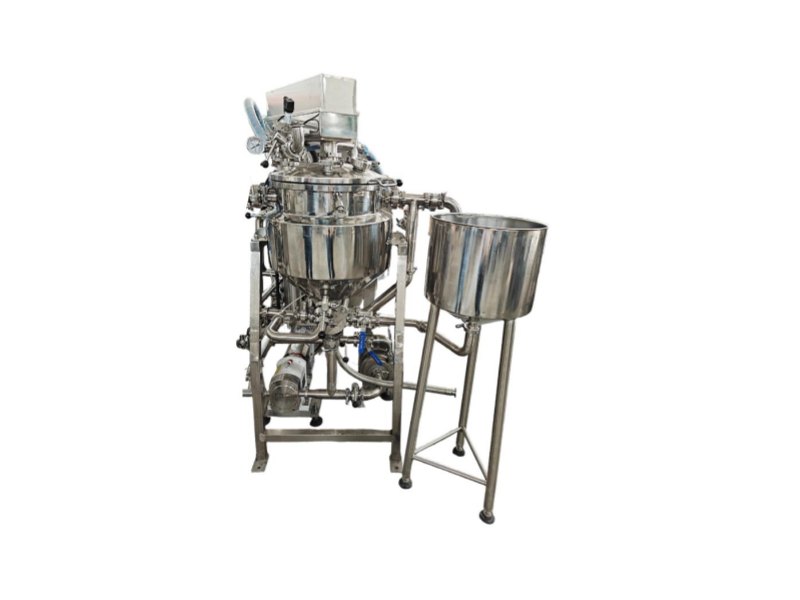
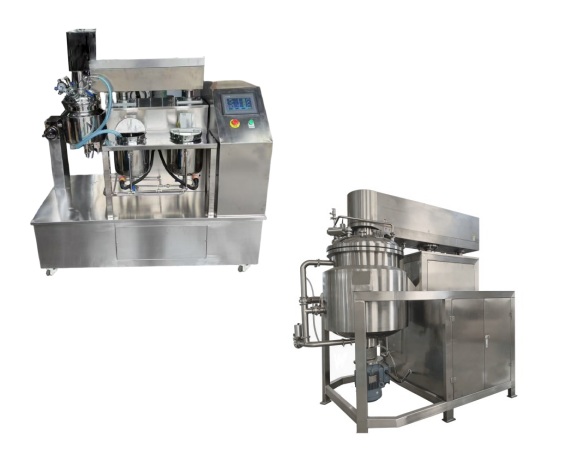
This is the most common type, divided into the SLVH series(top installed homogenizer type) and SLHB series(bottom homogenizer type). It relies on a high-shear rotor-stator assembly to homogenize the food materials.
Mixer Structure: Top or bottom homogenizer type, with the lifting mechanism with the scrapper agitating sytem
Applicability: This type is suitable for formulations where the ingredients are already in the form of fine particles or can be dissolved through heating, prior to being mixed and emulsified with the aqueous and oil phases.
Streamlined structure: A homogenizing head, wall-scraping agitator, and vacuum system; offer good cost-performance.
Flexible homogenization configuration: Top-mounted homogenization allows for easy cleaning, while bottom-mounted homogenization is better suited for materials prone to settling.
Flexible batch processing: Capacities ranging from 5L (laboratory scale) to 2000L (industrial scale).
Suitable for low-to-medium oil content: Ideal for the emulsification and homogenization of food products with low oil content.
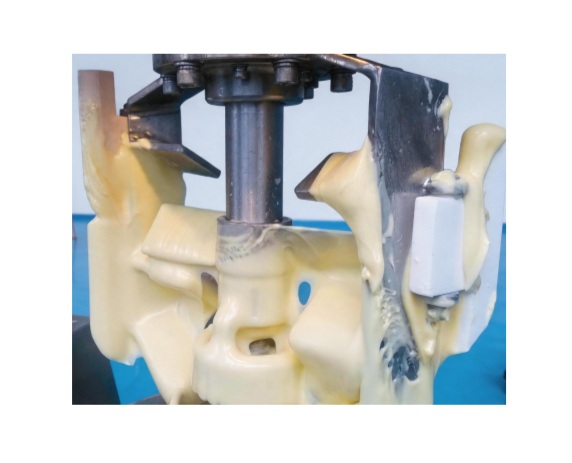
Chocolate sauce/paste (cocoa butter + powdered sugar + milk powder; require heating to dissolve)
Mustard and horseradish sauces (low oil content; require fine dispersion)
Bread fillings (creamy fillings, bean pastes)
Pet nutritional pastes (paste-form supplements; requires uniform mixing)
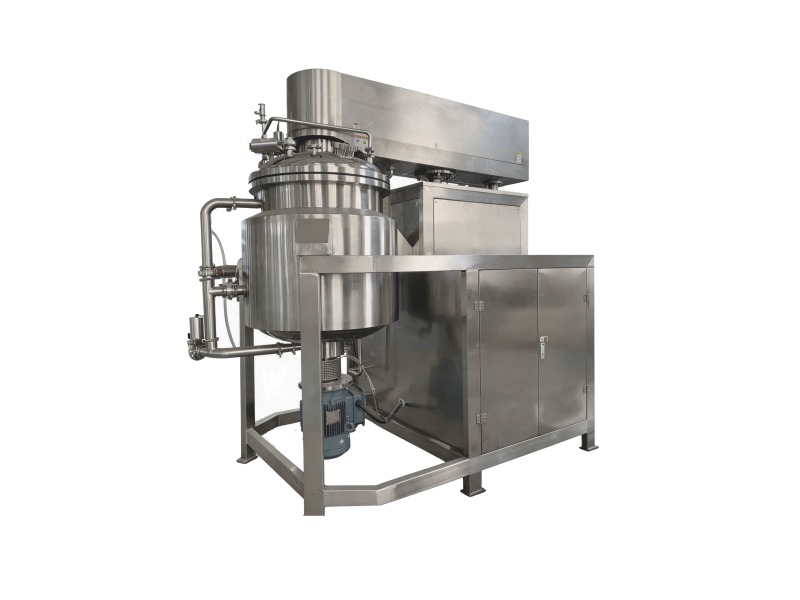
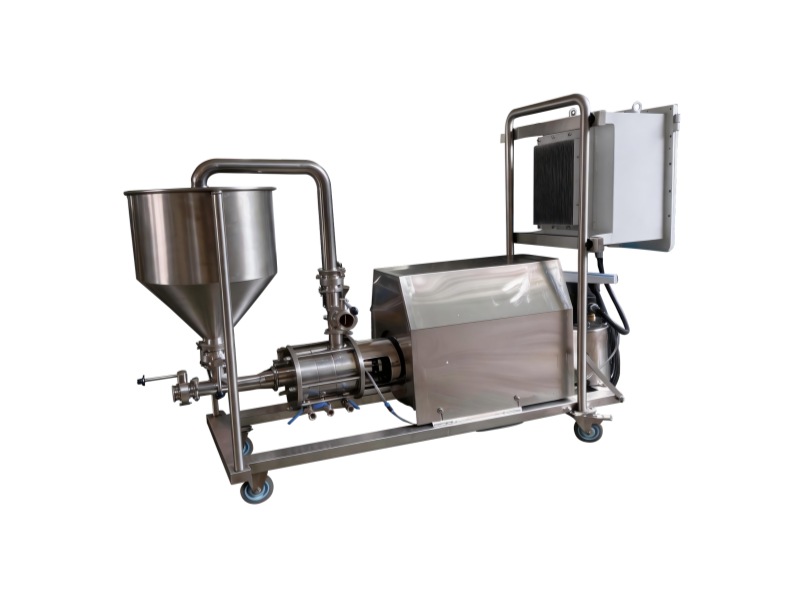
This type is our SLFT series vacuum emulsifying mixer, featured by the multi-stage emulsifying system installed at the bottom of the tank. The latest design adopts the horizontally installed type(SLFT-H series) for better emulsifying system than the vertically installed one.
Design Conception: Absorbing the advanced international concepts (such as those from Frymakoruma), our technician designed type vacuum emulsifying mixer to make high quality sauces.
Emulsifying Performance: The process is highly adaptable to various sauce formulations, yielding finished products with high viscosity and excellent resistance to oil-water separation.
Ultra High Shear Force: Linear velocity far exceeds standard models, achieving ultra-fine droplet breakdown.
Recirculation Homogenization: Configurable with external circulation piping for multiple passes, resulting in exceptionally stable emulsions.
Long Shelf Life: No oil-water separation; stable for over 6 months at room temperature.
Ideal for High Oil Formulations: Easily emulsifies high-oil food sauces. Certainly, it can also hand low oil sauces.
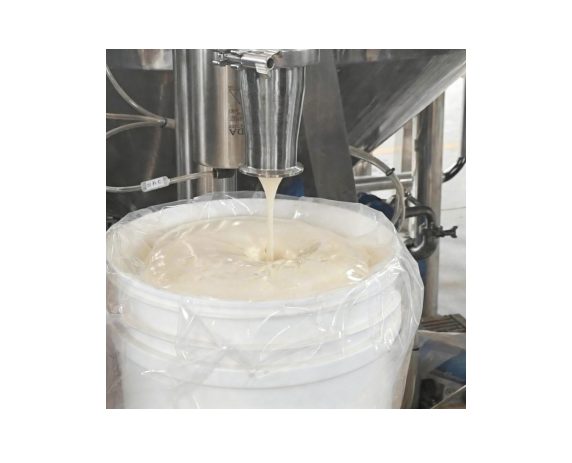
Mayonnaise (about 20%-85% oil content; requires exceptional stability)
Salad dressing (oil content from about 20% to 65%; silky texture)
Custard sauces and ketchup(heat-processed dairy-based sauce; require a smooth, fine texture)
Premium plant-based creams and emulsified savory sauces
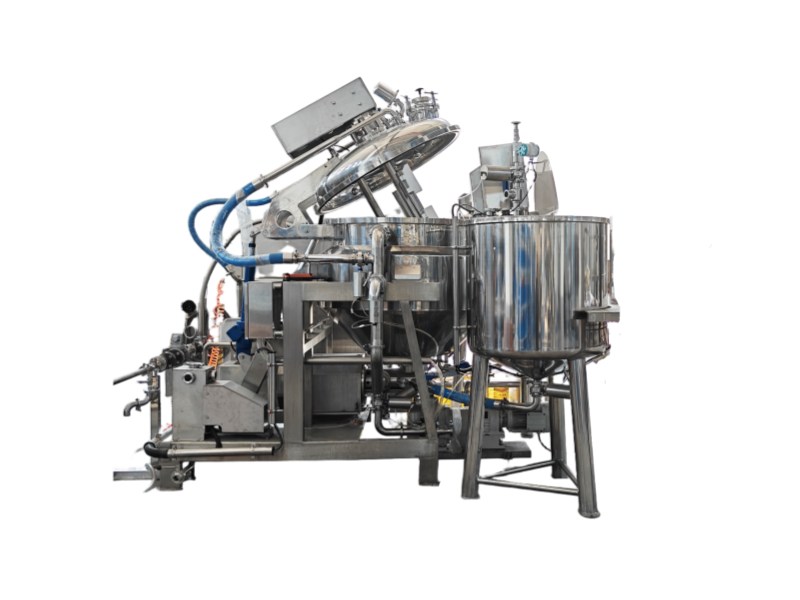
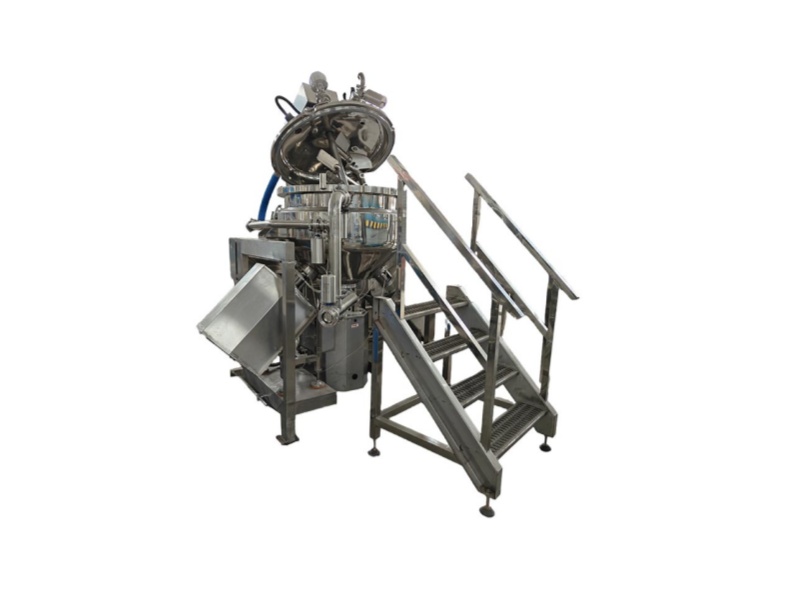
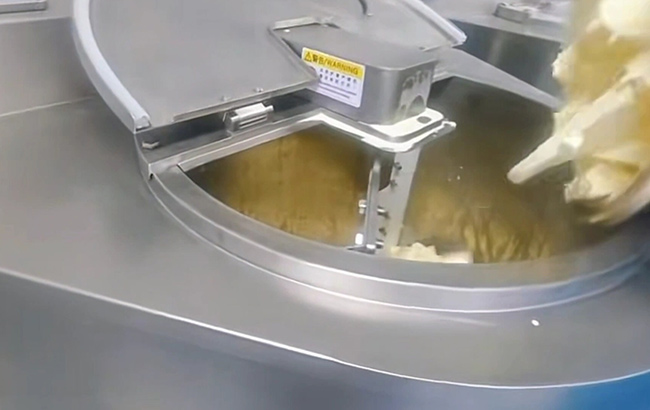
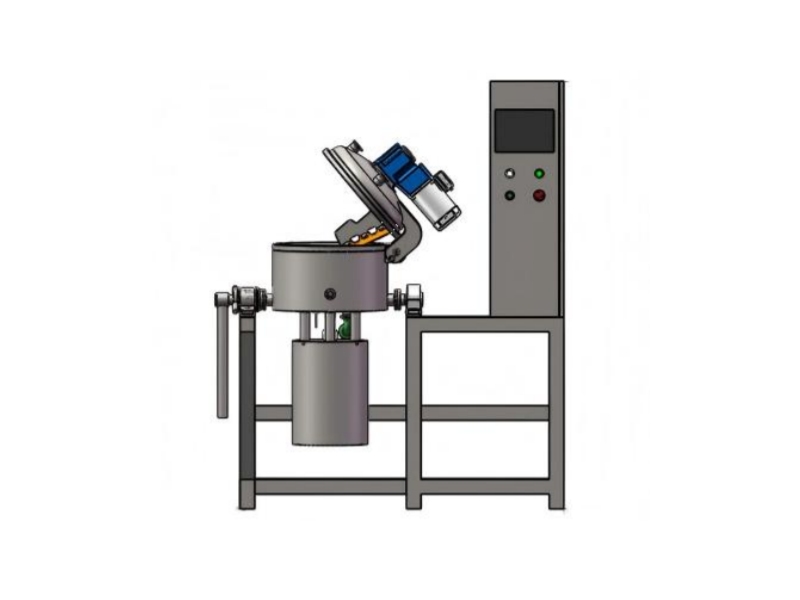
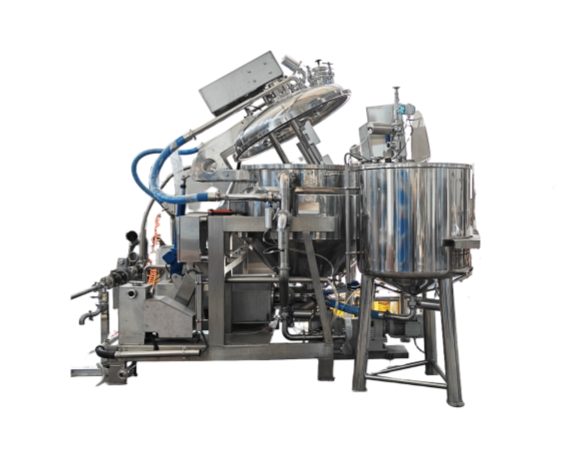
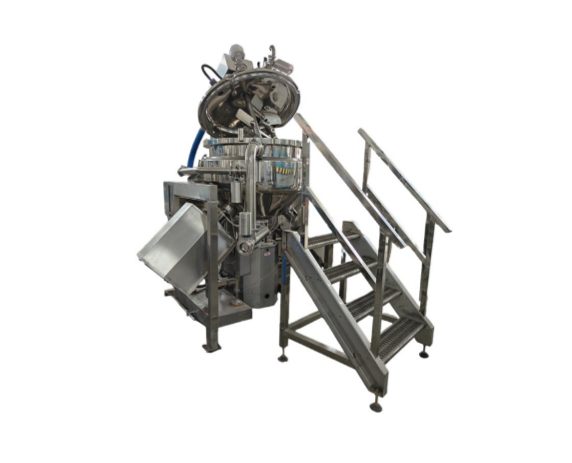
Our SLCM-P series uses a cutter-type emulsification system. High-speed blades are installed at the bottom or wall of the can to directly chop large solid materials (such as cheese, vegetables, and fruits) while simultaneously heating and cooking them, and then emulsifying and homogenizing them.
Applicability: It is suitable for sauces with low oil content that require pre-chopping, cooking to soften them and require emulsifying to homogenize other flavoring ingredients into the sauces.
Emulsification performance: It can quickly chop up lumpy materials and mix and emulsify them at the same time, with high emulsification efficiency.
High Speed Chopping: 0-3000rpm flying blades, simultaneously chopping, mixing, and emulsifying.
Steam Heating: Jacketed heating and direct steam injection heating, two modes selectable or simultaneously.
Wall Scraping and Stirring: Prevent sticking and scorching, ensuring even heating.
Multi-Functional: Integrate chopping, cooking, emulsifying, and vacuum processing.
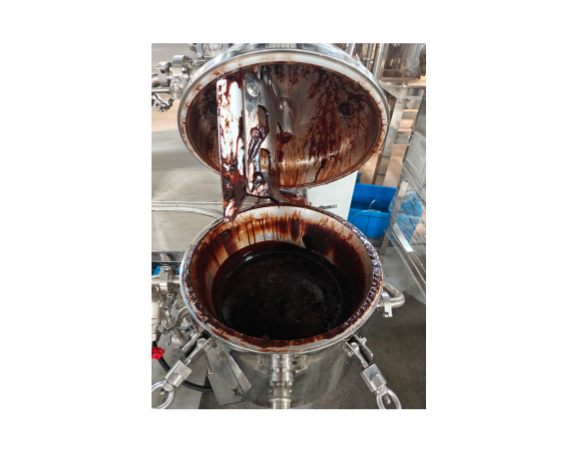
Processed sauces (cheese sauce, chocolate sauce, etc)
Fruit purees (blueberry jam, pineapple jam, mashed potatoes, carrot puree)
Bean purees (hummus, red bean paste, mung bean puree)
Thick soups (pea soup, tomato soup, requires blending to remove fiber)
Food vacuum emulsifying mixers are core equipment for producing high-quality water-oil sauces. Based on your sauce type, oil content, raw material form, and desired smoothness, choose the most suitable solution from three types: single homogenizing head, bottom integrated, and cutter type. This can significantly improve product quality and production efficiency. To help you select the right type, here are some key points below we've summarized for comparing these three types of equipment. For further one-on-one assistance with selection, please provide your sauce formula, process requirements, and production capacity needs, and we will customize a professional solution for you.

Emulsification Principle
The first two types employ single-stage and multi-stage stator-rotor emulsification systems respectively, while the latter uses a high-speed blade emulsification system.
Optimal Oil Content
Type one and three are more suitable for low to medium oil content food sauces, while the type two covers food sauces with low to high oil content.
Material Form Requirements
The solid raw materials added in the first two types need to be heat-meltable, while those in type three do not; they can be directly chopped.
Emulsification Fineness
Type two offers the best emulsification fineness.
Raw Material Form
For water-oil type micro-particle liquid emulsion, choose type 1 or 2; for large-scale fragmentation emulsification, choose type 3.
Oil Content
For low to medium oil content, you can choose all; for high oil content, choose option 2.
Cost Control
Type 1(single-head homogenizer) has the lowest cost; type 2 and 3 are more expensive.
Fineness Requirements
For high fineness, choose option 2 (SLFT series).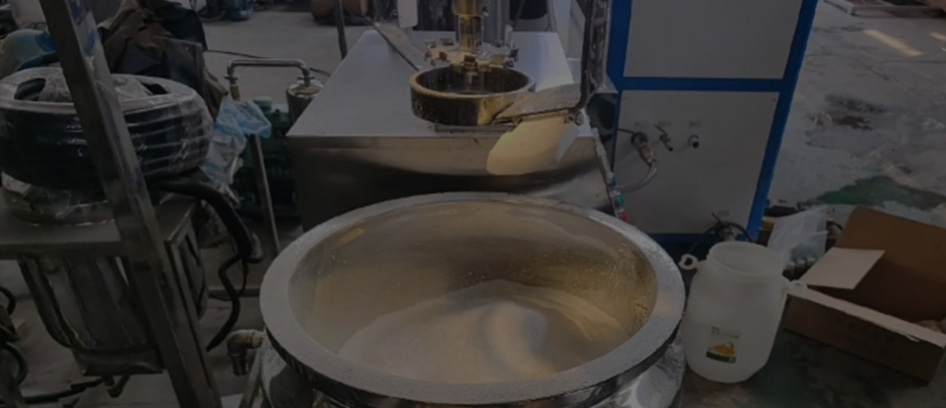
Provide you with the industry`s best solutions

Offer the pre-sales and after-sales technical support
Back to Top
We are devoted to the R&D, production and selling of the grinder machine, mixer machine and filling machine for the food factories. They work for the dry and wet food.
0086 150-5215-2936

 English
 French