


 English
 French
Customer Case Study - 10L Vacuum Emulsifier for Cold Process Salad Dressing Production
By:Salinovate Team
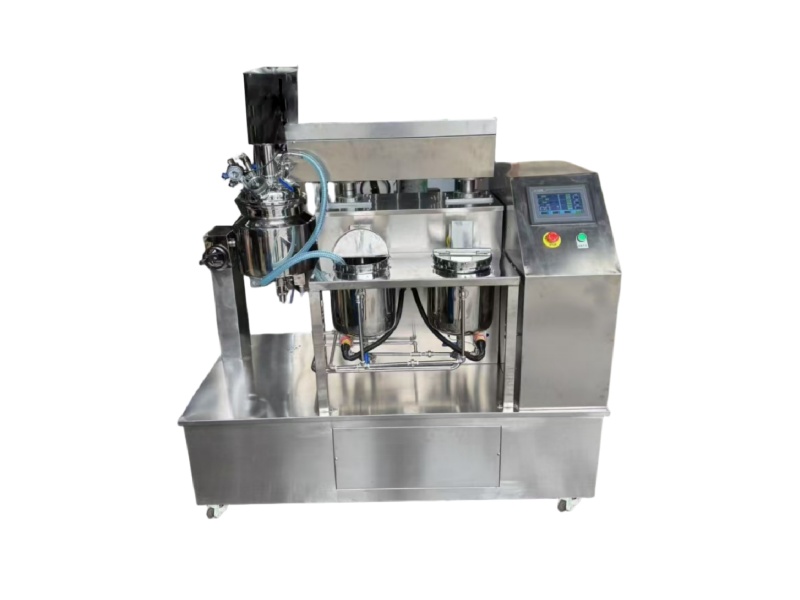
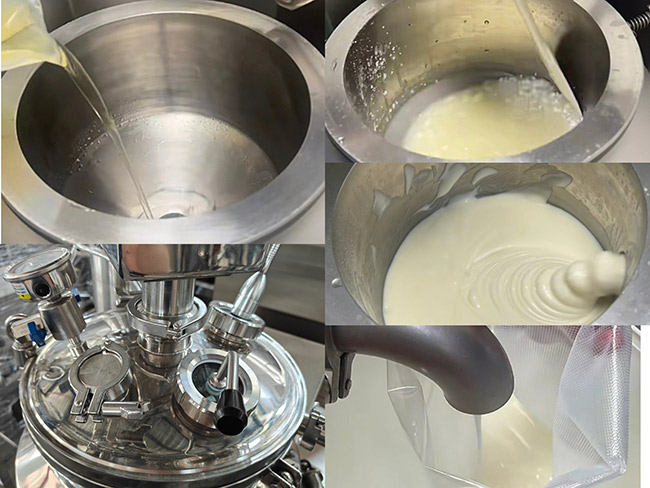
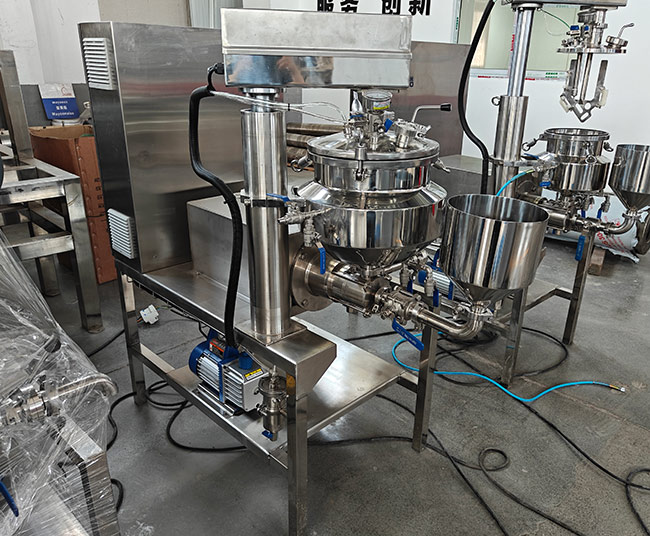
Our factory recently completed the manufacturing and factory acceptance testing (FAT) of an SLFT-H10 vacuum emulsifier for a food manufacturer specializing in salad dressings and condiment products. The customer required a compact emulsifying system for cold-process salad dressing production, with a batch capacity of 10 liters. The equipment will be used for recipe development, pilot production, and process validation before scaling up to larger manufacturing lines.
I. Customer Requirements
The customer was looking for equipment that could:
1)Produce 10L of salad dressing per batch
2)Maintain a stable low processing temperature during emulsification
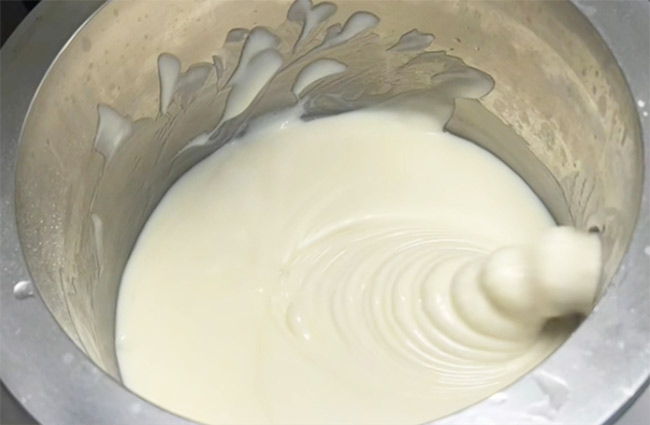
3)Deliver a smooth and stable emulsion
4)Minimize air bubbles in the final product
5)Provide data for future scale-up to industrial production
To meet these requirements, we suggested the SLFT-H-10 vacuum emulsifier with a triple-jacket vessel and an integrated bottom high-shear emulsifying system.
II. Equipment Configuration
Item | Specification |
Model | SLFT-H10 |
Batch capacity | About 10L for the max batch capacity |
Emulsifying system | Bottom-mounted integrated emulsifying system |
Vessel structure | Triple-layer jacketed tank |
Cooling method | Plant chilled water circulation |
Mixing system | Anchor scraper agitator |
Temperature detection | PT100 temperature sensor |
Vacuum system | Vacuum deaeration |
Control | PLC touch screen |
III. Why Cold Process Salad Dressing Requires Temperature Control
Many premium salad dressings are produced using a cold-process formulation to preserve the fresh flavor of vegetable oils, vinegar, herbs, and other heat-sensitive ingredients. Although no external heating is required, high-shear emulsification naturally generates heat through mechanical energy. If the product temperature rises excessively, it may affect viscosity, texture, and flavor consistency.
To address this challenge, the SLFT-H10 features a triple-layer jacketed vessel. Chilled water supplied by the customer’s factory circulates through the middle jacket during production, helping remove excess heat and maintain a stable processing temperature throughout the emulsification cycle. This solution ensures consistent product quality while supporting the customer’s cold-process manufacturing method.
IV. Key Features of the SLFT-H10 Vacuum Emulsifier
Basically, the equipment has the following four key features, which accommodate for the salad dressing production requirements.
1)Triple-Layer Jacketed Vessel
The vessel consists of a product chamber, a cooling jacket, and an insulated outer layer. Continuous cooling water circulation helps maintain stable product temperature during emulsification without exposing the ingredients to unnecessary heat.
2)Bottom High-Shear Emulsification
The integrated bottom-mounted emulsifier provides intense shear force directly inside the vessel, rapidly dispersing oil and water phases into a fine and stable emulsion. Compared with conventional mixers, this design improves emulsification efficiency and shortens processing time.
3)Vacuum Deaeration
The vacuum system removes entrapped air during mixing, reducing bubbles and oxidation while producing a smoother, glossier finished dressing.
4)Anchor Scraper Mixing
The anchor agitator continuously scrapes the vessel wall, preventing high-viscosity materials from sticking and ensuring uniform mixing.
V. Ideal for R&D and Pilot Production
A 10L batch size offers excellent flexibility for food manufacturers developing new products. Typical applications include:
• Salad dressing
• Caesar dressing
• Ranch dressing
• Thousand Island dressing
• Mustard sauce
• Other emulsified condiments
The compact system enables manufacturers to optimize formulations, evaluate ingredient performance, conduct shelf-life testing, and prepare samples for customer approval before investing in larger production equipment.
VI. Ready for Future Scale-Up
One advantage of pilot-scale vacuum emulsification is that validated process parameters can be transferred to larger production systems. Once the formulation has been optimized on the 10 L machine, manufacturers can scale production to 100 L, 300 L, 500 L, or even 1000 L while maintaining similar mixing and emulsification principles. This approach reduces development risks and shortens the time required for commercial production.
VII. Project Status
Status | Progress |
Equipment manufacturing | Completed |
Factory acceptance test | Passed |
Packing | In progress |
Shipment | Scheduled |
Installation & Commissioning | To be arranged |
After delivery, our engineers will provide on-site installation, commissioning, and operator training to ensure smooth production startup.
VIII. Conclusion
This concludes the overview of this salad dressing client case study; the SLFT-H10 is an excellent choice for the small-batch production of high-quality salad dressing. Its triple-walled vessel design easily meets the client's cooling requirements, while the standard vacuum system ensures the production of bubble-free dressings with an extended shelf life. If you require emulsification equipment for salad dressings or other sauces, please contact us for a quotation.