


 English
 French
In the article of Tomato Sauce Production Technology Analysis, we have deeply analyzed the processing technologies. Now let us specific the tomato sauce production line design based on the processing steps.
I. Production Line Design Overview
The tomato sauce production line is a highly automated and sophisticated food processing system. Its complete process flow covers core stages such as raw material cleaning, peeling, crushing and pulping, cooking and concentration, homogenization and emulsification, and filling.
Core Design Principles:
● Overall Production Capacity Matching: The processing capacity of each process equipment must be balanced to avoid bottlenecks.
● Hygiene Priority: Food processing equipment often uses stainless steel material because of its excellent corrosion resistance, hygiene performance, and easy cleaning characteristics.
● Flexible Production: By replacing some equipment, it can be compatible with the production of various fruit and vegetable products such as strawberry jam, apple jam, and hot sauce.

II. Pre-treatment System: Washing and Peeling
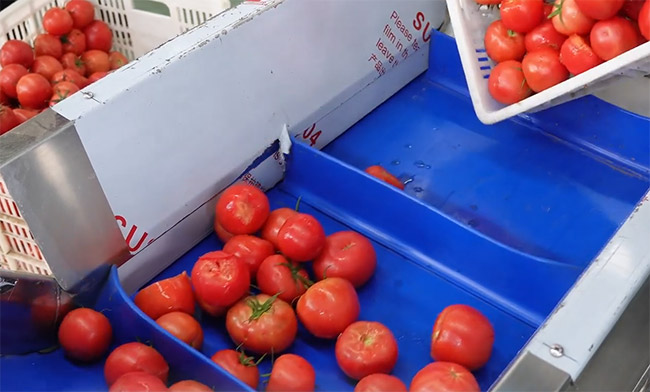
The pre-treatment of the fresh tomatoes mainly includes washing and peeling.
2.1 Bubble Washing Machine
Washing is the first step in ensuring product quality. Modern production lines use a multi-stage circulating water washing system, divided into four stages based on water cleanliness. Through the circulating water treatment facilities, tomatoes are washed clean to the maximum extent possible. System design points: The inner wall of the hydraulic conveying trough (flow channel) is smooth, with rounded transitions at bends to eliminate dead corners; the water pressure is appropriate to meet the requirements of rinsing and spraying.
2.2 Steam-Heated Peeling Machine
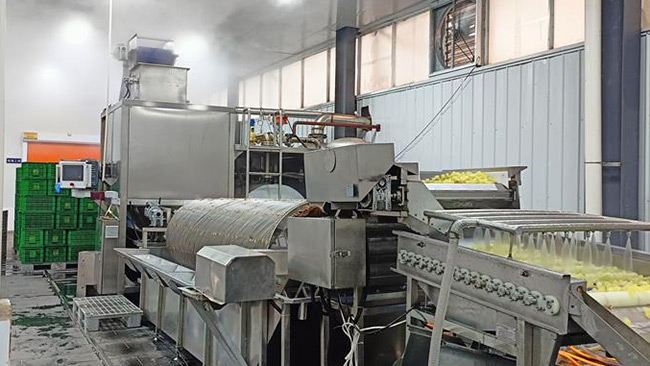
Tomato peeling is a key process for improving the quality of the finished product. Modern production lines use a steam-heated peeling machine, utilizing high-temperature steam to instantly treat the tomato surface, causing the skin to rapidly expand and separate from the flesh. The following is a detailed introduction to the peeling machine:
Continuous Steam Physical Peeling Machine:
This is currently the preferred equipment for large and medium-sized processing plants. It uses high-temperature, high-pressure steam to instantly expand the tomato skin and separate it from the flesh.
Item | Remark |
Processing capacity | 1-18 tons/h |
Working principle | The material enters the spiral pressure chamber, where high-pressure steam is injected during propulsion, causing the peel to crack and separate from the pulp. |
Supporting equipment | After discharge, the material needs to be cooled in a cold water tank before entering a rubber hexagonal roller brush machine for mechanical peeling. |
Remark: After the peeling machine, a washing step can be added to effectively rinse away any remaining fruit skin on the tomatoes.
III. Crushing and Pulping System
3.1 Crushing and Pulping Machine
The crushing process directly affects the subsequent grinding efficiency and product quality. Due to differences in processes and production scale, the crusher selected will vary.
Depending on the actual situation, cutter mixer, cutting machine, grinding pulping machine with peeling function, colloid mill, etc., can be used to crush fresh tomatoes. You can see different grinder options in our fruit and vegetable grinder machine part. Different equipment brings different crushing effects; the initial crushed product may be fresh tomato granules or a paste. For products requiring a high degree of fineness in the finished tomato sauce, we suggest to adopt multi-stage crushing process.
In this stage, if the tomatoes have not undergone a first high-temperature steam blanching and peeling process, you can choose the grinding pulping machine with peeling function.
3.2 Crushing Process Selection
● Hot Crushing Process: Rapidly heating the tomatoes to 85-90℃ before crushing effectively inactivates pectin methylesterase (PE) and polygalacturonase (PG), preventing pectin degradation and thus obtaining a high-viscosity product.
● Cold Crushing Process: Crushing at room temperature or low temperature retains higher enzyme activity and results in better product flowability.
Note: If the above blanching and peeling process is used, the tomatoes have already undergone high-temperature treatment. If fresh tomatoes are crushed and peeled simultaneously using a pulping machine with peeling function, it is considered room-temperature crushing. However, in the subsequent cooking and concentration stage, almost all tomato paste production involves high-temperature processing.
IV. Cooking and Concentration System
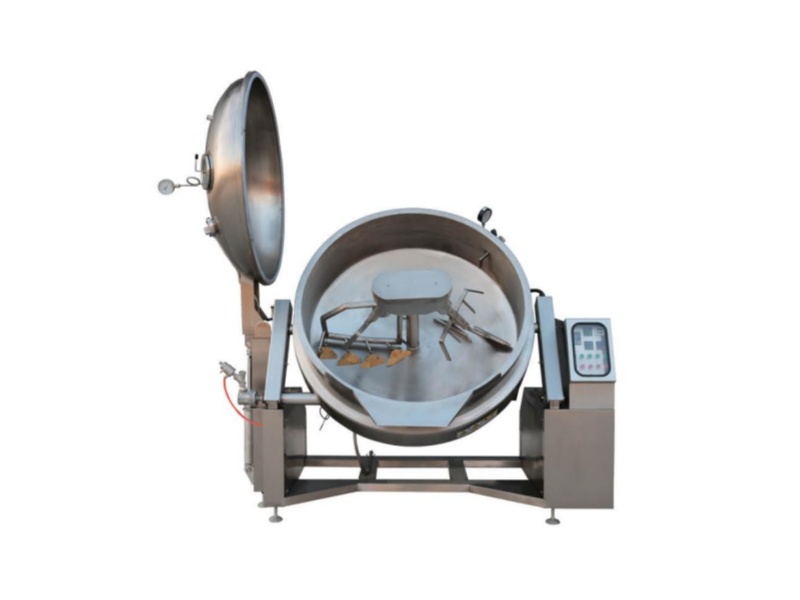
4.1 Jacketed Mixing Tank for Cooking
Experiencing the cleaning, peeling an crushing, the tomato puree enters the jacketed mixing tank for initial mixing and heating. Depending on the product formula, salt, white sugar, citric acid (1-2%), and other auxiliary ingredients can be added. The jacketed structure allows for steam heating, and the agitator ensures the sugar and acid dissolve evenly. You can choose our SLPC series planetary cooking mixer or the SLMT series mixing tank to play such role. Alternatively, a higher-level emulsifying device can be selected to further improve the fineness of the finished product. This is to be discussed in the following chapter.
Regarding the mixer, you can take this article named How to Confirm the Tomato Sauce Making Mixer Machine Solution for reference.
4.2 Concentration
For small-scale production, the concentration process can be completed directly in the jacketed tank: stirring and heating simultaneously until the total solids reach over 75%, resulting in a bright red, transparent, and thick paste. For medium to large-scale production, a vacuum concentrator is generally required to further increase the tomato sauce concentration.
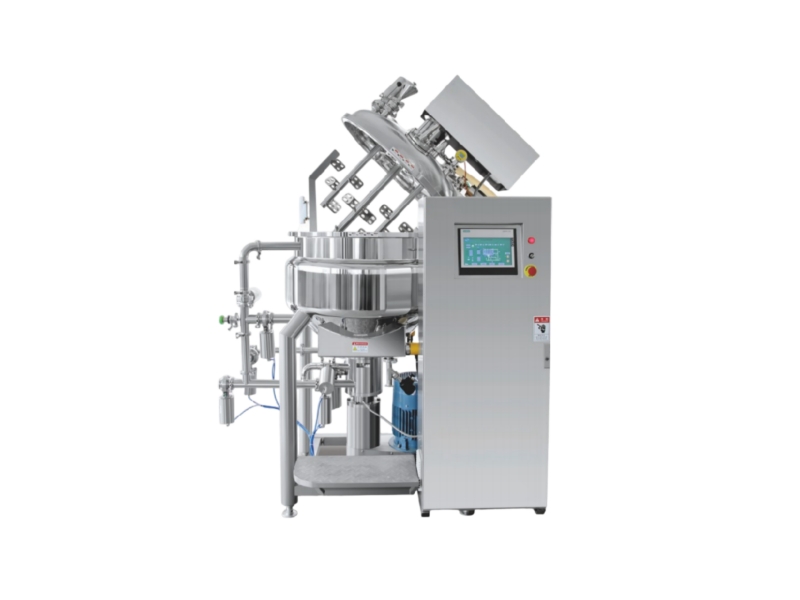
V. Homogenizing Emulsifying System
Although the concentrated tomato sauce has reached the target concentration, it still contains unevenly sized fruit particles and a pectin network structure. The homogenizing emulsifier mixer forces the material through tiny gaps, generating strong shearing, cavitation, and turbulence effects, further refining the particles and making the pectin network more uniform.
Process Effects:
● Particle size becomes uniform and finer.
● Improved product gloss and rheological properties.
● Enhanced product stability; less prone to separation during shelf life.
Furthermore, formula storage, weighing, and CIP cleaning functions are optional. These functions further improve operational efficiency.
VI. Filling Line: Customized Filling Solutions
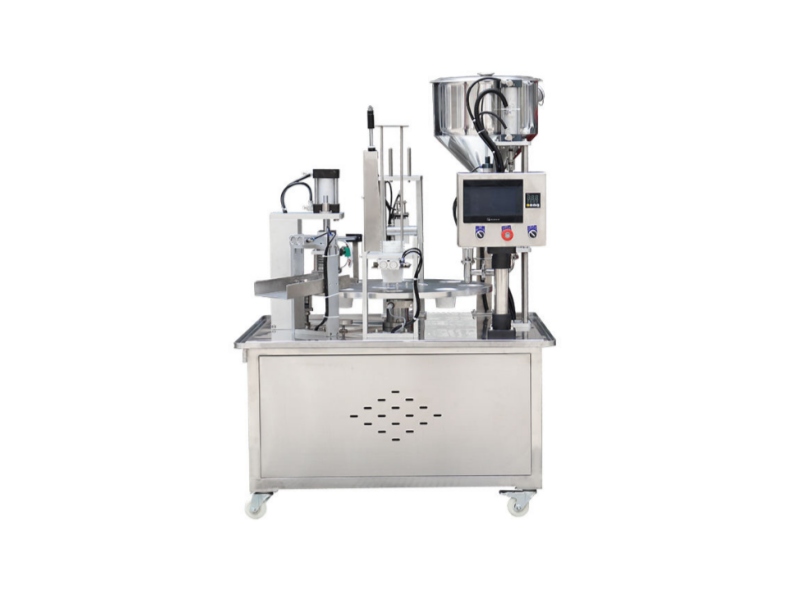
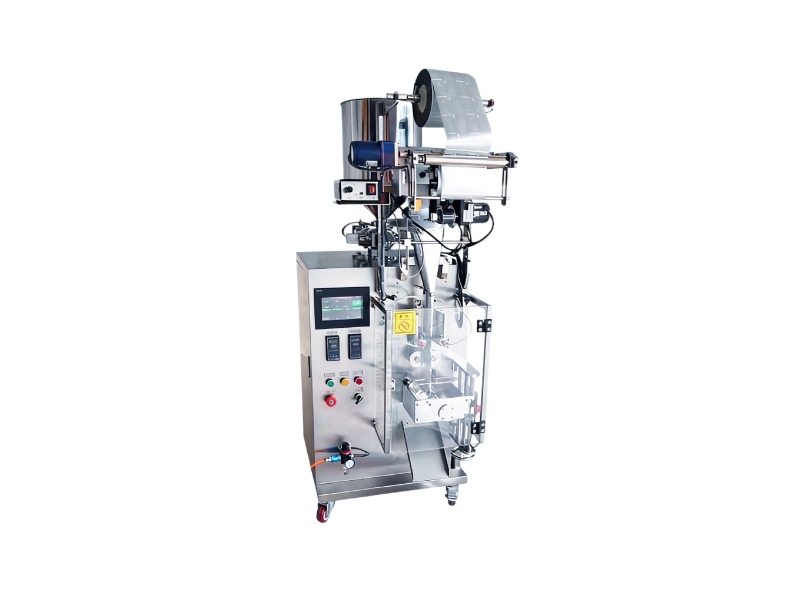
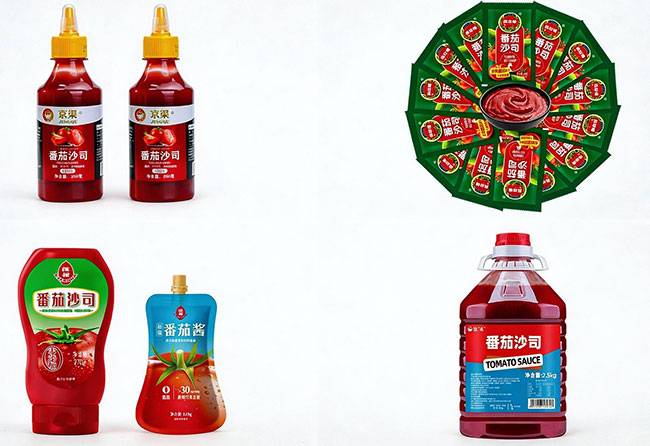
As commonly seen, ketchup packaging comes in various forms, so the specific equipment involved in the filling process needs to be customized based on specific circumstances. This includes bottle filling machines (filling, capping, labeling, coding, etc.), cup filling and sealing machines (filling, sealing, coding, etc.), and bag packaging machines (film forming, heat sealing, coding, etc.).
6.1 Bottle Filling Machine (Glass Bottles/PET Bottles/Buckets)
1)Applicable Scenarios: Retail market, catering channels
2)Process Requirements:
● Generally uses hot filling for effective sterilization.
● Subsequent use includes automatic capping/sealing machines, labeling machines, and marking/coding machines to complete the packaging.
6.2 Cup Filling Machine
1)Applicable Scenarios: Small-portion ready-to-eat products, children's food
2)Key Process Points:
● Employs a high-precision metering system to ensure accurate filling volume per cup.
● Can be equipped with an aluminum foil sealing machine for easy-tear design.
6.3 Bag Filling Machine
1)Applicable Scenarios: Catering channel
2)Technical Specifications:
● Packaging forms are mainly small roll film bags or spout pouch bags.
● Bag design: Three-side seal, irregularly shaped bags, special cuts, etc.
About this part, we suggest you to read How to Choose from Various Sauce Filling Equipment. It would be helpful for you.
VII. Line Control
Currently, high-end companies in the tomato sauce production line have achieved intelligent automated control of most equipment. However, many companies still use single-machine automated control, and then achieve the coordination of the entire production line through conveyor lines, conveyor pipes, conveyor pumps, photoelectric signals, and manual intervention.
VIII. Conclusion
Designing a tomato sauce production line is a systematic project that requires comprehensive consideration of raw material characteristics, process requirements, equipment matching, and return on investment. This article presents a complete line design encompassing bubble cleaning, steam peeling, crushing and pulping, cooking and concentration, homogenization and emulsification, and multi-format filling, representing the mainstream technological route in modern tomato processing.
Through scientific selection and rational integration, a well-designed tomato sauce production line can achieve:
● High Product Quality: Preserving the original color, flavor, and nutritional components of tomatoes.
● Flexible Production: Compatible with various fruit and vegetable products, responding to market changes.
● Food Safety: Sterilization treatment, CIP cleaning, meeting stringent food production hygiene standards.
For tomato sauce manufacturers pursuing high-quality production, selecting a professional partner and customizing the design based on specific production capacity needs and product positioning is key to achieving sustainable competitiveness. Salinovate can give you help in grinder, mixer, emulsifying mixer and filling machine part. For any need, please feel free to contact us.