


 English
 French
Tomato sauce, one of the world's most consumed condiments, integrates food science, mechanical engineering, and automation technology in its production process. According to the latest FAO data, global annual tomato production is approximately 170 million tons, of which about 80% is processed into various tomato products. This article, supported by academic research and combined with industrial practice, systematically analyzes the entire tomato sauce production process technology from fresh tomato to finished product filling. By introducing research findings from authoritative journals, it presents the scientific basis behind the technology choices.

I. Introduction to the Tomato Sauce Production Process
Before going into detail, let me first introduce some of the core processes involved in tomato sauce production. Typically, tomatoes need to go through several key steps: washing, blanching to remove the skin, crushing and pulping, cooking and concentration, homogenization and emulsification (adding seasonings), and filling. Due to differences in production scale and quality requirements, the equipment used in these steps may vary slightly, as may the crushing, mixing, and emulsification processes. This introduction only provides a general overview of common processing techniques and basic procedures and does not cover all the processes used in the market.
To give you a clear understanding of the entire processing stage, we're showcasing a tomato sauce factory production video below compiled by Food Tech Today. You can see almost all the processing techniques involved. Meanwhile, the video also shows more details on manual sorting, intelligent camera-based selection and removal, and storage. These are all additional steps typically involved in large-scale tomato sauce production.
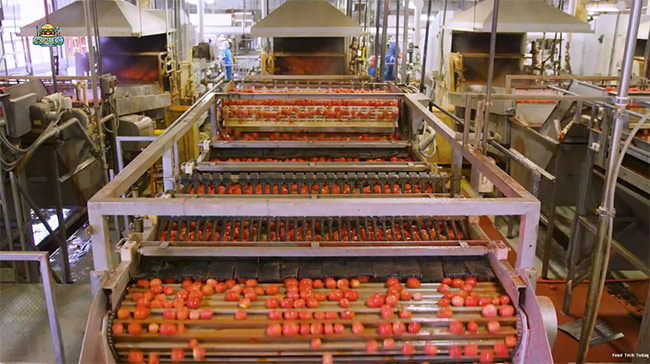
(Remark: the picture is shot from the tomato sauce production video by Food Tech Today.)
II. Analysis of the Core Technology
The tomato sauce production involves many processing technologies for different processing steps. Following are the specific introduction:
2.1 Raw Material Washing and Peeling Technology
After harvesting, fresh tomatoes are sent to the factory and undergo multiple washing and sorting processes to ensure they meet hygiene and production standards. The washing system generally includes three steps: soaking, bubbling, and spraying. After washing, the tomatoes need to be peeled, as the tomato skin affects the taste of the sauce. This process typically uses a steam blanching peeling method. Alternatively, peeling can be done during the subsequent crushing process, depending on the specific process chosen.
Equipment involved: Bubble washing machine, belt conveyor, steam blanching peeling equipment, etc.
2.2 Crushing and Pulping Technology
Tomato crushing is a crucial step determining the subsequent processing results, and the core issue lies in the choice of crushing method—the debate between hot crushing and cold crushing.
An in-depth study by the College of Food Science at Southwest University revealed the essential differences between the two methods:
● Hot crushing: Rapidly heating tomatoes to 85-90℃ before crushing effectively inactivates pectin methyl esterase (PE) and polygalacturonase (PG), preventing pectin degradation and resulting in a high-viscosity product.
● Cold crushing: Crushing at room temperature or low temperature retains higher enzyme activity, resulting in a product with better flowability.
If hot crushing is chosen, the previous process generally involves blanching to remove the skin, followed by crushing the tomatoes into a paste using a grinder. If cold crushing is chosen, a spiral peeling, crushing, and juicing machine is typically used to simultaneously peel and grind the tomatoes.
Academic Basis: According to a doctoral dissertation from Southwest University, hot crushing treatment reduces pectin methylesterase activity by 100% and polygalacturonase activity by 100%; while cold crushing treatment only reduces these activities by 37.26% and 22.44%, respectively. Correspondingly, the viscosity of hot-crushed sauce (2906.34 mPa·s) is significantly higher than that of cold-crushed sauce (1295.13 mPa·s).
This research provides a quantitative basis for the selection of crushing processes: for tomato sauce production aiming for high viscosity, hot crushing should be the preferred process.
2.3 Cooking and Concentration Technology
The tomato paste obtained after pulping typically contains only 4%–7% soluble solids. It must be concentrated to remove a large amount of water, achieving the 24%–28% concentration required for the final product. Concentration is not merely a dehydration process; it is a crucial step in shaping the product's flavor, color, and texture. According to research published in Food Science and Technology, tomato paste must contain at least 24% tomato solids (salt-free baseline), and this concentration is achieved through the concentration process.
Two Concentration Techniques:
Tomato pulp concentration mainly involves two methods: atmospheric pressure concentration and vacuum concentration (reduced pressure concentration).
1)Atmospheric Pressure Concentration
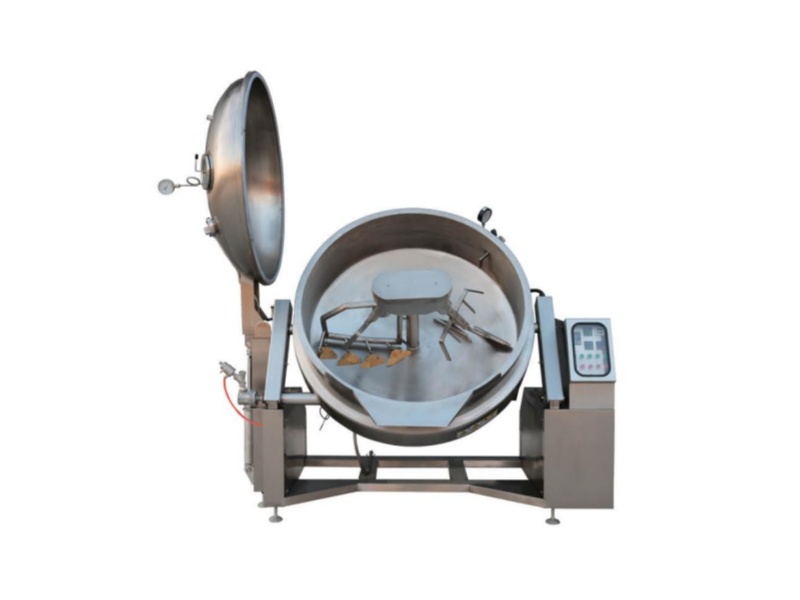
Equipment: Open-type jacketed mixing tank
Process Parameters:
● Concentration time: 20-40 minutes
● Key operating points: Continuous stirring is required to prevent scorching.
2)Vacuum Concentration
Equipment: Double-effect/multi-effect vacuum concentrator
Process Parameters:
● Material temperature: 50-60℃
● Soluble solids target: As per product requirements (28-30%, 30-32%, or 36-38%)
2.4 Homogenization and Emulsification Technology
After high-temperature cooking and concentration, emulsification and homogenization are indeed a crucial step in the production of modern tomato sauces, especially multi-flavor, high-quality tomato sauces. It's like giving the sauce an ultimate "refining" process, directly determining the final taste, texture, and stability.
Why is emulsification and homogenization necessary?
● To create a silky texture: Powerful physical shearing forces break down fruit fibers and other particles to below 2 micrometers, eliminating roughness and delivering a smooth experience.
● To create a stable system: Ensuring the uniform blending of oil, water, and spice particles prevents separation and layering, maintaining a thick and stable consistency.
● To enhance beautiful color: Cell rupture releases more natural pigments, resulting in a more vibrant and richer color, improving appearance.
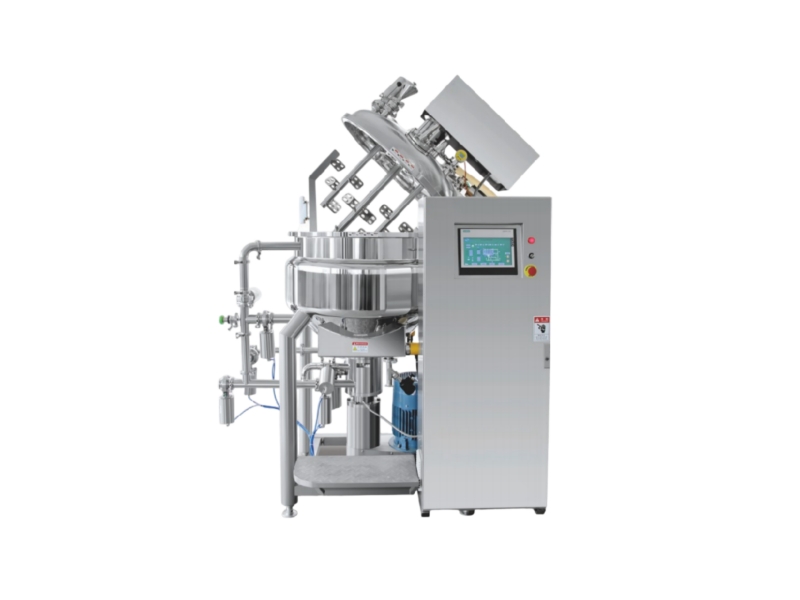
Below is a tomato sauce(ketchup) production experiment conducted by the well-known international company FrymaKoruma using their vacuum homogenizing emulsifying mixer. The raw materials included tomato paste, sugar, salt, and vinegar. As you can see, the final emulsified multi-flavored tomato sauce is very smooth and rich. (Our company offers an emulsifying mixer with a similar design concept, please see our SLFT series.)
2.5 Filling Technology
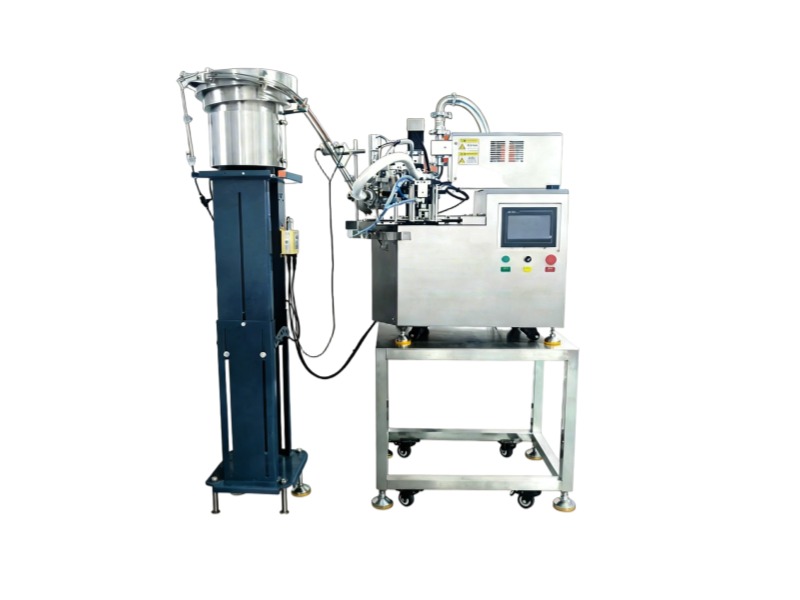
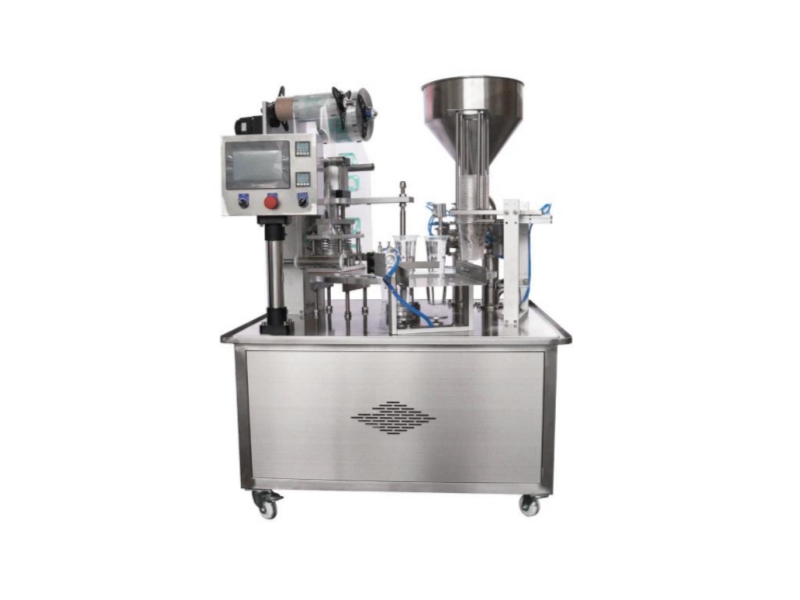
The filling technology for tomato sauce/ketchup is not singular; it involves a variety of techniques. This is mainly because the tomato sauce produced for different customer groups varies slightly, with differences in viscosity. Furthermore, differences in packaging type, filling volume, and filling speed also lead to variations in filling line design.
If you would like to learn more about tomato sauce/ketchup filling machines, please refer to this article called Unlock Diverse Filling Machines for Ketchup.
III. Conclusion
The tomato sauce production generally involves steps such as washing, peeling, crushing, cooking and concentrating, emulsification and homogenization. However, the specific technologies involved in each step will yield varying results depending on the equipment selected and applied. It is recommended to position the desired tomato sauces in advance: whether it aims for a pure, natural tomato paste flavor, a smooth texture, or a rich variety of flavors. Simultaneously, production capacity requirements and packaging methods should also be confirmed to ensure a customized and suitable processing technology is selected.