


 English
 French
Chickpea Flour Grinding Case - SLA-20 Air Classifier Mill for 100 Mesh Besan
By:Salinovate Team
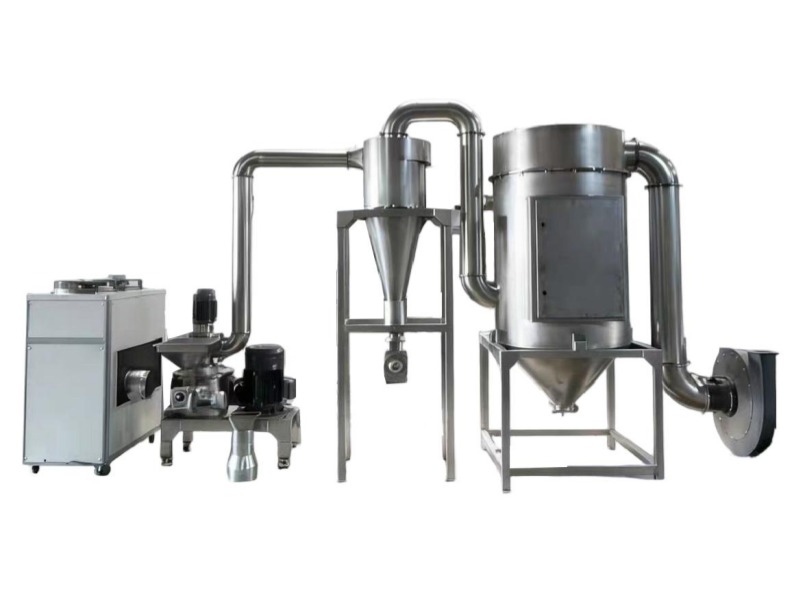
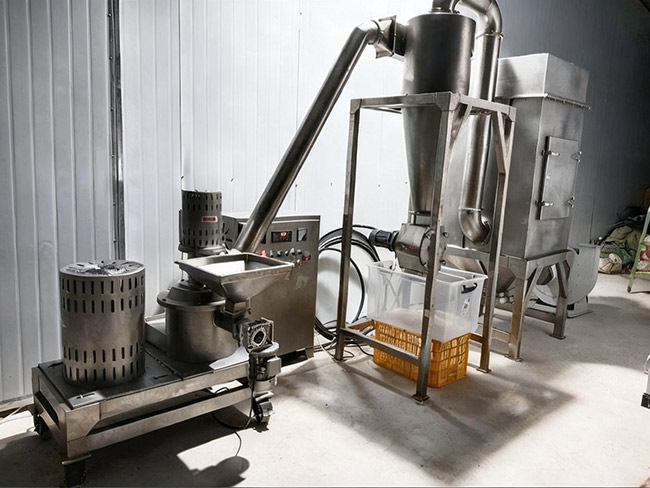
A customer recently installed an SLA-20 air classifier mill for chickpea flour production. The installed machine uses an 11 kw grinding motor and a 4 kw classifier motor, with a separate cyclone and pulse dust collection system as the standard configuration. The machine will help the customer to produce about 100 mesh besan flour at a speed of 120kg/h. This case is a useful reference for besan flour producers who need around 100 mesh chickpea flour at a moderate production capacity and are comparing different grinding technologies.
I. Project Requirements at a Glance
The basic production needs and material situation of customers are always necessary to understand before selection. The customer’s requirement can be summarized as follows:
Item | Project Requirement / Result |
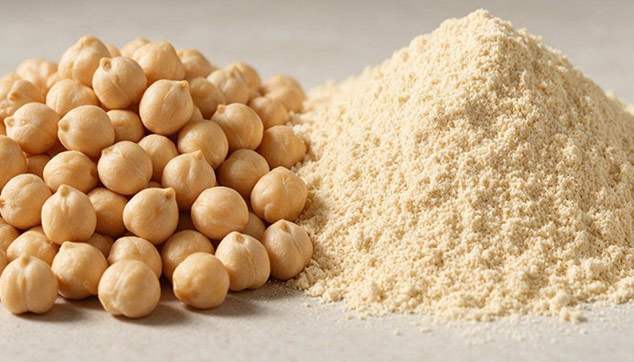
Raw material | Dehulled whole chickpeas(dried) |
Finished product | Chickpea flour / Besan |
Target flour fineness | Around 100 mesh with tight particle-size distribution |
Production capacity | Approximately 120 kg/h |
Dust collection | Required for high sanitary production standard |
Machine material | Food grade stainless steel 304 |
The important point in this project is the combination of moderate production capacity and relatively fine flour. The customer was not simply looking for a machine that could break chickpeas into powder. The requirement was to produce approximately 100 mesh besan flour at around 120 kg/h, while also having a proper powder collection system for factory production.
II. Why Was the Air Classifier Mill Selected
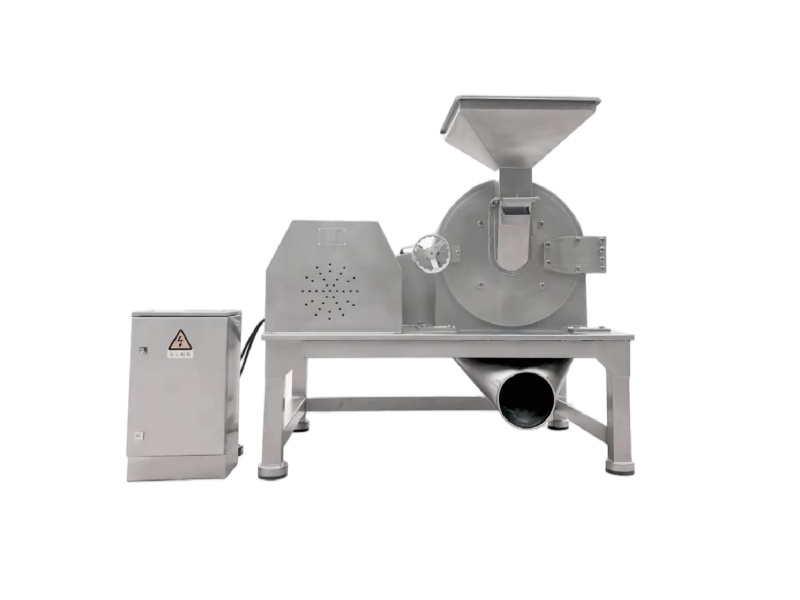
There are several ways to grind dried chickpeas into besan, as you can see there are many besan flour mill options on the market. For moderate-fine flour, a screen-controlled grinder such as the SLU series can be a practical solution. The output size is mainly adjusted by changing the screen, and this type of machine is suitable when the customer does not require very tight particle-size distribution. Our existing SLU-30 besan flour mill case, for example, used interchangeable screens to produce approximately 60-100 mesh flour for a small production requirement.
The situation is different when the customer puts more emphasis on fine powder and particle-size control. The SLA series uses mechanical grinding together with air classification. Instead of relying on a conventional screen to determine the final powder size, the classifier separates particles according to their aerodynamic behavior. Coarser particles remain in the grinding system for further processing, while the finer fraction is discharged as finished powder. This makes the air classifier mill more suitable for applications where the customer wants a relatively fine and more concentrated powder rather than simply having a certain percentage of material pass through a screen.
III. Why SLA-20 for About 120 kg/h
Machine selection should not be based on motor power alone. For besan flour production, several parameters need to be considered together:
• Raw material condition
• Target flour fineness
• Required capacity
• Particle-size distribution
• Dust-control requirements
• Factory space
• Investment level
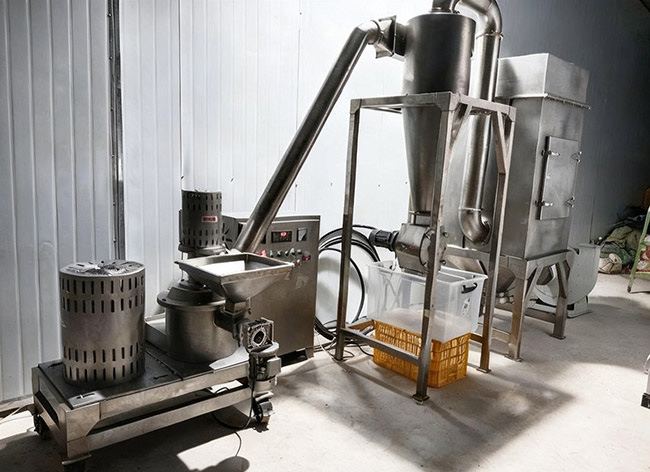
The customer’s target was around 120 kg/h rather than several hundred kilograms per hour. Therefore, there was no need to select a large SLA model. The SLA-20 shown in below picture provides a more appropriate scale for this type of moderate-capacity fine grinding application. Following are the actul project configuration of the chosen air classifier mill:
Item Name | Remark/Specification |
Air classifier mill model | SLA-20 model |
Grind motor | 11kw |
Classifier motor | 4kw |
Blower | 7.5kw |
Discharge motor | 0.55kw |
Main material | Stainless steel 304 |
IV. 100 Mesh Is Not Only a Screen Size
When customers tell us they need “100 mesh chickpea flour,” it is worth clarifying what they actually mean. A 100 mesh specification can refer to a screening requirement, but two products described as 100 mesh can still have different particle-size distributions. For example, one product may contain a relatively broad mixture of particles around and below 100 mesh, while another may have a more concentrated fine-powder distribution.
This distinction is important when choosing between screen-controlled grinding and grinding + air classification. A screen-controlled grinder is often sufficient when the customer mainly needs a certain maximum particle size and does not have strict requirements for particle-size distribution. An air classifier mill becomes more relevant when the customer wants finer powder with more controlled classification. That is why the customer’s 100 mesh requirement in this case was considered together with the required production capacity rather than treated as a simple screen-selection problem.
V. Why Is the Cyclone and Pulse Dust Collector Important
The SLA-20 is not normally considered as only a standalone grinding machine. The complete configuration includes a separate cyclone and pulse dust collection system. This is important for fine chickpea flour because fine powder is easily carried by the airflow generated during grinding and classification. The cyclone and dust collector work together with the grinding system to handle the powder-laden airflow and improve powder collection.
For food factories, dust control also matters for:
• Cleaner production areas
• Reduced airborne powder
• Better working conditions
• More controlled powder collection
• Easier handling of fine flour
VI. What Does This Case Tell Us About Besan Flour Mill Selection
This project illustrates a practical point that is easy to overlook: The required flour fineness and capacity should be considered together. A buyer asking for 120 kg/h of chickpea flour does not necessarily need the same type of grinder as a buyer asking for 120 kg/h at a much coarser particle size. Likewise, a customer requiring 100 mesh does not automatically need the largest or most advanced grinding system.
A useful selection process is:
Step 1: Define the raw material
Determine whether the material is:
* Whole chickpeas
* Dehulled chickpeas
* Dehulled and split chickpeas
The presence of the outer hull can affect grinding behavior because the fibrous material behaves differently from the inner chickpea.
Step 2: Define the actual flour requirement
Instead of simply saying “fine flour,” specify: 100 mesh + approximately 120 kg/h. This gives the equipment supplier a much clearer engineering target.
Step 3: Consider particle-size distribution
Ask whether the final product only needs to pass a certain mesh or whether the customer wants a more concentrated particle-size distribution. This can influence the choice between a screen-controlled grinder and an air classifier mill.
Step 4: Consider dust collection
Fine flour production should be evaluated together with the powder collection system. For an industrial installation, the grinder, cyclone and pulse dust collector should be considered as one system rather than three unrelated pieces of equipment.
Step 5: Confirm the result with actual material
Whenever the flour specification is important, a grinding test using the customer’s actual chickpeas is the most useful way to confirm the final result.
VII. Project Conclusion
For this project, the selected SLA-20 configuration was used for approximately 100 mesh chickpea flour production at around 120 kg/h. Meanwhile, we can learn from this case to know the selection logic for a suitable besan flour mill. If your requirement is similar to this project, the most useful information to provide when asking for a machine recommendation is: Chickpea type + moisture condition + target mesh + required kg/h + particle-size requirement. With these parameters, the grinding technology and model can be evaluated more accurately.