


 English
 French
Besan Flour Grinding Case - SLU-30 Powder Grinder for 30-60 kg/h Flour Production
By:Salinovate Team
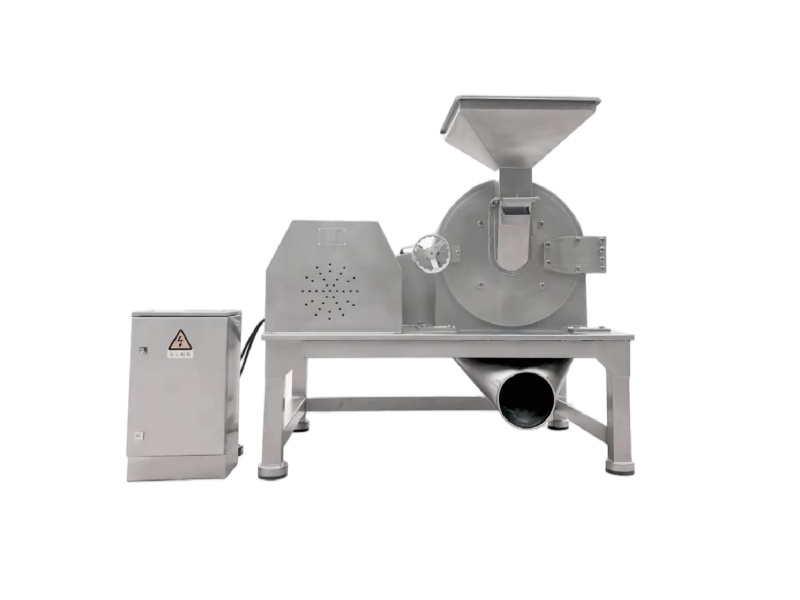
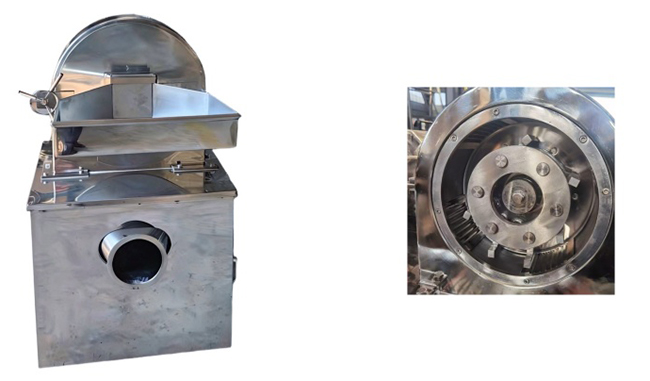
A small food processing customer recently approached us looking for a besan flour mill for a relatively small production capacity. The customer’s raw material was dried dehulled chickpeas, and the target production range was 30-60 kg/h. The final selected flour mill is the SLU-30 model powder grinder(beating hammer type cutter) with interchangeable screens, the output size range is around 60-100 mesh. We here present the complete customer case and analyze the grinder selection reason for you.

I. Customer Requirement
First, let us outline the customer's general information, as well as their basic production and procurement cost requirements. This customer runs a small food processing factory with a purchase need for the besan flour mill. The specific requirements are listed in the following table:
Item Name | Customer Requirement |
Raw material | Dried dehulled chickpeas |
Target capacity | Approximately 30-60 kg/h |
Target fineness | Required size: around 60 mesh and 80-100 mesh |
Machine material | Food grade stainless steel 304 |
Budget control | Within USD5,000 |
II. Why Was the SLU-30 Beating Hammer Type Grinder Selected
The SLU-30 was selected based on the customer’s actual production requirements rather than simply choosing the most advanced grinding equipment available. The selection process considered four main factors: investment budget, the condition of the chickpeas, required capacity, and target flour fineness.
2.1 Budget Limit Narrows the Machine Options
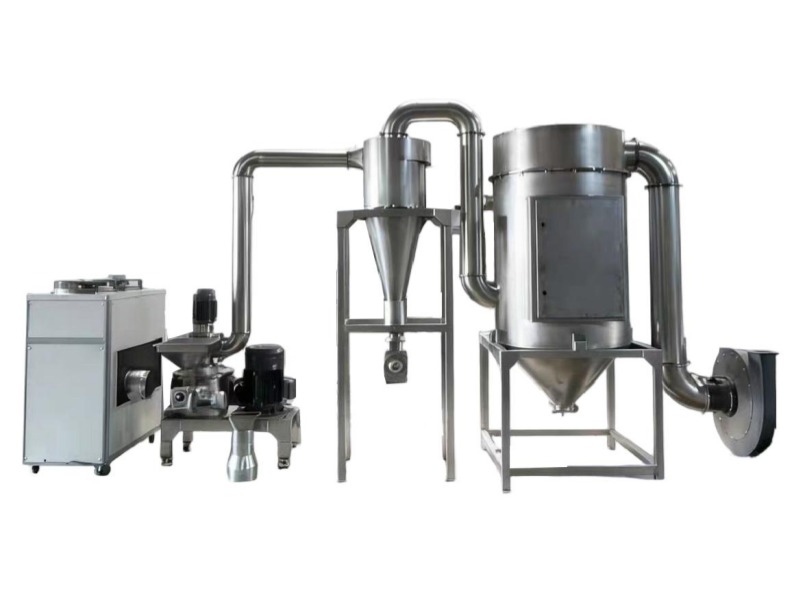
The customer’s equipment budget was approximately US$5,000. This immediately ruled out higher-investment grinding systems such as an air classifier mill, as well as larger hammer mill configurations whose equipment cost would exceed the customer’s budget. The left option is the SLU series standalone powder grinder. Considering the required 60-100 mesh fine flour and 30-60 kg/h capacity, the SLU series(beating hammer type cutter) can match the customer’s need. So we skipped the step to persuade the customer to raise the budget, which happens when the low budget is not enough to get the equipment matching the grinding demands.
2.2 Model Pick-up Based on the Material, Capacity and Fineness
The customer was using dehulled chickpeas. Removing the hull reduces the fibrous outer fraction entering the grinder, making the material more easier for direct size reduction than whole chickpeas with the hull still present. Considering the required mesh size range and capacity requirement, it is within the practical range of a standalone SLU-30 model powder grinder.
2.3 Multiple Screens Supplied for Different Powder Size
The customer did not require one single particle size. The practical requirement was to produce both:
• Coarser besan: around 60 mesh
• Finer besan: approximately 80-100 mesh
The SLU series powder grinder controls the output size by changing different hole size screen inside the chamber. So the SLU-30 was configured with interchangeable screens, then the customer could change the finished flour fineness according to the product being produced. The initial screen configuration was: 60 mesh*3, 80 mesh *3 and 100 mesh *2.
The three 60-mesh screens and three 80-mesh screens were matched to the customer’s current production requirements. Two additional 100-mesh screens were supplied because the customer may require a finer product in the future. This gave the customer some room to increase the fineness specification without immediately purchasing another grinding machine.
2.4 A Separate Sifting Machine Was Also Considered
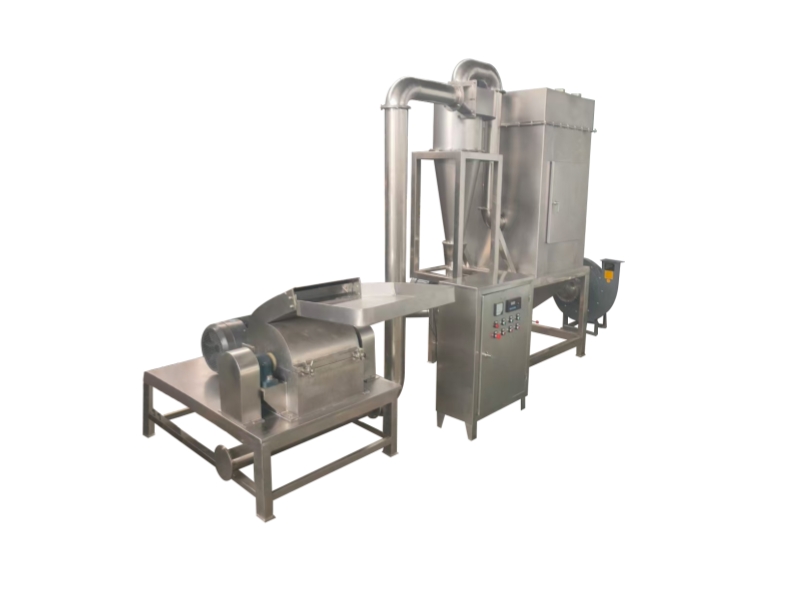
The customer had two different flour fineness requirements, so a separate sifting machine was also discussed as a possible downstream option. If the customer required tighter control of the final particle-size distribution, a two-layer, three-outlet sifter could be added after grinding. For example, the two screening layers could be configured around the customer’s desired grading points, with approximately 60 mesh and 80 mesh as the main separation points. Different outlets could then collect the corresponding fractions. This would provide more controlled particle-size separation than relying solely on the grinder screen.
After discussing the proposal with the customer, they ultimately selected the SLU-30 unit along with the recommended screen meshes of various specifications. They opted not to include a powder screening machine, as their requirements regarding particle size distribution were not particularly strict.
III. Case Summary
Why is the SLU-30 powder grinder selected as the right besan flour mill choice for this case? Actually, underlying this selection is a decision-making logic centered on the customer's needs. The customer in this case wanted approximately 60 mesh and 80-100 mesh flour, but did not require a tightly controlled particle-size distribution. Also, the whole purchase budget was within USD5,000. So the final solution was therefore the simple cost-saving design SLU-30 model standalone powder grinder with interchangeable screens.
If you are also planning to purchase a besan flour mill, please feel free to contact Salinovate Team for a customized solution.