


 English
 French
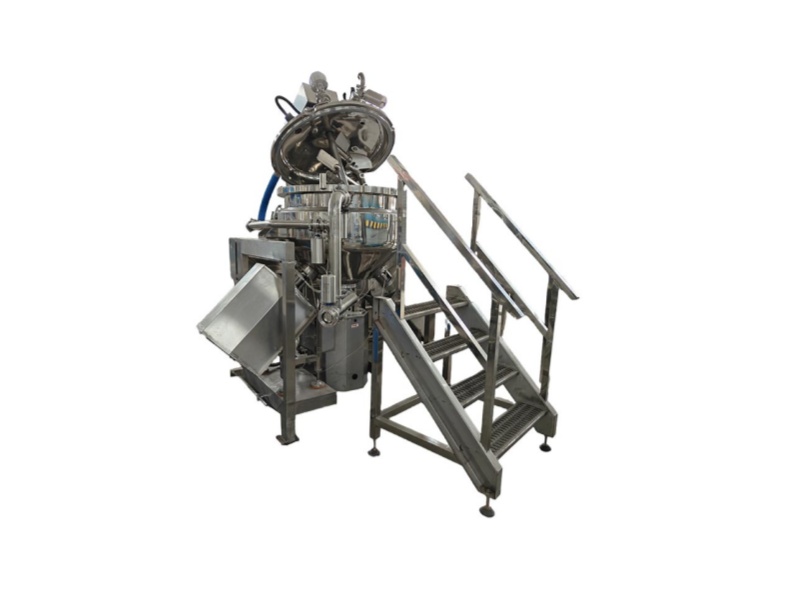
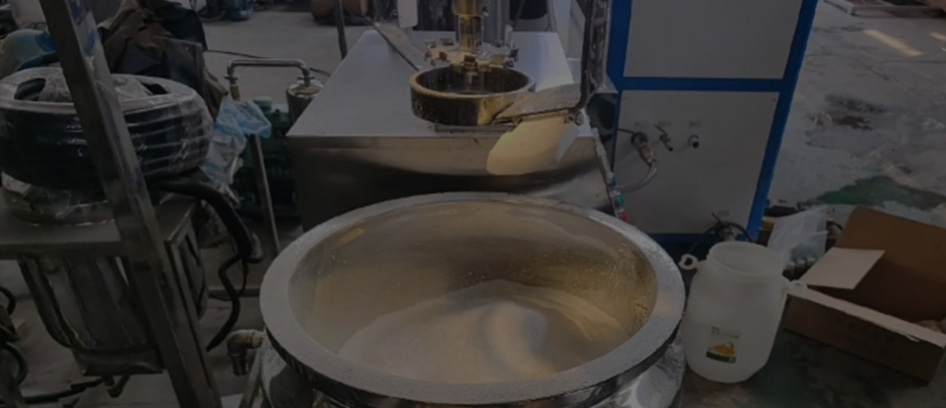
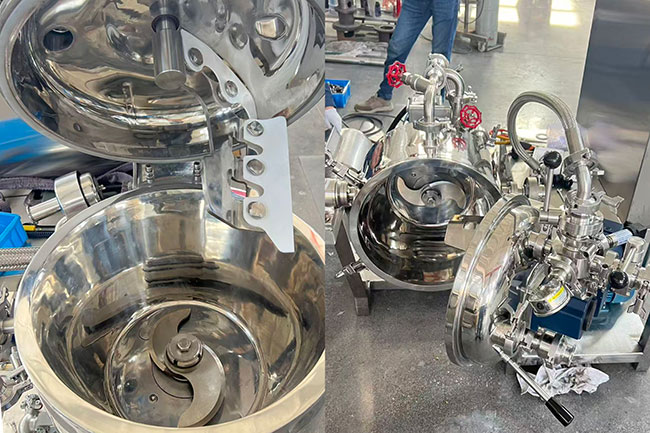
This article provides a systematic analysis of the core production technology for processed cheese sauce. It focuses specifically on today's most advanced all-in-one cutter emulsifier technology. The aim is to explore how it integrates multiple processing steps including cutting, heating, mixing, homogenization, and vacuum degassing into a one device to achieve a dual leap forward in both efficiency and product quality.(Salinovate Technology has such advanced universal cutter mixer as you can see below with the all-in-one cutter emulsifier technology.)

I. What Is Processed Cheese Sauce?
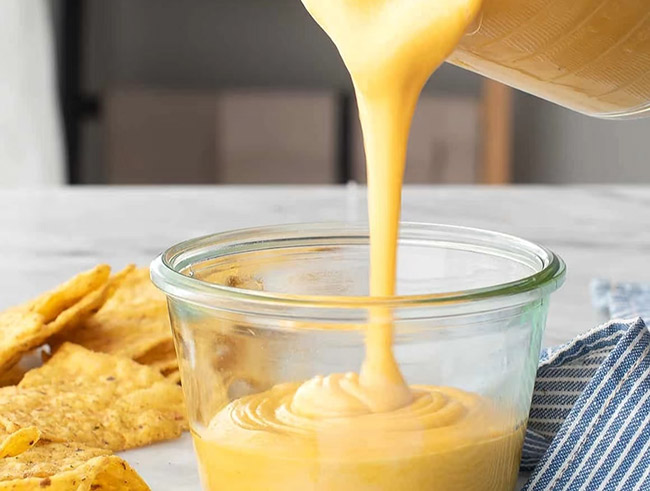
First, let us define processed cheese sauce. We have already addressed this question in our article called What Is Processed Cheese. Processed cheese sauce is a dairy-based product with an uniform and sauce-like consistency. Such product is produced by the heating, emulsification, and homogenization of natural cheese, emulsifying salt and other flavoring ingredients. It is a quintessential subcategory of processed cheese. High-quality emulsification and a refined texture are the core factors that determine the quality of the finished product.
II. Production Process for Processed Cheese Sauce
As indicated by its definition, the production process is essentially a procedure that fuses the proteins, fats, and water of natural cheese into a uniform and stable emulsion system. Its core methodology can be broken down into the following major steps:
• Chopping and Mixing: Large blocks of natural cheese are crushed into fine particles to ensure rapid and uniform heating during subsequent processing. Simultaneously, ingredients such as emulsifying salts and water are added to initiate preliminary mixing.
• Heating and Emulsification (Deep Fusion): Under high temperatures ranging from 75°C to 85°C, cations within the emulsifying salts (such as phosphates and citrates) chelate the free calcium ions present in the natural cheese casein. This process induces decalcification and alters the protein network structure. Consequently, casein polypeptides possessing emulsifying activity are released; this significantly enhances their hydration capacity and fat-emulsifying capabilities, thereby enabling the fat-rich natural cheese and water components to form a stable, unified emulsion.
• Homogenization and Textural Refinement: Any minute fat globules or protein particles potentially remaining within the emulsion are further broken down to an ideal size, ensuring that the resulting sauce possesses a smooth, grain-free texture.
• Vacuum Degassing (Key Enhancement): Conducted under vacuum conditions, this step effectively expels any minute air bubbles that may have been entrained during the mixing process. This results in a finished sauce that is denser, finer in texture, and brighter in color, while also extending the product's shelf life.
In the context of large-scale industrial production, traditional processes often require these various operations to be distributed across multiple pieces of equipment. This approach typically leads to prolonged production cycles, poses risks of contamination during material transfer, and makes it difficult to maintain batch-to-batch consistency. Consequently, the integration of the entire production workflow has emerged as the most significant trend in the technological advancement of processed cheese sauce manufacturing in recent years.
III. The Most Advanced Technology Currently Available: All-in-One Cutter Emulsifier Technology
The most advanced processed cheese sauce production technology currently on the market is known as the all-in-one cutter emulsifier technology, also called the "all-in-one processing system" or "vacuum cutter emulsifier system." Its core design concept is "one machine, multiple uses", simultaneously completing multiple processes such as chopping, heating, stirring, mixing, homogenizing, and vacuum degassing within the same machine, greatly shortening the production process and reducing intermediate steps. This technology was first invented and marketed by internationally renowned brands such as Stephan (Germany) and Roboqbo (Italy), representing the cutting edge of technology in the processed cheese processing field.
3.1 Main Functions: Four Major Processes Integrated
Functional Modules | Role | Value for Processed Cheese Sauce |
High-Efficiency Cutting | High-speed rotating blades mounted on the bottom/side walls instantly cut natural cheese blocks and blocky ingredients into extremely fine particles. | Cheese blocks can be directly fed in without crushing, significantly reducing processing time and manpower. |
Precise Heating | Jacket steam heating and direct steam injection are both supported. | Complete melting of cheese particles and uniform release of active ingredients. |
Powerful Mixing & Dispersing | Unique scrapper agitator design creates intense convection within the pot, ensuring uniform dispersion of various components. | Ensure 100% integration of emulsified salts, water, whey protein, and other auxiliary materials with cheese particles.
|
Homogenizing & Emulsifying | The built-in high speed cutting system applies high-intensity mechanical shear force to the molten mixture, forcing the oil phase to break down into tiny, uniform droplets. | Extremely high emulsification efficiency; fat globule size can be refined to micron size.
|
3.2 Core Upgrade: Standard Vacuum Function
High-end cutting type emulsifier mixer typically includes a vacuum system as a standard feature. During equipment operation, the vacuum environment offers the following multiple advantages:
1)High-efficiency degassing, improving texture: Under vacuum, materials rapidly lose microbubbles, increasing product density and resulting in a finer, smoother texture, leading to superior color and structure in cheese sauces.
2)Extended shelf life: Vacuum degassing removes dissolved oxygen, effectively inhibiting oxidation reactions and the growth of aerobic microorganisms, significantly extending the product's shelf life.
3)Optimized heating and evaporation: In a vacuum environment, the boiling point of liquids is significantly lowered. This allows for sterilization and concentration under gentler, lower-temperature conditions, maximizing the preservation of the cheese's original natural flavor, color, and nutrients.
3.3 Why is this technology revolutionary?
1)Efficiency Revolution: This technology highly integrates multiple processes that previously required 3-4 machines into a single unit, reducing overall process time by 50%-80%. Equipment like the Stephan Universal Machine is renowned for its cutting, mixing, heating, and emulsifying capabilities and is widely used in the industrial production of processed cheese. Its core concept is "one machine, multiple uses, multiple effects in one."
2)Quality Revolution: The powerful chopping and emulsifying system, combined with vacuum degassing, achieves unprecedented levels of emulsification in cheese sauces, resulting in product stability and smoothness far exceeding traditional jacketed kettle + colloid mill dispersion processes.
3)Hygiene and Reliability: The integrated, sealed system reduces material transfer steps, significantly lowering the risk of secondary contamination, while ensuring batch-to-batch product quality consistency.
3.4 Industry Standard Verification
The revolutionary value of this technology in the food industry has been verified by multiple parties. According to Stephan, a brand under ProXES, a food industry equipment expert, its general-purpose machinery is a "robust and efficient all-rounder" that simplifies and optimizes processing, suitable for a wide range of applications from confectionery and processed cheese to personal care. The integrated advantages of this technology have been fully verified in the actual production of processed cheese using models such as Stephan's UMX 5S.
Roboqbo's QBO system goes a step further, integrating the above functions with rapid cooling and concentration, aiming to complete almost all food conversion steps in a single machine, truly embodying the "one machine, multiple uses, one pot for sauce" concept. This compact, integrated processing system has proven capable of replacing multiple traditional machines (such as kneaders, planetary mixers, stoves, saucepans, refiners, concentrators, cutters, emulsifiers, etc.), achieving "reducing different processing stages to one in a continuous cycle."
IV. Our Technology and Solutions
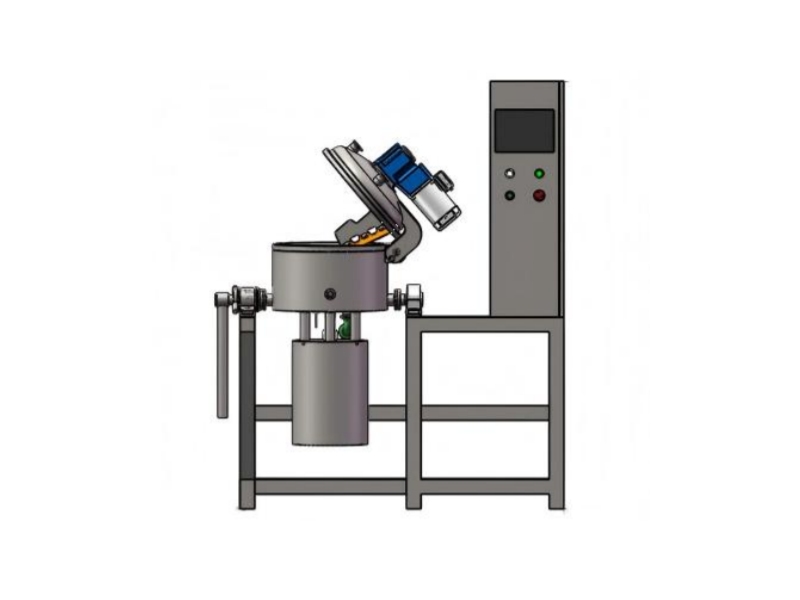
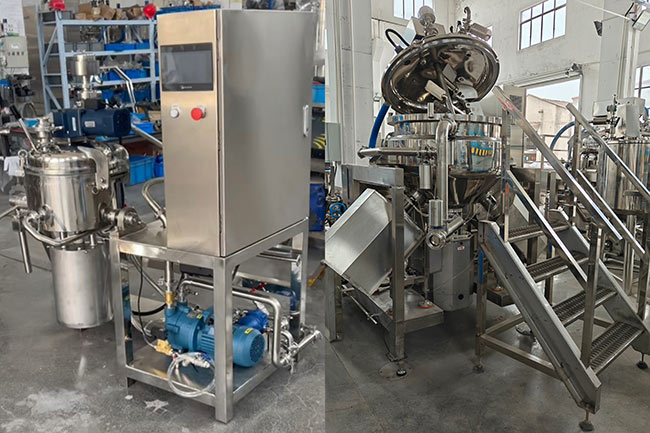
Based on in-depth study of the advanced concepts of international brands such as Stephan and Roboqbo, our company has independently developed a high-level, multi-functional chopping and emulsifying system, which is our SLCM-P series vacuum food cutter mixer/vacuum emulsifying mixer shown in below pictures. Our equipment perfectly integrates five core processes: chopping, heating, stirring, homogenizing, and vacuum degassing, ensuring stable performance and superior quality.
4.1 Core Technological Advantages
1)Multi-functional, fully integrated: One machine completes all key processes from cheese block input to finished cheese sauce, significantly simplifying the process and reducing manual intervention and material loss.
2)Cutting type emulsification system: Built-in 3000RPM high-speed chopping and emulsifying homogenization system, reducing oil droplets to the micron level, ensuring a stable, delicate, and non-layered product.
3)Vacuum degassing system: Standard configuration includes a high-efficiency vacuum pump, effectively removing air bubbles from the material throughout the processing, ensuring a firm, smooth, and brightly colored finished sauce, significantly extending shelf life.
4)Precise Temperature Control: Equipped with a heating jacket and direct steam injection system, it achieves rapid, uniform, and controllable heating, ensuring the cheese melts and emulsifies fully at the optimal temperature.
5)Flexible Customization: The pot capacity ranges from laboratory R&D level (15L) to pilot/industrial production (250L or higher capacity), and the blades can be configured in single or triple sets to match different production capacity requirements.
You can watch the working video of this type mixer to see clearly the working performance:
4.2 Typical Application Areas
This equipment is ideal for the production of the following types of reprocessed cheese sauces:
• Hamburger/Sandwich Filling Cheese Sauce
• Baking Cheese Fillings
• Restaurant Cheese Dipping Sauces
• Ready-to-eat Seasoned Cheese Sauces (Pasta Sauce, Baked Rice Sauce, etc.)
• Precursors for Reprocessed Cheese Slices/Blocks Sauces
V. Summary: Future Trend of the Processed Cheese Sauce Production
The production technology for processed cheese sauces is evolving towards greater integration, efficiency, and quality. All-in-one technology, a multi-functional chopping and emulsification technology centered on chopping, heating, mixing, homogenization, and vacuum degassing, represents the current industry pinnacle. This provides cheese sauce manufacturers with a professional solution for shortening process flows, improving production efficiency, and achieving superior quality stability. Therefore, this technology will be the future trend of the industry. Our company also has production equipment with similar technology; please contact the Salinovate Team if needed.
References:
1. Su Yanling, Liu Lu, Chen Jianxing, et al. Optimization of compound emulsifying salts for the production of processed spread cheese [J]. Food Science, 2013, 34(18): 1-5.
2. Buňková, L.B., et al. Processed cheese is a dairy product made by heating and mixing natural cheese with emulsifying salts. Foods, 2025.
3. ProXES. (2022). UMX 5 & UMX 5S Product Brochure. ProXES GmbH.
4. Roboqbo. QBO System – All-in-One Processing System. Roboqbo.
Related Post:
>>Custom 250L Cheese Sauce Vacuum Emulsifying Mixer with External Circulation Completed
>>How to Choose Cheese Mixer Making Cheese Sauce
>>Mayonnaise Mixer Machine Options for Industrial Production