


 English
 French
How to make chocolate sauce? Trust that many chocolate sauce lovers have such confusion. Drawing upon both technical literature and industry best practices, this article provides a systematic breakdown of three processing methods for chocolate sauce. The whole analysis covers formulation, equipment introduction, and a comparative analysis of the respective advantages and disadvantages of each technique. The final purpose is to help you identify the production solution best suited to your needs.

I. Introduction: Two Classic Formulations for Chocolate Sauce
Before the analysis on how to make chocolate sauce, we need to figure out the formulations for such sauce. As a staple ingredient in the realms of baking, desserts, and breakfast spreads, the manufacturing process for chocolate sauce directly impacts the product's texture, stability, and shelf life. Based on their compositional makeup, chocolate sauces are broadly categorized into two main types:
Formula Type | Key Ingredients | Process Characteristics | Typical Products |
Cocoa mass/Chocolate chip-based | Cocoa mass, chocolate chips, cream, powdered sugar, condensed milk, etc | Require initial heating for dissolution, followed by mixing and homogenization | High-quality chocolate sauces, baking-grade chocolate sauces |
Cocoa powder-based | Cocoa powder, butter, powdered sugar, vegetable oil, etc | Dry-wet mixing (powder-oil blend), followed by heating and stirring | Economical chocolate sauces, coating sauces |
Regardless of the specific formula used, transforming these raw materials into a smooth, refined chocolate sauce necessitates three core processing stages: heating for dissolution, mixing and stirring, and homogenization and emulsification.
II. Traditional Methods: Stirring Techniques in Home and Small-Scale Workshops
Tracing back to the earliest period, manual heating and stirring/automatic stirring are adopted to make chocolate sauce in the home kitchen or small workshops.
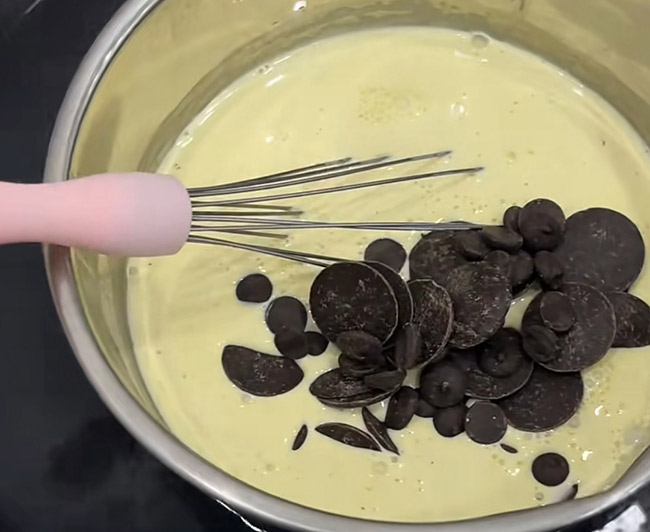
2.1 Process Flow
The earliest methods for making chocolate spread were relatively simple:
A[Fat-based Ingredients: Cocoa Mass / Chocolate Chips / Butter] → B[Pre-melting via Water Bath] → C[Add Powdered Sugar & Condensed Milk]C → D[Manual Stirring or by Stand Mixer] → E[Chocolate Sauce]
2.2 Process Characteristics
Feature | Description |
Heating method | Pre-melting fat-based ingredients via a water bath |
Mixing equipment | Standard mixer/handheld stirrer |
Application | Home production, small-scale bakeries |
Output | Small batches (a few kilograms to a few tens of kilograms) |
2.3 Limitations of Traditional Methods
Problem | Manifestation | Underlying Cause |
Coarse texture | Lack smoothness | Insufficient shear force from mixing equipment |
Short shelf life | Layering/separation occurs after a few days of storage | Unstable emulsion system |
According to technical literature on chocolate processing, chocolate spreads produced using traditional mixing methods typically feature oil droplet sizes ranging from 50 to 100um. This is significantly larger than the 5 to 20um range achieved in industrial production, resulting in a marked reduction in emulsion stability.
III. Modern Process Method One: By Emulsifying Mixer
The emulsifying mixer is currently the standard equipment for the industrial-scale production of chocolate sauce. Based on configuration and price, these machines can be categorized into three categories.
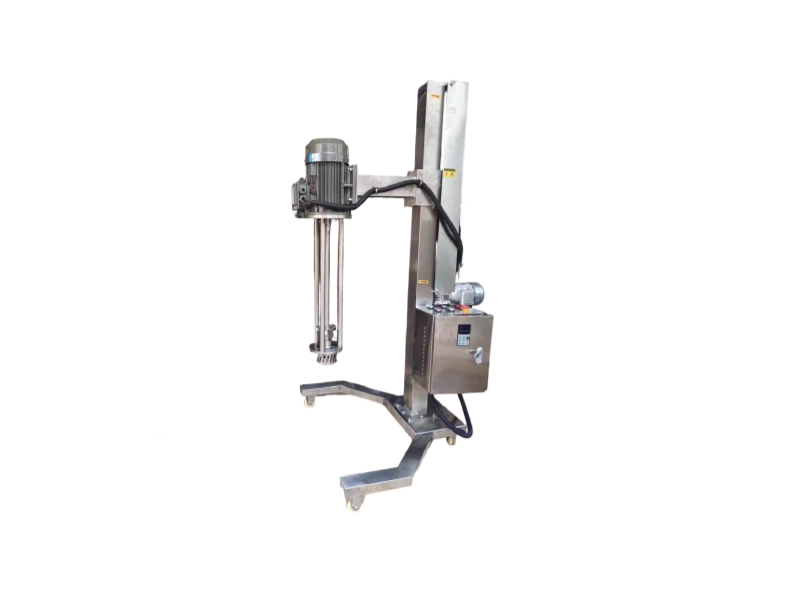
3.1 Category 1: SLH Series Stand-Mounted High Shear Mixer
Equipment Features: simple structure and affordable price
Item | Description |
Price | Low |
Heating method | Require external assistance (via a water bath or separate heating unit) |
Usage method | Materials must be pre-heated and dissolved before being placed in a container for processing with the homogenizing head. |
Applicable scenarios | Small-scale usage, laboratory R&D, small-batch bakeries. |
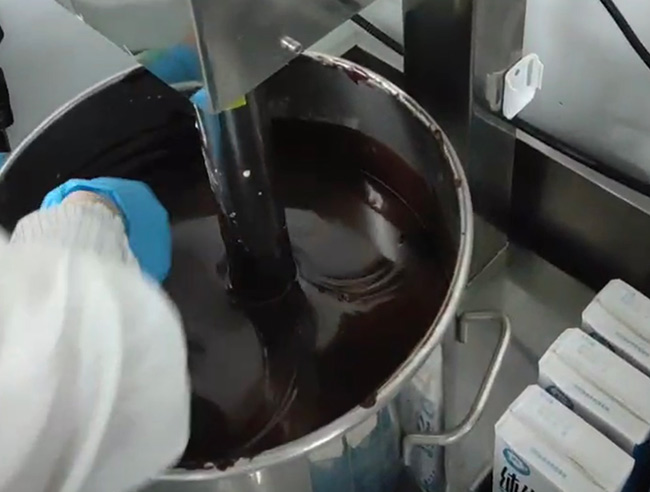
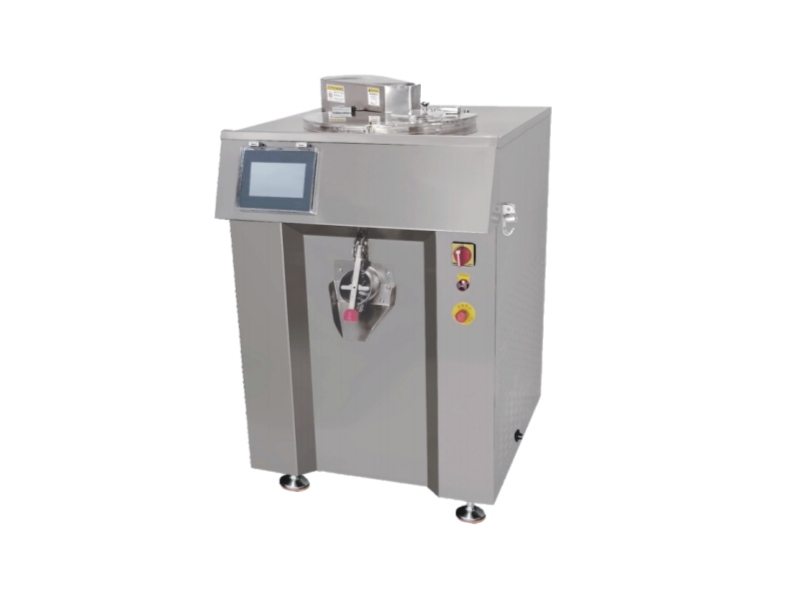
3.2 Category 2: SLMT/SLC Series Tank-Type Emulsifying Tank
Equipment Features: Integrated design, triple-jacketed tank structure, and built-in heating capability.
Item | Description |
Structure | Triple-jacketed tank |
Heating method | Electric heating or steam heating (optional) |
Functionality | Integrated heating, stirring, and homogenization |
Hygiene | Fully enclosed design for superior hygiene |
Applicable Scenarios | Small to medium-sized factories, batch production |
Advantages:
● Comprehensive Functionality: Heating, stirring, and homogenization are completed in a single integrated process.
● Enhanced Hygiene: Fully enclosed design minimizes the risk of contamination.
● Temperature Control: Enable precise control over heating temperatures.
Following is a video of our SLC-80 model tank-type emulsifying mixer for chocolate sauce making for your reference:
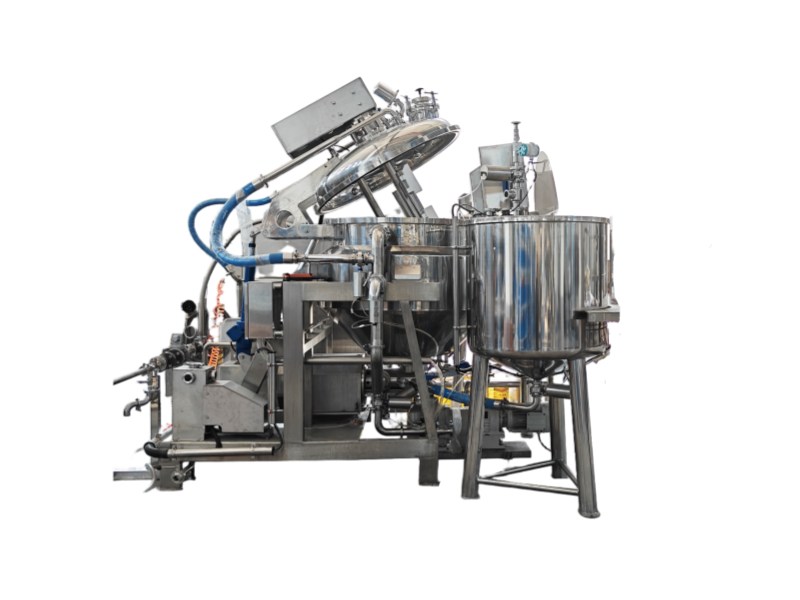
3.3 Category 3: SLFT Series Upgraded Three-Stage High Speed Vacuum Emulsifying Mixer
Equipment Features: Employ a three-stage homogenization system to deliver optimal emulsification results.
Parameter | Description |
Homogenization system | Three-stage rotor-stator series configuration |
Emulsification fineness | Oil droplet particle size reaches 2-5um |
Stability | No separation occurs during long-term storage |
Mouthfeel | Exceptionally silky and refined |
Applicable scenarios | Premium chocolate spreads, export-grade products, large-scale manufacturing facilities. |

Core Advantages:
● Superior Emulsification: Produce the silkiest and most refined chocolate spreads
● Maximum Stability: Prevent oil-water separation even during prolonged storage
● Consistent Quality: Ensure excellent batch-to-batch consistency
IV. Modern Process Method Two: Chocolate Sauce Production by Cutter Mixer
The cutter mixer represents another category of equipment used for producing chocolate paste; its primary distinguishing feature is its ability to directly process large-sized raw materials. Such cutter mixer can be divided into two categories.
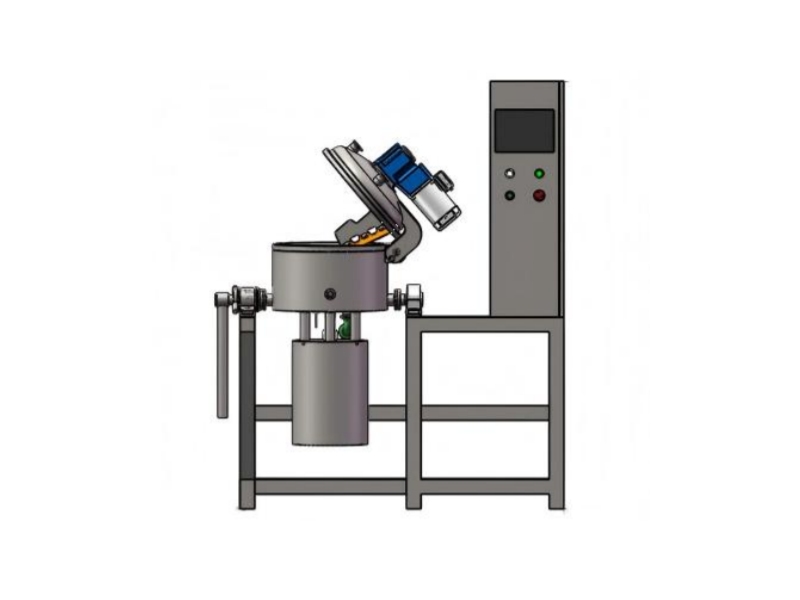
4.1 SLCM Series Single Layer Standard Cutter Mixer
Item | Description |
Structure | Single-layer tank with bottom-mounted high-speed blades |
Functions | Chopping, mixing, and homogenization |
Heating method | Require external pre-heating |
Applicable scenarios | Small-batch production; frequent product changeovers |
Operational Procedure:
● Fat-based ingredients (such as cocoa liquor blocks, chocolate chips, etc.) are pre-heated and melted in advance.
● Load the ingredients into the chopping mixer.
● Perform the chopping, emulsification, and homogenization processes.
4.2 SLCM-P Series Triple-Layer Cutter Mixer (Support Jacket Heating or Steam Injection)
Project | Description |
Structure | Triple-walled jacketed tank with bottom-mounted high-shear blades |
Function | Integrated chopping, mixing, heating, and homogenizing capabilities |
Heating method | jacket heating or steam injection |
Applications | Industrial production; direct processing of large size raw materials |
Key Advantages:
● Direct Loading of Large Materials: Cocoa liquor blocks and chocolate chips can be added directly without pre-chopping
● All-in-One Processing: Heating, chopping, mixing, and homogenizing occur simultaneously within a single unit
● Enhanced Efficiency: Eliminate the need for a separate pre-melting or pre-dissolving step
4.3 Key Distinctions from Emulsifiers
Comparison Dimension | Emulsifying Mixer | Cutter Mixer |
Material input form | Small pieces or pre-dissolved | Large chunks (direct input) |
Cocoa mass/Chocolate chip processing | Require prior heating and dissolution | Direct input for chopping |
Pre-dissolution requirement | Mandatory | Not required |
4.4 Why is a Cutter Mixer Better Suited for Cocoa mass and Chocolate Chips-Based Chocolate Sauce?
At room temperature, cocoa mass and chocolate chips exist as solid blocks. If the homogenization function is activated directly under these conditions:
● The homogenizer mechanism may become jammed by the large chunks of material;
● It would be necessary to preheat the mixture for a period, allowing the material to melt before the homogenization process could begin.
In contrast, the bottom-mounted rotary blade design of cutter mixer enables the unit to:
● Directly chop through large blocks of cocoa liquor;
● Perform chopping simultaneously with heating;
● Eliminate the need for pre-melting, thereby significantly boosting production efficiency.
This feature is particularly crucial when processing chocolate sauces derived from cocoa mass or chocolate chips.
V. Detailed Comparison of Equipment
The first traditional processing method is primarily utilized in home kitchens or small-scale bakeries; therefore, it is excluded from the scope of this comparison. This section focuses specifically on comparing the two modern methods for processing chocolate sauces.
5.1 Technical Parameter Comparison
Comparison Criteria | SLH Series Hanger Type | SLMT/SLC Series Tank-Type | SLFT Series Three-Stage Type | SLCM Series Cutting Type |
Heating Method | External Auxiliary | Jacket Heating | Jacket Heating | Jacket Heating or Steam Injection (Triple-Layer Model) |
Processing of Large Solids | Not Possible | Not Possible | Not Possible | Possible |
Texture Fineness | Average | Good | Optima | Good |
Price | Low | Medium | High | High |
Applicable Scale | Small to medium batches | Small to large batches | Small to large batches | Small to large batches |
5.2 Emulsification Performance Comparison
Equipment Type | Emulsification Effect | Texture | Stability |
SLH series | Average | Average | Relatively Stable |
SLMT/SLC Series | Average | Good | Relatively Stable |
SLFT Series | Very Good | Optima | Most stable |
SLCM Series | Good | Good | Stable |
VI. Summary
How to make chocolate sauce? We believe that, based on the analysis of processing methods provided above, you already know the answer. Essentially, specialized production equipment is required to successfully manufacture chocolate sauce. Moreover, as the production equipment underwent successive generations of upgrades, the quality of the chocolate spread produced rose to ever-higher levels.
If you would like to know more about the chocolate production issues or look for the machine solutions, welcome to contact us.
Related Posts: