


 English
 French
This article provides a detailed analysis of the definition, production process, product classification, and application scenario of processed cheese, helping you gain a comprehensive understanding of the technical underpinnings of this important dairy product category.

I. Definition and History of Processed Cheese
Many people may have a somewhat vague understanding of the concept of processed cheese; here, we will briefly introduce the definition of this product and trace its historical origins.
1.1 Definition
Processed cheese is a dairy product, the main raw materials of which are one or more types of natural cheese. According to the definition provided by Michigan State University, processed cheese is produced by shredding natural cheese and heating it to a molten state (a composition of proteins, water, and fats). During this heating process, emulsifying salts are added to emulsify the mixture (other flavorings, such as milk powder or butter, may also be added). Thereby, the shredding, heating and emulsifying form all the ingredients into a stable oil-in-water emulsion.
1.2 Historical Background
The origins of processed cheese can be traced back to the early 20th century. According to records from the Department of Food Science and Human Nutrition at Michigan State University:
● 1911: Walter Gerber of Switzerland developed the first commercially produced processed cheese.
● 1916: James L. Kraft (founder of Kraft Foods) was granted the first patent for processed cheese.
● 1921: George Garstin of the Phenix Cheese Co. was granted a patent for the emulsification process.
The primary motivation behind the development of processed cheese was to address the issue of natural cheese's instability when stored at ambient temperatures. The goal was to create a product capable of long-term storage in environments with temperatures of 40°C or lower, without succumbing to quality defects such as fat leakage, "sweating," or oil separation.
II. Analysis of the Production Process
So, what exactly does the production process for processed cheese spreads look like? In reality, the final form of processed cheese products is not monolithic; while the processes for different finished goods share commonalities, they also possess distinct differences. Please refer to the analysis below.
2.1 Core Process Flow
A[Natural Cheese] → B[Crushing/Grinding]
B → C[Ingredient Mixing: Emulsifying salts, water, other Ingredients]
C → D[Heating & Emulsification]
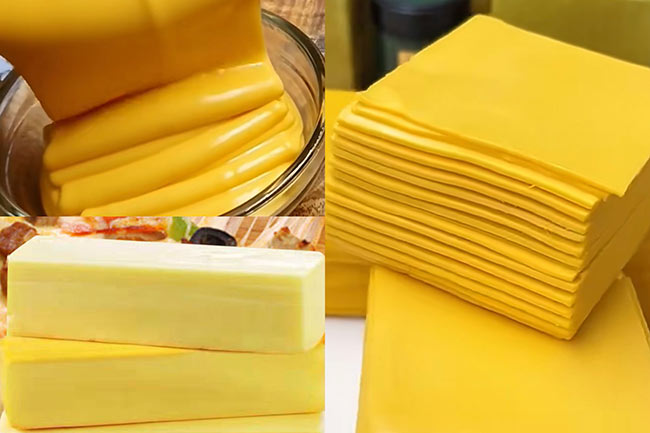
D → E1[Final Product 1: Cheese Spread]
→ E2[Semi-Product of Final Product 2: Cheese Sauce]
E2 → F1[Cooling & Shaping]
F1 → G1[Slicing/Cutting into Strips]
G1 → G2[Cheese Slices/Cheese Blocks]
2.2 Process Upgrades
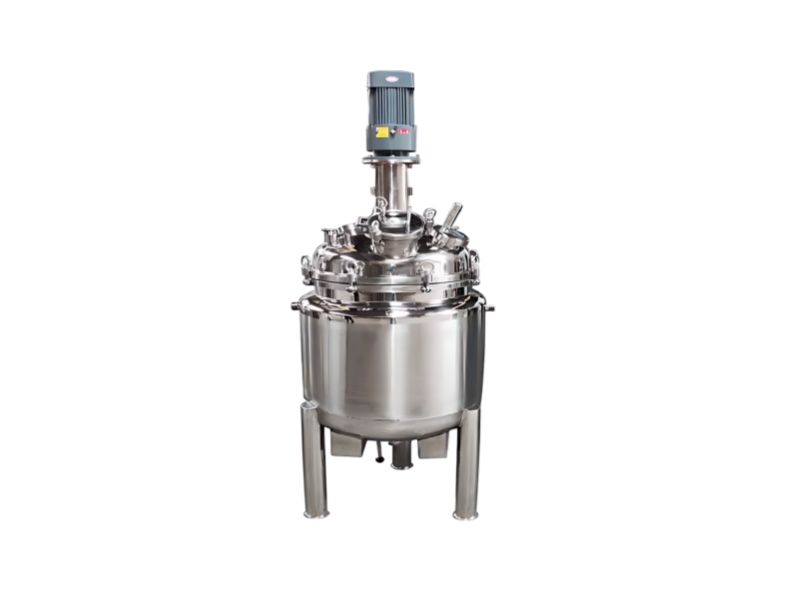
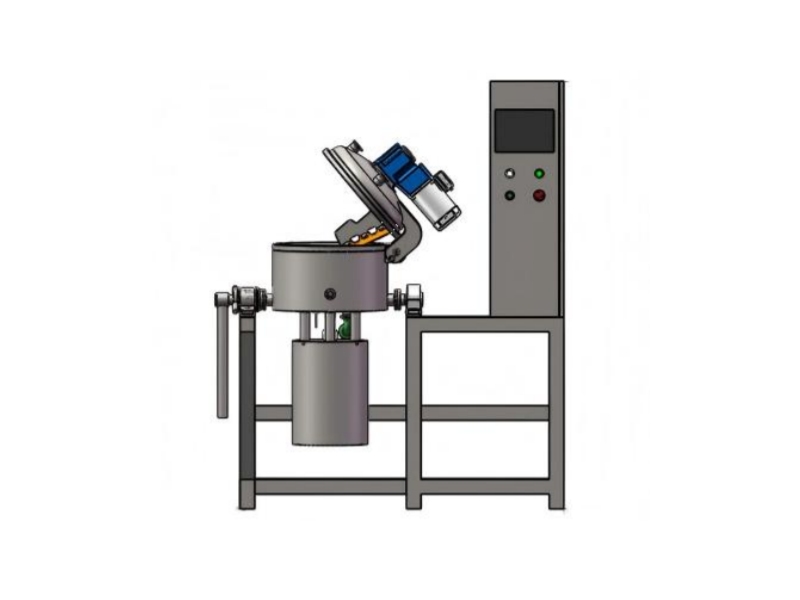
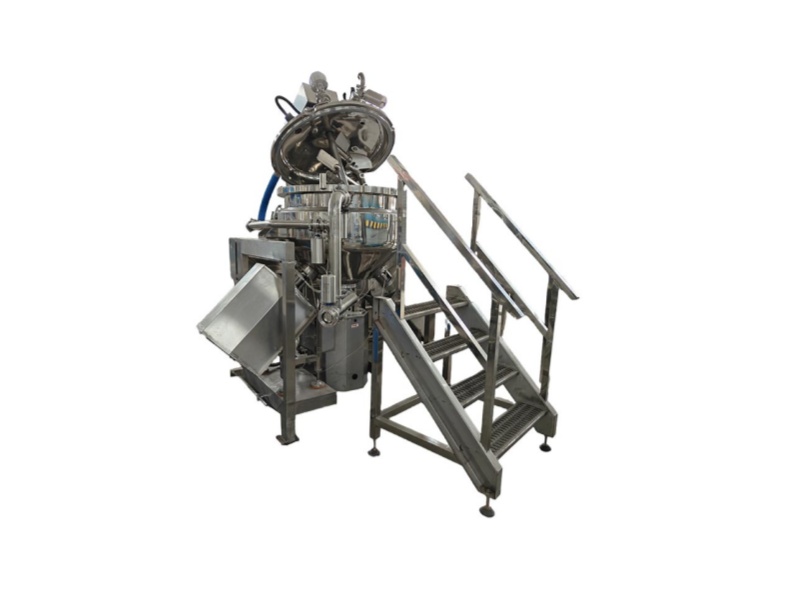
The above outlines the traditional production process for cheese processing. In actual modern manufacturing, however, the stages of cheese shredding, heating, and emulsification can be performed simultaneously, thereby eliminating the need for such an extensive array of equipment. Renowned international brands, such as Stephan, have long since introduced the UMX series machine that integrate shredding, heating, and emulsification functions into a single unit, thereby significantly boosting the processing efficiency of cheese sauces. Our company also has similar universal machine, with the integrated functions in one unit.
Of course, if subsequent steps, such as producing sliced processed cheese is required, separate equipment for cooling, slicing, and similar operations will still be necessary.
2.3 Differences in Formulation Ratios
Parameter | Spreadable Type (Processed Cheese Spread) | Solid Type(Processed Cheese Slice/Block) |
Moisture content | 44–60% | 2–25% |
Fat content | ≥20% | ≥47% FDM (Fat in Dry Matter) |
Emulsifying salts | 1–3% | 1–3% |
Thickeners/Stabilizers | Optional (≤0.8%) | Generally not used |
The fundamental reason for these differences in ingredients lies in the required product characteristics: Spreadable products must maintain a soft, spreadable texture; consequently, they feature a higher moisture content and may sometimes include added stabilizers (such as locust bean gum, xanthan gum, etc.). Solid type products, conversely, require an elastic texture that allows for slicing/cutting; therefore, they feature a lower moisture content.
III. Key Application Scenarios
3.1 Sliced / Block-form Processed Cheese
● Burger Slices: Melts quickly; smooth texture
● Sandwich Slices: Melts evenly without dripping
● BBQ Slices: Retains shape under high heat; ideal for grilling
● Ready-to-Eat Snacks: Individually packaged; convenient for on-the-go consumption
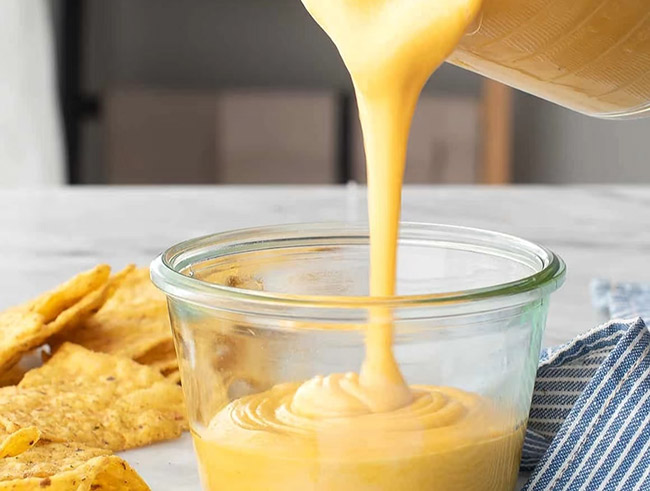
3.2 Spreadable / Sauce-form Processed Cheese
● Cheese Dips: Perfect with chips, vegetables, or crackers
● Bread Spreads: Ideal for breakfast spreads or baking fillings
● Cooking Sauce Bases: Foundations for cheese sauces and dips
● Pasta Sauces: Cheese-flavored pasta sauces
IV. Conclusion
So, what is processed cheese? It is a dairy product derived from natural cheese through a sequence of crushing, heating, and emulsification. Depending on its intended application, it can be produced as spreadable cheese (high moisture content) or as sliced/block cheese (low moisture content, requiring cooling for shaping and cutting).
References:
1. Fox, P.F., Guinee, T.P., Cogan, T.M., McSweeney, P.L.H. (2017). Processed Cheese and Substitute/Imitation Cheese Products. In: Fundamentals of Cheese Science. Springer, Boston, MA.
2. ScienceDirect. Cheese Spread - Food Science Topic.
3. Cheese Market News. (2017). Processed cheeses provide cooking, snacking solutions.
Related Posts: