


 English
 French
Nut butter has always been popular, and its market size is expected to continue growing in the future. This growth is driven by health-conscious consumer trends, the rise of plant-based diets, and product innovation. So, how to make nut butter? From raw nuts to a stable and delicious spread, it requires a precise understanding of food science principles and engineering techniques. This article aims to analyze the entire production chain of nut butter, specifying the various processing technologies applied in the butter production.

I. Nut Butter Market Insights and Ingredient Science
1.1 Market Trends and Business Opportunities
Historically, the nut butter market has been dominated by peanut butter. However, the market is now entering a period of diversification:
1)Product diversification: In addition to traditional peanut butter, almond butter, cashew butter, and macadamia nut butter are gaining market share.
2)Mixed-flavor nut butters: Single-flavor spreads are too monotonous; multi-flavor nut butters offer more nutritional value and a richer taste.
3)Functional demands: Products with added super foods (chia seeds, flax seeds), protein fortification, and reduced sugar versions are gaining popularity.
For more information on nut butter market development and investment opportunities, please refer to our article: Investment Analysis - Value and Chance in the Nut Butter Market.
1.2 Core Quality Parameters of Raw Nuts
Scientific selection of raw materials is the foundation of quality. The significant differences in the chemical composition of different nuts greatly influence process design.
Nut Types | Fat Content | Protein Content | Typical Usage | Challenge |
Peanut | 44-56 | 25-30 | Traditional Nut butter | Temperature Control |
Almond | 49-55 | 21-26 | Premium Spread | Hard Material |
Cashew Nut | 44-50 | 18-22 | Sweet Butter | Sweet |
Walnut | 65-70 | 15-18 | Functional Products | Prone to Rancidity |
(Date source: USDA National Nutrient Database, 2023)
Key Performance Indicators (KPIs) Control:
1)Moisture Content: Raw materials must be controlled at 5-7% to ensure consistent baking results.
2)Free Fatty Acids (FFA): ≤1.5%, to prevent premature rancidity.
3)Aflatoxins: Must meet FDA/EU limits (≤20ppb).
II. A Comprehensive Analysis of the Core Production Process
The core processing steps for nut butter consist of roasting, peeling, coarse grinding, and fine grinding.
2.1 Nut Pretreatment: Roasting
1)Temperature-Time Curve:
Peanuts: 150-160°C, 18-22 minutes (for sufficient Maillard reaction)
Almonds: 140-150°C, 15-18 minutes (to prevent excessive browning)
Cashews: 130-140°C, 12-15 minutes (to preserve natural sweetness)
2)Heat Transfer Method Selection:
Convection Roasting: Good uniformity, suitable for small nuts
Drum Roasting: High heat transfer efficiency, suitable for industrial continuous production
Superheated Steam Roasting: Emerging technology, reduces acrylamide formation by 70%
3)Peeling Technology Key Points:
Dry Peeling: Rapid cooling after roasting, removing the seed coat using a friction peeling machine
Wet Peeling: Briefly blanching (90°C hot water, 1-2 minutes), then mechanical peeling
Technical Key: Peeling efficiency ≥95%, nut breakage rate ≤3%
2.2 Grinding and Texture Control Engineering
1)Two-Stage Grinding Theory
Coarse Crushing Stage:
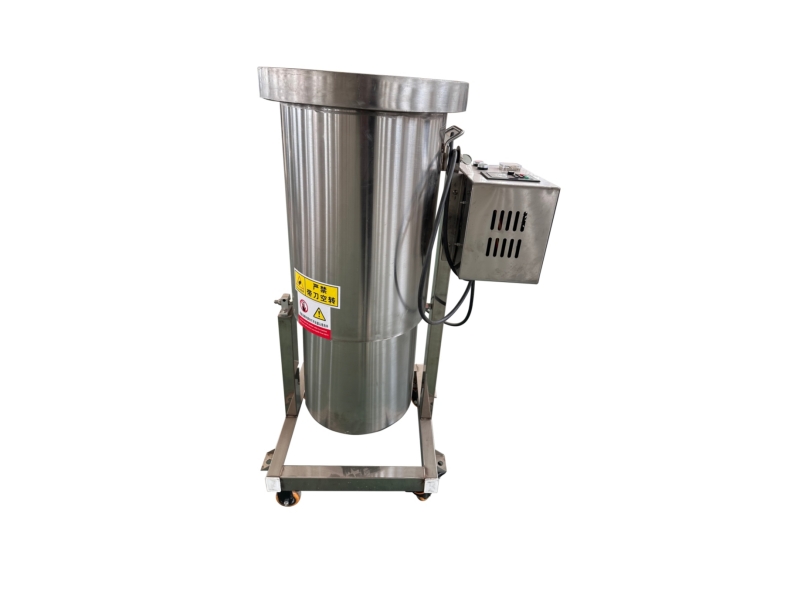
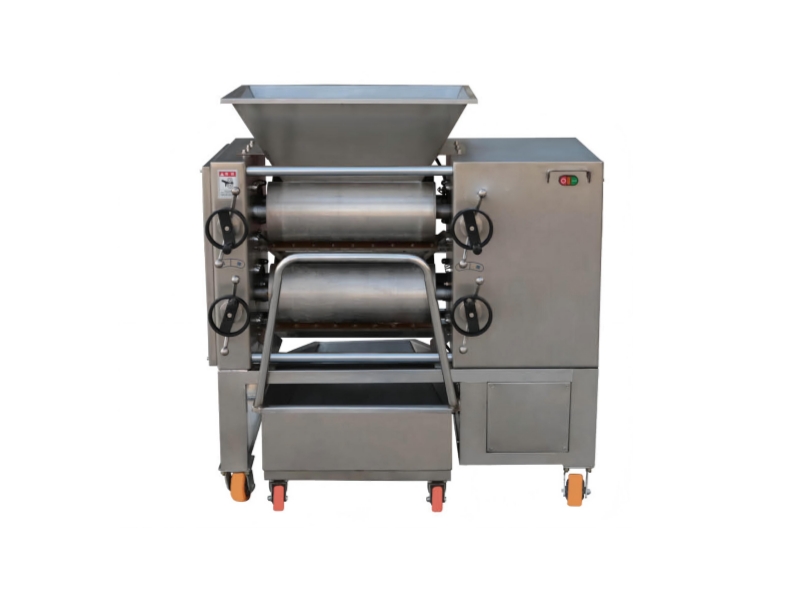
● Reason: Some nut particles are relatively large, and it's best to crush them before fine grinding to significantly improve the efficiency of subsequent fine grinding. Furthermore, for small-scale nut butter production, if the subsequent colloid mill model is relatively small, the feed opening is also small. Pre-crushing is a necessary step to ensure normal feeding in the subsequent fine grinding stage.
● Matching Equipment: Our SLCM series simple cutter mixers and SLRG series roller grinder (single set of rollers is sufficient) are particularly suitable for coarse crushing. The SLCM is suitable for relatively small-scale crushing, while the SLRG is suitable for medium to high-scale crushing.
Fine Grinding Stage:
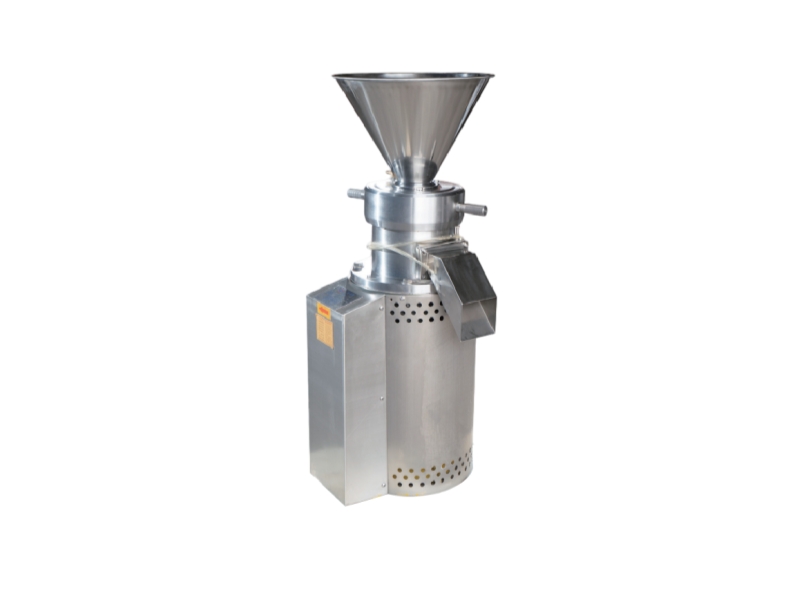
● It is the core process, determining the final texture. Preferred equipment: Stone mill or colloid mill.
2)Working principle
Stone mill: Low-speed (20-40rpm) grinding, slow temperature rise (<45°C), preserves flavor substances
● Applicability: Customer groups prefer nut butter ground with traditional stone mills, with the main focus being the stone grinding technique.
Colloid mill: High-speed shearing (2900rpm), high efficiency, suitable for large-scale production
● Applicability: General industrial production usually uses colloid mills as the first choice, with very high working efficiency. Capacities from 50kg/h to 1 ton per hour and above are available.
● Remark: If there is a very high demand for the fineness of the nut butter, requiring a fineness of 300 mesh, a high-pressure homogenizer is a necessary piece of equipment after the grinding by colloid mill. You can read this article of Colloid Mill VS High-Pressure Homogenizer to see the difference.
Notes:
● Viscosity Adjustment: Controlled through grinding fineness, temperature, and the proportion of added solid fat.
● Oil Separation Prevention Technology: Adding 0.5-2% of hydrogenated vegetable oil or shea butter as a stabilizer
2.3 Innovative Process for Mixed Flavor Nut Butter
1)Mixing Ingredients:
● Mixed flavors: Matcha powder, spice powders, salt, powdered sugar, etc. can be added.
● Addition of functional ingredients: High-protein powders, chia seeds, cocoa nibs, etc.
2)Working Steps:
The process of uniformly mixing the newly added seasonings with the nut butter involves homogenization and emulsification processes, as well as cooling process. At the same time, special attention must be paid to the addition of granular ingredients; these should be added only after the other ingredients and the main nut butter have been homogenized and emulsified. Only the stirring function should be activated; the homogenization function should be turned off.
3)Process Innovation Points:
● Step-by-step mixing strategy: Prevent component separation and particle damage caused by density differences.
● Cooling design: The mixing tank usually is in two-layer design with the cooling jacket to efficiently control the mixed nut butter temperature to maintain the quality.
● Vacuum mixing technology: Remove trapped air and extends shelf life, optional.
III. Filling and Packaging Technology Solutions
3.1 Packaging Forms and Equipment Selection Matrix
Package Type | Applicable Product | Key Equipment | Key Technology | Speed Range |
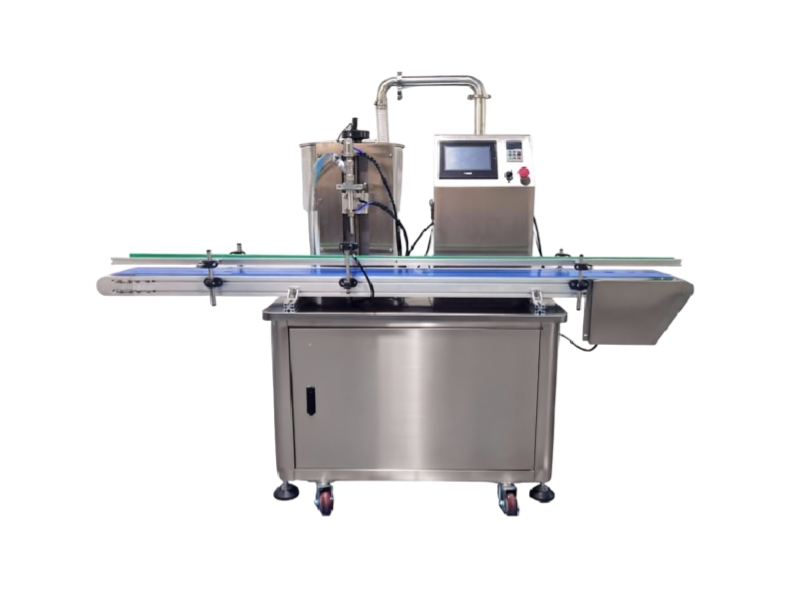
Glass Bottle(50-500g) | High-end nut butter | Semi automatic filling machine, linear filling machine, rotary filling machine | Anti drip filling, vacuum sealing and capping | 5-200BPM |
PET Bottle(100-500g) | Mid-range,portable | Semi automatic filling machine, linear filling machine, rotary filling machine | Anti drip filling | 5-200BPM |
Spout Pouch Bag(80-500g) | Portable, children group | Semi automatic filling machine, filling and capping integrated machine | Anti drip filling, vibration disc cover | 5-70BPM |
Plastic Bucket(1-20kg) | Catering/B2B channels | Filling pressing line | Big volume filling | 1-30BPM |
3.2 Filling Technology Analysis
1)Filling Dosage System:
● Rotor Pump Dosing: Particularly suitable for high-viscosity nut butter, with relatively fast pumping speed
● Piston Pump Dosing: Pneumatic piston dosing and servo-controlled piston cylinder dosing for medium to low viscosity nut butter.
● Gear Pump Dosing: Filling by gear pump, suitable for low to medium viscosity nut butter.
2)Oil-Proof Filling Technology:
● Principle: Accurately control the product temperature at 28-32℃ (slightly higher than the melting point of the oil) before filling
● Equipment: Conveyor pipes and filling valves equipped with jacket insulation
● Effect: Reduce phase separation during the filling process and decrease oil separation by 50% during shelf life
3)Intelligent Control System:
● Filling program settings: Filling programs for different filling specifications can be set on the PLC touch screen, such as setting the filling head diving time, filling volume, filling time, filling time interval, etc. After each program is designed, it can be saved in the PLC program. Call it every time you use it.
● Weight feedback system: The actual weight data of each bottle is fed back to the PLC, and the filling parameters are adjusted in real time
● Visual inspection system: detects liquid level height, cover sealing, and label position
● Data traceability: Automatic recording of filling parameters (temperature, weight, speed) for each batch, in compliance with FSMA requirements
4)Aseptic Filling System (for high-end products)
● Process flow: Product UHT sterilization (110 ° C, 3-5 seconds) → Aseptic filling environment (ISO level 5).
● Advantages: No need to add chemical preservatives, extended shelf life to 18-24 months.
● Investment: Equipment costs 30-40% higher than traditional hot filling.
IV. Quality System and Food Safety
4.1 Critical Control Points (HACCP) System
Process Stage | Potential Harm | Control Measures | Monitoring Frequency | Corrective Measures |
Raw Material Receiving | Aflatoxin, heavy metals | Supplier audit and batch test | Per batch | Reject excessive raw materials |
Roasting Stage | Acrylamide, pathogenic bacteria | Temperature and time control | Continuous | Product isolation evaluation during deviation |
Grinding Stage | Metal foreign objects, microorganisms | Magnetic separator and metal detector | Continuous | Remove contaminated batches |
Continuous Monitor | Poor sealing and secondary pollution | Vacuum/pressure testing | Sampling per hour | Adjust equipment parameters |
4.2 Shelf Life Prediction Model
Establishing Accelerated Shelf Life Testing (ASLT) based on Arrhenius equation:
● Temperature conditions: 37 ° C storage vs 25 ° C storage
● Key deterioration indicators:
● Peroxide Value (PV): Target ≤ 10 meq/kg
● Acid Value (AV): Target ≤ 3 mg KOH/g
● Sensory rating: Acceptance rate ≥ 6 (on a 10 point scale)
● Prediction formula: log (shelf life 25 ° C)=log (shelf life 37 ° C)+Ea/R (1/310-1/298)
V. Investment Analysis and Production Line Configuration Suggestions
5.1 Investment Allocation Schemes of Different Scales
Production Scale | Annual Production Capacity | Key Equipment Configuration |
Entrepreneurial | 50-100 Tons | Desktop roaster+small stone mill/colloid mill+semi-automatic filling machine |
Small and medium-sized | 500-1000 Tons | Continuous roasting line+colloid mill+automatic filling line |
Industrial grade | Over 5000 Tons | Fully automatic pretreatment line+multiple colloid mills+intelligent filling system |
5.2 Energy Consumption and Efficiency Optimization Strategies
1)Heat Recovery: Heat recovery of baking exhaust gas, saving energy consumption by 15-20%.
2)Peak Electricity Management: Grinding equipment operates off peak to reduce electricity costs.
3)Water Circulation System: Filtration and reuse of cleaning water, with a water-saving rate of up to 60%.
VI. Conclusion: Technology Selection and Business Success Path
How to make nut butter? The butter making process is a precise combination of food science, mechanical engineering, and marketing. The key to success lies in choosing the most suitable technology path based on the target market positioning.
1)Mass market, scale priority : Choose colloid mill continuous production line, focusing on production capacity, energy consumption, and automation level.
2)High end market, quality priority: Choose traditional stone grinding process, focus on controlling grinding temperature and flavor retention
3)Innovative products, flexible production: Adopting modular design, easy to switch between different nut varieties and formulas
Regardless of the chosen technological route, the core principles remain unchanged: understanding the characteristics of raw materials, respecting food science, and precise process control. Nut sauce is not just ground nuts, but a stable, safe, and delicious food system created through precision engineering.