


 English
 French
Icing sugar, also known as powdered sugar or confectioners’ sugar, is an essential ingredient in the bakery, confectionery, dairy, beverage, and instant food industries. Compared with granulated sugar, icing sugar offers a finer particle size, faster dissolution, smoother texture, and better blending performance, making it ideal for products such as cake icing, buttercream, fondant, beverage premixes, and dessert powders.
Although icing sugar appears to be a simple product, industrial-scale manufacturing requires careful control of particle size, grinding temperature, moisture, dust collection, and product flow ability. We here will explain to you the icing sugar manufacturing technology, common grinding equipment, quality control methods, and key processing considerations used by modern food manufacturers.

I. What Is Icing Sugar?
Icing sugar is produced by grinding refined white sugar crystals into an ultra-fine powder. Depending on market requirements, manufacturers may also add a small quantity of food-grade anti-caking agents to improve storage stability and flow ability.
Compared with granulated sugar, icing sugar provides several advantages:
• Rapid dissolution
• Smooth mouthfeel
• Uniform mixing
• Better decoration performance
• Improved texture in bakery products
Commercial icing sugar typically has a particle size ranging from 48 to 180um(about 80-300 mesh) based on the past communication with our customers, although finer grades are available for specialty applications.
II. Industrial Icing Sugar Manufacturing Process
A typical icing sugar production line consists of the following processing stages:
2.1 Raw Material Preparation
Production begins with high-purity refined white sugar. For stable grinding performance, the sugar should have:
• Low moisture content
• Uniform crystal size
• High sucrose purity
• Minimal impurities
Consistent raw materials help maintain stable production and reduce variations in particle size.
2.2 Feeding System(Optional)
Granulated sugar is transported from storage silos to the grinding system using:
• Screw conveyors
• Vacuum conveying systems
• Self-suction type feeding pipe
A constant and controlled feed rate is important for achieving uniform grinding efficiency.
2.3 Fine Grinding
Fine grinding is the core step in icing sugar production. The objective is to reduce sugar crystals into a fine, uniform powder while minimizing heat generation and maintaining product quality.
Common grinding technologies include:
• Disc Mill
• Hammer Mill
• Turbo Mill
• Air Classifier Mill (ACM)
• Pin Mill
Each technology has its own advantages, and the most suitable solution depends on production capacity, required particle size, energy efficiency, and process configuration.
III. Selecting the Right Grinding Technology
Choosing the appropriate grinding equipment is one of the most important decisions when designing an icing sugar production line.
3.1 Disc Mill
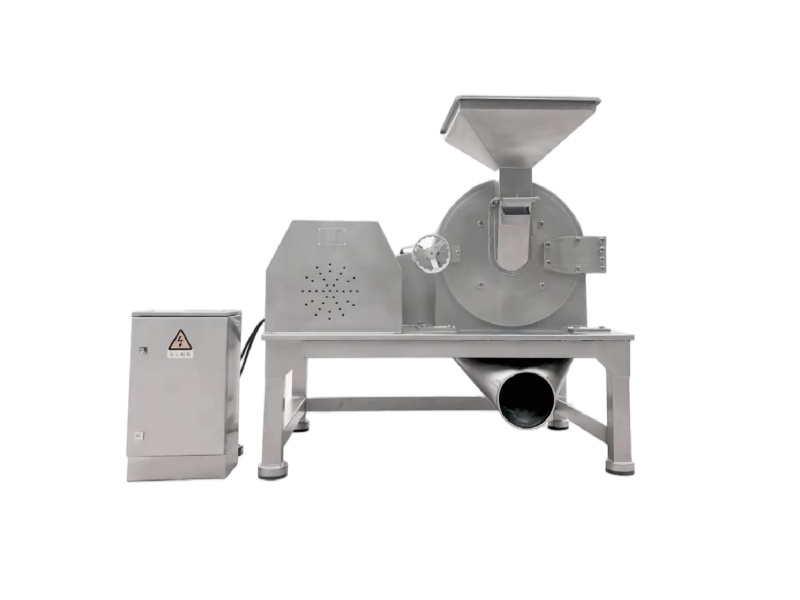
Disc mills are widely used for standard icing sugar production, it is entry-level low speed pin mill. They provide stable grinding performance, and simple maintenance, making them suitable for many food processing applications. The output sugar powder size is about 60-150 mesh.
3.2 Hammer Mill
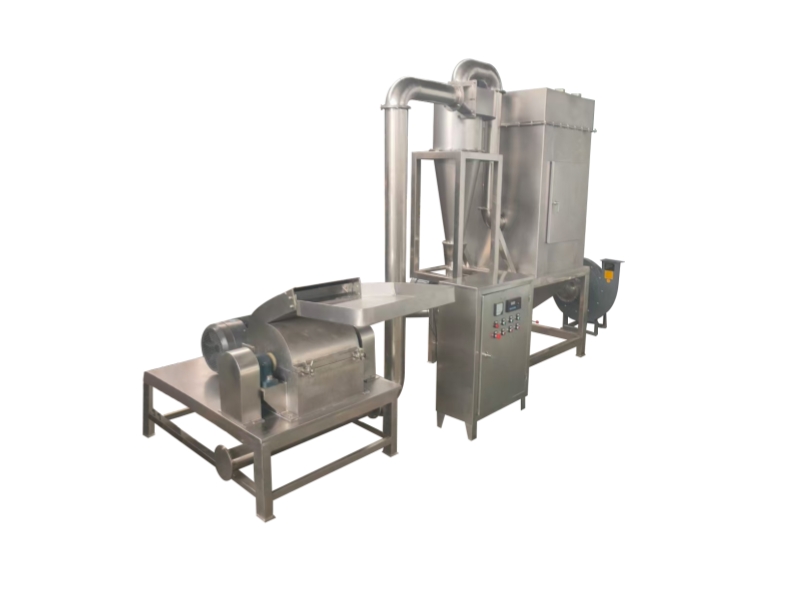
Hammer Mills use high-speed hammer cutting impact to reduce sugar crystals and are suitable for medium to high production capacities. Sugar is very easy to grinding, for this type hammer mill, the output size for icing sugar could be 60-150 mesh.
3.3 Turbo Mill
Turbo Mills generate strong airflow together with mechanical impact, allowing efficient fine grinding while maintaining good production capacity. They are often selected when higher throughput and improved particle distribution are required. The sugar powder output size range is also close to 60-150 mesh.
3.4 Air Classifier Mill (ACM)
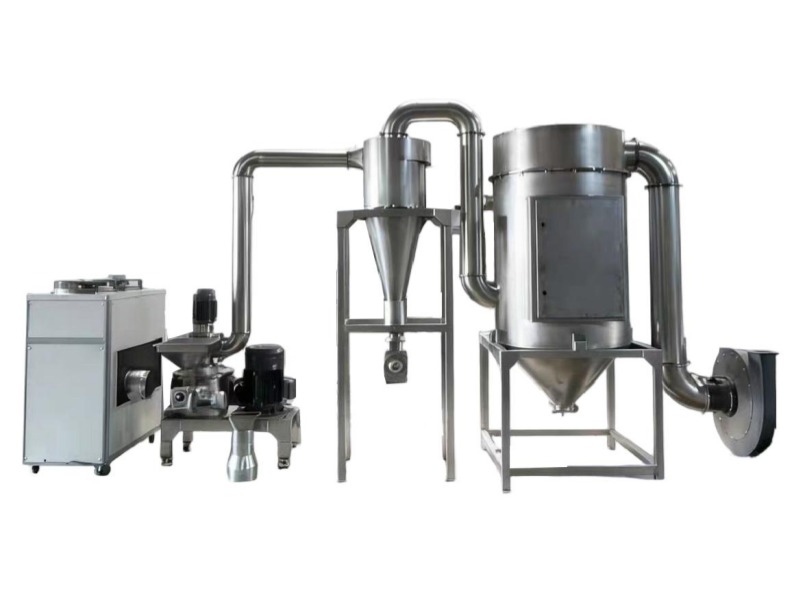
An Air Classifier Mill combines grinding and air classification in a single system. Oversized particles are automatically returned to the grinding chamber until the desired fineness is achieved, making ACM systems suitable for applications requiring tight particle size distribution. The output icing sugar powder size is 100-500 mesh and some of them can reach 1000 mesh.
3.5 Pin Mill
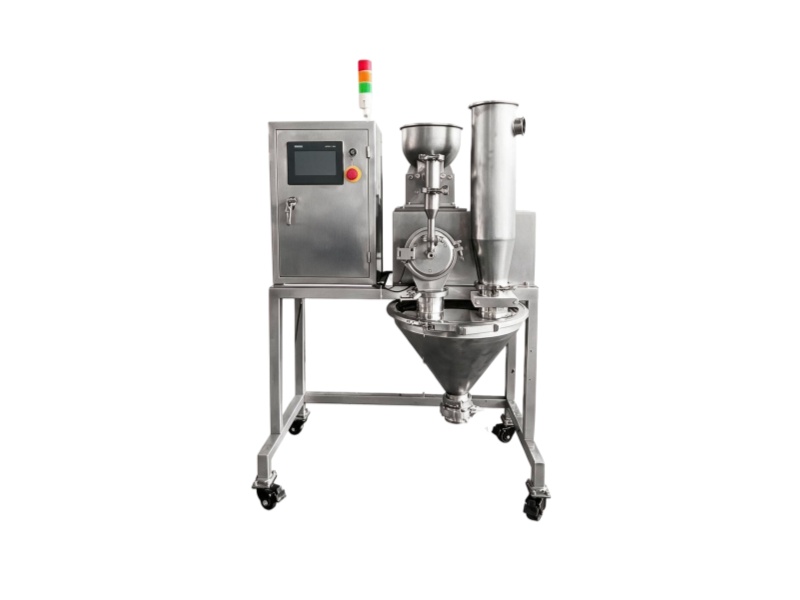
Pin Mills are also widely used in sugar grinding and are capable of producing very fine powders with a narrow particle size distribution. The output size is around 60-500 mesh for icing sugar. However, due to the high-speed impact between rotating pins, they generally generate more heat than other grinding methods. For continuous icing sugar production, additional cooling systems or chilled air are often required to prevent sugar softening, sticking, and reduced grinding efficiency.
3.6 Brief Explanation
In the actual sugar powder production, our SLU series universal powder grinder(disc type mill, hammer type cutter, turbo type cutter, etc optional design) and SLA series air classifier mill are the two commonly chosen powder grinder for icing sugar. For other type grinders, they can also easily grind sugar into fine powder but lack of greater versatility. Equipment selection should be based on product specifications, production capacity, energy consumption, and operating costs.
IV. Preventing Caking During Production
One of the biggest challenges in icing sugar manufacturing is maintaining good flow ability during storage. Manufacturers generally use several approaches listed below:
1)Moisture Control: Maintain low humidity throughout the production and packaging process.
2)Anti-Caking Agents: Depending on local regulations, manufacturers may add small quantities of corn starch, potato starch, tricalcium phosphate, silicon dioxide. These additives help reduce moisture absorption and improve powder flow ability. Usually, powder mixers are used to well mix the sugar powder with these additives.
3)Temperature Management: Reducing heat generated during grinding helps prevent sugar from softening or sticking inside the milling chamber.
4)Proper Packaging: Moisture-proof packaging materials help extend shelf life and maintain product quality during transportation and storage.
V. Dust Control and Food Safety
Because finely ground sugar dust is combustible, industrial production systems should include appropriate dust management and safety measures. A modern icing sugar production line generally incorporates:
• Dust collection systems
• Cyclone separators
• Explosion venting where required
• Proper equipment grounding
• Hygienic stainless-steel construction
• Closed-loop pneumatic conveying systems to reduce dust emissions and contamination risks
Good dust control not only improves workplace safety but also reduces product loss and supports compliance with food manufacturing standards.
VI. Quality Control
Consistent product quality depends on continuous monitoring throughout the production process. Manufacturers typically inspect:
• Particle size distribution
• Moisture content
• Bulk density
• Flowability
• Product whiteness
• Packaging integrity
• Microbiological safety
Routine quality testing helps ensure that the final product meets customer specifications and industry standards.
VII. Typical Equipment in an Icing Sugar Production Line
A complete industrial production line may include:
• Sugar storage silo
• Feeding system
• Powder grinder machine with cyclone and dust collecting system
• Vibrating sieve
• Mixing system for anti-caking agents
• Conveying system
• Automatic weighing machine
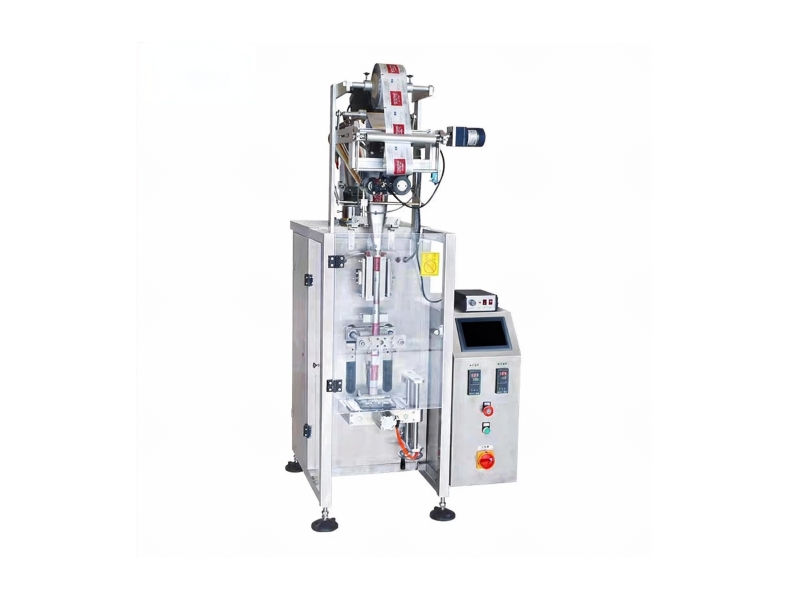
• Packaging machine
• PLC control system
Depending on production capacity, these components can be integrated into a fully automated processing line.
VIII. Conclusion
Industrial icing sugar manufacturing involves much more than simply grinding granulated sugar. Achieving consistent product quality requires careful control of raw materials, grinding technology, particle size, temperature, moisture, dust management, and packaging.
Because different factories have different production goals, selecting the appropriate grinding technology from disc mill, hammer mill, turbo Mill, air classifier mill, or pin mill based on the desired product specifications, processing capacity, and operating efficiency. A flexible and well-designed production system enables manufacturers to produce high-quality icing sugar while maintaining reliable, economical, and safe operation.
References:
1. Codex Alimentarius Commission (FAO/WHO). Draft Standard for Powdered (Icing) Sugar — Guidance on product composition, permitted anti-caking agents, and quality requirements.
2. ScienceDirect Topics. Powdered Sugar — Overview of particle size, processing methods, and industrial applications.
3. P. J. Fellows. Food Processing Technology: Principles and Practice (4th Edition). Woodhead Publishing. Chapters on size reduction, powder processing, and food engineering.
4. Earle, R. L. Unit Operations in Food Processing. A classic reference covering milling, particle size reduction, heat generation, and food powder production.
5. ISO 22000: Food Safety Management Systems — International standard for food safety management in food manufacturing.