


 English
 French
How to make besan flour? At home, the answer may seem simple: grind chickpeas and sieve the powder. For commercial besan production, however, making consistent chickpea flour involves more than choosing a powerful grinder. Raw material condition, cleaning, dehulling, moisture, grinding method, particle size distribution, temperature, and dust control can all affect the final flour. This article explains the practical process of making besan flour on a small or industrial scale.

I. What Is Besan Flour
Besan flour is a flour made from chickpeas, commonly associated with gram flour or chickpea flour. The raw material can be processed in different forms. Some producers start with whole dried chickpeas, while others use dehulled and split chickpeas (chana dal) as the milling feed. This distinction is important because the raw material condition affects the subsequent milling process. If the objective is a relatively clean, fine flour, the milling system should be selected according to the actual feed material rather than simply choosing a machine advertised as a “besan grinder.”
II. The Basic Besan Flour Making Process
A practical industrial process can be organized into the following stages: Chickpea receiving → Cleaning → Dehulling/splitting when required → Conditioning → Grinding → Classification or sieving → Dust collection → Finished flour handling.
Not every besan flour producer needs every stage. For example, a producer purchasing already cleaned and dehulled chana dal may not need to install a complete dehulling section. A small producer may also use a simpler grinding and screening arrangement, while a larger plant may require continuous feeding, dust collection, and tighter particle-size control. The process should therefore be designed around the raw material and finished flour specification.
2.1 Start with the Right Chickpea Material
Before discussing the grinder, it is important to define the feed material. Three situations are commonly encountered:
• Whole dried chickpeas
• Dehulled chickpeas
• Dehulled and split chickpeas / chana dal
Whole chickpeas contain the outer hull, which can influence flour color, fiber content, particle size, and the behavior of the grinding process. For a fine besan product, dehulling and splitting may therefore be considered before final milling. The important point is that “chickpea” is not a sufficient process specification. A mill supplier should also know whether the material is whole or split, the approximate feed size, moisture condition, and the required final flour.
2.2 Clean the Raw Material Before Milling
Cleaning is often treated as a preparation step rather than part of the milling process, but it directly affects equipment protection and finished-product quality. Foreign materials such as stones, metal, dust, plant residues, and other seeds should be removed before the chickpeas enter the grinder. For an industrial installation, the cleaning arrangement should be selected according to the incoming raw material quality and the required hygiene level. This also helps prevent unnecessary wear or damage to the grinding chamber.
2.3 Dehulling and Splitting: When Is It Necessary
If whole chickpeas are used, dehulling and splitting can be incorporated before final grinding. The purpose is not simply to make the chickpea smaller. Removing the outer hull changes the material entering the flour mill and can make it easier to produce a more uniform flour. Research on chickpea milling also shows that raw-material preparation and moisture condition can significantly affect milling behavior and flour particle size. (MDPI) For producers buying prepared chana dal, this stage may already have been completed upstream.
2.4 Moisture Matters More Than Many Buyers Expect
One of the most overlooked variables in besan production is moisture. Too much moisture can make the material more difficult to mill cleanly and may encourage material buildup around screens or grinding components. Very dry material can behave differently again, affecting energy consumption, fines generation, and particle-size distribution.
There is no single moisture number that should automatically be applied to every chickpea and every mill. Published milling research has tested different moisture levels and found that moisture content and milling speed can significantly influence particle size, energy requirements, flour temperature, and flour composition. (MDPI) For industrial production, the better approach is to establish a suitable moisture range through raw-material testing and milling trials, rather than treating one number as a universal rule.
2.5 Grind the Chickpeas into Flour
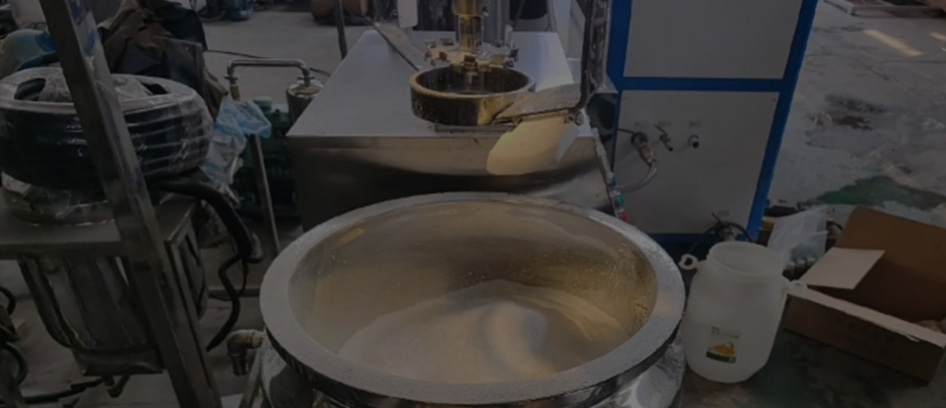
After preparation, the chickpeas or chana dal enter the grinding stage. This is where equipment selection becomes important. Different grinding technologies can produce different combinations of:
• Grinding capacity
• Particle size
• Particle-size distribution
• Heat generation
• Energy consumption
• Screen requirements
• Dust generation
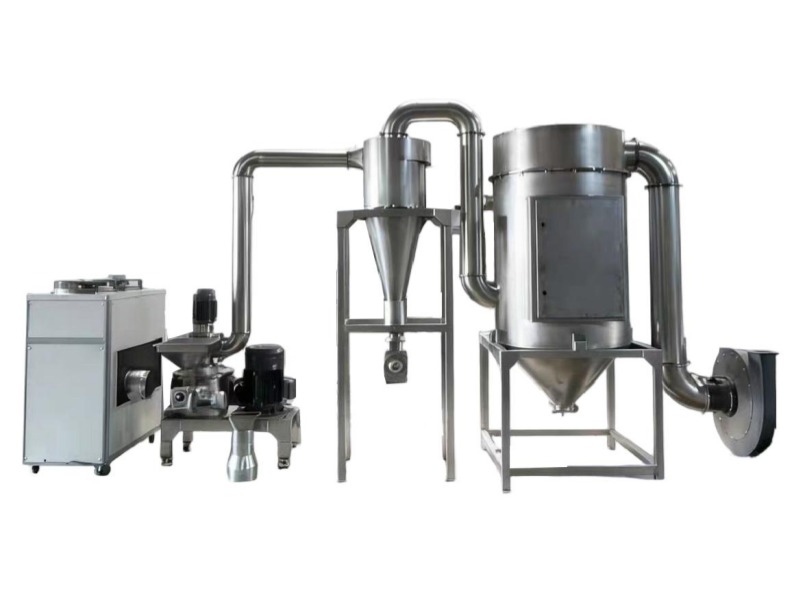
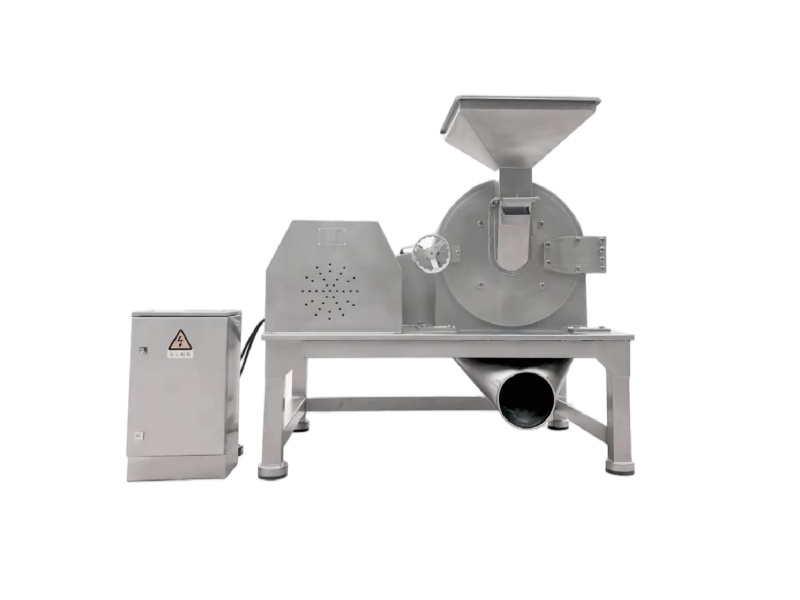
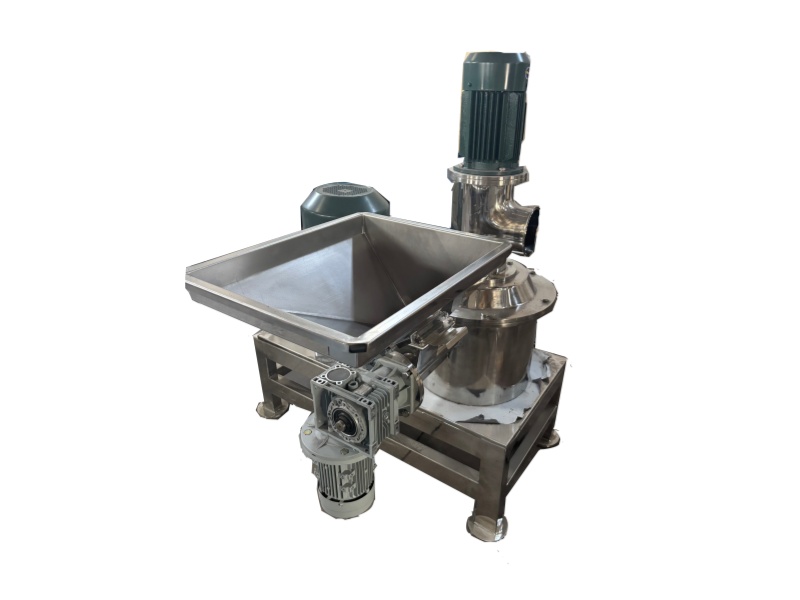
For moderate and medium-fine besan flour production, a screen-controlled grinder can be practical. For higher fineness or tighter particle-size distribution, a different grinding and classification principle may be more appropriate. This is why there is no universal answer to the question “Which machine is best for besan flour?” The correct question is: What raw material are you processing, what flour specification do you need, and at what capacity?
2.6 Sieve or Classify the Flour
Grinding does not necessarily produce particles of exactly the same size. A screening or classification stage can separate the finished flour from oversized particles. For a screen-based grinding system, changing the screen is one of the main ways to influence the final flour size. For applications requiring a narrower particle-size distribution, air classification can provide another process option. Instead of relying only on a screen, an air classifier separates particles according to their aerodynamic behavior.
This distinction becomes important when two products are both described commercially as 100 mesh, but their actual particle-size distributions are different. Particle size should therefore be specified according to the customer’s application rather than relying on mesh number alone.
2.7 Dust Collection Is Part of the Process
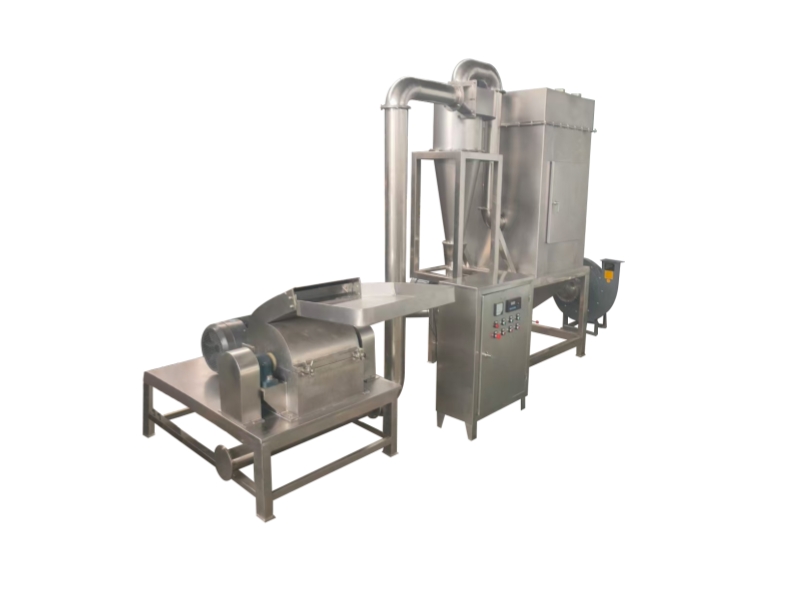
Besan flour production generates fine powder dust during grinding, screening, and discharge. Dust collection should therefore not be treated as an optional accessory added after the grinder has been selected. The appropriate arrangement depends on the machine size, production capacity, plant layout, and cleanliness requirements.
For some small systems, a relatively simple dust-control arrangement or a single standalone powder grinder may be sufficient. For medium and larger grinding systems, a separate cyclone and dust collector can be incorporated into the process. This is also why the physical layout of the grinding room matters. Available floor area and ceiling height can influence the final equipment configuration.
2.8 Finished Flour Collection
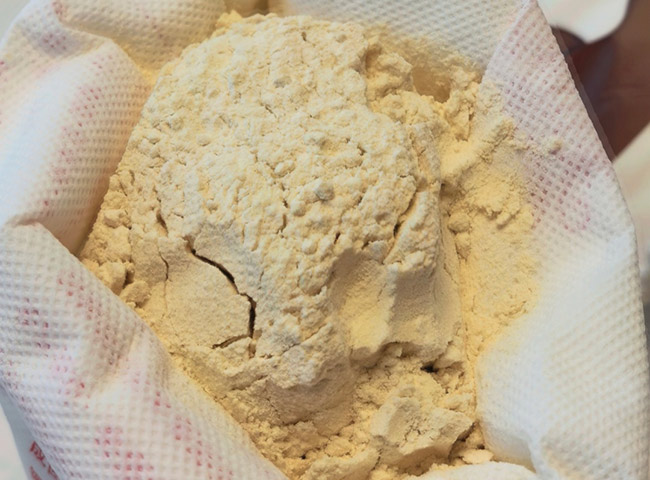
After grinding and sieving, usually cloth bag, plastic bag, stainless steel bucket, or buffing silo, etc can be chosen as the collecting container to collect the final powder products.
III. The Right Chickpea Preparation Leads to Better Besan Flour
How to make besan flour? Making consistent flour starts before the chickpeas enter the besan flour mill. The condition of the raw material determines how the milling process should be designed.
Whole chickpeas, dehulled chickpeas, and chana dal can behave differently during grinding, so the preparation stage should be matched to the required flour quality and production process. Cleaning, dehulling, moisture control, and feed-size consistency are not necessarily separate requirements for every project; they should be evaluated according to the actual raw material and final product specification. Once the raw material is properly prepared, the grinding system can be selected more accurately. The goal is not simply to make the chickpeas as fine as possible, but to achieve the required particle size, flour quality, production capacity, and process stability.
In other words, a successful besan flour process begins with understanding the chickpea before choosing the machine.