English
 French
How to grind rice into flour? At a basic level, rice flour is made by reducing cleaned rice grains into smaller particles through milling. But for commercial production, the process is not simply about putting rice into a grinder. The rice variety, moisture, milling method, particle size, starch damage, and temperature control, etc can all affect the processing steps in rice flour production. Here, we will explain the processing steps involved in rice flour milling and the practical factors to consider when designing a small or industrial rice flour production process.

I. The Basic Process of Making Rice Flour
A typical dry rice flour process can be summarized as: rice → cleaning → dehusking/preparation → grinding → sieving or classification → dust collection → finished rice flour. Not every application requires exactly the same process. For example, if the incoming material is already cleaned and milled white rice, the dehusking stage may not be necessary. On the other hand, brown rice flour requires the bran to remain part of the final product, so the preparation route is different. The first question should therefore be: What type of rice are you starting with, and what type of flour do you want to produce?
II. Description of Processing Steps for Rice Preparation and Rice Flour Grinding
So, what exactly are the individual processing steps involved in grinding rice into flour? We will explain this in detail in this section.
2.1 Start with Clean Rice
Before grinding, the rice should be properly cleaned to remove foreign materials such as stones, metal particles, dust, husks, and other unwanted materials. This is particularly important for commercial rice flour production because foreign materials can affect both product quality and equipment operation. If the rice is supplied as paddy rather than milled rice, additional processing such as dehusking and cleaning is required before the grain enters the flour mill. For already processed white rice, the preparation stage can be much simpler.
2.2 Decide Between Dry, and Semi-Dry Milling
One of the most important decisions in rice flour production is the milling method.
1)Dry Milling
In dry milling, cleaned rice is ground without soaking it in water. The process is relatively straightforward: clean rice → dry grinding → sieving/classification → flour collection. Dry milling requires less water and avoids the wastewater generated by conventional semi-dry milling. It can therefore be attractive for applications where a shelf-stable dry flour and a relatively simple process are required.
2)Semi-Dry Milling
Semi-dry milling involves soaking the rice into water before grinding, which is the major difference from the dry milling. A simplified process is: Rice → Soaking → Dewatering & Drying → Grinding → Sieving. About rice drying after soaking, as long as there is no visible surface moisture, the rice is ready to use. Semi-dry milling can produce finer flour and lower damaged-starch levels than many dry-milling approaches. This is because rice that has been soaked is less hard than completely dry rice. However, it requires substantially more water and additional processing for dewatering and drying.
2.3 Grind the Rice to the Required Particle Size
After preparation, the rice enters the grinding stage. The required particle size depends heavily on the intended application. A relatively coarse rice flour may be suitable for some food products, while applications such as certain noodles, bakery products, baby foods, or specialty rice-based products may require much finer flour. The important point is that particle size is not just a machine setting, it is affected by:
• Grinding technology(disc mill, pin mill, roller mill, air classifier mill, etc)
• Rotor or grinding speed
• Screen specification
• Rice hardness
• Moisture
• Number of grinding passes
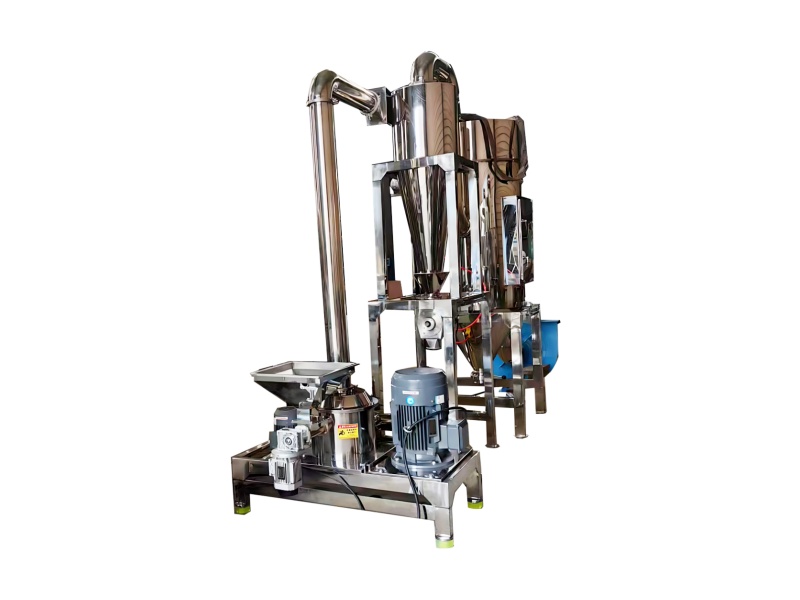
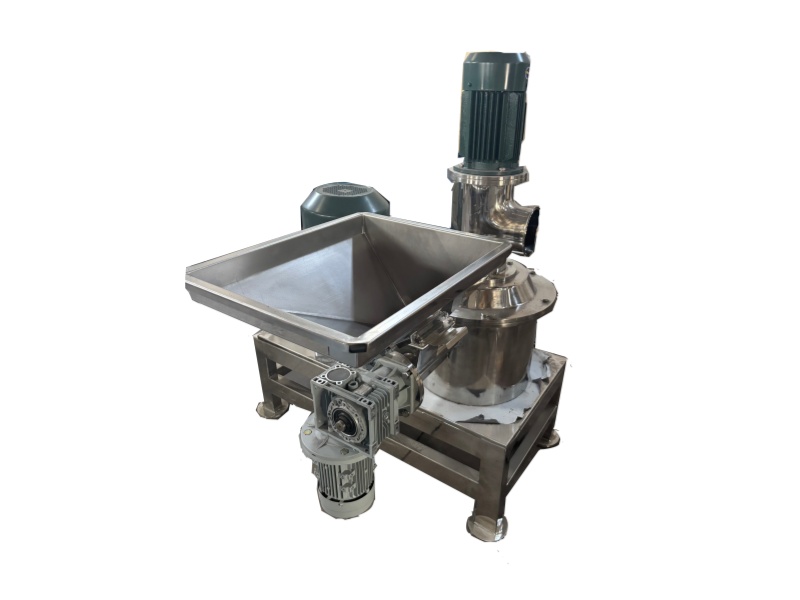
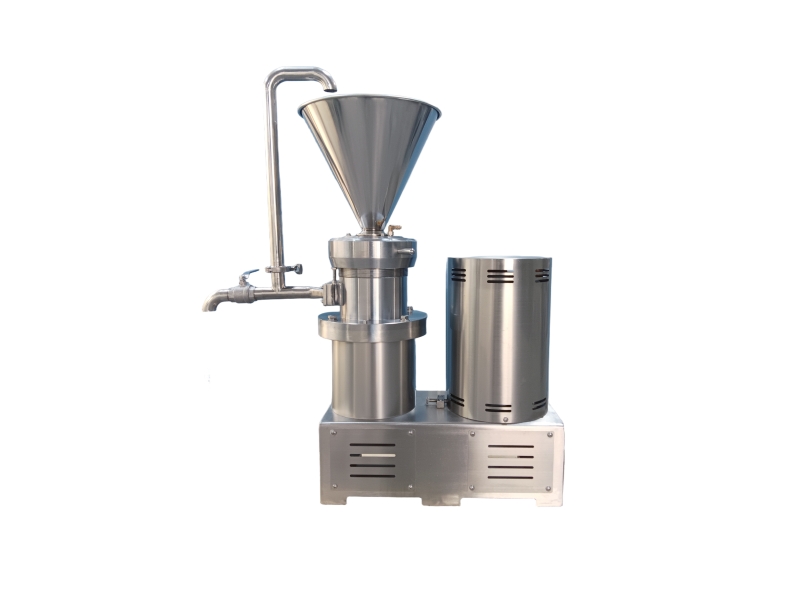
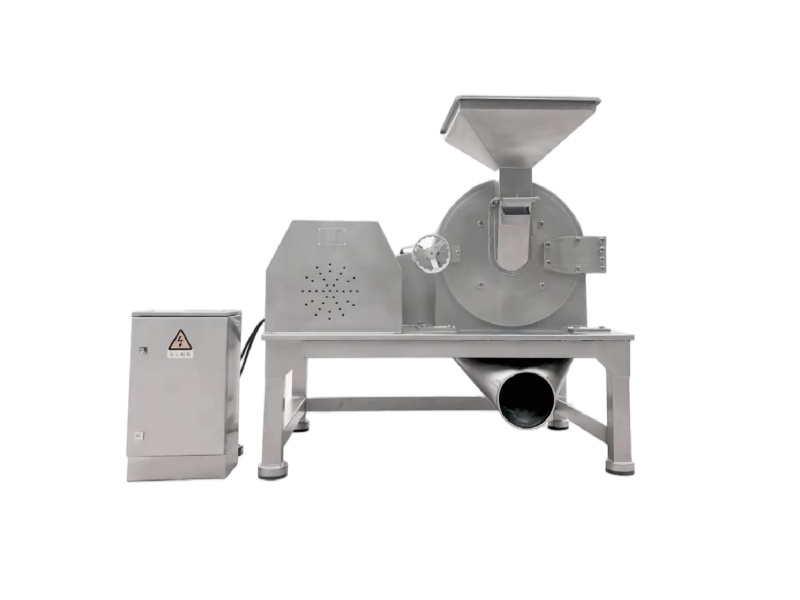
Note: we here supply different rice flour grinder options for you, such as disc mill, air classifier mill, pin mill, etc grinder machines.
2.4 Control Heat During Grinding
Grinding converts mechanical energy into heat. This becomes increasingly important when producing fine rice flour or running the grinder continuously. Excessive heat can influence the characteristics of the flour, while the grinding conditions themselves can affect starch damage. If there is a pursuit for the high quality rice flour, cooling system can be considered to work together with the grinding system.
2.5 Sieve or Classify the Rice Flour
After grinding, the flour may need to be screened or classified. For straightforward applications, a sieve can remove oversized particles and help maintain a more consistent product. For applications requiring finer control of particle-size distribution, an air classification system can provide another option. The choice depends on the required flour specification. A simple screen-controlled grinding system may be sufficient for many applications. More demanding applications may benefit from a grinding and classification system designed specifically around the target particle-size distribution.
2.6 Dust Collection in Grinding Process
Fine rice flour is easily dispersed as airborne dust during feeding, grinding, screening, and discharge. Therefore, dust collection should be considered as part of the overall rice flour milling system rather than as an afterthought when the flour capacity need is medium to large level.
For a small production line, a compact dust-control arrangement may be sufficient. Larger systems may require a more complete pneumatic conveying and filtration design. The available floor space and ceiling height should also be considered when designing the equipment layout.
III. Summary
Grinding rice into flour can be as simple as cleaning the rice and mechanically reducing its particle size. But producing consistent commercial rice flour is a different challenge. The final result depends on the relationship between rice preparation, moisture, grinding technology, particle size, starch damage, temperature, etc.
For some applications, dry milling provides a practical and water-saving route. For others, semi-dry milling may provide better flour characteristics. The best process is therefore not necessarily the one that produces the finest powder. It is the one that produces the required flour quality, particle-size distribution and production capacity with a suitable overall process. If you are planning a rice flour production line, Salinovate team can evaluate the rice type, target capacity, required fineness, processing method and installation conditions to help determine a suitable grinding configuration.