


 English
 French
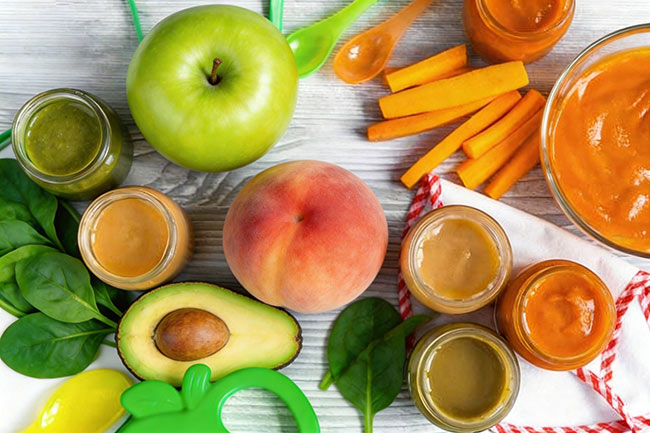
Vegetable puree is a core ingredient in infant formula, sauces, and soup bases, and its processing technology directly affects the product's taste, nutrient retention, and production efficiency. From the simplest mechanical grinding to multifunctional equipment that integrates chopping and mixing, and then to all-around machines that simultaneously cook, chop, and blend, vegetable puree technology has undergone three generations of technological evolution.
This article will provide an in-depth analysis of the technical principles, equipment characteristics, and selection criteria of three generations of vegetable puree machines. The purpose is to offer a scientific basis for equipment selection for vegetable puree production enterprises.
I. First Generation Technology: Traditional Crushing Technology
This is the first generation of vegetable crushing technology, possessing a crushing function. Different vegetable grinders produce different finished products, which can be in the form of a paste, smashed granules.
1.1 Technical Principles and Equipment Types
Traditional grinding technology is the most basic process for making vegetable puree, using mechanical force to crush vegetables. Based on different crushing mechanisms, it is mainly divided into the following categories of equipment:
Equipment Type | Working Principle | Applicable Product | Finished Product |
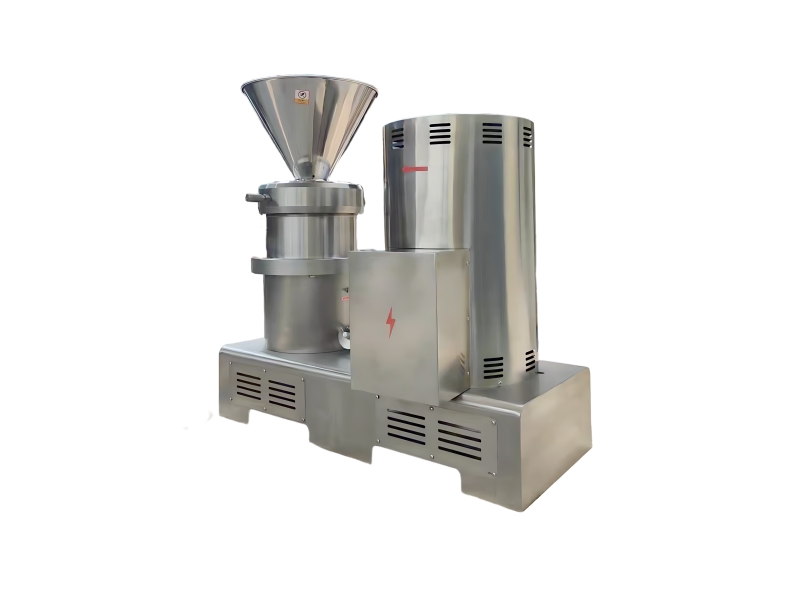
Shearing and grinding between the high-speed rotating rotor and stator. | Liquid or semi-liquid materials (juice, jam, vegetable puree) | Fine texture, suitable for smooth products. | |
Rotating blades cut and crush materials. | Various fruits and vegetables with different textures (leafy vegetables, root vegetables, fruits) | Fast processing speed, suitable for smashed vegetable |
1.2 Application of Colloid Mills in Vegetable Puree Processing
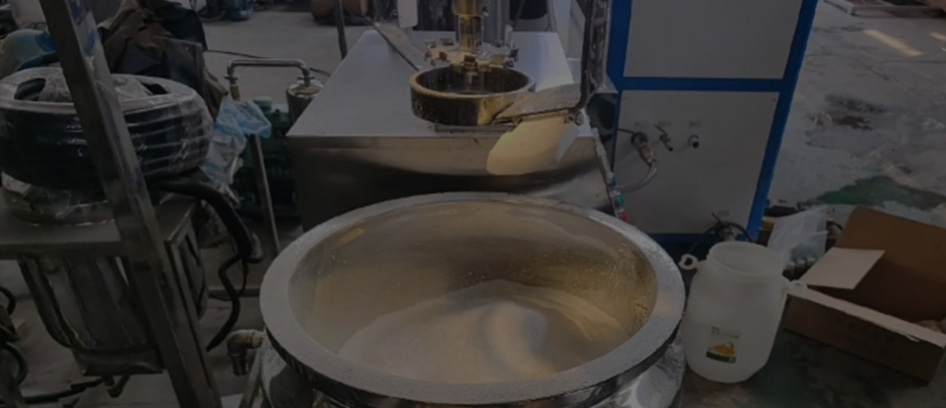
Colloid mills are the most representative equipment in the first generation of technology, and are particularly suitable for vegetable puree products that require a fine texture. Their working principle utilizes the tiny gap between the high-speed rotating rotor and stator to generate strong shearing and grinding action on the material, breaking down fibers and cells to the micron level. Following is a working video for carrot puree for your reference:
1.3 Limitations of Traditional Technology
While traditional grinding technology is simple and reliable, it has significant limitations:
● Dispersed Processes: Grindingg, mixing, and heating require multiple pieces of equipment, posing a risk of contamination during material transfer.
● Low Efficiency: Multiple processes result in long production cycles and high energy consumption.
● Quality Loss: Multiple transfers may lead to oxidation and flavor loss.
II. Second Generation Technology: Integrated Chopping and Mixing Technology
Here we come to introduce the second generation technology with the combined coarse grinding, fine grinding and mixing functions.
2.1 Technical Principle
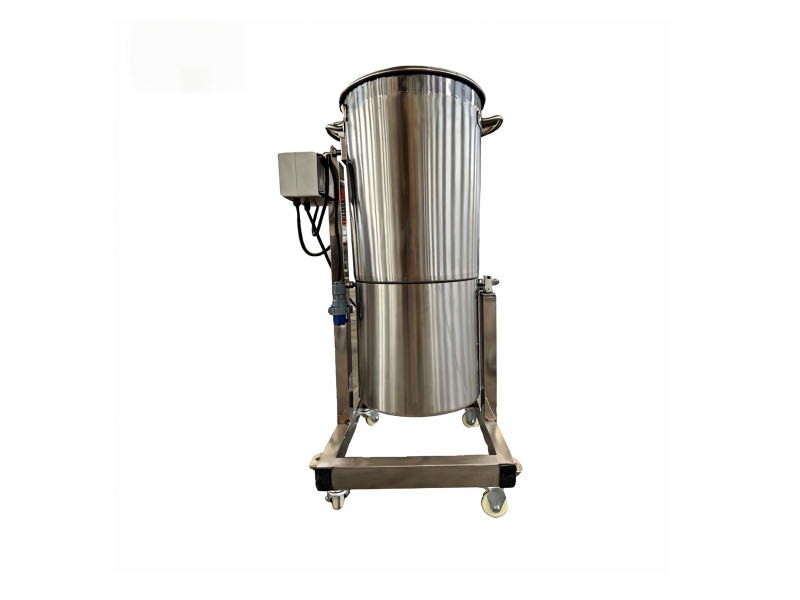
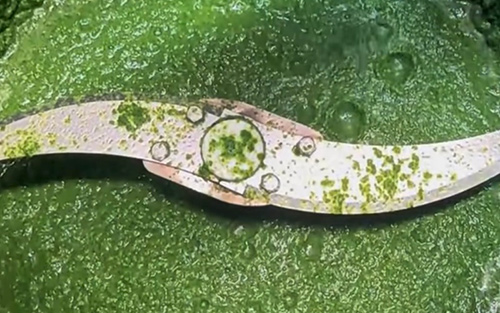
The second-generation technology integrates coarse crushing, fine grinding and mixing functions into a single device, achieving a breakthrough in multi-functionality. The core of this type of equipment is a bottom-mounted flying blade. High-speed rotating chopping blades break down big size materials and conduct fine grinding. Meanwhile, the turbine caused by the flying blades has the mixing function.
Working Principle:
● Bottom Flying Blades: High-speed chopping blades (up to 3000 rpm) installed at the bottom of the tank are responsible for quickly chopping vegetables into a paste.
● Mixing: The rotation of the bottom flying blades generates a large vortex, resulting in a mixing effect.
2.2 Characteristics of Internationally Renowned Brands and Equipment
2.2.1 Robot Coupe
Robot Coupe, a French company, is a pioneering brand in the food chopping and mixing field, renowned for its modular blade systems. According to Robot Coupe's technical data, different types of blades are suitable for different materials:
Cutter Type | Function | Applicable Scenarios |
Micro-tooth blade | Achieve a very high level of refinement and cutting. | Need an extremely smooth vegetable puree |
Smooth blade | Powerful cutting ability. | Chop meat, vegetables and fruits. |
2.2.2 Hobart
Hobart, an American brand, is known for its durability. Its chopping and blending machine also uses a bottom-mounted blade design, along with a scraping and mixing system, effectively preventing fruit and vegetable puree residue from remaining on the pot walls. This makes it particularly suitable for medium to high viscosity vegetable puree products.
2.3 Domestic Design and Customization
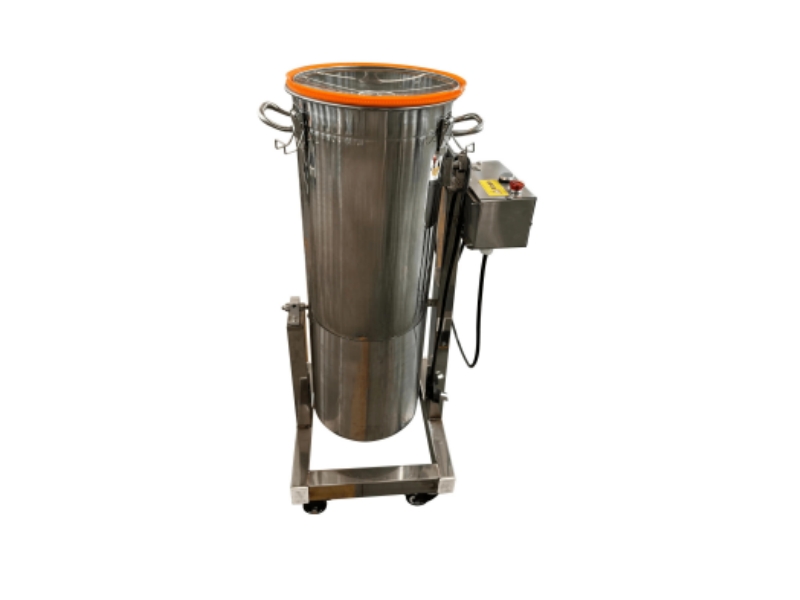
Based on absorbing advanced international technologies and integrating local crushing technology, Salinovate has also developed an integrated chopping and mixing machine, which can be customized according to needs. The equipment structure can also be made differently. For specific products, please refer to our SLCM series vertical cutter mixer. Also, you can watch the following working video to see the performance:
Standard Configuration:
● Volume Range: 30-500L
● Bottom Blade Speed: 0-3000rpm (Variable Frequency Adjustable)
● Material: 304 Stainless Steel
● Control Method: Button or PLC Control
2.4 Advantages of Second-Generation Technology
Dimension | Compared with Traditional technologies | Value |
Integration | Coarse crushing, fine crushing and mixing in one process | Reduce equipment investment and save workshop space. |
Efficiency | A single machine completes three processes. | Production time reduced by 30-40%. |
hygiene | No material transfer required. | Reduce pollution risk. |
III. Integrated Cooking, Chopping, and Mixing Technology
The third generation vegetable puree machine has all-around functions include the cooking, chopping and mixing functions.
3.1 Technical Principles and Innovative Value
The third-generation technology represents the highest level of vegetable pureeing technology, integrating cooking, chopping, and mixing functions into a single device, truly achieving "one-stop processing." Its core design concept is to complete the entire processing from raw materials to finished vegetable puree within a single tank.
Working Principle:
● Cooking Function: Vegetables are steamed and softened through jacketed heating.
● Chopping Function: High-speed blades at the bottom chop the softened vegetables into a puree.
● Stirring Function: A wall-scraping stirring system effectively prevents material residue from remaining on the pot walls.
3.2 Internationally Leading Equipment
3.2.1 Stephan
Stephan, a German company, is a leader in integrated cooking and chopping technology. Its equipment is renowned for its high shearing force and precise temperature control, and is widely used in the production of high-end infant food, fruit puree, and hummus. Its blades feature a detachable design, making them very easy to install and remove. Furthermore, the equipment uses PLC intelligent control, and multiple functions can be modularly designed. The following is a video demonstration of the Stephan integrated cooking and chopping machine in operation:
3.2.2 Roboqbo
Roboqbo, an Italian company, has extensive experience in the field of multi-functional processing equipment. Its equipment possesses the following innovative functions:
Functional Modules | Function |
Vertical blades | Mix food evenly and thoroughly, cook and cool low-stirring products in a short time. |
Steam injection system | Directly inject steam into the container for heating. |
CIP cleaning system | Washing is performed by managing special detergents and through recycling and rinsing stages. |
Vacuum system | Optional configuration for degassing and low-temperature concentration. |
You can watch the following working video to see the Roboqbo design:
3.3 Domestic Customization Solution
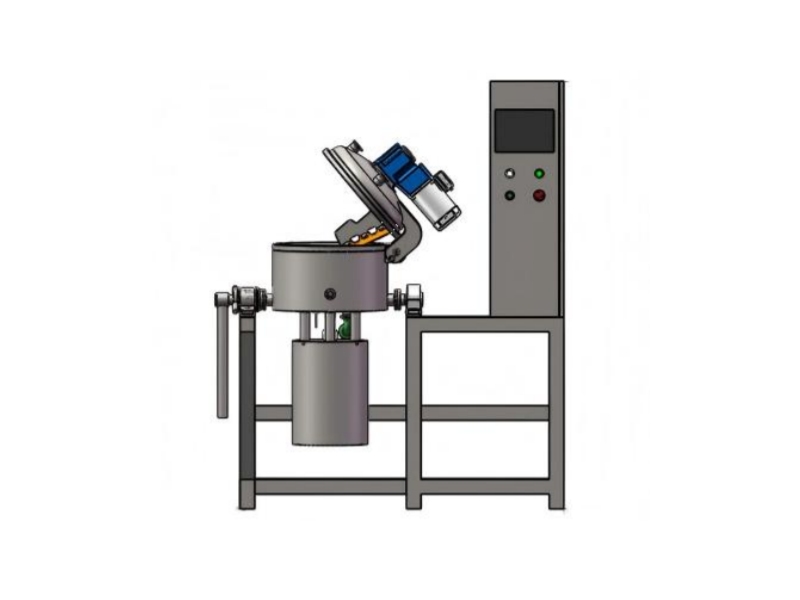
Borrowing from advanced international design concepts, we can also provide customized integrated cooking, chopping, and mixing machines. Based on the second-generation bottom-blade cutter mixer machine, the solution upgrades the pot body from a single-layer structure to a three-layer structure, and supports the integration of a wall-scraping stirring system and a vacuum system. Regarding the pot lid design, two structural forms are available:
3.3.1 Flip-top Structure(You can see the video below)
Features:
● The top cover can be fully opened for easy feeding and cleaning.
● Suitable for enterprises that need to frequently change formulas and produce multiple varieties.
● Equipped with a flip-top cover to reduce labor intensity.
Applicable Scenarios:
● R&D centers, pilot plants
● Multi-variety, small-batch production
● Products requiring frequent monitoring of material status.
3.3.2 Lifting Structure
Features:
● The stirring device can be lifted for easy discharge and cleaning.
● Good sealing performance, suitable for vacuum or pressurized conditions.
● High degree of automation, suitable for mass production.
Applicable Scenarios:
● Industrial mass production
● Products requiring vacuum degassing or pressurized processing
● Food processing workshops with high cleanliness requirements.
3.4 The Core Value of Third-Generation Technology
Comparison of three generations of technology:
Dimension | The First Generation | The Second Generation | The Third Generation |
Functional integration | Grinding | Coarse+fine grinding, mixing | Coarse+fine grinding, mixing, heating/cooling, etc |
Investment cost | Low to medium | Low to medium | High |
Space Occupation | Small to large | Small to large | Small to large |
Processing time | Long | Middle | Short |
Nutritional retention | Common | Good | Very good |
IV. Comparison of Applicable Scenarios and Selection Recommendations for the Three Types of Models
Above are the introduction of the three generations of puree machines, now let us have a comparison.
4.1 Selection by Product Type
Product Type | Recommended Technology | Reason |
Basic vegetable puree (pumpkin puree, carrot puree) | Second-generation vertical cutter mixer | High cost-performance ratio, meets basic needs |
Smooth vegetable puree | Add an extra colloid mill homogenization step | The taste is more delicate. |
High-end baby food | Third-generation cutter and mixer machine with heating/cooling jacket | Good nutrient retention and high hygiene standards. |
Compound vegetable sauce | The third generation | High mixing uniformity and good batch consistency |
4.2 Select According to Process Requirements
Process Requirement | Recommended Technology | Key Configuration |
Diverse vegetable grinding products | All types are ok based on the specific requirements. | Depend on the specific process requirements. |
Room temperature puree making | Second-generation vertical cutter mixer | Bottom flying blades |
Cook and mash into a puree | The third generation | Cooking, heating, grinding, etc |
Vacuum | The second or third generation | Vacuum pump |
V. Summary
After reading the information above, you can see the technological evolution of the vegetable puree machines. From single-function grinding equipment to multi-functional machines, and then to all-around machines that simultaneously cook, chop, and blend, each iteration of vegetable puree technology corresponds to the food industry's higher pursuit of efficiency, quality, and nutrient preservation. Of course, the third generation isn't necessarily better than the first or second generation; everything depends on the customer's product needs, cost requirements, and production capacity.
If you are interested in vegetable puree equipment, please contact Salinovate Team.