


 English
 French
SLA-60 Air Classifier Mill for 1 Ton/h Rice Flour Production at 80-100 Mesh
By:Salinovate Team
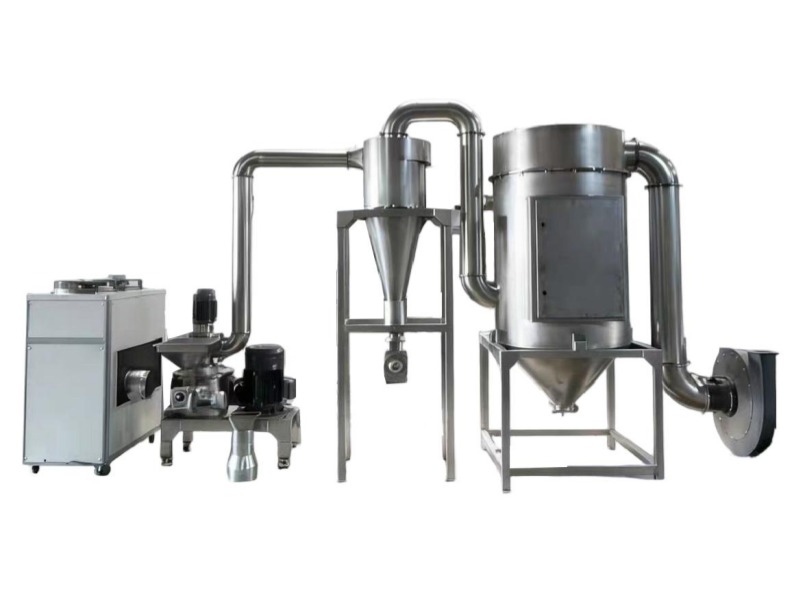
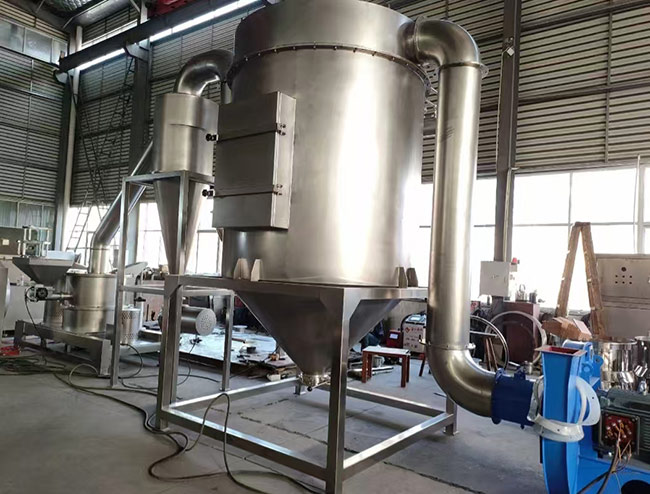
For flour producers looking for approximately 1,000 kg/h production capacity at 80-100 mesh, the grinding technology becomes an important part of the equipment selection. At this production scale, a conventional screen-controlled grinder is not the most practical solution. Screen wear, screen blockage, replacement, and the need to maintain a large screening area can become time-wasting and low efficient as production capacity increases. Here we will share with you the 1 ton/hour rice flour grinding project, in which the customer finally chose an SLA-60 air classifier mill configured with 45kw grind motor and 11kw classifier motor for continuous fine powder production.

I. Overview of the Rice Flour Grinding Project
This customer runs a flour production factory and is faced by the expansion need to meet the rising flour supply demand. So he required a large powder grinder machine to increase the production capacity. The final choice of the customer was the SLA-60 model air classifier mill. The processing requirements for the rice flour mill are and the configuration of the chosen powder mill are as follows:
Item Name | Customer Requirement/Machine Specification |
Raw material | Dried rice |
Target fineness | 80-100 Mesh |
Target production capacity | 1000 KG/H |
Material requirement | SS304 |
Operation and maintenance requirement | Easy to operate and maintain |
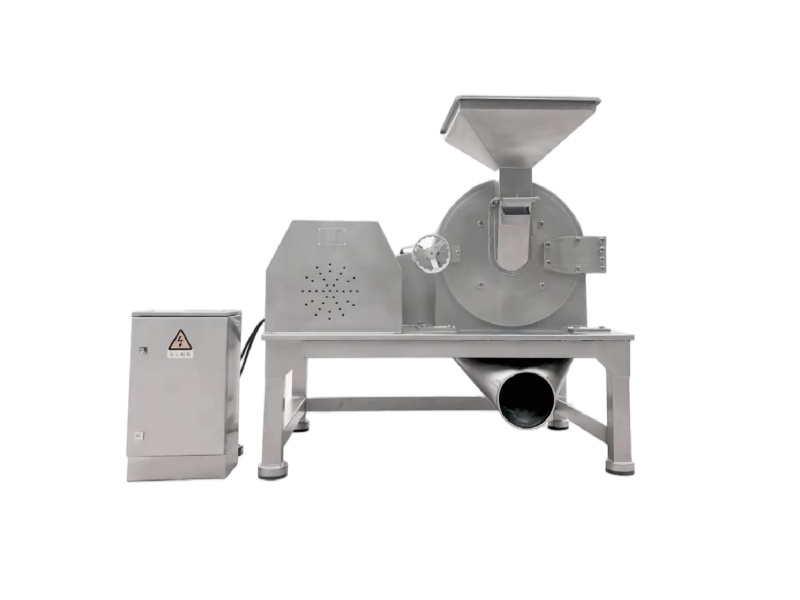
Chosen grinder type and model | SLA-60 model air classifier mill |
Grind motor of the grinder | 45 KW |
Classifier motor of the grinder | 11 KW |
Flour size control method | By air classifying, no screen design |
Machine material | Main part are SS304, the cutter adopts the hard material. |
Control method of the grinder | Button control, easy to use |
Special design for the grinder cover | Pneumatic hinged lifting cover, easy to open for the cleaning and maintenance need. |
Machine capacity | Reach 1000kg/h for 80-100 Mesh flour based on the customer’s rice type. |
II. Why a Screenless Grinding Design Makes Sense for High Capacity Flour Production
One of the most important differences between conventional flour grinders and an air classifier mill is how the final particle size is controlled. Many traditional grinders use a screen. Material is mechanically pulverized and then passes through the screen according to the required particle size.
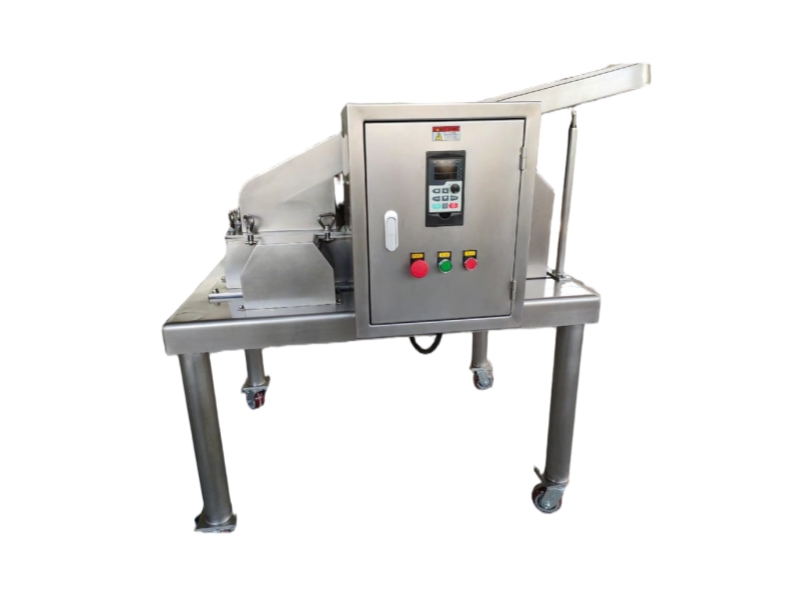
This approach can be practical for small and medium-capacity applications. For example, our SLU series can use interchangeable screens to control flour fineness and is suitable for applications where the required capacity and particle-size control match this type of configuration. However, when production moves toward approximately 1 ton/h, the operating conditions become different. A screen is a working component inside the grinding process. During continuous production, the screen may experience:
• Mechanical wear
• Powder accumulation or blockage
• Cleaning requirements
• Replacement requirements
• Reduced effective screening area when blocked
The actual impact depends on the material, screen specification, operating conditions, and production schedule. Therefore, screen wear is not necessarily a problem for every application. However, for a high-capacity continuous rice flour application, it is reasonable to consider whether the production process can be controlled without relying on a conventional grinding screen. This is one of the reasons an air classifier mill(no screen design) can become attractive.
III. How the SLA-60 Controls Flour Fineness Without a Conventional Screen
The SLA-60 combines two processes in one grinding system:
1. Mechanical impact grinding
2. Air classification
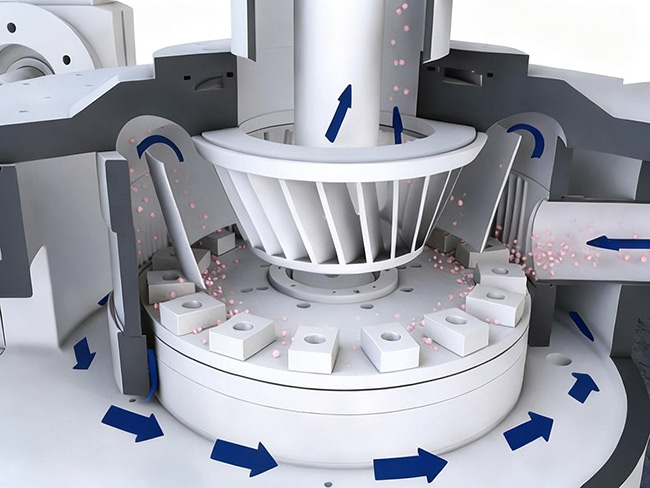
Material is first reduced in size inside the grinding chamber. Instead of using a screen as the primary size-control component, the airflow carries the ground particles toward the classifier. The classifier separates particles according to their aerodynamic behavior. Fine particles can pass through the classification zone and leave the grinding system, while particles that are still too coarse remain in the system and return to the grinding area for further size reduction. This creates a continuous grinding and classification process.
The basic principle is therefore different from the work flow: grinding → screen → finished powder. The air classifier mill works more like: grinding → air classification → fine powder discharge + coarse particle return. This is particularly useful when the customer needs both high production capacity and controlled fine powder.
IV. Why 80-100 Mesh Is a Practical Range for an Air Classifier Mill
The customer’s target of 80–100 mesh is an important part of this project. 80-100 mesh is already a relatively fine flour specification, but it is not an extreme ultra-fine requirement. This distinction matters.
An air classifier mill is capable of operating over a much wider fine powder range. The classifier speed can be adjusted according to the required particle size, with higher classifier speed generally producing a finer cut point. For a customer requiring approximately 80-100 mesh, there is therefore no need to push the machine toward its finest possible operating condition. Instead, the machine can be configured around the customer’s actual production target: High capacity + medium-fine flour + continuous classification.
This is one of the practical reasons an SLA-60 configuration can be considered for this type of project. The objective is not to achieve the finest powder possible. The objective is to produce the required flour specification at the required production scale.
V. Pneumatic Hinged Cover for Easier Cleaning and Maintenance
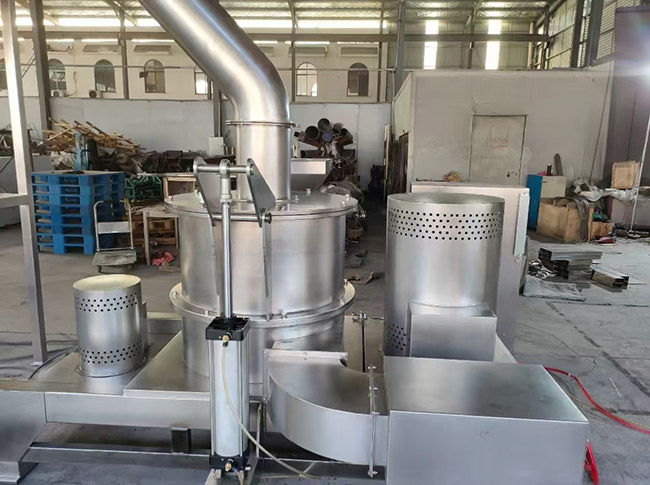
Another important feature of this SLA-60 project is the pneumatic hinged/lifting top cover. For a high-capacity flour grinding machine, cleaning and inspection are not secondary considerations. Powder can remain inside the grinding chamber and around internal components after production. Regular cleaning is particularly important for food-processing applications where different materials may be processed on the same equipment.
The pneumatic cover allows the grinder part of the grinding machine to be opened more conveniently, providing better access to the internal grinding area. This can help operators with:
• Cleaning residual powder
• Inspecting internal components
• Checking wear parts
• Carrying out routine maintenance
• Reducing the physical effort required to open the machine
The pneumatic cover does not make the flour finer or increase the nominal capacity. Its value is in improving equipment accessibility and maintenance convenience.
VI. Conclusion: Match the Grinding Technology to the Production Requirement
The key point of this SLA-60 rice flour grinding project is not simply that the machine uses a 45 kw motor or that it can produce fine powder. The more important question is why an air-classifying ultra-fine grinder with a screenless grinding design is appropriate for a high-capacity flour application. For a project requiring approximately 1 ton/h at 80-100 mesh, the customer needs to consider more than nominal grinding capacity. A screen-controlled grinder may be suitable for many conventional flour applications, particularly at smaller production scales. However, when production becomes larger and continuous, screen wear, blockage, cleaning, and replacement become factors worth considering.
Are you planning to purchase a rice flour mill for your workshop now? Contact Salinovate team to get your customized rice flour mill proposal.