


 English
 French
SLA-30 Air Classifier Mill for Rice Flour with 500-600 KG/H Capacity at 100-200 Mesh
By:Salinovate Team
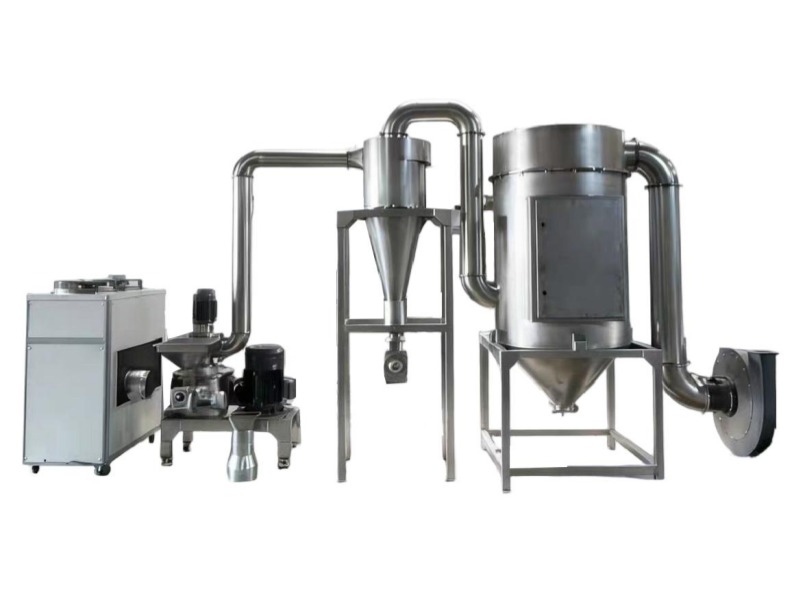
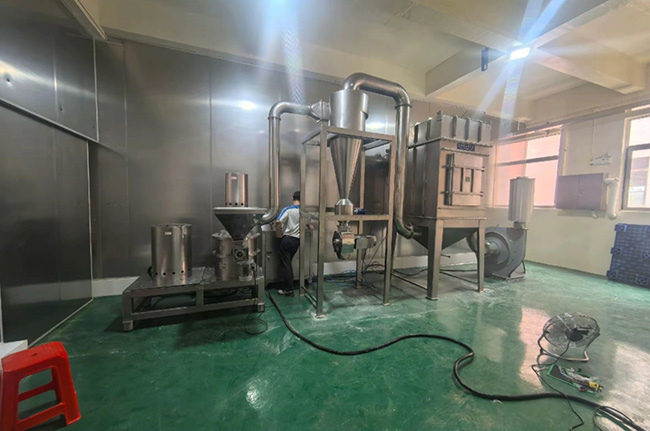
A domestic flour manufacturer purchased our SLA-30 air classifier mill for fine grinding of rice and glutinous rice. The equipment has now been installed, commissioned, and put into operation at the customer’s production facility. The customer’s main requirement was to produce approximately 100-200 mesh flour, with a target production capacity of around 500-600 kg/h for rice and glutinous rice. More importantly, this project required a different approach to the grinding components because of the relatively high hardness and wear characteristics of rice.

I. Project at a Glance
We handled a rice flour grinding project for the flour manufacturer in China, and following is a brief project explanation for you to see the general conditions:
Item | Customer Requirement/Project Result |
Application | Rice flour and glutinous rice flour |
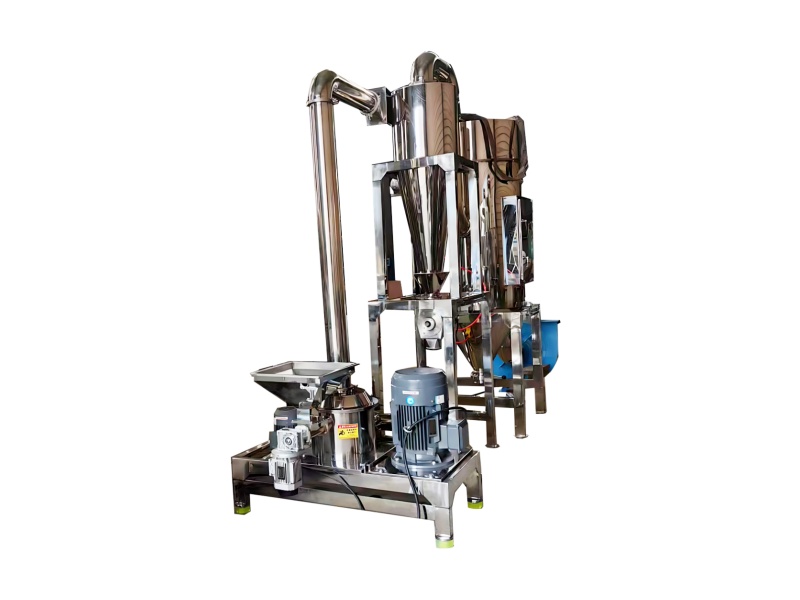
Equipment | SLA-30 air classifier mill |
Installation | Completed |
Commissioning | Completed |
Target fineness | 100-200 mesh |
Rice flour capacity | Approx. 500-600 kg/h |
Glutinous rice capacity | Approx. 600-700 kg/h |
Grinding motor | 37 kw |
Classifier motor | 5.5 kw |
Grinding motor speed | Fixed speed |
Classifier speed | Variable frequency control |
Grinding components | Wear-resistant customized design |
Key challenge | Fine grinding + wear resistance |
Actual capacity can vary with rice variety, feed condition, moisture, target particle size, and operating parameters.
II. Why Did the Customer Choose an Air Classifier Mill for Rice Flour
The customer’s requirement was not simply to crush rice into a powder. The finished product needed to reach a relatively fine 100-200 mesh range while maintaining commercially useful throughput.
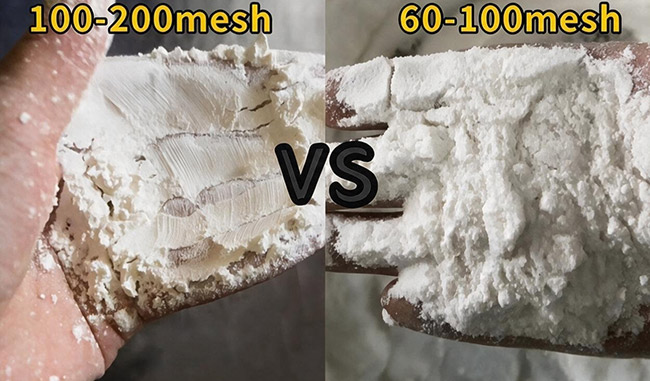
A conventional grinder may be able to reduce rice into powder, but fine flour production requires additional control over which particles leave the grinding system and the output rice flour is only 60-100mesh, not fine enough. An air classifier mill combines impact grinding and air classification. During operation, rice is mechanically reduced inside the grinding chamber. Airflow then carries the ground material toward the classifier. The classifier separates particles according to their aerodynamic behavior. For rice flour, the output size range is about 100-300 mesh, adjustable by controlling the classifier speed. Following is a comparison picture of the output rice flour by air classifier mill and conventional sieve control grinder, 100-200 mesh rice flour vs 60-100 mesh rice flour.
For this project, the customer therefore needed not just a rice grinder, but a grinding system capable of combining high-speed impact grinding with adjustable classification. So the customer in this case chose the SLA-30 model air classifier mill.
III. Why Is the Rice Capacity Lower Than the Glutinous Rice Capacity
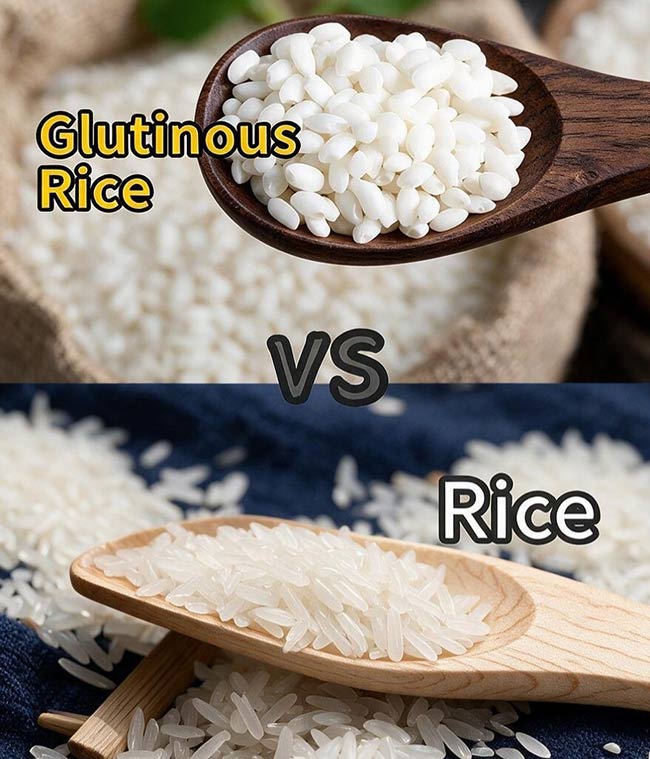
The customer processes both ordinary rice and glutinous rice. Under the customer’s operating conditions, the glutinous grinding capacity is a bit higher than the rice grinding capacity, 600-700kg/h vs 500-600kg/h. The difference does not mean that the machine is unstable. It reflects an important principle in powder processing: The capacity of a grinding machine is determined by the material and target powder specification, not simply by motor power. Different rice varieties can behave differently during grinding.
Factors that influence throughput include:
• Material hardness
• Moisture content
• Feed particle characteristics
• Target fineness
• Powder flow ability
• Operating conditions
Therefore, it would be misleading for a supplier to quote one universal capacity for “rice.” For a buyer, a more useful question is, “What capacity can this machine achieve with my specific rice at my required final fineness?” That is why application testing is valuable before purchasing a industrial grinding machine.
IV. The Engineering Challenge: Rice Is Not a Low-Wear Material
One of the less-discussed aspects of rice flour production is grinding component wear. When customers search for a rice flour grinder, they often compare:
• Motor power
• Capacity
• Mesh size
• Machine price
But the material of the grinding components can have a significant influence on long-term operating performance. For this project, we considered the hardness and continuous grinding requirements of rice when selecting the grinding components.
A conventional configuration can use stainless steel grinding components, such as 304 stainless steel, depending on the application. However, for harder materials such as rice and especially for other hard or abrasive plant materials, standard stainless steel components may experience faster wear. Therefore, the SLA-30 supplied for this project uses a wear-resistant customized grinding design. The blades use a stainless-steel base with hard-alloy inserts at the working sections. Also, the grinding disc is treated to improve its resistance to wear during continuous rice grinding.
V. How Long Can the Wear-Resistant Components Last
Under the customer’s current rice grinding conditions, the customized grinding components are designed with an expected service life of approximately one year under normal operating conditions before replacement may become necessary.
This should not be interpreted as a universal one-year guarantee. Actual wear life depends on:
• Rice variety
• Material hardness
• Moisture
• Daily operating hours
• Feed rate
• Final powder fineness
• Cleaning and maintenance
• Actual operating conditions
This is why we prefer to describe wear-part life according to application conditions rather than provide a universal number for every customer. For a machine buyer, this information is more useful when evaluating the total cost of ownership.
VI. How Is the Particle Size Controlled
The SLA-30 uses a separate 5.5 kw classifier motor with variable-frequency speed control. The grinding motor is operated at a fixed speed, while the classifier motor can be adjusted through frequency control.
This creates a useful division of functions:
• Grinding motor → provide the primary grinding energy
• Classifier motor → control particle separation
The classifier speed can therefore be adjusted according to the desired powder fineness. Compared with the traditional screen replacement system, the classifying system is more convenient without the need of purchasing and replacing the wearing screen.
VII. What Can Other Rice Flour Manufacturers Learn from This Project
This case demonstrates several points that are useful when selecting a rice flour grinding machine.
1. Don’t evaluate the machine by motor power alone.
The SLA-30 uses 37 kw grinding motor and 5.5 kw classifier motor, but these numbers only describe part of the system.
The actual production result also depends on material and operating conditions.
2. Specify the target fineness together with capacity.
For example, 100–200 mesh at approximately 500–600 kg/h for rice flour. This gives the manufacturer a real engineering target.
3. Consider wear resistance when processing hard materials.
The grinding components should be selected according to the material. For this project, the rice application required:
• Stainless steel base material
• Hard-alloy inserts
• Wear-resistant grinding blades
• Hardened grinding disc
4. Ask about wear-part life before purchasing.
The purchase price is only one part of the cost. A better comparison includes: Machine price + replacement parts + maintenance + downtime.
VIII. Consider an Air Classifier Mill for Rice Flour
The purchased SLA-30 model air classifier mill is used for 500-600kg/h rice and glutinous rice flour(100-200 mesh) making for our domestic flour factory. If you have similar fineness and capacity requirement, basically our SLA-30 model air classifier mill can be the suitable option. If you have lower or higher capacity requirement, welcome to contact Salinovate Team for the suitable model recommend.