


 English
 French
How the SL-200 Hammer Mill Meets an 80-100 Mesh Ginger Powder Requirement
By:Salinovate Team
Choosing a ginger powder grinding machine is not simply about finding a mill that can produce fine powder. The right solution must also match the raw material, required output, production capacity, available floor space, and equipment budget.
In this customer case, Salinovate recommended the SL-200 hammer mill for processing thin, dry ginger slices into 80-100 mesh ginger powder. With a target production capacity of approximately 100 kg/h, and an integrated cyclone and pulse dust collection system, the SL-200 offered a practical solution for a customer seeking reliable grinding performance without investing in a larger or more complex production system.
The key to this selection was matching the equipment to the actual production requirements rather than choosing a machine with unnecessary capacity or complexity.

I. Project Requirements: 80-100 Mesh Ginger Powder Within a Limited Budget
The project requirements were relatively straightforward: the customer already had prepared ginger slices, so the main task was to grind the dried material to the required particle size while keeping production capacity and equipment investment under control.
The main operating requirements were summarized in the following table:
Item Name | Customer Requirement |
Raw material | Thin, dried ginger slices |
Finished product | Ginger powder |
Target fineness | 80-100 mesh |
Expected production capacity | Approximately 100 kg/h |
Equipment budget | Below USD 10,000 |
Available floor area | Approximately 5m² for the compact setup |
These requirements provided a clear basis for selecting the grinding equipment. Rather than prioritizing maximum output or ultra fine grinding capability, the solution needed to deliver a suitable balance of particle size, throughput, footprint, and investment cost.
II. Why the SL-200 Hammer Mill Was Selected
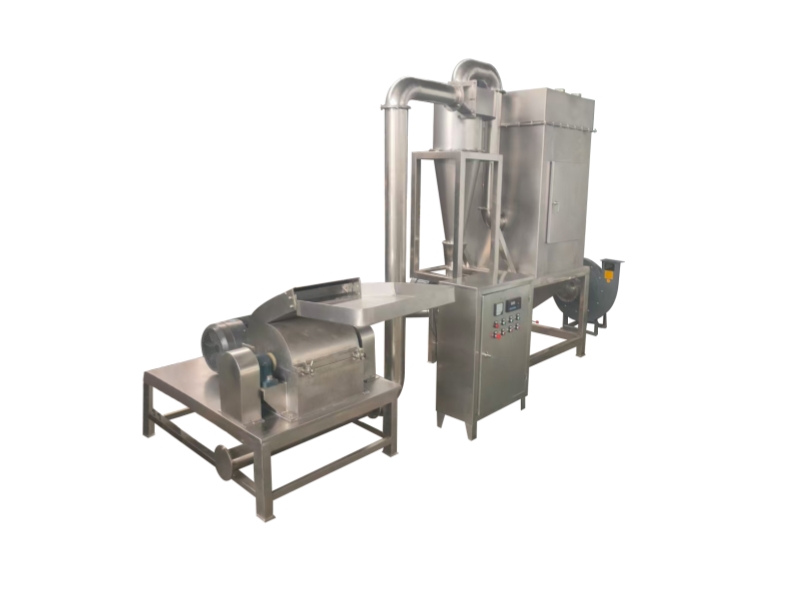
The SL-200 hammer mill was recommended because its screen-controlled grinding principle, production capacity, and integrated configuration matched the customer’s requirements. For thin, dry ginger slices and a target of 80-100 mesh, a screen-controlled hammer mill was a practical option to evaluate before considering a more complex air-classifier grinding system.
2.1 Screen-Controlled Grinding for the Required Fineness
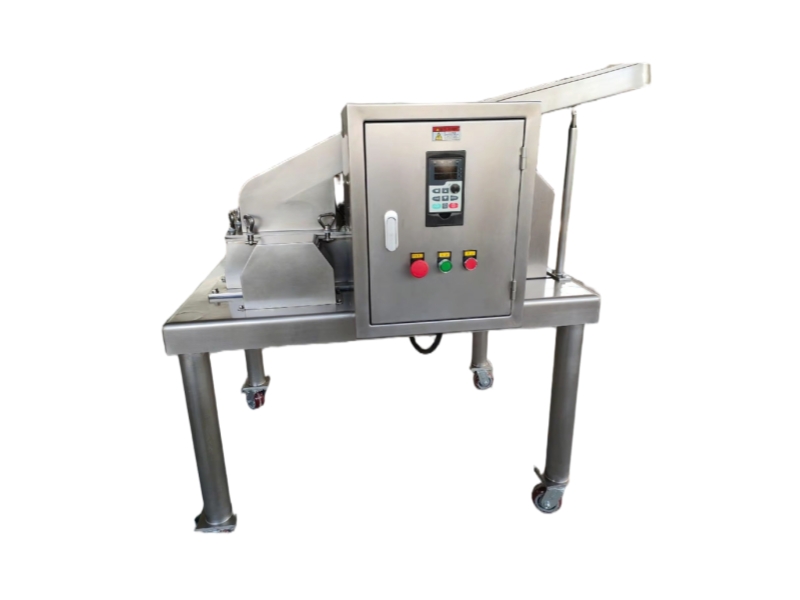
The SL-200 uses rotating hammers to break down the material inside the grinding chamber. The ground particles pass through the installed screen and are discharged from the machine.
The screen aperture influences the discharge process and the resulting particle-size distribution. A finer screen generally restricts particle discharge more than a coarser screen, so the actual throughput depends on the screen selected, material properties, feed rate, and operating conditions. For this project, the customer required 80-100 mesh fineness. We suggested 80 mesh screen to the customer, the actual output size is mainly 80-100 mesh.
2.2 A Capacity Suited to the Customer’s Production Scale
The SL-200 is a small model in our SL hammer mill series. Based on the ginger slice conditions, the capacity can reach about 100kg/h for 80-100 mesh powder making. This positioned the SL-200 within its intended application range while avoiding the need to purchase a larger machine solely for additional capacity that the customer had not requested.
2.3 A More Practical Investment for the Application
The customer was working with an equipment budget below USD 10,000. The solution therefore needed to prioritize the essential grinding and dust collection functions rather than add equipment that was not necessary for the stated production target.
A screen-controlled hammer mill was a reasonable choice because the required fineness fell within the machine’s intended application range, and the dried ginger slices were relatively easy to grind. For this application, selecting a suitable machine at the correct production scale was more important than purchasing the most advanced grinding technology available.
III. Integrated Grinding, Cyclone, and Pulse Dust Collection
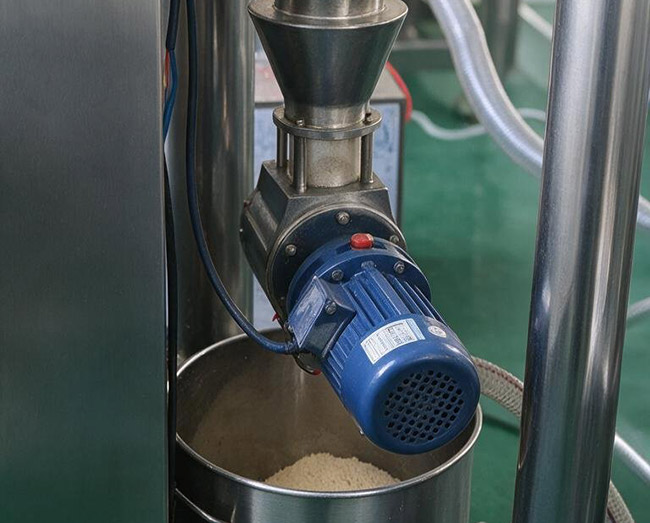
The SL-200 was selected with an integrated configuration combining the grinding machine, cyclone, and pulse dust collector. For a customer with limited workshop space, this arrangement helps consolidate the main grinding and dust collection components into a compact setup.
3.1 A Compact Layout for a Small Production Area
Instead of arranging the grinder and dust collection equipment as widely separated units, the integrated configuration brings the main components together. This reduces the space required for equipment placement and simplifies the overall layout. For this project, approximately 5 m² of allocated floor area was considered sufficient for the compact setup.
3.2 Why Dust Collection Matters in Ginger Powder Production
Grinding dried ginger produces fine airborne particles. Without suitable dust collection, powder can escape into the surrounding workshop, causing product loss and creating a less clean working environment.
In the SL-200 configuration, the cyclone and pulse dust collector work with the grinding system to collect discharged powder and capture fine airborne dust. The cyclone separates much of the powder from the conveying air, while the pulse dust collector captures finer particles that remain in the airflow. The effectiveness of the complete system depends on its design, airflow, filter condition, and operating parameters.
For this customer, the integrated arrangement addressed two practical concerns at the same time: keeping the equipment footprint manageable and providing a dedicated dust collection system.
3.3 See the SL-200 Grinding and Dust Collection Setup
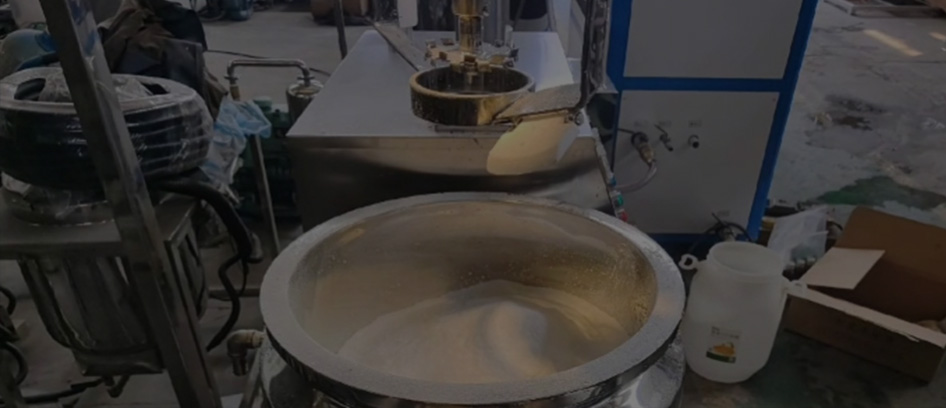
Currently, the grinder machine is in the customer’s factory to conduct its powder grinding task. Watch the factory video below to see the SL-200 grinding performance and its equipment configuration:
IV. Is a Screen-Controlled Hammer Mill Suitable for Your Ginger Powder Project
A screen-controlled hammer mill is worth considering when the raw material is dry and brittle, the target fineness is within the machine’s working range, and the customer wants a relatively straightforward grinding system.
It may be particularly suitable for small and medium-sized ginger powder production projects where investment, floor space, and ease of operation are important selection factors. However, the right machine depends on more than the material name alone. Before selecting a ginger powder grinding machine, consider the following:
• Raw material condition: Is the ginger fully dried, and are the slices sufficiently brittle for grinding?
• Required fineness: Is the target 80 mesh, 100 mesh, or a finer powder with a more demanding particle-size distribution?
• Production capacity: Is the required output around 100 kg/h, or does the project need a substantially higher throughput?
• Product specifications: Does the customer require a specific particle-size distribution, or is a screen-based target sufficient?
• Workshop layout: Is there enough space for the grinder, dust collection system, material handling, cleaning, and maintenance?
• Investment budget: Is a straightforward hammer mill sufficient, or does the application justify a more specialized grinding system?
If your ginger powder project requires a substantially finer product or tighter particle-size control, an air classifier mill may also be worth evaluating. The appropriate choice should be based on the required output and material test results rather than fineness claims alone. For more information, see our Hammer Mill Powder Machine page and Industrial Powder Grinder Machine Selection Guide to compare grinding principles and understand which factors influence machine selection.
Conclusion
This ginger powder grinding project demonstrates the value of matching equipment to the real production requirement. The customer needed to process thin, dry ginger slices into 80-100 mesh powder, with an expected capacity of approximately 100 kg/h, a compact installation, and an equipment budget below USD 10,000. The SL-200 hammer mill was recommended because its screen-controlled grinding principle and integrated dust collection configuration aligned with these priorities.
The broader lesson is that a suitable ginger powder grinding solution does not necessarily need to be the largest or most sophisticated machine. It needs to match the raw material, target particle size, expected capacity, available space, and investment requirements.
If you are planning to produce ginger powder from dried ginger slices, share your target mesh size, required hourly output, and raw material condition with the Salinovate team. We can help evaluate a suitable grinding configuration and determine whether material testing is needed to confirm the expected performance.