


 English
 French
A powdered sugar production line is designed to transform granulated sugar into a fine, uniform powder that meets the requirements of baking, confectionery, food manufacturing, and other applications. However, producing powdered sugar involves more than grinding sugar to the desired fineness. The process must also account for powder handling, starch blending, product consistency, and packaging requirements.
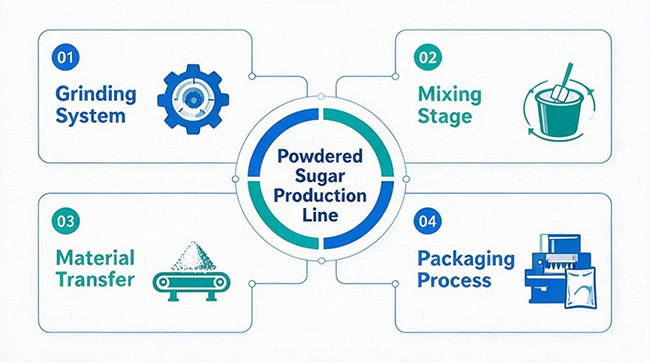
For many applications, corn starch is blended with powdered sugar to help reduce caking and improve handling during storage. This makes the mixing stage an important part of the overall production process. At Salinovate, powdered sugar production line design starts with the intended product and production requirements. The grinding system, mixing stage, material transfer, and packaging process must work together as a coordinated production flow rather than as a collection of independent machines.

I. How Does a Powdered Sugar Production Line Work
A typical powdered sugar production line includes raw sugar feeding, grinding, powder mixing, and finished-product packaging. Material conveying and intermediate storage can be incorporated where they are needed to support the required production capacity and level of automation. A general process flow is: granulated sugar feeding → sugar grinding → powdered sugar and corn starch mixing → finished-product packaging.
Depending on the production arrangement, conveying equipment and buffer hoppers may be installed between processing stages to improve material transfer and coordinate equipment operation. The exact configuration depends on the required powder fineness, output capacity, product formulation, packaging method, available factory space, and investment budget.
II. Raw Sugar Feeding and Preparation
The production process begins with feeding granulated sugar into the grinding system. The feeding arrangement should provide a stable material supply while matching the grinder’s processing capacity.
For smaller production operations, manual feeding may be sufficient. Larger production facilities may require a more automated feeding arrangement to reduce manual handling and maintain a more consistent material supply.
The feeding method should be selected according to the production scale and operating requirements. There is no single feeding configuration that is suitable for every powdered sugar factory.
III. Sugar Grinding: Achieving the Required Powder Fineness
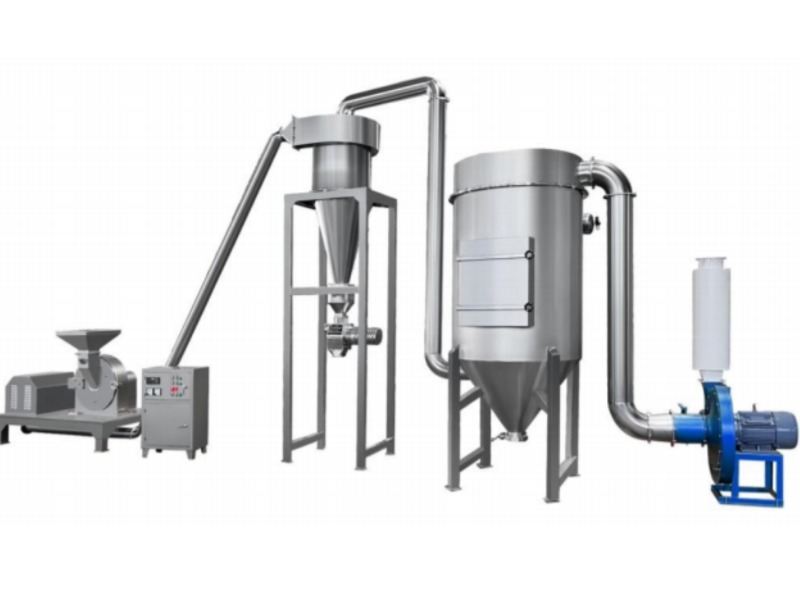
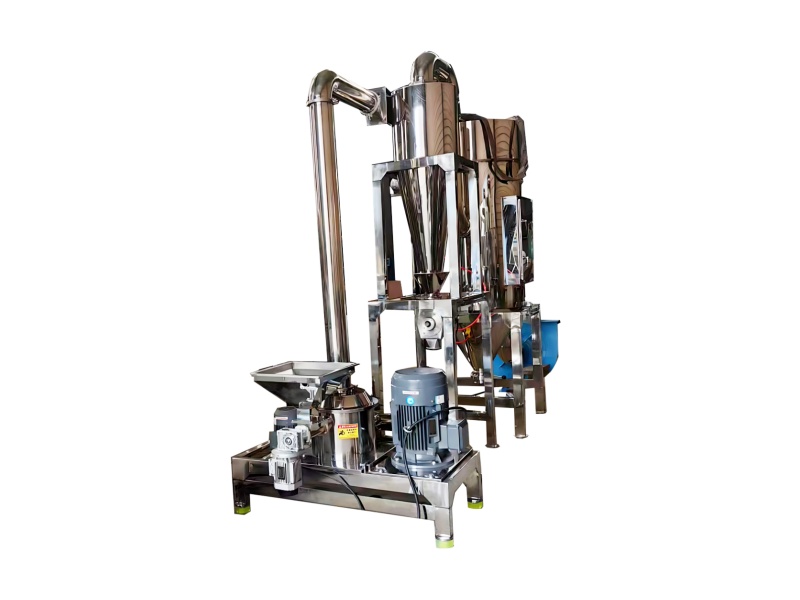
Grinding is the central processing stage in a powdered sugar production line. Granulated sugar is reduced to a finer powder to meet the particle-size requirements of the intended application.
Different products require different powder characteristics. Standard powdered sugar for general food processing may have different fineness requirements from fine sugar powder used in premium bakery products or specialized food formulations.
The grinding system should therefore be selected according to several factors:
• Target fineness: The required particle-size range influences the suitable grinding technology and operating conditions.
• Production capacity: The grinder must meet the required output under the specified product and fineness conditions.
• Product consistency: The grinding process should provide a powder suitable for the subsequent mixing and packaging stages.
• Operating requirements: Cleaning, maintenance, dust management, and continuous or batch production requirements should be considered during equipment selection.
A finer target particle size may reduce achievable throughput, depending on the grinding technology and operating conditions. Production capacity should therefore be evaluated against the actual fineness requirement rather than considered as an isolated machine specification.
For equipment selection, see Salinovate’s sugar grinding machine options. For applications requiring particularly fine sugar powder, a dedicated fine-grinding configuration may be more appropriate. One relevant example is Salinovate’s fine sugar powder grinding equipment.
IV. Powder Mixing: Blending Powdered Sugar with Corn Starch
After grinding, powdered sugar is commonly blended with corn starch to help reduce caking and improve the handling and storage characteristics of the finished product. This mixing stage is an essential part of many commercial powdered sugar production processes. It should be considered when planning the complete production flow, rather than treated as an unrelated downstream operation.
4.1 Why Is Corn Starch Added to Powdered Sugar
Powdered sugar has a large surface area and can be sensitive to moisture. Under unsuitable storage or handling conditions, the powder may form lumps, affecting its flowability and making subsequent packaging more difficult.
Corn starch is commonly used in powdered sugar formulations as an anti-caking ingredient. Its purpose is to help limit particle agglomeration and support more consistent product handling. However, the effectiveness of the finished product depends on more than the presence of starch. Moisture exposure, storage conditions, ingredient characteristics, and blending uniformity also influence product performance. The starch addition rate should be determined by the intended application, product formulation, customer specifications, and applicable food regulations.
Remark: If you would like to know more powdered sugar and starch mixing design details, you can read our customer case named Custom SLR-500 Ribbon Blender + Screw Conveyor – Safe & Efficient Sugar Powder and Corn Starch Mixing Solution.
4.2 Why Is Mixing Equipment Important
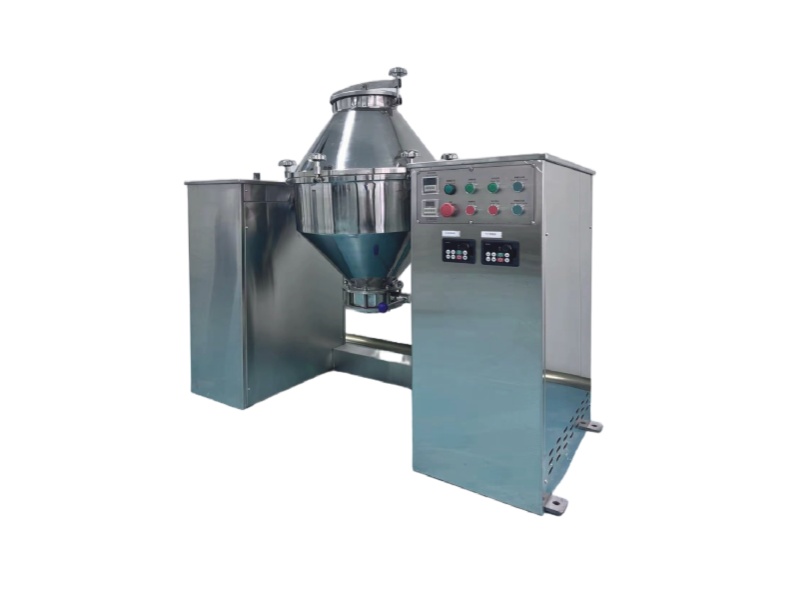
The mixing stage must distribute corn starch throughout the powdered sugar as uniformly as the product specification requires. An unsuitable mixing arrangement may lead to uneven ingredient distribution, inconsistent batches, or unnecessary handling between processing stages. The mixer should therefore be selected according to the batch size, required blending performance, production schedule, and cleaning requirements.
For powdered products with stringent hygiene requirements, the mixer design and product-contact surfaces should also be considered as part of the equipment selection process. Salinovate’s powder mixing equipment can be evaluated according to the product characteristics and production requirements. The key design principle is to coordinate grinding and mixing capacity so that the mixer can handle the powder output without creating an unnecessary production bottleneck.
V. Finished-Product Handling and Packaging
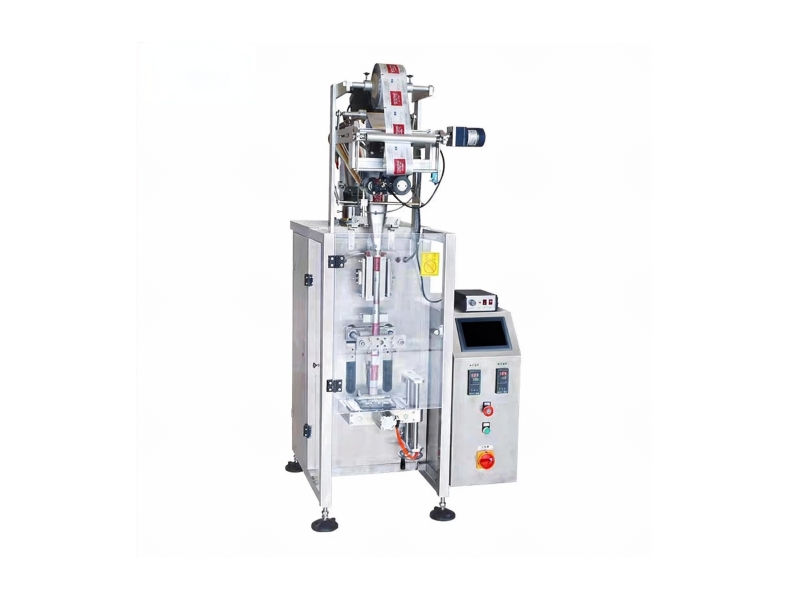
After mixing, the powdered sugar blend is transferred to the packaging stage. The packaging arrangement depends on the intended sales format and production scale. Small retail packages, food-service bags, and larger industrial packages may require different filling and weighing arrangements.
The packaging system should be compatible with the powder’s flow characteristics and the required filling accuracy. Because powdered sugar is a fine material, the design should also account for dust generation during transfer and filling. Where necessary, conveying equipment or buffer hoppers can be used between mixing and packaging to coordinate the operating rates of the two stages.
The selection of conveyors, hoppers, and automated feeding equipment should be based on the required production capacity, factory layout, automation level, and available budget. These components are supporting elements of the production line and should be configured around the actual process requirements.
VI. How to Design a Powdered Sugar Production Line
A suitable production line is not simply a list of machines. Its design should establish a logical relationship between processing stages so that each machine can perform its function without unnecessarily restricting the overall production flow. Several considerations are particularly important.
6.1 Start with the Finished Product
Before selecting equipment, define the product requirements:
• Required powdered sugar fineness
• Intended application and product quality specifications
• Whether corn starch or other permitted ingredients will be blended with the sugar
• Required blending uniformity
• Finished-product packaging format
These requirements establish the basic process and determine which equipment functions must be included.
6.2 Match Grinding and Mixing Capacity
The grinding and mixing stages must be designed to work together. For example, if the grinding system produces powder faster than the mixing stage can process it, material may accumulate between the two operations. Conversely, an oversized mixing system may increase batch waiting time or leave equipment underutilized.
The appropriate arrangement depends on whether the factory uses continuous processing, batch mixing, or a combination of both. Production capacity should be assessed across the complete process rather than based solely on the rated output of the grinder.
6.3 Plan the Material Flow
The arrangement of equipment should allow powdered sugar to move logically from grinding to mixing and then to packaging. Conveying systems, buffer hoppers, and automatic feeding devices can be incorporated according to the required automation level, production scale, factory layout, and budget. The goal is to provide reliable material transfer and coordinate the processing stages without adding unnecessary equipment or complexity.
6.4 Consider Cleaning, Dust Control, and Food Safety
Fine sugar powder requires appropriate attention to cleaning, dust management, and safe operation. The production line should be designed to support practical cleaning and maintenance, particularly around material transfer points, mixers, and packaging equipment.
Sugar dust can also present a combustible-dust hazard under certain conditions. Equipment selection and system design should therefore include a suitable assessment of dust hazards, ignition sources, and applicable safety requirements. The required protective measures depend on the specific process and installation; they should not be assumed to be covered simply because an individual machine includes a particular component.
VII. Configure the Production Line Around Your Requirements
There is no single powdered sugar production line configuration that fits every factory. A suitable design must reflect the relationship between the required product, processing capacity, mixing requirements, material flow, and packaging method.
For a small operation, a relatively simple arrangement may be sufficient. A larger factory may need more automated feeding, conveying, intermediate storage, and packaging to support its production schedule. The essential process remains straightforward: feed the granulated sugar, grind it to the required fineness, blend it with corn starch according to the product formulation, and transfer the finished blend to packaging. The supporting equipment is then configured around the required capacity, operating method, factory conditions, and investment budget.
Salinovate can help evaluate the grinding, mixing, and related equipment needed for a powdered sugar production line. To discuss a suitable configuration, share your target output, required powder fineness, product formulation, packaging format, and preferred level of automation. A well-designed production line should not simply connect individual machines. It should coordinate every processing stage to deliver the required product quality and production performance.
References
1. Occupational Safety and Health Administration (OSHA). Hazard Communication Guidance for Combustible Dusts. OSHA Publication No. 3371-08. Available from the OSHA combustible dust guidance