


 English
 French
A harsh reality: Many newly built nut butter production lines suffer from severe equipment over-configuration or capacity bottlenecks. The root of the problem lies in the lack of targeted design based on product characteristics and production scale.
When you search for nut butter production line, you might expect a one-size-fits-all answer. But the truth is: a production line producing 100 tons of premium cold-ground almond butter is drastically different from a production line producing 1000 tons of traditional peanut butter in terms of core equipment, process layout, and investment structure.
Based on the food survey research, this article offers you a decision-making matrix. You will find the production line configuration solution best suited for your business here.

I. Understanding Your Product – The Essential Differences Between the Three Process Paths
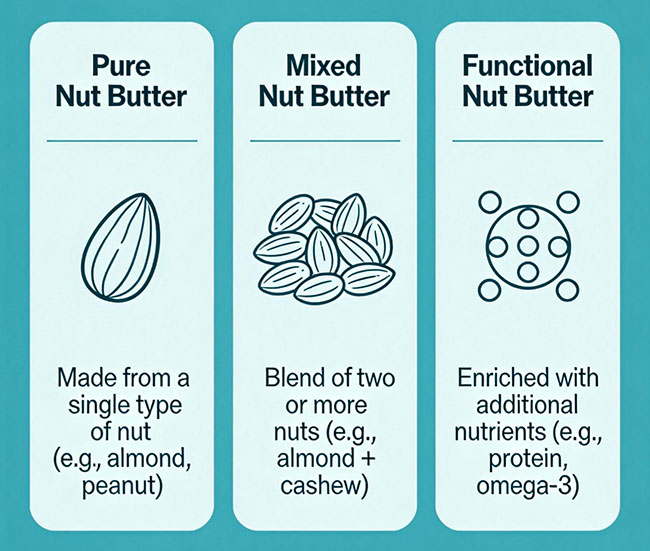
We previously conducted an analysis and research on investment in the nut butter market, which revealed that the market is currently divided into three main categories: single-origin nut butters, mixed nut butters, and functional nut butters. These three types of nut butters share some common processing steps in their production, but they also have differences. These differences were briefly touched upon in the article of Processing Technology Analysis - How to Make Nut Butter. Therefore, the corresponding production line designs also differ. The following is a discussion of the production line designs for these three different types of nut butters:
1.1 Pure Nut Butter: The Beauty of Subtraction
1)Product Definition: Contain only single or mixed nuts, with no additives (may contain a small amount of salt). Pursues the natural flavor and texture of nuts.
2)Scientific Principle: The core technology of this type of product is low-temperature physical grinding. The core challenge is how to control the 3)temperature (to prevent oil oxidation) and achieve the ideal particle size distribution(which determines the texture) during the grinding process.
4)Key Literature Support: A study by Chen et al. (2022) in Food Research International confirmed that for pure nut butter, for every 10℃ increase in grinding temperature, the rate of unsaturated fatty acid oxidation increases by 2.3 times. This means that temperature control is not a bonus, but rather the lifeline of quality.
Core Equipment for the Production Line:
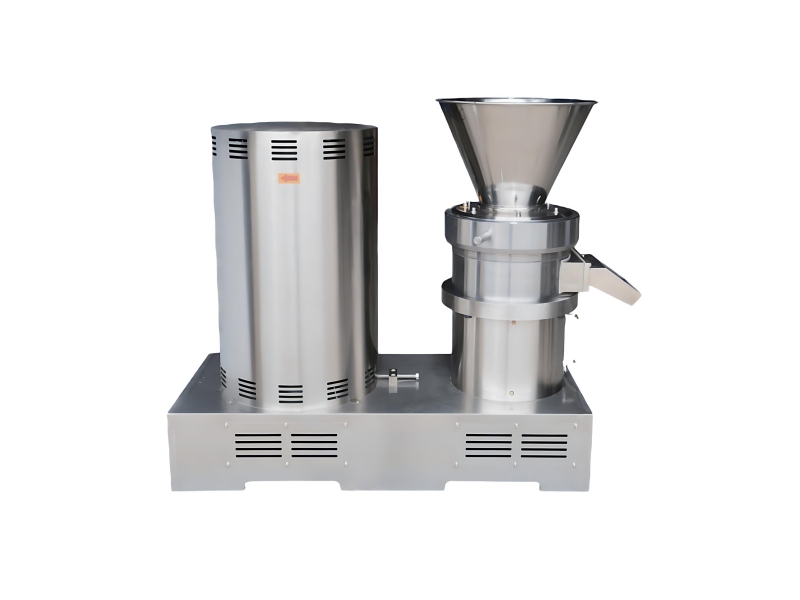
● Essential: High-efficiency cooled grinding system (stone mill or water-cooled colloid mill), high pressure homogenizer(for fine paste)
● Important: Precise roasting and cooling system
● Unnecessary: Mixing tanks, complex flavoring systems
Typical Products: Premium cold-ground almond butter, additive-free peanut butter, stone-ground cashew butter.
1.2 Mixed Flavored Nut Butter: The Art of Addition
1)Product Definition: Flavoring ingredients such as sugar, salt, spices, and cocoa powder are added to a nut base.
2)Scientific Principles: The core extends from grinding to micro-dispersion and macro-mixing. The challenge lies in how to uniformly disperse trace amounts of additives (sometimes <1%) into a high-viscosity nut base while maintaining stability (preventing oil-saucer separation).
3)Key Literature Support: Smith et al. (2021) in the Journal of Food Engineering showed that for ingredients with an addition amount <2%, the coefficient of variation (CV) of conventional mixing is as high as 18%, while the pre-dispersion + progressive mixing process can reduce the CV to below 5%.
Core Equipment of the Production Line:
● Retain all equipment for pure nut butter.
● Added Key Equipment: Precision metering system, high-efficiency mixing equipment (possibly including homogenizer)
● Added Auxiliary Systems: Trace ingredient premixing station, viscosity adaptive conveying system
Typical products: Chocolate hazelnut spread, cinnamon almond spread, sea salt caramel cashew spread.
1.3 Functional Nut Butter: Nutritional Engineering
1)Product Definition: Contains functional ingredients such as protein powder, probiotics, vitamins, and chia seeds.
2)Scientific Principles: This is not just about mixing, but also about constructing an active ingredient protection and sustained-release system. The biggest challenges are protection of heat-sensitive ingredients and prevention of uneven sedimentation.
3)Key Literature: According to the USDA's 2023 Guidelines for the Processing of Functional Foods, heat-sensitive ingredients such as probiotics will have a survival rate that decreases by more than 90% if exposed to temperatures above 45°C for more than 10 minutes.
Core Equipment for the Production Line:
● Retain all equipment from the first two categories
● Upgraded Key Equipment: Temperature-controlled mixing system (ensuring <40°C)
● New Special Equipment: Post-addition system (avoiding heat-sensitive ingredients undergoing heat processing), online monitoring system
● Strict Environmental Control: Temperature, humidity, and cleanliness control
Typical Products: High-protein peanut butter, probiotic almond butter, mixed nut butter with added Omega-3.
II. Scale Determines Configuration - A Clear Choice of Three Investment Paths
Regardless of the type of product you produce, scale dictates your equipment configuration logic. The decision sheet below visually illustrates your chosen path:
Nut Butter Type | Production Scale | Production Line Design |
Single-origin nut butter | Entrepreneurial stage | A1 |
Growth stage | A2 | |
Scaling stage | A3 | |
Mixed nut butters | Entrepreneurial stage | B1 |
Growth stage | B2 | |
Scaling stage | B3 | |
Functional nut butters | Entrepreneurial stage | C1 |
Growth stage | C2 | |
Scaling stage | C3 |
(Remark: Entrepreneurial stage: 50-200tons/year; growth stage: 200-800 tons/year; scaling stage: above 800tons/year )
2.1 Entrepreneurial Stage (50-200 tons/year) - Validation and Survival
Core concept: Minimum feasible production line. The goal is not to maximize production capacity, but to validate products, processes, and markets at the lowest cost.
Comparison of Configuration Schemes:
Equipment Module | A1 | B1 | C1 | Cost Difference |
Nut Roaster | Small to medium electric/gas roaster/oven | Same as A1 | Same as A1 | Same or no big difference |
Coarse Grinder | Cutter mixer type grinder | Cutter mixer type grinder | Cutter mixer type grinder | Same |
Nut Butter Grinder | Small stone grinder/colloid mill | Small stone grinder/colloid mill | Small stone grinder/colloid mill | Same or no big difference |
Mixer(Mix/Emulsify) | No need | 50-100L mixing tank (homogenize, vacuum, cooling) | 50-100L mixing tank (homogenize, vacuum, cooling) | A1<B1≤C1 |
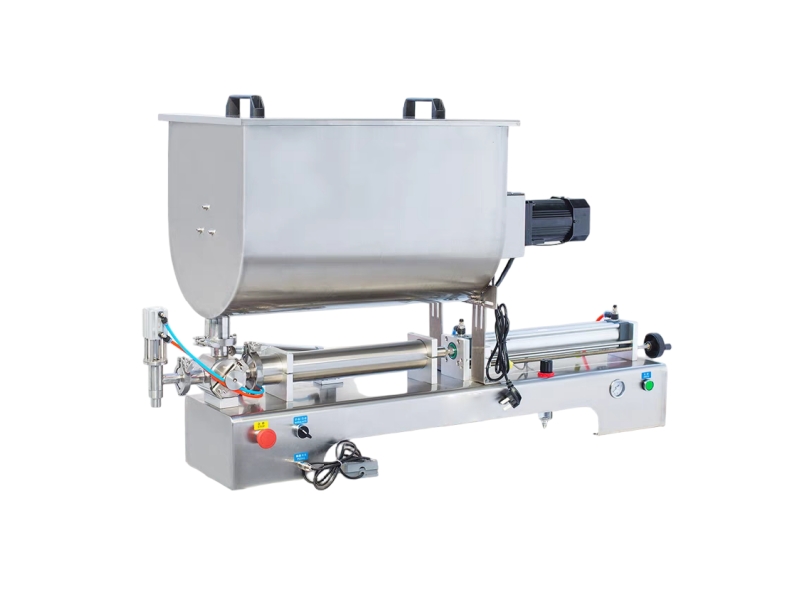
Nut Butter Filling Machine | Semi-automatic type | Semi-automatic type | Semi-automatic type | Same or no big difference |
Remark:
1)For coarse and common fine butter, the above machines are basically enough; For very fine nut butter, high pressure homogenizer is also a must. In the line design, this device is not mentioned as key points.)
2)About the peeling part for the nuts, usually the both dry and wet peeling technology are popular before or after the roasting step.
3)About the cooling after roasting, usually natural cooling for the small quantity processing and cooling machine following the roasting step. Usually the cooler is equipped together with the roaster if there is an automatic cooling need for your part.
2.2 Growth Oriented (200-800 tons/year) - Efficiency and Expansion
Core concept: Balanced automation. The core contradiction at this stage is to improve efficiency and reduce costs while maintaining sufficient flexibility to adapt to product innovation.
1)Core Upgrade of Single Pure Nut Butter (A2) :
Upgrading Configuration | Function | Working Unit |
Continuous type roaster | High processing capacity for nut roasting | Roasting unit |
Roller type grinder | High efficient coarse crushing | Coarse Grinding Unit |
Material lifting conveyor | Automatic convey nuts to the grinder | Grinding unit |
Buffering use storage silo | Store the ground nut butter | Between grinding unit and filling unit |
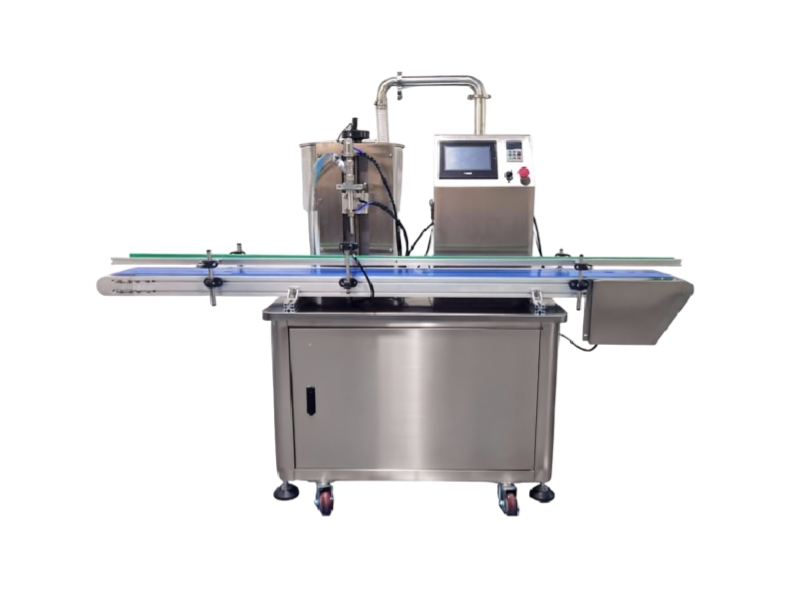
Automatic filling line | Combine filling, capping/pressing, labeling in one line | Filling unit |
2)Core Upgrade of Single Pure Nut Butter (B2) :
Upgrading Configuration | Function | Working Unit |
Continuous type roaster | Same as A2 | Same as A2 |
Roller type grinder | Same as A2 | Same as A2 |
Material lifting conveyor | Same as A2 | Same as A2 |
Buffering use storage silo | Same as A2 | Same as A2 |
Temperature sensor | Detect the real-time temperature of the mixture | Mixing unit |
Buffering use storage silo | Store the mixed nut butter | Between the mixing unit to the filling unit |
Automatic filling line | Same as A2 | Same as A2 |
3)Strict Design of Functional Nut Butter (C2):
Upgrading Configuration | Function | Working Unit |
Continuous type roaster | Same as A2 | Same as A2 |
Roller type grinder | Same as A2 | Same as A2 |
Material lifting conveyor | Same as A2 | Same as A2 |
Buffering use storage silo | Same as A2 | Same as A2 |
Temperature sensor | Detect the real-time temperature of the mixture | Mixing unit |
Buffering use storage silo | Store the mixed nut butter | Mixing unit |
Automatic filling line | Same as A2 | Same as A2 |
Cooling Jacket for the filling machine feed hopper | Control the butter temperature | Filling unit |
High standard clean production room | For high sanitary standard of high-end nut butter | Throughout the whole line |
2.3 Industrial Grade (Over 800 Tons/Year) - Professional and Barrier
Core concept: Specialization, automation, and digitization. This level of production line itself is a competitive barrier.
The core features of the configuration plan are:
1)Parallel Processing Capability:
● A3 Plan: Possible configuration of dual grinding lines , with one stone mill for high-end and one colloid mill for standard
● B3 Plan: Equipped with a multi formula mixing system, capable of producing 3-5 different products simultaneously. (automatic weighing function and PLC control formula storage function.)
● C3 Plan: Establish a clean workshop with strict separation of functional areas
2)Intelligent Control System:
● Equipment layer: Real time data collection
● Process control: Production scheduling optimization
● Manufacturing execution system: With the ERP management system, real data uploading in the raw material supply, production progress, packing data, etc can help monitor the whole supplying chain to quickly make adjustments.
3)Sustainable Design:
● Thermal energy recovery system (saving 15-20% energy)
● Water circulation system (water reuse rate>60%)
● Recycling of waste materials (using nut skin residue as feed or fuel)
III. Your Decision Checklist -7 Key Questions
Before investing any funds, please answer the following questions honestly:
3.1 Product Positioning
1)If the answer is "the purest nut flavor" → prioritize the pure nut jam route
2)If the answer is "unique flavor experience" → requires mixed seasoning sauce route
3)If the answer is "addressing specific nutritional needs" → must take the functional nut sauce route**
3.2 The Estimated Actual Sales Volume for the First Year
1)<50 tons: Starting from the experimental level
2)50-200 tons: The most economical configuration for entrepreneurial level
3)200-500 tons: Growth configuration with the highest cost-effectiveness
4)>500 tons: Industrial grade configuration should be considered
3.3 The Availability of Professional Technical Team
If not, avoid choosing Class C solutions that require extremely high operational requirements.
3.4 The Sensitivity for the Cost to the Target Channel
1)Mass channels: prioritize cost control and choose high-efficiency solutions
2)High end channels: Quality first, investing in more precise equipment
3.5 New Product Launch Frequency
1)If there is frequent innovation, choose the B1/B2 scheme with higher flexibility.
2)If the product is stable, choose the professional and efficient A2/A3 solution.
3.6 The Level of Financial Adequacy
1)Nervousness: Starting from the minimum configuration, reserve upgrade interfaces.
2)Adequate: One step approach may be more cost-effective in the long run.
IV. Professional Suggestions
4.1 Professional Advice from Research and Investigation
1)Starting from small-scale validation: Johnson et al. (2022) pointed out in Food Engineering Reviews that companies adopting the validation before expansion strategy have a 64% lower failure rate than the one-step approach strategy.
2)Focus on core processes: For nut butter, grinding and mixing are the two most critical steps. The best equipment should be invested in these two aspects, while costs can be moderately controlled in other aspects.
3)Design Scalability: When designing the production line, consideration should be given to the future 20-50% capacity expansion space to avoid having to start over 2-3 years later.
4.2 Conclusion: No Best but Most Suitable
Returning to the harsh reality at the beginning: many companies' production line problems stem from mismatches. The method to avoid mismatches is simple: stop searching for the standard answer and start designing your answer.
Your nut sauce production line should be:
1)Equipment combination that aligns with your product philosophy.
2)Capacity allocation that matches your market size.
3)The degree of automation that is compatible with your team's capabilities.
4)Investment structure that matches your financial situation.
Next Steps:
Salinovate can provide you with the entire production line design and solution configuration from nut grinding, mixing to filling. Meanwhile, regarding the roasting line for pre-processing, we can assist you in collaborating with professional roaster manufacturers to jointly solve your production line design.
If you have any needs, please feel free to consult us.
References:
[1] Chen, H., et al. (2022). Oxidation kinetics of unsaturated fatty acids in nut butter during processing. Food Research International, 151, 110865.
[2] Smith, J., et al. (2021). Mixing homogeneity in high-viscosity food systems. Journal of Food Engineering, 298, 110498.
[3] U.S. Department of Agriculture. (2023). Guidelines for Functional Food Processing. USDA Technical Bulletin No. 1934.
[4] Johnson, M., & Patel, R. (2022). Scale-up