


 English
 French
Nacho Cheese Sauce Refined Revolution
By:Salinovate Dec 09,2025
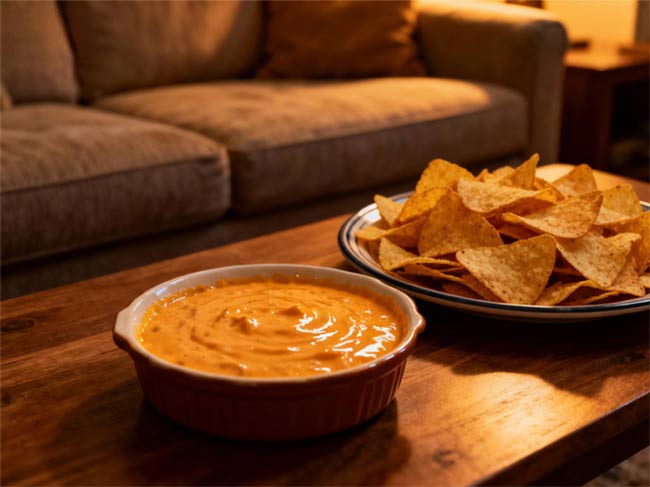
Imagine you're sitting on the sofa, holding a golden and crispy potato chip in one hand and lightly dipping the other into a bowl of silky, rich nacho cheese sauce. The moment it touches your tongue, the creamy aroma, the slight saltiness, and the smooth texture blend perfectly. Behind this seemingly simple deliciousness lies a refined revolution from the kitchen to the factory.

I. Solo Performance in the Kitchen: The Art and Limitations of Homemade Cheese Sauce
Making cheese sauce at home is a ritualistic affair, full of warmth and activity: at the stove, you carefully melt butter, add flour and stir into a paste, then slowly pour in milk, watching it thicken. Finally, you sprinkle in shredded cheddar cheese and patiently stir until completely melted. This process is like playing a solo piece—relying on the chef's intuition, the strength of their wrist, and a split-second judgment of the heat.
But homemade cheese sauce has its limitations: the texture can sometimes be coarse, it tends to separate after cooling, the flavor distribution is uneven, and there are always subtle differences each time you make it. This is why, when potato chip factories decided to bring this dipping sauce to millions of consumers, they had to upgrade this solo performance into a symphony.
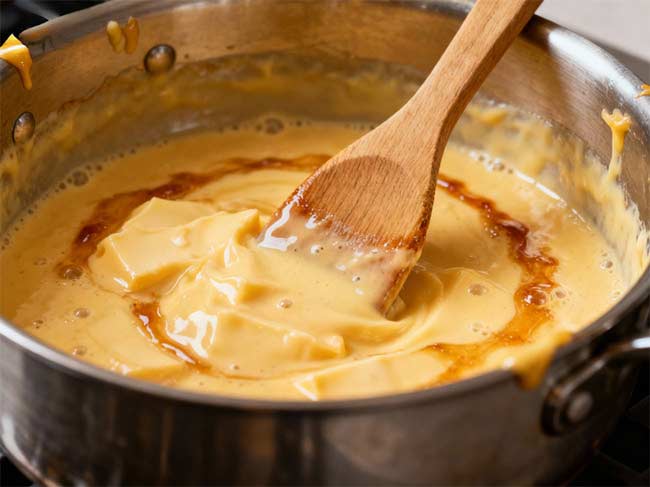
II. First Movement: The Symphony of Temperature - Precise Cooking Mixer
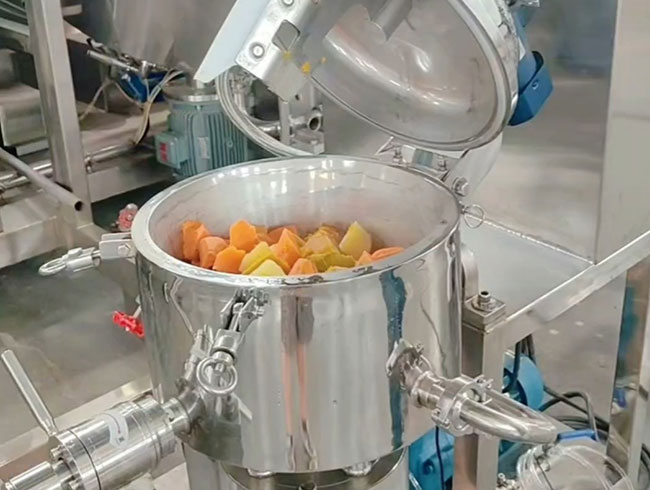
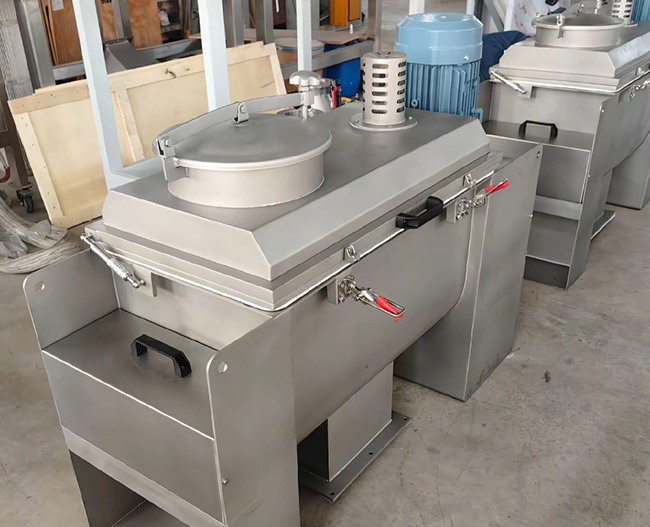
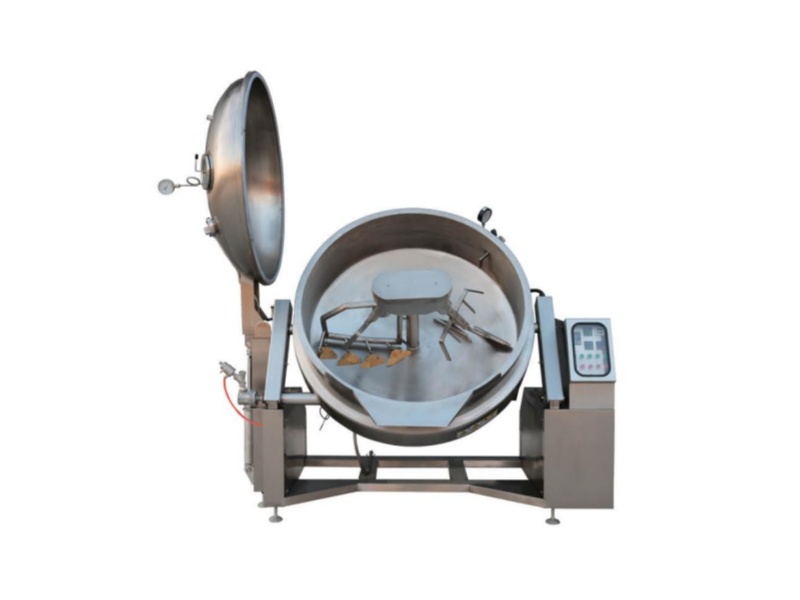
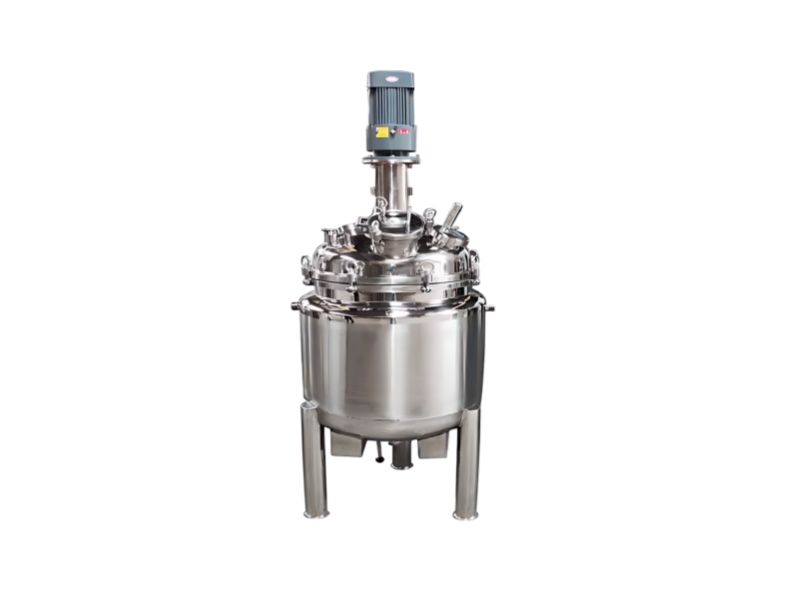
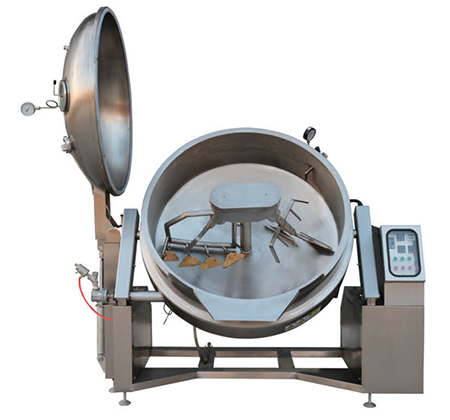
Stepping into a modern food factory, you're first greeted by gleaming stainless steel cooking mixer. These behemoths are fundamentally different from a home stove: they don't simply heat food, but precisely control thermodynamic processes.
Imagine a standing cooking tank, equipped with sensitive temperature sensors and automatic stirring arms. Here, the base of cheese sauce(milk fat, protein, and moisture) is gently processed within a precise range of 62-85°C. This temperature range is carefully calculated: sufficient to destroy potential microorganisms without causing excessive denaturation of milk proteins, resulting in a coarse texture.
Even more intriguing is the multi-stage heating process: first, solid fats are melted at a lower temperature, then the temperature is gradually increased to activate emulsifiers, and finally, cheese chunks are added at a specific temperature. This temperature ladder design ensures that each ingredient releases its optimal properties in the most suitable environment—a precision impossible to achieve with a home stove.
III. Second Movement: A Revolution in Texture – High-Shear Emulsification Equipment
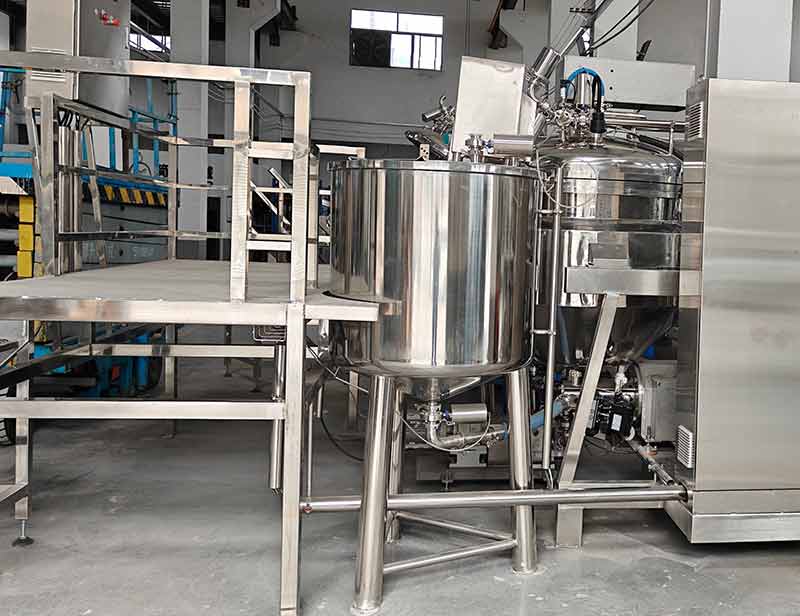
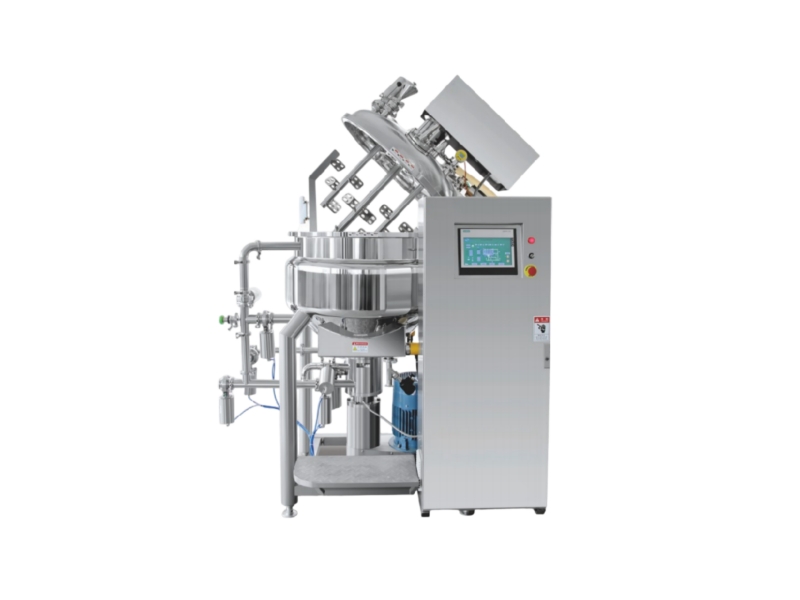
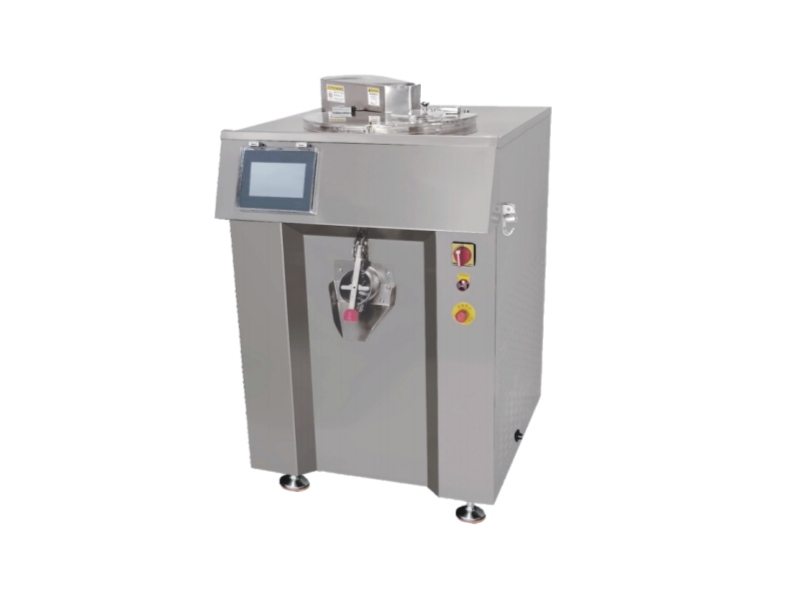
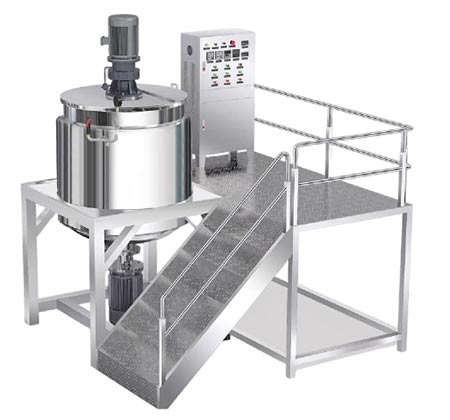
If cooking mixer is the string section of a symphony orchestra, then high shear emulsifying mixer is the timpani – giving cheese sauce its soul-like silky texture.
While a household blender hums, an industrial-grade emulsifying mixer is creating texture miracles at 2900rpm. Its rotor-stator system generates powerful shear forces, breaking down fat globules to the micron level (less than 20 microns). This size is just below the threshold of human tongue perception – which is why industrial cheese sauces taste exceptionally smooth, almost grainless.
Even more ingenious is the vacuum emulsification technology(optional): a vacuum is simultaneously created during emulsification, removing air introduced during mixing. This not only prevents oxidation and spoilage but also eliminates the impact of tiny air bubbles on texture. The final product has a velvety density, each spoonful is uniformly smooth, and there is no unpleasant oil-sauce separation after cooling.
IV. Third Movement: The Elevation of Flavor From Homogeneity to Layers
Perhaps most counterintuitively, industrial production can create richer layers of flavor than home cooking.
Through a multi-stage addition system, engineers can add different flavored cheeses at different stages: aged cheddar is added initially for a base of saltiness, smoked cheese is added in the middle to increase complexity, and finally, Parmesan grated cheese is mixed in at a low temperature to retain its distinct nutty flavor. Thanks to the precise control of the emulsification system, these flavors don't blend together but form a subtle "flavor map" within the sauce.
Even more interesting is the texture design: by adjusting the emulsification parameters, the same equipment can produce cheese sauces suitable for different types of potato chips—a thicker, coating texture for thick-cut chips, and a more fluid, lightly coating texture for thinner chips. This level of precision customization is unattainable in a home kitchen.
V. The Philosophy of Science Behind Symphonies
From small kitchen pots to factory assembly lines, accompanied by a delicate revolution in nacho cheese sauce. Homemade cheese sauce relies on the chef's immediate judgment, full of individuality but difficult to replicate. Industrial production, through equipment, solidifies, optimizes, and scales up best practices, allowing millions to enjoy the exact same wonderful experience at different times and places.
But this is not a compromise between art and technology. On the contrary, it is the precise temperature control of steamers and the high-speed shearing of emulsifying mixer that liberates food developers' ability to explore the frontiers of flavor. The ultimate smoothness, complex layers, and intelligent textures that cannot be consistently achieved in a home kitchen become commonplace in industrial equipment.
This small jar of cheese sauce contains not only the aroma of milk and the savory flavor, but also the wisdom and care that humanity has put into pushing everyday tastes to their limits. This may be the most touching secret of industrialized cuisine.