


 English
 French
The icing sugar market offers business opportunities for sugar processors, food ingredient manufacturers, bakery suppliers, and entrepreneurs looking to enter the food processing industry. Demand comes from commercial bakeries, confectionery manufacturers, dessert producers, and other food businesses that require finely ground sugar for specific formulations and applications.
However, a growing market does not automatically translate into a profitable manufacturing business. Raw material prices, local competition, product specifications, processing efficiency, packaging costs, and customer relationships all influence the financial performance of an icing sugar operation.
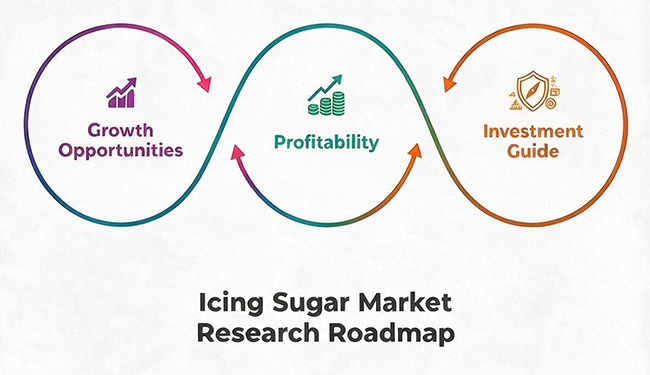
For investors, the more important question is not simply whether the global icing sugar market will grow, but where demand exists, which customers are worth targeting, and whether production can be commercially competitive. This guide examines the icing sugar market size and outlook, major demand drivers, potential business models, production economics, equipment considerations, and investment risks to help prospective manufacturers make informed decisions.

I. Icing Sugar Market Overview: Understanding the Demand
Icing sugar, also known as powdered sugar or confectioners’ sugar, is finely ground sugar used in applications where rapid dispersion, smooth texture, and consistent ingredient distribution are important.
Depending on the market and intended application, commercial products may also contain an approved anti-caking ingredient to improve flowability and reduce caking during storage. Although icing sugar is a relatively simple ingredient, its commercial value depends on how well it meets the requirements of downstream food manufacturers. Three customer groups are particularly relevant to prospective producers.
1.1 Bakery and Confectionery Manufacturers
Commercial bakeries and confectionery manufacturers are important customers for icing sugar. Typical applications include cake icing, buttercream, fondant, confectionery fillings, decorative coatings, and selected bakery formulations.
These customers do not necessarily require the finest possible powder. Their priority is usually a product that performs consistently in their manufacturing process. For example, a bakery ingredient supplier serving multiple commercial customers may need to maintain consistent particle size distribution across batches. Significant variation can affect dispersion, texture, and the performance of the finished product. This creates opportunities for suppliers that can provide dependable specifications, reliable delivery, and consistent quality.
For new manufacturers, identifying the actual requirements of local bakeries and confectionery producers is a practical first step toward assessing market demand.
1.2 Food Ingredient Distributors and Wholesalers
Food ingredient distributors provide another potential route to market. Instead of selling directly to every bakery, a manufacturer can supply wholesalers that already serve established customer networks. This approach may help a new producer reach customers more efficiently, although distributors typically expect competitive pricing, dependable supply, suitable packaging, and commercially attractive purchasing terms.
Some may also require private-label packaging or minimum order quantities. Before choosing this business model, investors should understand the distributor’s expected margin and whether the resulting selling price leaves sufficient room for the manufacturer’s operating costs.
1.3 Industrial Food Processing
Icing sugar is also used in selected dessert mixes, confectionery formulations, and other processed food products. Industrial buyers may have more demanding requirements than smaller food businesses. These can include defined particle size distribution, moisture control, traceability, food safety documentation, and stable supply volumes.
For manufacturers targeting this segment, production consistency is an important competitive factor. A machine’s rated capacity alone does not establish whether a manufacturer can satisfy an industrial customer’s requirements. The complete process must consistently deliver the required product specification.
II. Icing Sugar Market Size and Growth Forecast
Market research provides a useful starting point for evaluating the industry’s commercial potential, although published estimates vary according to the product categories, geographic coverage, and methodologies used by individual research providers.
According to Mordor Intelligence’s 2026–2031 market forecast, the global icing sugar market was estimated at approximately USD 4.65 billion in 2025 and USD 4.96 billion in 2026. The report projects that the market will reach USD 6.84 billion by 2031, representing a compound annual growth rate (CAGR) of 6.65% over the 2026–2031 forecast period [1].
These figures are research estimates and forecasts, not audited global sales totals. They should be interpreted as indicators of the market’s potential rather than guaranteed outcomes for individual manufacturers.
2.1 What Do the Market Statistics Tell Investors
The forecast suggests that icing sugar is an established ingredient market with potential for further expansion. Nevertheless, a global growth rate does not indicate how much demand is available to a new manufacturer in a particular country.
For investment planning, the more useful questions are:
• How much icing sugar do local bakeries and food manufacturers purchase each month?
• How many established suppliers already serve these customers?
• Are customers dissatisfied with current prices, product consistency, or delivery times?
• Is imported icing sugar expensive or difficult to obtain?
• What product specifications and packaging formats are most commonly purchased?
• Can a new supplier offer a meaningful advantage without sacrificing its margin?
These questions help translate broad market statistics into a commercially relevant assessment.
A country with a large bakery industry may already have strong competition and efficient distribution networks. A smaller market may offer better entry opportunities if buyers experience supply shortages, high transportation costs, or limited access to suitable product grades. The most attractive opportunity is not necessarily the largest market. It is the market where a new manufacturer can meet a clearly identified need at a competitive cost.
2.2 Regional Demand and Market Entry
Regional differences in food manufacturing activity, distribution infrastructure, and sugar availability can create different opportunities for icing sugar producers. For example, a manufacturer serving a concentrated network of commercial bakeries may benefit from shorter delivery distances and repeat purchasing relationships.
Another producer may focus on supplying distributors that serve multiple cities or countries. This model can increase potential sales reach but may also require greater working capital, more complex logistics, and stronger quality management. Investors should evaluate local customer demand and supply conditions before choosing a factory location or production scale. Global market growth is useful background information, but the feasibility of a specific investment depends on the addressable market available to that business.
III. Where Are the Business Opportunities in the Icing Sugar Market
A new manufacturer can enter the icing sugar market through several business models. Each has different requirements for capital, customer acquisition, production capacity, and product differentiation.
3.1 Local Icing Sugar Manufacturing
Local production may be attractive where buyers face high import costs, inconsistent supply, long delivery times, or limited access to suitable product grades. A manufacturer can begin by serving a defined geographic area and expand as customer demand becomes more predictable.
The main advantage is the opportunity to develop direct relationships with bakeries, food manufacturers, wholesalers, and ingredient distributors. However, local manufacturing does not automatically provide a cost advantage. A business must compare the delivered cost of imported icing sugar with the total cost of producing it locally, including refined sugar, processing, packaging, labor, utilities, maintenance, quality control, storage, and delivery.
If established competitors have access to cheaper raw materials or more efficient production facilities, a smaller manufacturer may struggle to compete on price alone. A clear customer segment and a realistic cost structure are therefore essential before investing in production equipment.
3.2 B2B Supply to Bakeries and Food Businesses
Supplying icing sugar to commercial customers can be a practical alternative to immediately developing a consumer-facing brand. Potential customers include regional bakeries, cake manufacturers, confectionery producers, food service distributors, and bakery ingredient wholesalers.
This model allows the manufacturer to focus on product consistency, commercial relationships, and reliable delivery. However, buyers may expect competitive wholesale prices, credit terms, private-label packaging, and stable supply throughout the year. Prospective manufacturers should investigate these purchasing conditions before calculating projected revenue.
3.3 Specialized Grades and Application-Specific Products
Another opportunity is to serve customers with more specific product requirements. Different food applications may require different particle size distributions, flow characteristics, or ingredient formulations. A manufacturer that consistently meets a specialized specification may be able to differentiate itself from suppliers competing primarily on price.
However, finer powder is not automatically more profitable. Producing a finer grade may require additional processing, greater energy consumption, lower throughput, or more demanding quality control. Any potential price premium must be evaluated against these additional costs. Before developing a specialized product, manufacturers should confirm the customer’s actual requirements, expected purchasing volume, repeat-order potential, and willingness to pay for the additional performance.
IV. Is an Icing Sugar Manufacturing Business Profitable
Profitability depends on the relationship between selling price, raw material costs, processing expenses, and the volume that can be sold consistently. A useful starting point is the contribution margin per kilogram.
Contribution margin per kilogram = Net selling price per kilogram − Variable cost per kilogram. Variable costs may include refined sugar, approved anti-caking ingredients where applicable, packaging, electricity, direct production labor, consumables, and variable delivery expenses. The contribution margin must cover fixed operating costs before the business generates an operating profit.
4.1 A Simplified Profitability Example
Consider a hypothetical icing sugar manufacturer with the following assumptions:
• Net selling price: USD 0.90/kg.
• Variable production and delivery cost: USD 0.78/kg.
• Monthly sales volume: 50,000 kg.
The contribution margin is: USD 0.90 − USD 0.78 = USD 0.12/kg.
At 50,000 kg of monthly sales, the manufacturer generates: 50,000 × USD 0.12 = USD 6,000 in monthly contribution.
This amount is available to cover fixed operating costs and other expenses not included in the variable cost calculation. The figures above are illustrative assumptions, not verified market prices, industry averages, or a forecast for a specific factory. Their purpose is to demonstrate how relatively small differences in cost per kilogram can influence the financial performance of a manufacturing business.
4.2 Calculate the Break-Even Sales Volume
A manufacturer should also determine how much product must be sold to cover fixed operating costs. Break-even sales volume = Monthly fixed costs ÷ Contribution margin per kilogram. Using the hypothetical contribution margin of USD 0.12/kg, a factory with USD 12,000 in monthly fixed costs would need to sell approximately 100,000 kg per month to cover those costs.
This simplified calculation excludes additional considerations such as financing costs, taxes, depreciation treatment, initial capital expenditure, and working capital. A full investment assessment should incorporate these items and test whether the business remains viable under less favorable operating conditions.
4.3 Raw Material Costs Can Determine Competitiveness
Refined sugar is typically the principal raw material in conventional icing sugar production. Changes in sugar procurement costs can therefore have a substantial effect on the manufacturer’s margin, particularly when selling prices are fixed under long-term supply contracts.
Investors should investigate raw material availability, supplier pricing, minimum order quantities, storage requirements, payment terms, and the ability to adjust selling prices when costs change. A low equipment purchase price cannot compensate for a structurally uncompetitive raw material supply arrangement.
4.4 Production Capacity Must Match Actual Demand
A grinding system capable of processing 300 kg/h does not guarantee that a factory will sell 300 kg of icing sugar every operating hour. Actual production depends on the required fineness, material characteristics, operating conditions, cleaning, maintenance, downtime, and the capacity of downstream collection and packaging equipment.
Commercial performance depends on sales volume rather than machine capacity alone. For a new business, matching the initial production system to validated demand may be more sensible than purchasing the largest available machine at the beginning. The investment plan should also allow for expansion if sales grow and additional production capacity becomes commercially justified.
V. What Equipment Is Needed to Produce Icing Sugar
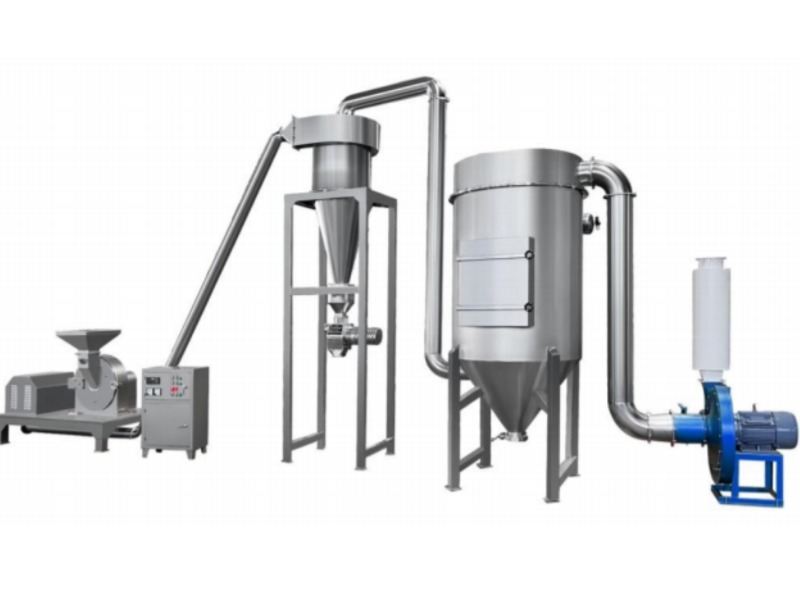
The required equipment depends on the intended product specification, production volume, available factory space, and desired level of automation. A typical icing sugar manufacturing setup may include:
• Refined sugar feeding and storage equipment.
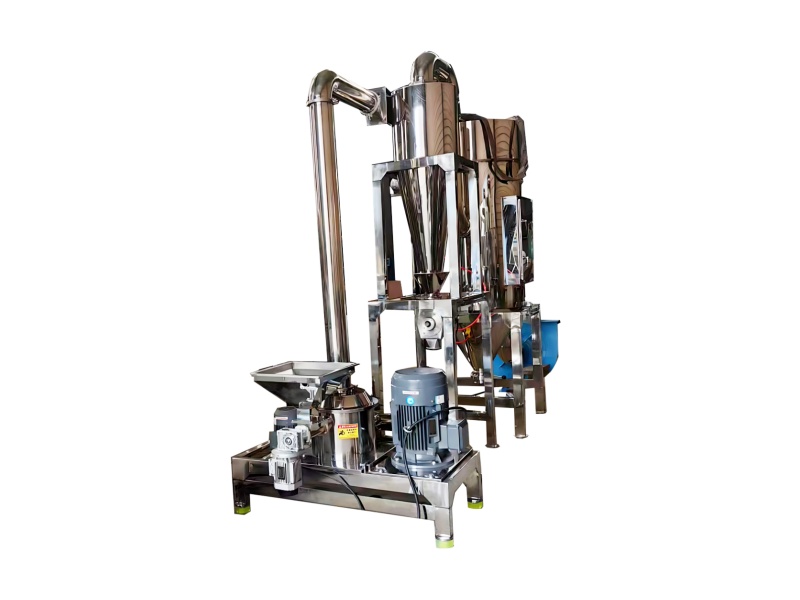
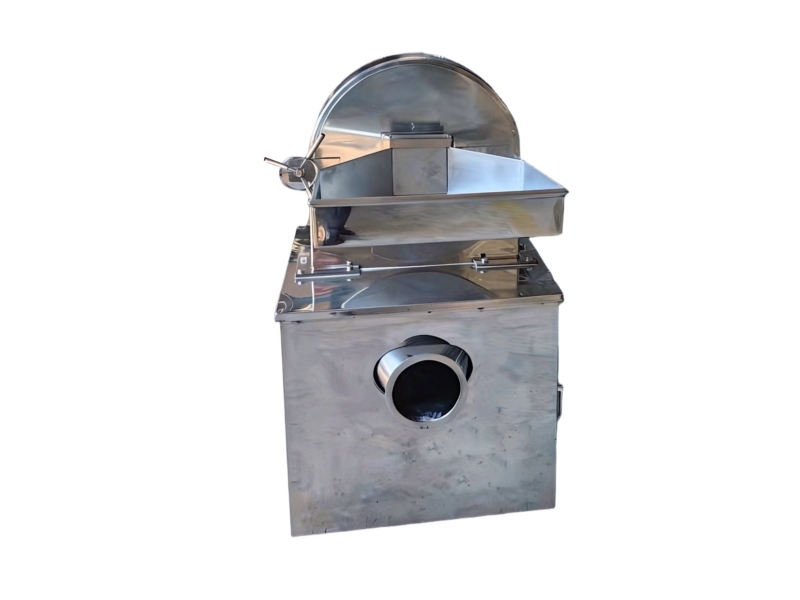
• An industrial sugar grinding machine.
• Sieving equipment, depending on the required product specification.
• Conveying equipment for material transfer.
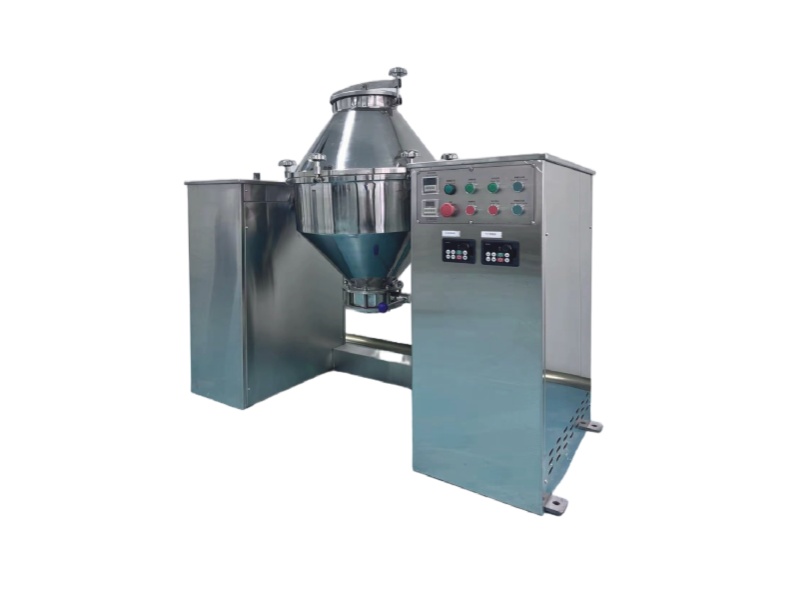
• A powder mixing machine if an approved anti-caking ingredient is used.
• Weighing and packaging equipment.
• Appropriate controls, cleaning provisions, and safety measures.
Not every manufacturer requires a fully automated production line. A small operation may begin with a compact grinding and collection system, while a larger factory may require automated feeding, conveying, classification, and packaging. The objective is to select a complete process configuration that meets the customer’s product requirements at an acceptable operating cost.
5.1 Standard Powdered Sugar vs. Finer Icing Sugar
The required particle size is one of the first decisions to make when selecting equipment. For many conventional powdered sugar applications, a suitable mechanical grinder may provide an economical solution. Depending on the machine design and product requirements, a screen can help control the discharged particle size.
For applications requiring finer or more closely controlled particle size distribution, an air classifier mill may be worth evaluating. An air classifier mill combines mechanical grinding with particle classification. The classification system helps determine which particles can leave the grinding zone, while particles that do not meet the operating conditions may remain in the system for further grinding. This arrangement can be useful for producing finer powders, but actual throughput depends on the target fineness, material characteristics, equipment model, and operating conditions.
Neither technology should be selected solely on the basis of its maximum advertised fineness. The appropriate choice depends on the required product specification, expected throughput, operating cost, maintenance needs, and overall process design.
5.2 Why Particle Size Specifications Matter
Mesh numbers such as 80 mesh, 100 mesh, and 200 mesh are commonly used when discussing powder fineness. However, mesh numbers alone do not fully describe the particle size distribution of a finished product.
The relationship between mesh size and particle dimensions depends on the applicable sieve standard, and two products with the same nominal mesh specification may have different distributions of fine and coarse particles. Before purchasing equipment, manufacturers should confirm the actual specification required by their customers. Where relevant, this may include the measurement method, particle size distribution, oversize content, and performance in the intended food application. Equipment suppliers should evaluate these requirements alongside the material properties and desired production capacity.
5.3 Dust Collection and Production Safety
Fine sugar powder can create airborne dust during grinding, conveying, collection, and packaging. Dust collection is therefore important for maintaining a cleaner working environment and controlling the release of airborne particles. It is also a safety consideration. The U.S. Occupational Safety and Health Administration identifies sugar and other finely divided food materials as potential combustible dust hazards under suitable conditions [2].
A sugar grinding facility should assess dust accumulation, potential ignition sources, electrical equipment suitability, housekeeping, and the protective measures required for the specific installation. The appropriate design depends on the material properties, facility layout, applicable regulations, and a site-specific risk assessment. A standard dust collector should not automatically be assumed to provide explosion protection. Where combustible-dust protection is required, the equipment and protective measures must be selected and verified for the actual installation.
Manufacturers should consult qualified engineering and safety professionals when designing a new sugar grinding facility.
VI. Production Costs and Operational Factors
The investment decision should account for the complete production process rather than the purchase price of the grinding machine alone.
6.1 Initial Capital Investment
Capital requirements may include:
• Grinding and classification equipment.
• Feeding and conveying systems.
• Dust collection and air handling.
• Sieving and mixing equipment where required.
• Weighing and packaging machinery.
• Electrical installation and utilities.
• Factory preparation and safety measures.
• Initial raw material inventory and working capital.
The final investment depends on production capacity, automation, installation requirements, and local operating conditions.
A compact setup may reduce initial capital expenditure but require more manual handling. An integrated production line may improve consistency and reduce some labor requirements, but its additional capital cost must be justified by expected sales and operating savings.
6.2 Packaging and Moisture Management
Icing sugar can be affected by moisture, which may contribute to caking and handling difficulties. Packaging should therefore be appropriate for the product’s intended storage period, transportation conditions, and customer requirements.
Bulk industrial packaging and small retail packages have different cost structures. Retail packaging may require more machinery, labeling, inventory management, and distribution effort per kilogram sold. Packaging decisions should reflect the intended sales channel rather than equipment convenience alone.
6.3 Quality Control and Food Safety
Commercial customers may require more than a visually fine powder. Depending on the application and market, quality control may include moisture measurement, particle size testing, checks for foreign materials, traceability, microbiological controls where applicable, and verification of packaging integrity.
Manufacturers must also consider hygienic equipment design, cleaning procedures, personnel training, and relevant local food safety requirements. If anti-caking ingredients are used, their permitted use, dosage, labeling, and suitability for the intended market must be verified. Consistent quality and reliable documentation can help manufacturers establish long-term relationships with industrial buyers.
VII. Main Risks in the Icing Sugar Market
Despite the industry’s potential, new manufacturers should evaluate several risks before committing capital.
7.1 Price Competition
Conventional icing sugar may be a price-sensitive product. If several suppliers offer comparable quality and delivery terms, buyers may switch when a competitor provides a lower price.
A new manufacturer should establish a clear competitive advantage, such as dependable delivery, consistent quality, flexible order quantities, specialized grades, or better service. Without a clear reason for customers to change suppliers, market growth alone may not generate an attractive return.
7.2 Uncertain Demand and Customer Concentration
A factory can become financially vulnerable if it relies on only a few major buyers. Losing one large customer may leave the business with excess capacity, unsold inventory, and ongoing fixed expenses.
Before expanding production, manufacturers should validate demand through customer interviews, trial orders, realistic sales forecasts, and purchasing commitments where available. The assessment should also account for seasonal demand changes and the payment terms typically required by commercial customers.
7.3 Working Capital Pressure
Raw material purchases, packaging inventory, finished goods, and customer credit periods can create significant working capital requirements. Even a business with a positive contribution margin can experience cash flow problems if customers pay slowly or raw material prices rise before selling prices can be adjusted. An investment plan should therefore include a working capital estimate and cash flow analysis rather than relying exclusively on projected accounting profit.
7.4 Regulatory and Safety Requirements
Food manufacturing requirements differ across countries and markets. Potential obligations include facility registration, hygiene controls, ingredient management, labeling, traceability, and customer-specific audits. The potential for combustible sugar dust must also be evaluated when designing the facility and selecting equipment. Investors should confirm applicable legal requirements before finalizing the factory layout and equipment configuration.
VIII. How to Evaluate an Icing Sugar Manufacturing Investment
A practical feasibility study should answer five questions before major equipment purchases are made.
First, who will buy the product? Identify target customers, their current suppliers, expected purchasing volumes, product requirements, and willingness to consider a new supplier.
Second, which product specification will the factory produce? Determine whether the business will focus on conventional powdered sugar, finer grades, specialized formulations, or multiple products. Product specifications should be based on customer requirements rather than the maximum fineness a machine can achieve.
Third, what production capacity is commercially justified? Estimate realistic monthly sales, operating hours, expected downtime, and packaging capacity. Do not treat the machine’s maximum rated output as guaranteed monthly production.
Fourth, what is the full cost per kilogram? Include raw materials, packaging, electricity, labor, maintenance, quality control, logistics, and other relevant expenses. Calculate the contribution margin and break-even sales volume under conservative assumptions.
Fifth, what could cause the investment to underperform? Test scenarios involving lower selling prices, higher refined sugar costs, slower customer acquisition, reduced operating hours, and delayed payments.
A project that remains viable under less favorable assumptions is generally a stronger investment candidate than one that depends on optimistic market growth and full-capacity production from the first month.
IX. Conclusion: Is the Icing Sugar Market Worth Entering
The icing sugar market offers opportunities connected to bakery production, confectionery manufacturing, food service, and the wider food processing industry. Market research points toward continued growth, but an individual manufacturer’s success depends on more than the global market forecast.
The most important factors are access to competitive raw materials, a clearly defined customer segment, reliable product quality, efficient production, and a sustainable route to market. Equipment selection should follow the business model rather than determine it. A conventional grinding system may be appropriate for standard powdered sugar, while finer or more tightly controlled products may require a different grinding and classification configuration.
For prospective manufacturers, the most sensible approach is to validate customer demand, establish the required product specification, calculate realistic production costs, and then select equipment that matches the confirmed business requirements. A viable icing sugar manufacturing business is built on the combination of market demand, cost control, product consistency, and reliable customer relationships but not on market growth forecasts or production capacity alone.
References
[1] Mordor Intelligence. (2026). Icing Sugar Market Size & Share Analysis — Growth Trends and Forecasts (2026–2031). Mordor Intelligence. Market size and growth figures are research estimates and forecasts.
[2] Occupational Safety and Health Administration (OSHA). (2009). Hazard Communication Guidance for Combustible Dusts. OSHA Publication No. 3371-08. U.S. Department of Labor.