


 English
 French
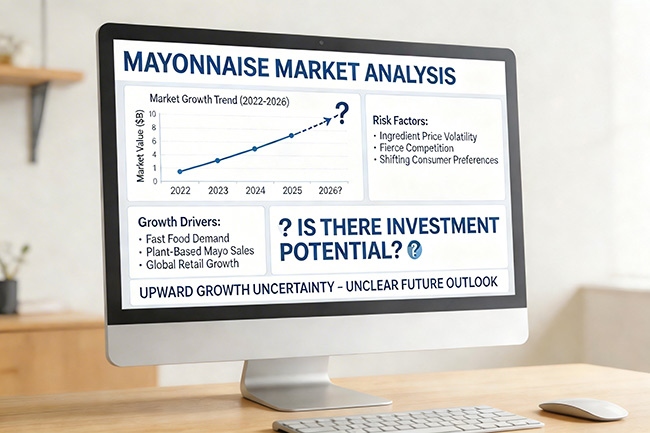
Mayonnaise has been very popular among the world, with crowded market. Is it still a good market for the investors to invest in? This article synthesizes the latest data from authoritative market research institutions such as Global Growth Insights, QY Research, and Fortune Business Insights to provide you with a systematic analysis. You can see here the global mayonnaise market's size, consumption trends, competitive landscape, and future opportunities, offering decision-making references for industry practitioners.

I. Market Overview: A Trillion-Dollar Market Expands Steadily
Firstly, we need to figure out the whole mayonnaise market conditions. Divided into the overall global market and the regional market, we see the mayonnaise market trend.
1.1 Global Market Size and Growth Forecast
Mayonnaise, as a core category in the global condiment industry, is experiencing steady growth. According to the latest data from Global Growth Insights, the global mayonnaise market size reached US$9.043 billion in 2025 and is projected to expand to approximately US$10.139 billion by 2035, with a compound annual growth rate (CAGR) of 1.15% during the forecast period.
While forecasts from different research institutions vary, the growth trend is highly consistent:
Research Institutions | 2025 Market Size | 2033/2035 Forecast | CAGR | Data Scope |
Global Growth Insights | US$9.043 billion | US$10.139 billion (2035) | 1.15% | Mayonnaise only |
Global Information Industry (GII) | US$13.2 billion (2024) | US$19.62 billion (2033) | 4.5% | Includes salad dressing |
Fortune Business Insights | - | Continued Growth | - | Mayonnaise only |
Deep Market Insights | US$12.97 billion (2024) | US$19.46 billion (2033) | 4.6% | Includes salad dressing |
Key Insights: The overall condiment market, including salad dressings, is growing faster (CAGR 3.3%-4.6%), while the pure mayonnaise market is showing a stable and gradual expansion. The global market size for salad dressings and mayonnaise reached US$22.91 billion in 2025 and is projected to reach US$28.66 billion by 2032, with a CAGR of 3.3%.
1.2 Regional Market Structure
Region | Market Share | Characteristics | Growth Drivers |
North America | 34% | Largest Global Market | Fast food culture, high penetration rate of prepared food products |
Asia Pacific | 29% | Fastest Growing Region | Popularization of Western-style diets, urbanization, increased disposable income. |
Europe | 23% | Mature Market | Dominated by organic products, strict quality standards. |
Middle East and Africa | 14% | Emerging Market | Halal certified products, increased variety of condiments. |
North American Market Details: The North American mayonnaise market was valued at $5.16 billion in 2024 and is projected to reach $7.67 billion by 2033, representing a CAGR of 4.54%. The United States is the dominant market in the region, with a projected value of $5.56 billion by 2033.
Asia Pacific Market Potential: Mayonnaise consumption in the Asia Pacific region has grown by 46% over the past five years, primarily driven by the expansion of fast-food chains and the increasing popularity of Western-style diets. 22% of convenience stores and supermarkets in second-tier cities now offer locally branded mayonnaise.
II. Consumer Trends: A Structural Shift from Traditional to Diversified
In the growing market, how the customer behave? You can read the following analysis.
2.1 Product Segmentation
Unflavored (Plain) Mayonnaise: Continues to dominate the market, accounting for approximately 61% of global consumption. Its versatility and neutral flavor make it the preferred base for sandwiches, burgers, and dips. Over 54% of households regularly use plain mayonnaise, and 32% of plain mayonnaise products on the market now offer egg-free or vegan versions.
Flavored Mayonnaise: The fastest-growing segment, accounting for 39% of global demand. Popular flavors include garlic, jalapeño, mustard, and peri-peri. Over 43% of Gen Z consumers prefer flavored products, and 36% of fast-food restaurants globally offer at least three flavor options.
2.2 Health-Focused Transformation: The Low-Fat, Egg-Free, and Vegan Wave
Rising consumer health awareness is reshaping the mayonnaise market landscape:
Health Trends | Market Performance | Growth Data |
Egg-free/Vegan mayonnaise | Market size estimated at $5.7 billion in 2025, projected to reach $10.18 billion by 2034 | CAGR 6.66% |
Low-fat Mayonnaise | Fastest growing segment globally | Expected to Maintain Fastest Growth Rate |
Organic mayonnaise | Penetration rates continue to increase in North America and Europe | 38% of newly launched products contain organic Ingredients |
Shifting consumer attitudes: Over 32% of global consumers actively seek plant-based spreads and condiments. In North America and Western Europe, demand for vegan mayonnaise has increased by 41% due to rising veganism and dietary restrictions. 38% of Gen Z and Millennial consumers prefer products that align with ethical and environmental concerns.
Key Brand Updates:
● March 2023: Kraft Heinz partnered with Chilean food technology company NotCo to launch NotMayo, a plant-based mayonnaise using chickpea flour as an egg substitute.
● May 2023: Kewpie launched Kewpie Vegan Mayo, designed for vegetarians, vegans, koshers, and gluten-free diets.
● April 2022: Saffola launched a healthy egg-free mayonnaise containing vitamins A, D, and E.
2.3 Packaging Innovation and Evolution of Consumption Scenarios
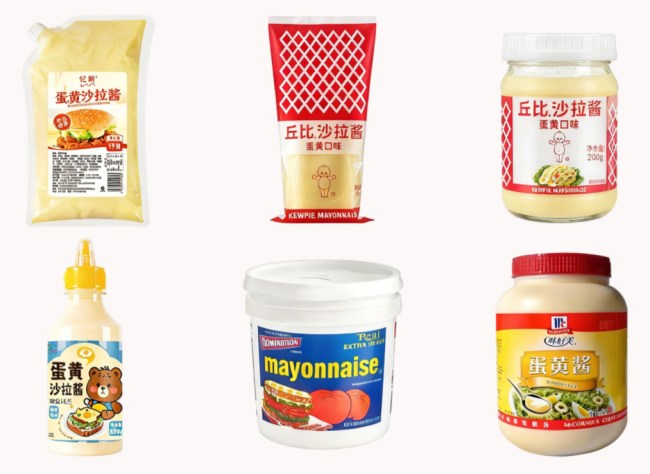
Changes in Packaging Formats:
● Squeeze bottles and single-serving pouches account for 41% of mayonnaise packaging innovation.
● Bulk packaging (bags, buckets) for food service consumption is growing by 38%.
● Private label brands occupy 18% of supermarket shelf space in Europe and North America.
Channel Structure:
● Retail Channel: Account for approximately 58% of global consumption, with supermarkets and hypermarkets contributing 46% of retail sales.
● Food Service Channel: Account for 42% market share; over 57% of fast-food restaurants use mayonnaise on their menus.
● E-commerce Channel: Currently account for 29% of mayonnaise purchases and is growing rapidly.
III. Competitive Landscape: A Highly Fragmented Global Market
Despite the upward trend of the whole market, we can not ignore the fierce competitions in the market. Following are the competitor analysis for you:
3.1 Major Players and Regional Distribution
The global mayonnaise market is highly fragmented, with a wide variety of manufacturers, each focusing on specific regional markets:
Brand | Dominated Area | Characteristics |
Hellmann's | North America, Europe | A global leader, recording double-digit growth during the pandemic. |
Kraft Heinz | North America | The plant-based NotMayo was launched in 2023. |
Kewpie | Asia-Pacific, Japan | Innovative formulas cater to local tastes, dominating the Asian market. |
Tasteful Beauty | Worldwide | Condiment conglomerate |
Essen、Efko、NMZhK | Eastern Europe | Russian domestic brands dominate |
3.2 Competitive Landscape Analysis
● Market Concentration: The top five manufacturers hold a significant market share, but regional brands and private label brands continue to expand their market share.
● Price Competition: Private label brands attract price-sensitive consumers with competitive pricing, occupying 22% of supermarket shelf space.
● Product Differentiation: Flavor innovation, health positioning, and sustainable packaging are the main directions for differentiation.
IV. Growth Drivers and Market Opportunities
Faced by the high competition in the rising mayonnaise market, we need to see the growth drivers to find market opportunities.
4.1 Core Growth Drivers
Drivers | Data Support | Market Impact |
Growth in Convenience Food Demand | 64% of urban consumers keep mayonnaise in their kitchens | Stable growth in retail channels |
Expansion of Fast Food Culture | Over 60% of fast food chains rely on mayonnaise as a core ingredient. | Strong demand in the food service channel |
Penetration in Emerging Markets | Consumption in the Asia-Pacific region grew by 46%, and retail sales of condiments in the Middle East grew by 34% | Global market expansion |
Innovation in Healthy Products | Egg-free mayonnaise CAGR 6.66%, flavored products account for 44% of new SKUs. | Product upgrade opportunities |
4.2 High-Growth Sub-Sectors
Sector 1: Egg-Free/Vegan Mayonnaise
● Market size estimated at $5.7 billion in 2025, projected to reach $10.18 billion by 2034
● CAGR of 6.66%, significantly higher than the overall market
● Driving factors: Popularization of plant-based diets, demand from people with egg allergies, and cholesterol concerns
Sector 2: Flavored Mayonnaise
● Accounts for 39% of global demand, 43% favored by Generation Z consumers
● Food service innovation: 36% of fast food restaurants offer at least three flavors
● Regional flavor innovation: Product launches in Southeast Asia and Latin America increased by 39%
Sector 3: Low-Fat/Functional Mayonnaise
● Fastest growing sub-sector globally
● Increasing demand for products rich in functional ingredients such as Omega-3 and Vitamin E
● Low-fat products attract consumers concerned about weight management and heart health
V. Challenges and Strategies
Meanwhile, there are also challenges in the material purchase, supply chain, and the other issues. You can see the analysis below.
5.1 Common Challenges Facing the Industry
Challenges | Data | Impact |
Rising raw material costs | 43% of manufacturers report increased operating costs | Profit margin pressure |
Supply chain fluctuations | Edible oil price fluctuations, avian influenza affecting egg supply. | Uncertainty in raw material procurement |
Health concerns | 36% of consumers express concerns about chemical preservatives. | Pressure to clean labeling |
Regulatory compliance | 33% of exporters face compliance delays due to different regional regulations. | Increased export costs |
Shelf life challenges | 29% of manufacturers face difficulties with shelf life. | Increased R&D investment |
5.2 Recommended Response Strategies
1. Product Formula Upgrade: Adopt natural preservatives and clean-label ingredients to meet health demands.
2. Supply Chain Diversification: Develop alternative raw materials (such as chickpea flour instead of eggs) to mitigate procurement risks.
3. Regionalized Production: Establish factories close to major markets to reduce transportation and compliance costs.
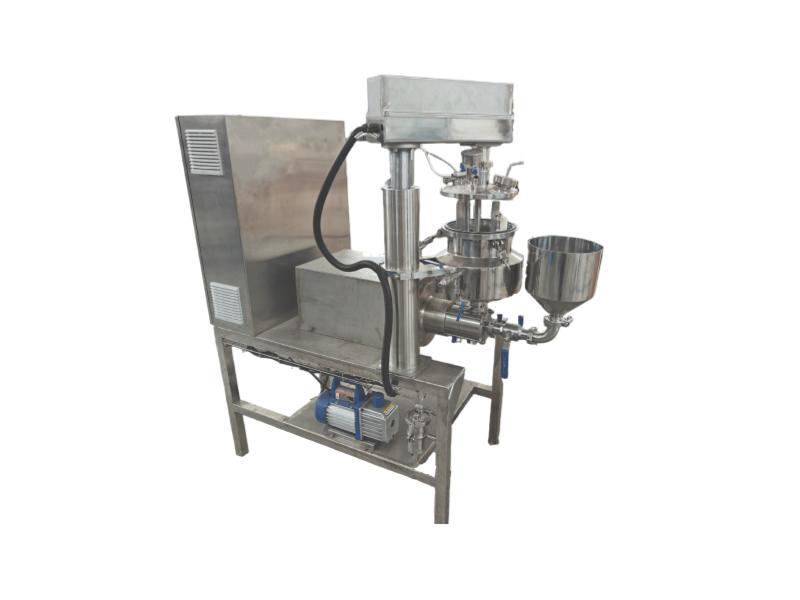
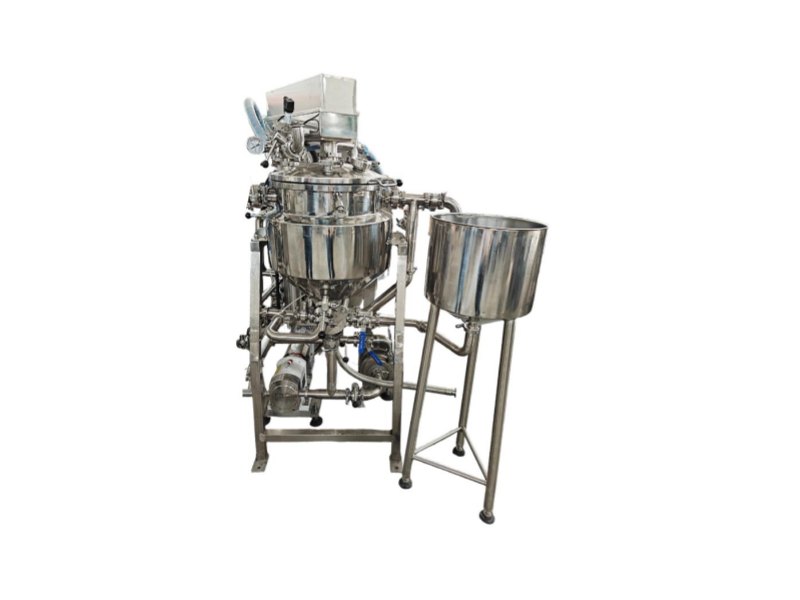
4. Technology Investment: Upgrade emulsification equipment to extend product shelf life and reduce reliance on preservatives.
VI. Future Outlook and Strategic Recommendations
6.1 Market Forecast for 2026-2035
● Overall Size: The global mayonnaise market is projected to expand steadily at an annual growth rate of 1.1-4.6%.
● Structural Changes: The market share of egg-free, low-fat, and flavored products continues to increase.
● Regional Landscape: The Asia-Pacific region is leading in growth, while North America maintains the largest market share.
6.2 Implications for Equipment Suppliers
Market Trends | Equipment Demand | Opportunities |
Growth in egg-free/vegan products | New emulsification process equipment | Plant-based formulas require different emulsification technologies |
Diversification of flavored products | Flexible production lines | Increased demand for small-batch, multi-variety production |
Health-focused transition | Precision temperature control systems | Retention of functional ingredients requires precise process control |
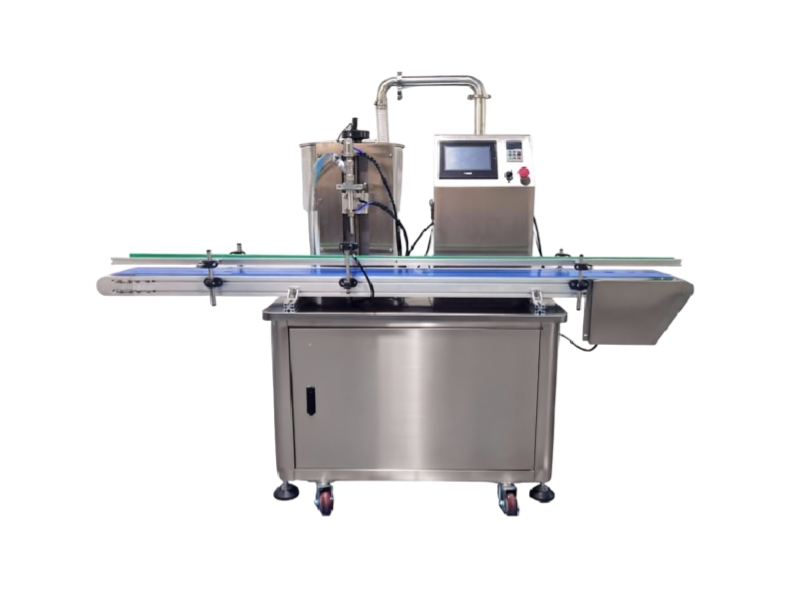
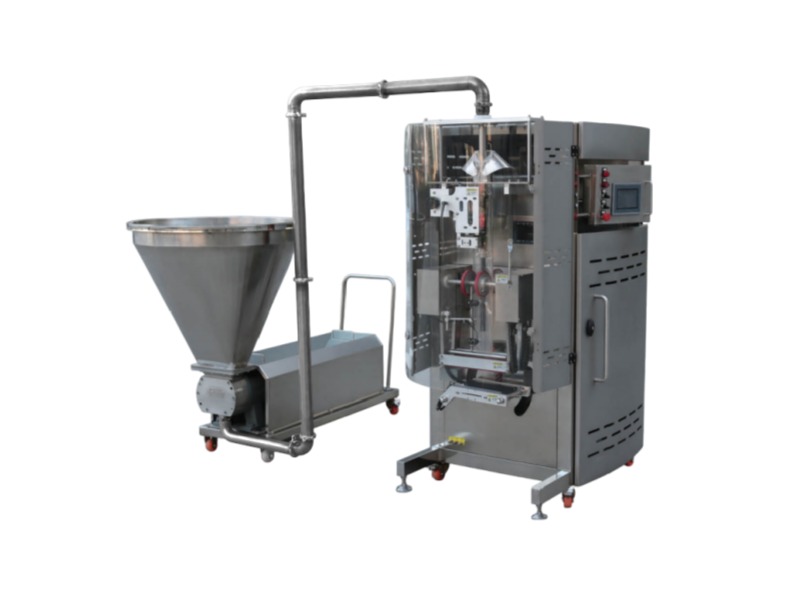
Packaging innovation | Multi-size filling equipment | Increased demand for extrusion bottles, pouches, and small-portion packaging. |
6.3 Conclusion
The mayonnaise market is undergoing a structural transformation from traditional to diversified. Behind the steady growth of 1.1%-4.6% lies the combined driving force of consumption upgrading, increased health awareness, and product innovation. For equipment manufacturers, understanding and serving the three high-growth sectors of egg-free, low-fat, and flavorful products will be key to seizing market opportunities.
References:
1. Global Growth Insights. (2026). Mayonnaise Market Size and Trends in 2026.
2. Gelonghui. (2025). 2026 Salad Dressings and Mayonnaise Market Outlook: Global Competitive Landscape and Domestic Substitution Path in China.
3. QY Research. (2026). Global Salad Dressings and Mayonnaise Market Research Report 2026.
4. Fortune Business Insights. (2026). Mayonnaise Market Size, Share & Industry Analysis, 2026-2034.
5. Japan Business Network Information (GII). (2026). Mayonnaise Market Size, Market Share and Growth Analysis (2026-2033).
6. Gelonghui. (2026). 2026 Salad Dressing and Mayonnaise Industry Chain Analysis Report.
7. Deep Market Insights (2026). North America Mayonnaise Market Size & Outlook, 2025-2033.
8. GII Research (2026). Global Egg-Free Mayonnaise Market Size, Share, Trends & Growth Analysis Report 2026-2034.
9. Deep Market Insights (2026). Global Mayonnaise Market Size & Outlook, 2025-2033.