


 English
 French
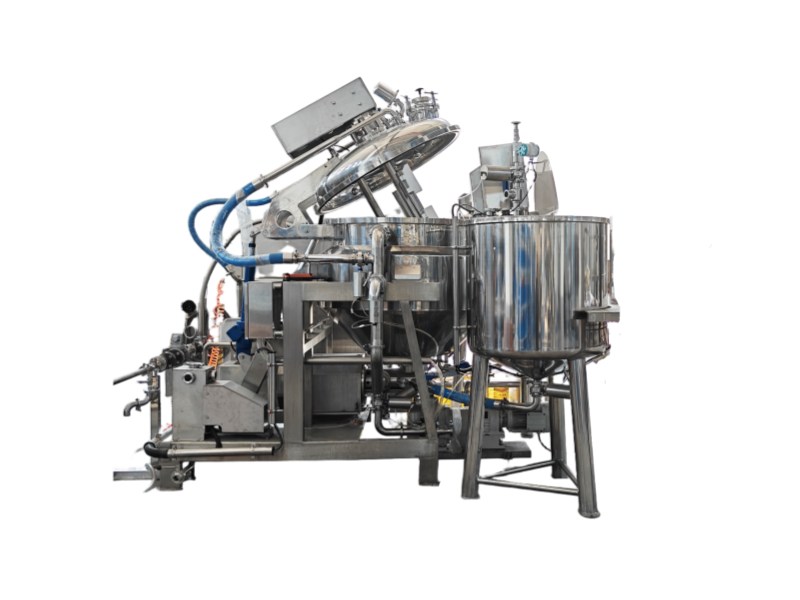
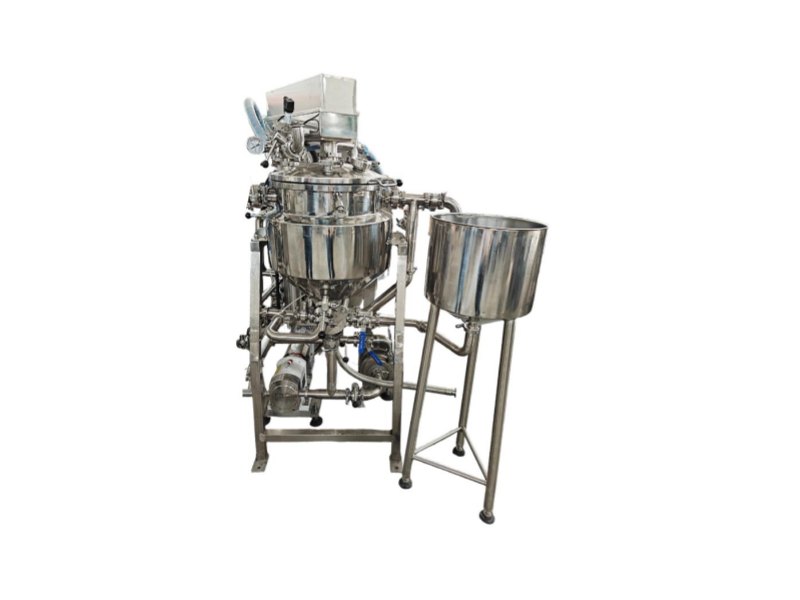
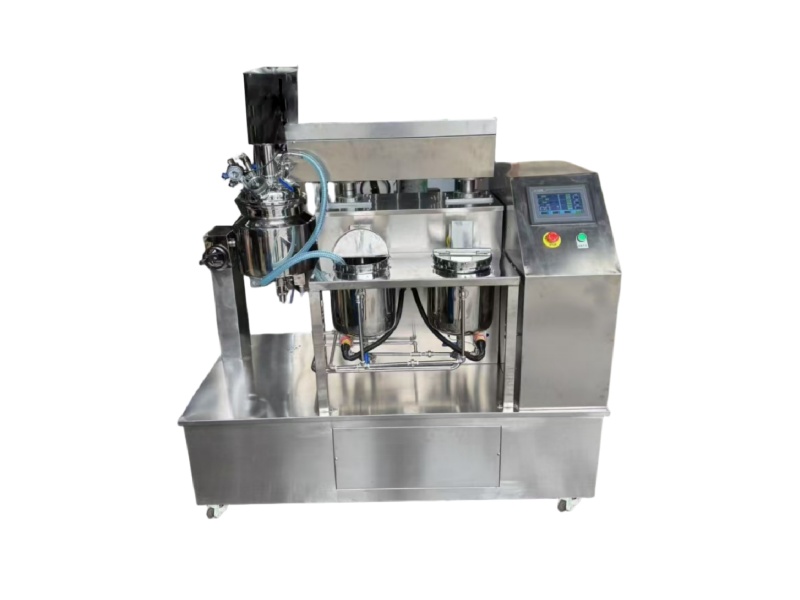
This article provides a systematic analysis of the intelligent interconnection scheme between the emulsifying pot and the pre-treatment pots for mayonnaise production. It highlights the pivotal roles played by proportional valves in controlling feeding ratios and by pneumatic valves in material conveyance and switching, thereby facilitating automated, precise, and highly efficient production.
I. Introduction: From Independent Operation to Collaborative Workflow
In the industrial-scale production of mayonnaise, the pre-treatment of the aqueous and oil phases is typically conducted separately in dedicated water and oil tanks. After this step, the phases are transferred to the main emulsifying pot for a three-stage homogenization and emulsification process. Under traditional production methods, there is often a lack of effective interlinked control between these pots leading to the following issues:
● Feeding ratios rely on manual measurement, adding the oil phase too rapidly can easily lead to demulsification.
● Valve actuation requires manual operation, leading to low efficiency and a high susceptibility to human error.
● Production efficiency is constrained, making it impossible to achieve continuous-flow operations.
The core value of equipment integration lies in the seamless interconnection of the water/oil tanks with the main emulsification tank by the proportional valves and pneumatic valves. Thereby, the automated and precise production can be a reality.
II. System Composition: Three Core Components
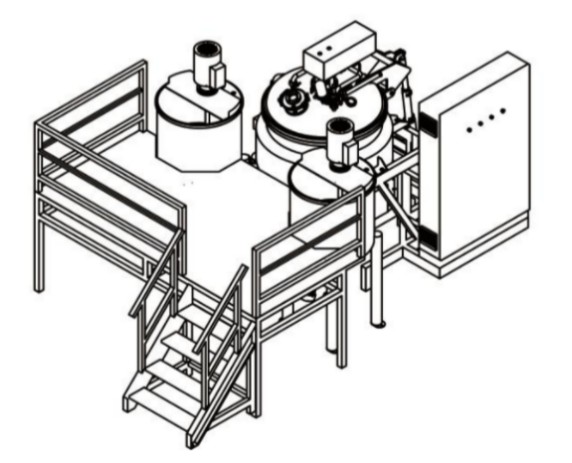
Before delving into the details of equipment coordination, let us first briefly introduce the three core components of the emulsification equipment used in mayonnaise production.
2.1 Main Emulsifying Tank
Item | Description |
Equipment | Integrated Three-Stage Vacuum Emulsifying Tank |
Function | Homogenize the water and oil mixture |
2.2 Aqueous Phase Pre-treatment Vessel (Water Tank)
Item | Description |
Function | Stir aqueous-phase ingredients (water, vinegar, sugar, salt, egg yolks, etc.) |
Discharge method | Bottom discharge, connected to a pneumatic valve |
2.3 Oil Phase Pre-treatment Vessel (Oil Tank)
Item | Description |
Function | Storage of vegetable oil |
Discharge method | Bottom discharge, connected to a pneumatic valve |
III. Core Control Components: Proportional Valves and Pneumatic Valves
Having examined the three core components of the emulsifier, we can now clearly understand the objective behind the equipment's coordinated operation. The primary goal is the precise and automated control of the transfer of aqueous-phase and oil-phase materials from the pretreatment tanks to the main emulsification tank. In this transfer process, the proportional valves and pneumatic valves play a pivotal role in intelligent control.
3.1 Proportional Valves - Precise Control of Feeding Ratios
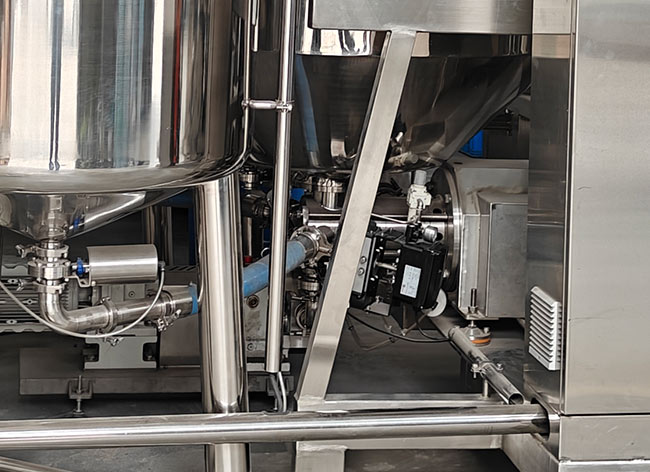
Function: To precisely control the feeding ratio of the aqueous and oil phases, thereby ensuring the accuracy of the oil-to-water ratio within the mayonnaise formulation.
Parameter | Description |
Installation location | Discharge pipelines of the oil tank |
Control method | PLC + Analog signal |
Applicable media | Oil-phase liquids |
Why are proportional valves necessary:
Controlling the feed rate of the oil phase is of greater importance. Since mayonnaise is an oil-in-water emulsion, adding the oil at a stable low speed helps prevent demulsification.
3.2 Pneumatic Valves - Material Conveyance and Path Switching

Function: Controls the opening and closing of pipelines connecting the water tank, oil tank, and main emulsification tank, thereby ensuring the precise conveyance of materials in accordance with the specified process flow.
Item | Description |
Valve Type | Pneumatic Valve |
Control Method | PLC + Solenoid Valve (Discrete Signal) |
Response Time | ≤ 1 second |
Pneumatic Valve Configuration Scheme:
Valve No. | Installation Location | Function |
V1 | Water tank outlet | Control the discharge of the aqueous phase material |
V2 | Oil tank outlet | Control the discharge of the oil phase material |
V3 | Circulation pipeline | Control the material circulation and emulsification path |
V4 | Main emulsification tank outlet | Control the outlet of the mayonnaise |
IV. System Interconnection Workflow
Step-by-Step Workflow:
Step | Action | Control Component Status | Description |
Aqueous phase Feeding | Aqueous phase material enters the main emulsification tank | Start the three stage homogenize motor of the emulsifying pot and open V1 | Automatically start the valve to transfer the water phase into the emulsifying pot by the homogenize pump |
Oil phase feeding | Oil phase material enters the main emulsification tank | Close V1; open V2; proportional valve adjusts flow | Automatically start the valve to transfer the oil phase into the main pot at a stable low speed by the pump |
Mixing | Mix water and oil phase | Close V2 and V3; start agitation | Low-speed agitation |
Emulsification circulation | Material circulates for emulsification | Open V3 and Close V4 | Material undergoes circulating shear for particle size refinement. |
Vacuum Degassing | Removal of air bubbles | Activate the vacuum system | Vacuum level: -0.08 to -0.09 MPa |
Finished product discharge | Discharge of finished product after emulsification | Open V4; close circulation valves | Finished product is conveyed for filling.
|
V. Summary
Proportional valves regulate the ingredient feed ratio, while pneumatic valves control the material flow paths. These components operate in intelligent tandem with a PLC system, enabling seamless coordination between the water/oil tanks and the main emulsification tank. This integration ensures the mayonnaise production process is precise, automated, and highly efficient. For further details or customized solutions, please feel free to contact us.
Related Posts:
>>Mayonnaise Mixer Machine Options for Industrial Production