


 English
 French
What is besan flour? Besan flour is a fine flour made from chickpeas, traditionally associated with Bengal gram or chana dal. It is also commonly called gram flour, while “chickpea flour” is a broader term that can refer to flour made from different forms or varieties of chickpeas. The important point is that besan is not defined only by the word “chickpea.” The raw material used, whether it is whole or dehulled and split, and how it is milled can all affect the final flour.
For consumers, this distinction helps explain why different products can all be labelled as chickpea flour or gram flour while having different color, texture, particle size, and processing characteristics. For food manufacturers, the distinction is even more important because the raw material condition becomes part of the milling specification.

I. What Is Besan Flour Made From
Besan is generally produced from chickpeas used for gram or Bengal gram flour, with many traditional formulations using dehulled and split chickpeas, commonly known as chana dal. However, commercial production does not always start from exactly the same feed material. A besan producer may begin with:
• Whole dried chickpeas
• Dehulled chickpeas
• Dehulled and split chickpeas (chana dal)
These are not simply three names for the same milling feed. The outer hull, seed structure, moisture condition, feed size, and preparation method can influence how the material behaves during grinding. That is why an equipment supplier should not evaluate a “besan flour” project based only on the final product name. The actual question is: What form of chickpea is going into the grinder, and what flour specification needs to come out?
II. Is Besan Flour the Same as Chickpea Flour
Is besan flour the same as chickpea flour? They are closely related, but the terms are not always used in exactly the same way. “Chickpea flour” is a broad English description for flour produced by grinding chickpeas. Besan or gram flour traditionally refers to flour associated with Bengal gram and, in many South Asian applications, dehulled and split chickpeas.
This distinction appears frequently in food and ingredient markets. Some sources use “besan,” “gram flour,” and “chickpea flour” almost interchangeably, while others distinguish besan from flour made from whole Kabuli chickpeas or other chickpea varieties. (Glutepedia)
For that reason, the label alone may not tell you everything about the raw material. If a flour specification matters, it is better to confirm:
• Chickpea variety or raw material type
• Whole, dehulled, or split condition
• Raw or roasted material
• Target particle size
• Required particle-size distribution
This is especially relevant for commercial flour production.
III. Why Does the Raw Material Matter
Why does the raw material matter? This is one of the most useful points to understand about besan flour. A whole chickpea contains an outer hull and an inner seed. When the hull is removed and the grain is split, the material entering the grinder changes.
That can affect:
• Flour color
• Fiber contribution
• Grinding behavior
• Particle-size distribution
• Final texture
• Equipment selection
For example, Salinovate’s besan processing guidance distinguishes between whole dried chickpeas, dehulled chickpeas, and dehulled and split chickpeas before discussing the grinding stage. This means that “chickpea flour” is not a sufficient technical specification when selecting a commercial grinding machine. A mill supplier needs more information about the actual feed material.
IV. How Is Besan Flour Made
How is besan flour made? At a basic level, besan flour production sounds simple. By grinding chickpeas, then you get the besan flour. Commercial production is more involved. A typical process can include: raw material receiving → cleaning → dehulling/splitting when required → conditioning → grinding → classification or sieving → dust collection → finished flour handling.
The exact process depends on the starting material and the required flour specification. For example, a producer using already dehulled and split chana dal may have a different preparation stage from a producer starting with whole dried chickpeas. Cleaning is also an important part of the process. Stones, metal, dust, plant residues, and other foreign materials should be removed before the material reaches the grinding equipment.
The grinding machine is therefore only one part of a besan flour production system.
V. What Does Fine Besan Flour Actually Mean
Fine besan flour is a common market requirement, what does fine besan flour actually mean? This is where a food ingredient question becomes a milling question. “Fine” does not describe one universal particle size.
A producer may specify besan using:
• Mesh size
• Micron size
• Percentage passing a particular mesh
• Particle-size distribution
• A combination of these specifications
For example, a customer may require approximately 60 mesh, while another application may require 80-100 mesh or considerably finer powder. These requirements can lead to different grinding-system choices. This is also why the question “What is the best besan flour machine?” cannot be answered without knowing the target particle size and production capacity.
VI. How Is Besan Flour Ground in an Industrial Plant
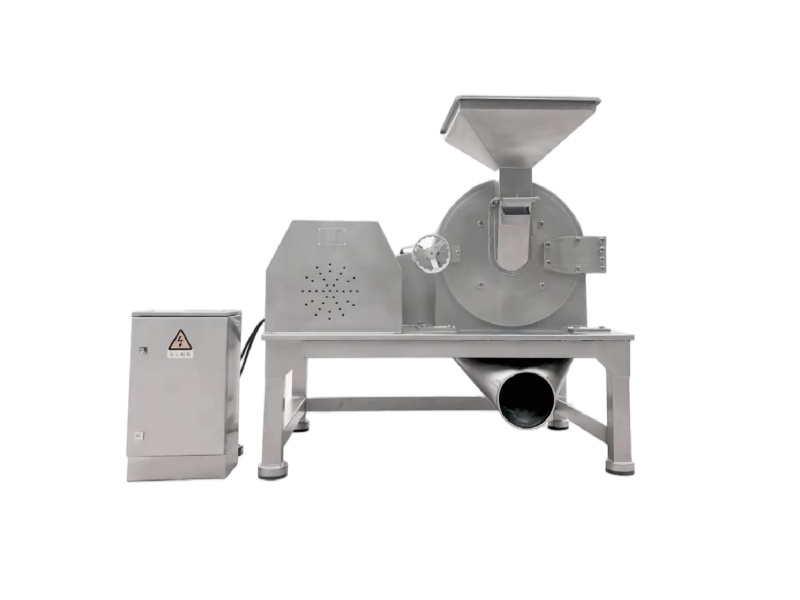
How is besan flour ground in a plant? There is more than one practical way to produce besan flour. For moderate production and less demanding particle-size distribution, a conventional powder grinder with a screen can be suitable. The screen controls the particle size, and different screen specifications can be selected according to the target flour. This approach is represented by Salinovate’s SLU series, which can cover a relatively broad grinding range and can be combined with screening when tighter separation is required.
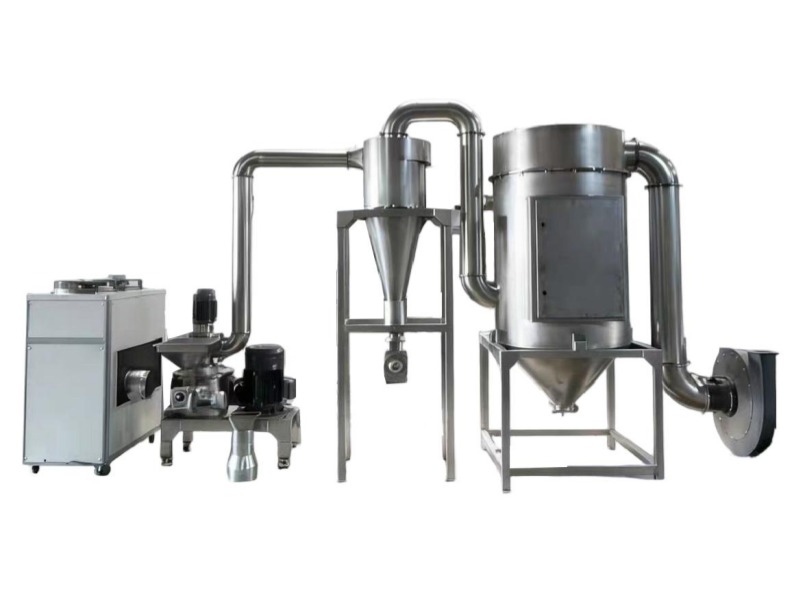
For finer powder or applications requiring more controlled classification, an air classifier mill can be considered. An air classifier mill combines mechanical impact grinding with air classification. Instead of relying on a conventional grinding screen to determine the final particle size, the classifier separates particles according to their aerodynamic behavior. Fine particles can leave the classification zone, while coarser particles return for further grinding.
This makes the two systems fundamentally different in grinding approach and particle size control as shown in the following sheet:
Grinding Approach | Main Particle Size Control |
Screen-controlled grinder | Grinding screen |
Air classifier mill(no screen design) | Air classification |
Grinder(screen control or no screen design) + separate sifter | Grinding + external screening |
Remark: For people with very high powder size control requirement, the third approach of grinder and separate sifter are applicable for both the traditional screen-controlled grinder and no screen design air classifier mill. The choice depends on the actual besan specification rather than the assumption that one technology is suitable for every product.
VII. Besan Flour: The Simple Definition and the Industrial Reality
So, what is besan flour? Besan is a chickpea-based flour traditionally associated with Bengal gram and commonly produced from dehulled and split chickpeas or chana dal. It is also widely referred to as gram flour, while the broader term “chickpea flour” can include flour produced from different chickpea forms and varieties.
For everyday cooking, these names are often used interchangeably. For commercial/industrial flour production, however, the distinction becomes more important. The final besan is influenced not only by the name of the raw material, but also by whether the chickpeas are whole, dehulled or split, their condition before grinding, the target particle size, and the grinding and classification method.
For more information on the industrial production process, see Salinovate’s How to Make Besan Flour guide, and for equipment selection, see Besan Flour Mill Options.