


 English
 French
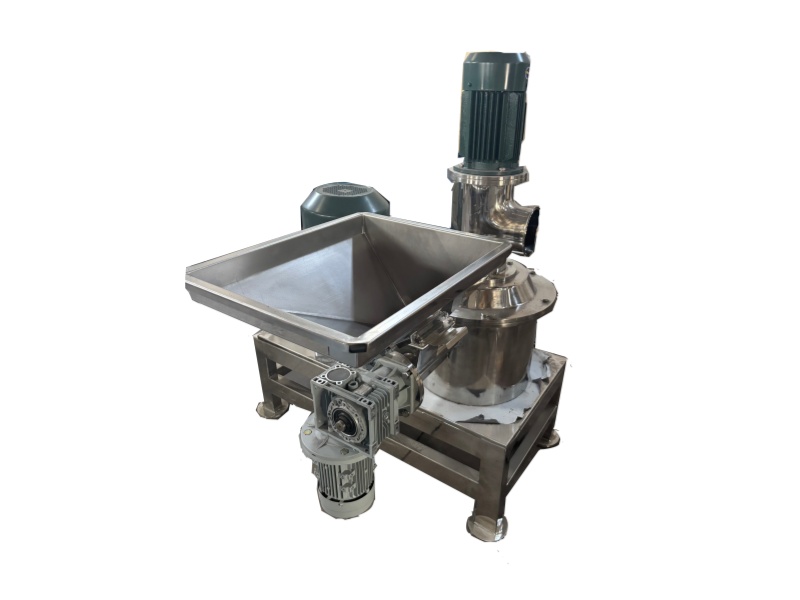
Choosing the best air classifier mill is not simply about selecting a machine with higher power or finer grinding capability. For industrial powder processing, the right air classifier mill should match your material characteristics, target particle size, production capacity, powder quality requirements, and long-term operating conditions.
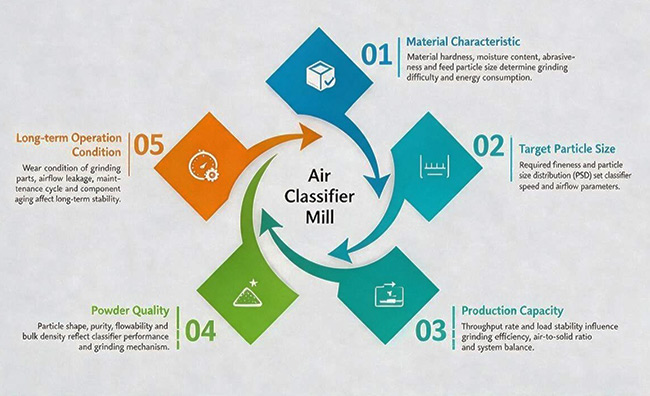
Many companies compare only the specifications listed on supplier websites, such as motor power, airflow volume, or grinding fineness. However, these parameters alone cannot determine whether the equipment will perform well in real production.
A properly selected air classifier mill system should provide:
• Stable particle size distribution
• High grinding efficiency
• Low energy consumption
• Reduced heat generation
• Easy maintenance
• Consistent powder quality
This guide explains the key factors experienced buyers should evaluate before purchasing an air classifier mill.
I. Understand When You Need an Air Classifier Mill
Before choosing a machine, the first question is not “Which model should I buy?” but “Is an air classifier mill the right grinding technology for my product?”.
An air classifier mill combines two processes in one system:
1)Mechanical impact grinding
2)Air classification separation
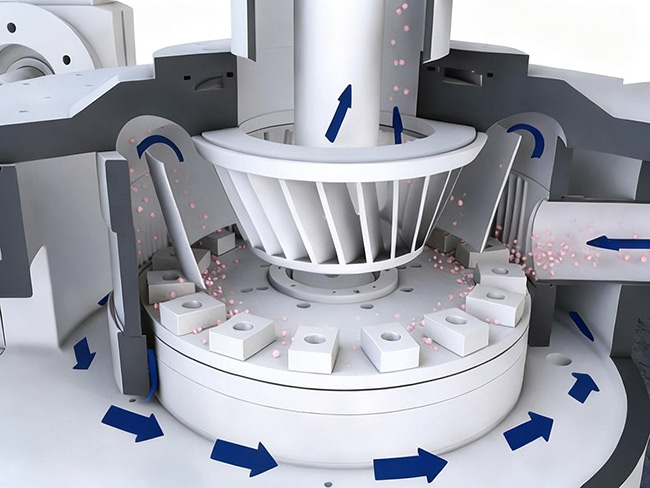
During operation, material enters the grinding chamber where high-speed rotating components create impact forces to reduce particle size.

At the same time, the integrated classifier separates particles according to aerodynamic behavior:
1)Fine particles are carried out with airflow
2)Oversized particles return to the grinding zone for further processing
This closed-loop grinding principle allows better control of particle size compared with conventional hammer mills or disc mills.
Air classifier mills are commonly selected for applications requiring:
• Fine powder production
• Narrow particle size distribution
• Low contamination risk
• Temperature-sensitive material processing
II. Air Classifier Mill vs Other Grinding Equipment: How to Choose
One of the biggest mistakes during equipment selection is choosing a grinder based only on final particle size. Different grinding technologies have different advantages.
Air Classifier Mill Best for:
• D90/D97 controlled fine powders
• 10–150 um(100-1250 mesh) particle range
• Products requiring consistent particle distribution
Advantages: integrated classification, adjustable particle size, less over-grinding, suitable for continuous production
Hammer Mill Best for:
• Coarse grinding
• Crushing brittle materials
• Larger particles before further processing
Limitations: wider particle distribution, more fines generation, less precise particle control, etc
Pin Mill Best for:
• Medium fine grinding
• Food powders
• Sugar, salt, spices
Limitations: higher temperature generation at high speed, limited classification ability
Disc Mill/Turbo Mill Best for:
• Medium fine powder production
• Materials requiring impact and shearing force
Limitations: particle size control depends more on screen or airflow design
Practical Selection Rule:
If your requirement is, “I need very fine powder with stable particle size”
→ Air classifier mill is usually a better choice.
If your requirement is, “I only need size reduction”
→ Hammer mill or pin mill may provide a more economical solution.
III. The Most Important Factor: Material Characteristics
A professional air classifier mill manufacturer should not recommend equipment only based on capacity. Material properties directly influence grinding performance.
Before selecting a machine, evaluate:
1)Material Hardness
Harder materials require:
• Higher impact energy
• More durable grinding components
• Different liner materials
Examples: turmeric, rice, limestone, ceramic materials, minearals, etc
2)Moisture Content
Moisture affects:
• Feeding stability
• Grinding efficiency
• Powder discharge
Materials with excessive moisture may cause:
• Blockage
• Reduced output
• Poor classification efficiency
3)Fat and Oil Content
High-fat materials can create:
• Agglomeration
• Powder sticking
• Temperature increase
Examples: nuts, seeds, nutmeg, cumin, etc
4)Heat Sensitivity
For heat-sensitive products, consider:
• Air cooling system
• Water cooling jacket
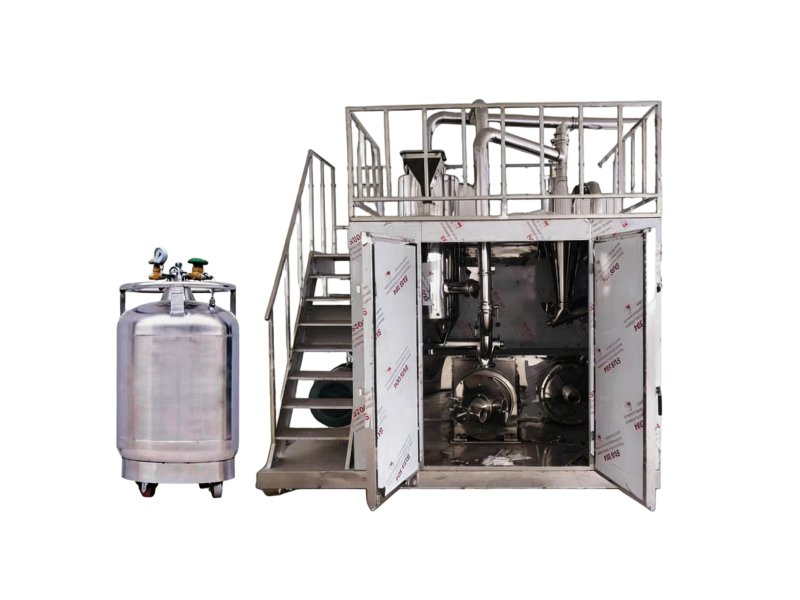
• Cryogenic grinding solution
A good supplier should analyze the material before recommending the configuration.
IV. How to Select the Right Air Classifier Mill Capacity
Many buyers make a common mistake: They select equipment only according to the required output.
However, air classifier mill capacity depends on:
• Material density
• Feed particle size
• Target fineness
• Material hardness
• Powder characteristics
For example: A machine producing 500 kg/h of 100 mesh powder may only produce 150 kg/h when producing 300-400 mesh fine powder.
Therefore, capacity should always be evaluated together with:
• Feed size
• Final particle size
• Required production hours
• Powder quality standard
V. Particle Size Control: What Buyers Should Ask Suppliers
Particle size is usually the most important purchasing factor. Instead of asking, “Can your machine make 10 micron powder?” but ask the following questions:
1)How stable is the particle size during continuous production?
2)Can the classifier speed be adjusted?
3)What is the expected yield of fine powder?
The classifier wheel speed is one of the key factors affecting fineness. Generally, higher classifier speed means finer powder and lower classifier speed means coarser powder. However, extremely high speed does not always mean better performance because it may increase energy consumption, wear and temperature.
VI. Key Design Features of a High-Quality Air Classifier Mill
When comparing different manufacturers, pay attention to these technical details.
1)Independent Classifier Control
A well-designed system allows independent adjustment of:
• Grinding speed
• Classifier speed
• Air volume
This provides better process control.
2)Closed Loop Pneumatic Conveying
A closed-loop pneumatic conveying system can provide:
• Reduced dust emission
• Better working environment
• Continuous powder transportation
• Improved automation
3)Wear Protection Design
For abrasive materials, important components include:
• Grinding chamber liner
• Impact components
• Classifier wheel
Material options may include:
• Stainless steel
• Hardened alloy
• Ceramic coating
4)Easy Cleaning and Maintenance
For food and pharmaceutical industries, consider:
• Quick disassembly design
• Smooth internal surfaces
• Reduced dead corners
VII. Final Checklist: How to Choose the Best Air Classifier Mill
Before making a final decision, confirm:
✓ The supplier understands your material characteristics
✓ Grinding tests are available
✓ Particle size data can be provided
✓ Capacity is based on real application conditions
✓ Cooling requirements are considered
✓ Wear parts and maintenance are explained
✓ The complete system design matches your production process
Choosing a best air classifier mill is not only purchasing a grinder. It is selecting a complete powder processing solution that determines your production efficiency, product quality, and operating cost. A reliable manufacturer should help you select the right technology instead of simply selling a machine.