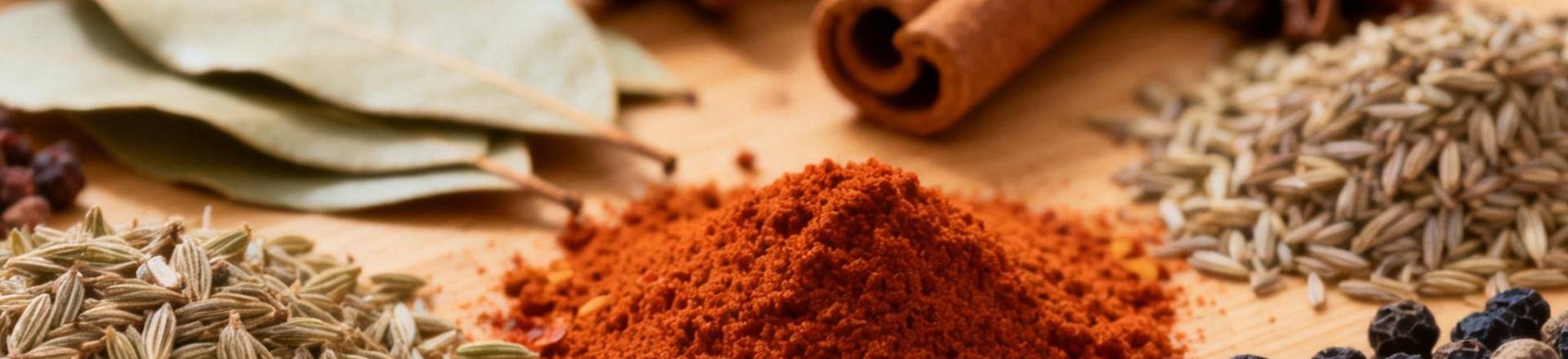
Against the backdrop of a continuously growing international flavor market and increasingly stringent requirements for spice refinement and flavor preservation, spice factories face challenges beyond mere pulverization. The challenge lies in how to efficiently, economically, and to the greatest extent possible preserve the authentic flavor of spices during pulverization. The forms and properties of dried spices vary greatly, and incorrect pulverization methods can lead to oil leakage, flavor volatilization, color deterioration, and even equipment blockage. This article will delve into the core issue, systematically analyzing how to grind spices in two steps to give the spice factories an industrial guide.
The essence of spice grinding is the destruction of its physical structure, and oil content and fiber content are the two core indicators that determine the difficulty of pulverization and the selection of equipment. Following is the overall analysis of different spices in different characteristics and the different spices grinder machines in different design and performance.
These spices have a relatively moderate oil and fiber content, making them the most common type in pulverization.Typical Examples: Dried chili peppers, black pepper, garlic slices, sage, licorice slices, etc.
Material Characteristics: They possess a certain degree of hardness or brittleness, and contain oil or fiber, but not to an extremely high degree. Moderate temperature control is required during the pulverization process.
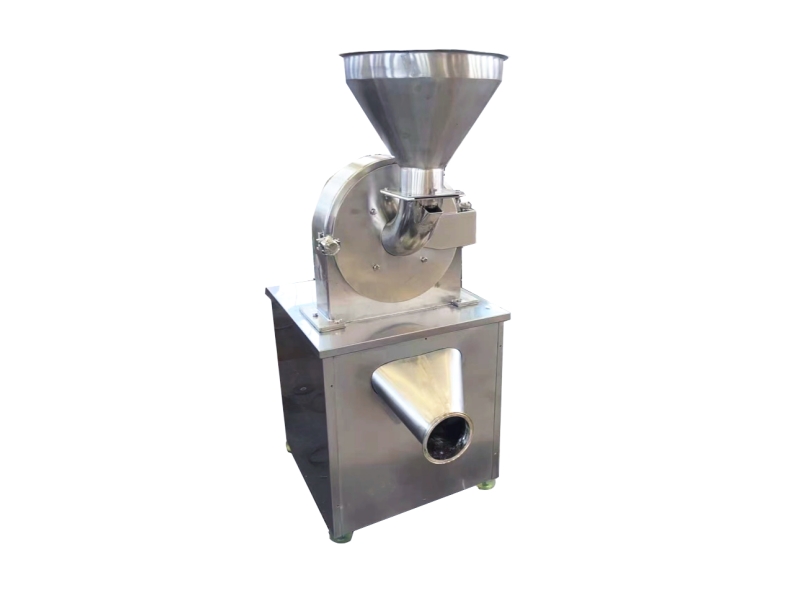
Pulverization Method: The core principle is to break the material into fine powder through the impact, shearing, and friction between high-speed rotating moving blades (hammers, blades, turbines) and fixed toothed rings.
Grinder Types: Conventional hammer mills, turbine mills, or high-speed blade mills are the mainstream choices.
Grinding Performance: 10-60mesh for oil spices, and 20-120mesh for fiber spices.
Suitable User Groups: Such spice grinders are suitable for a wide range of medium-sized compound seasoning manufacturers, sauce factories, and soup packet manufacturers.
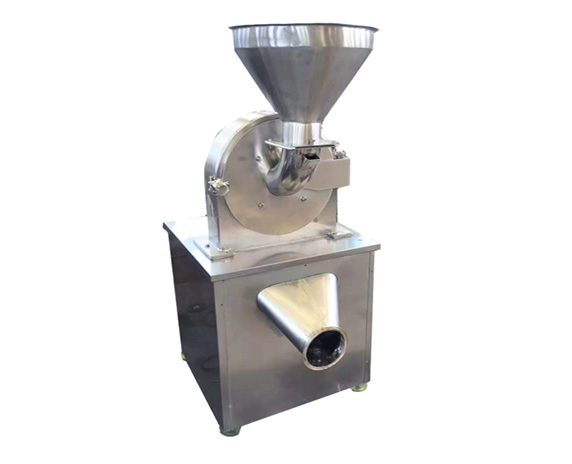
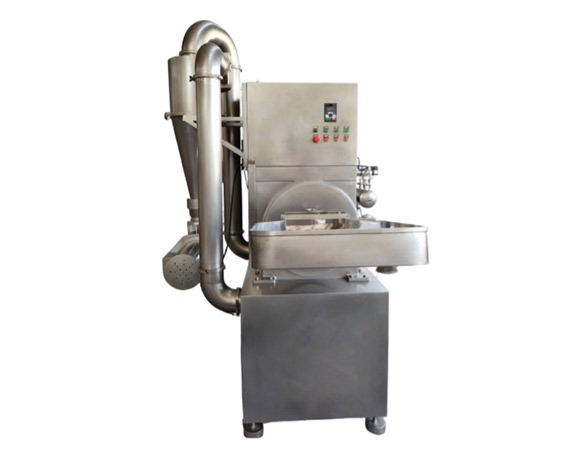
1)High Cost-Effectiveness: Relatively low equipment investment and operating costs, mature technology, and easy maintenance.
2)Strong Versatility: One machine can process multiple common fragrances, adapting to multi-variety, batch production modes.
3)Stable Capacity: Mature design, easy to achieve continuous production, and wide capacity coverage.
What problem you are facing by when grinding high oil spices? Oils are easily released during grinding and friction-generated heat, leading to sticking, clumping, oxidation of flavor compounds, and darkening of color.
Main solution: low temperature control to alleviate the high heat and blockage problems caused by excessive oil.
Cooling method: by cold air machine or by liquid nitrogen
Typical Examples: White pepper, cumin, yellow mustard seeds, black mustard seeds, nutmeg, etc.
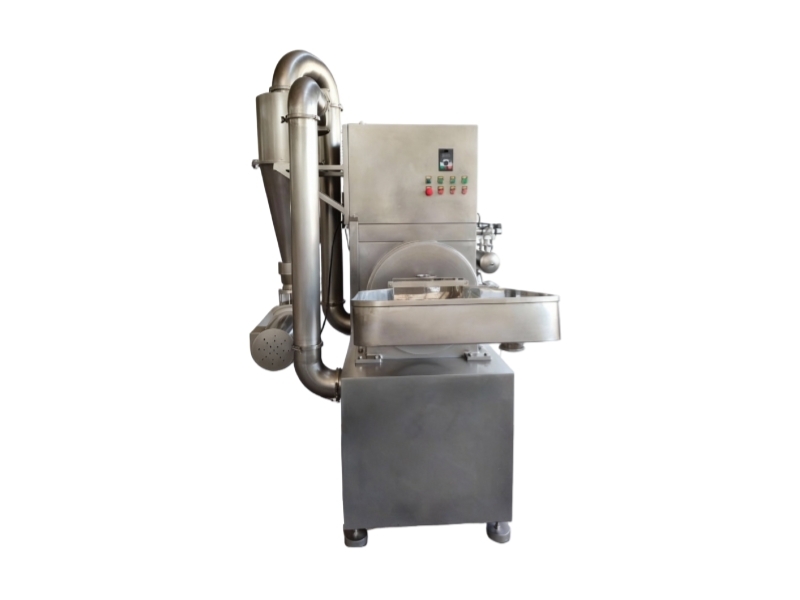
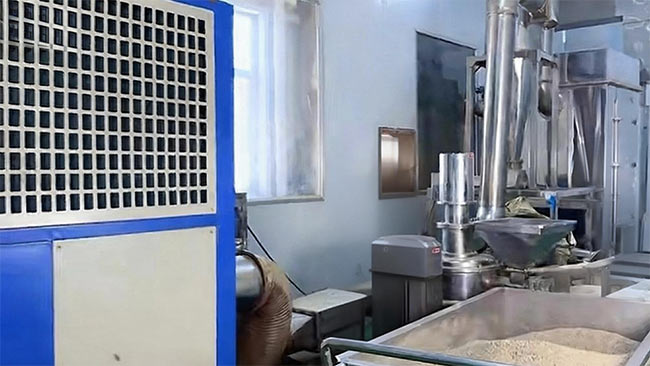
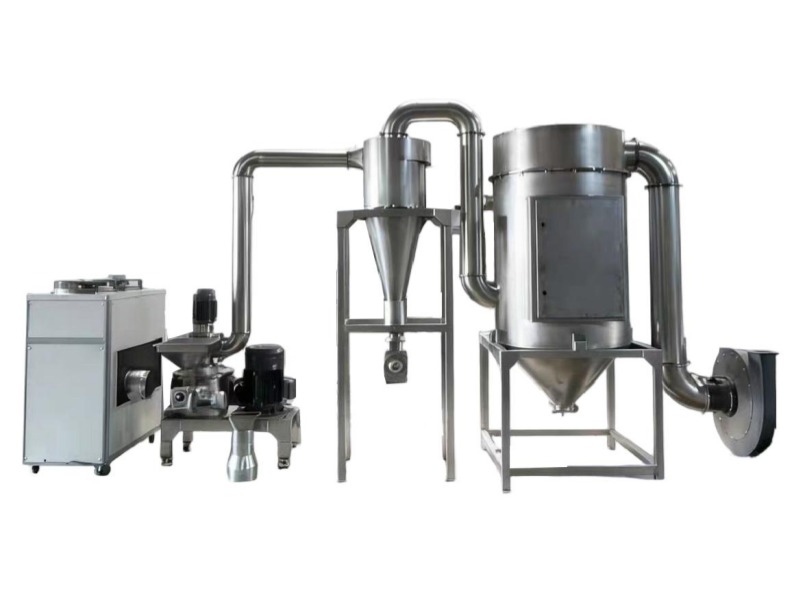
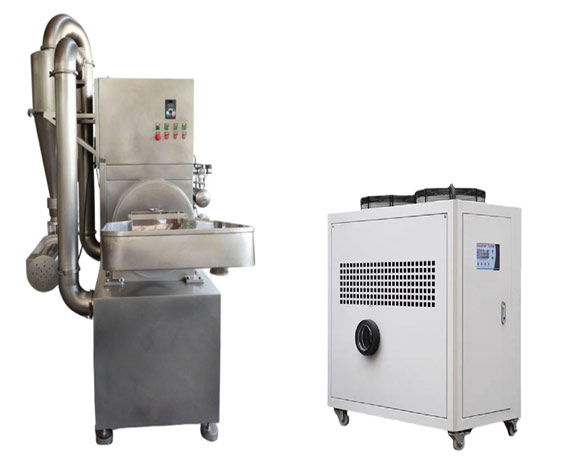
Spice Grinder Design: main grinding unit + cold air machine
Cooling performance: The cooling unit introduces cold air at 0℃ to -10℃ into the pulverizing chamber, effectively absorbing the heat of pulverization and keeping the chamber temperature at a low level.
Final result: This solution significantly alleviates the "oil explosion" problem and is suitable for most cost-sensitive processing scenarios that require maintaining basic quality.
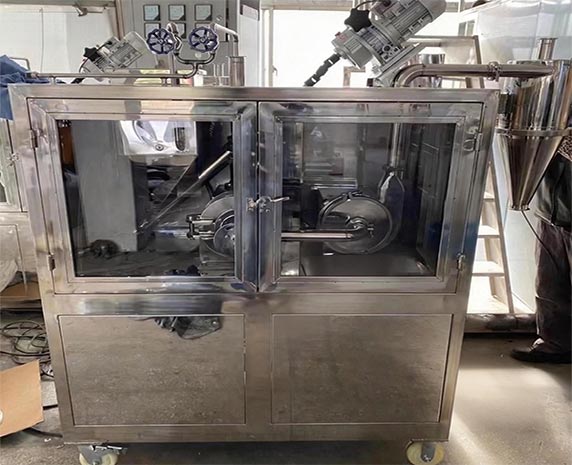
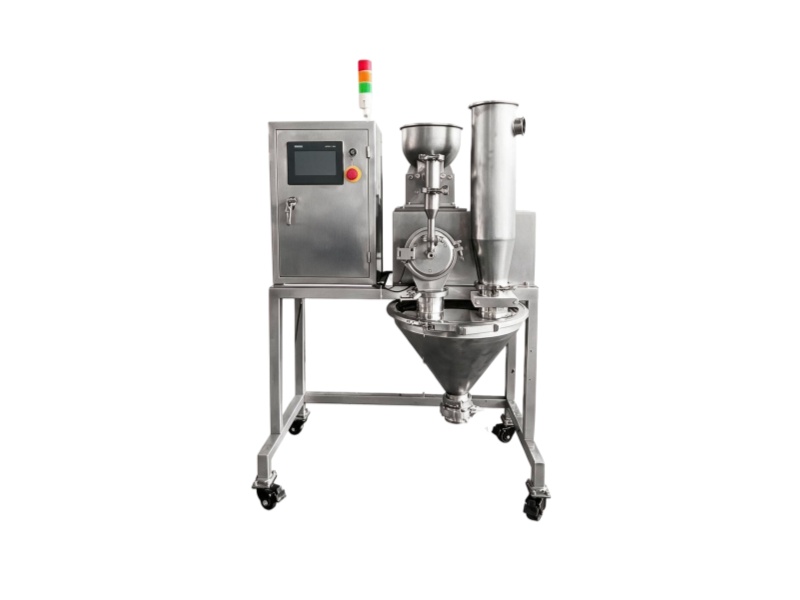
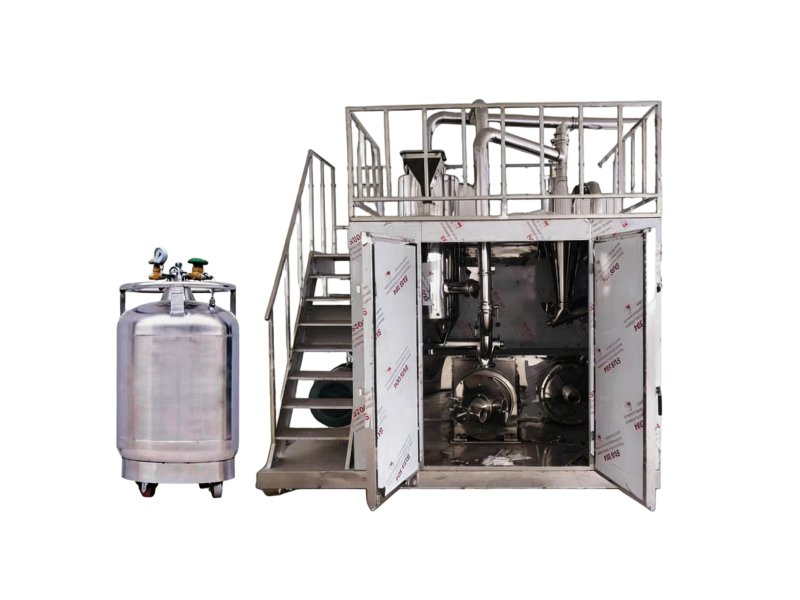
Cryogenic Grinder Design: Utilize an ultra-low temperature (cryogenic) grinder plus the liquid nitrogen (LN2). Liquid nitrogen at -196℃ instantly embrittles the spices and the oils are completely solidified, fundamentally preventing heating and oxidation. This type perfectly preserves volatile flavor components and natural color; excellent powder size in top-quality.
Considerations: High operating costs due to liquid nitrogen consumption and necessary support of reheating dryer or cold storage. Primarily suitable for users producing high-end essential oils, natural pigments, top-tier condiments, and those in the supply chains of leading international brands.
The fibers have extremely strong toughness. Conventional crushing easily produces flocculent material, making it difficult to achieve high fineness, and they are also prone to tangling in equipment.
Typical Examples: Ginger, turmeric, cinnamon, onion, and herbs (such as bay leaves).
Solution Design: Two types of solutions, responding to different factory need.
Final Result: medium fine or ultra fine powder
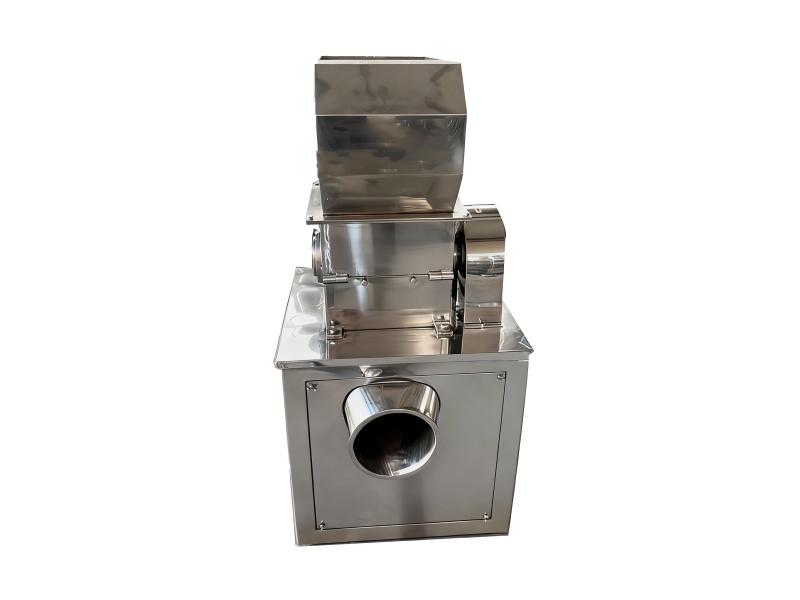
Solution Design: A standard grinder adopts the reinforced hammer blade design. With specially designed grinding knife for the fiber spices, the shearing force on the fibers is enhanced. The grinding fineness can reach 60-120 mesh, meeting the needs of many basic applications.
Powder Control Method: By changing sieve, you can get different mesh range spice powder. Usually 60mesh, 80mesh, 100mesh sieves are the common ones for the fiber spices.
Advantage: Low-cost design for medium fine spice powder; Easy operation, very easy to use the spice grinder machine.
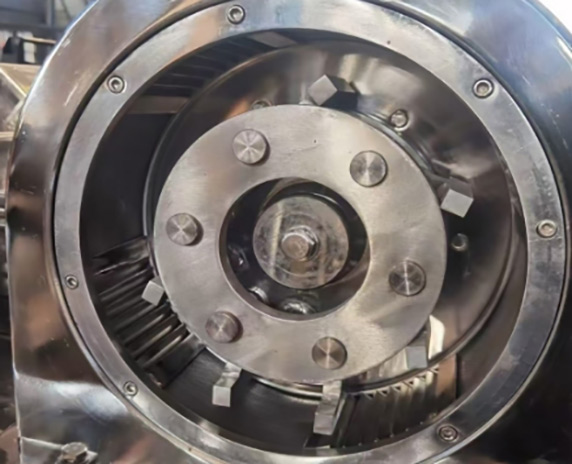
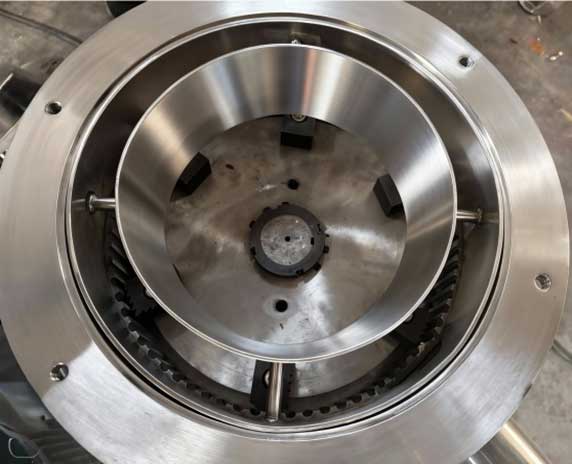
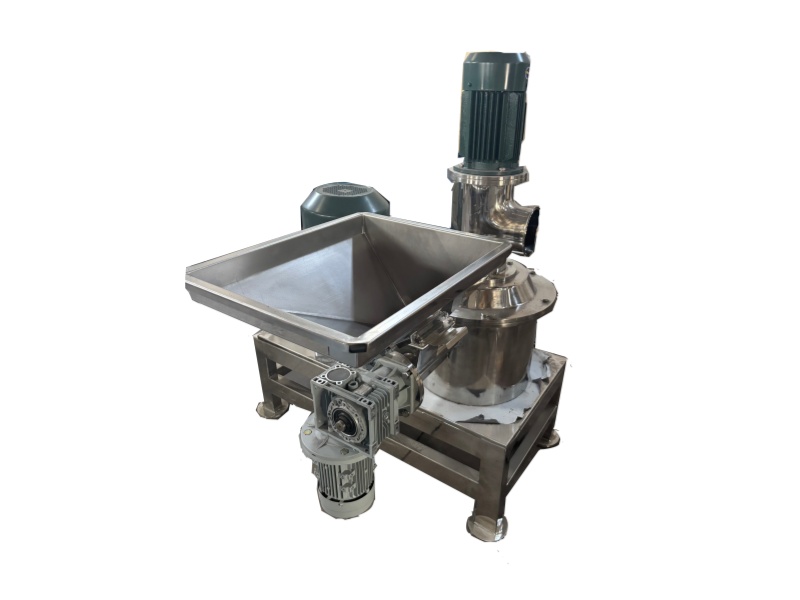
Fine Grinder Design: The core of this equipment lies in the combination of a high-speed rotating blade assembly and a built-in classifying wheel. The pulverized material is carried by airflow; particles meeting the target fineness pass through the classifying wheel and enter the collection system.
Advantages: Eliminate the need for screens, completely solving the problem of fiber clogging; fineness can be precisely controlled between 100-300 mesh or even higher by adjusting the classifying wheel speed.
Suitable Groups: Manufacturers specializing in health foods, high-end catering prepared products, and specialty health ingredients.
Industrial-grade spice pulverization is a precise process based on materials science. There is no "one-size-fits-all" spice grinder, only solutions best suited to the characteristics of the spice, product positioning, and production goals. From general pulverization to cryogenic protection, and then to ultra fine fiber breaking, technological advancements have always revolved around the core objectives of maximizing efficiency, yield, and the retention of flavor compounds.Here we come to the step two on how to grind spices, how to select the right spice grinder and following is a summary of the core decision-making path for industrial product selection.

Characteristics Analysis
The primary and essential step is to analyze the oil content and fiber strength.
Fineness Demand
Clarify the mesh size range required for the final product, directly determining whether to use conventional or ultra fine grinding.
Determine Capacity
Based on the hourly or batch processing volume, determine the equipment model and size, matching it with cooling, dust removal, and other supporting capabilities.
Temperature Control
For heat-sensitive and high-oil spices, the cooling function is usually a must.
Consider the Structure
Pay attention to the material and design of the core grinding components, as this directly affects crushing efficiency and wear life.
Prevent Material Clogging
For fibrous or highly viscous materials, prioritize products with screenless, large channel, or unclogging designs.
Maintain Cleanliness
The interior of the equipment should be clean and free of dead corners, easy to disassemble and clean, and avoid cross-contamination.
Calculate Overall Costs
Comprehensively consider equipment purchase cost, energy consumption, frequency of replacement of wearing parts, and cost of auxiliary media (e.g., liquid nitrogen).
Provide you with the industry`s best solutions

Offer the pre-sales and after-sales technical support
Back to Top
We are devoted to the R&D, production and selling of the grinder machine, mixer machine and filling machine for the food factories. They work for the dry and wet food.
0086 150-5215-2936

 English
 French