


 English
 French
Wise Choice of Low Temperature Grinding for High Oil Spices
By:Salinovate Team
In the pursuit of ultimate flavor, the delicacy of spice powder has become a key measure of quality today. Recently, we collaborated with a customer specialized in high-quality spice powder production to jointly solve the common problem of ultra-fine crushing of high oil content spices in the industry. The challenges faced by customers are clear and specific: how to stably and efficiently process high oil spices such as white pepper into ultra fine powder uniformly passing 80 mesh, in order to meet the new requirements of high-end customers for taste and solubility? In this case, the customer finally chose the low temperature grinding method for spices.

I. Customer Pain point: Traditional Craftsmanship Encounters A Quality Ceiling
This customer is a well-known composite spice powder supplier in South China, with a product line covering dozens of categories such as pepper powder, Sichuan pepper powder, and five spice powder. With the increasing demand for standardization and flavor integration in the catering industry, the fineness shortcomings of its main product - white pepper powder are becoming increasingly obvious.
The core contradiction lies in:
1)Market demand: Downstream food factories require pepper powder with a fineness of over 80 mesh (approximately 180 microns) to achieve a complete fusion of no sand sensation in soups and sauces.
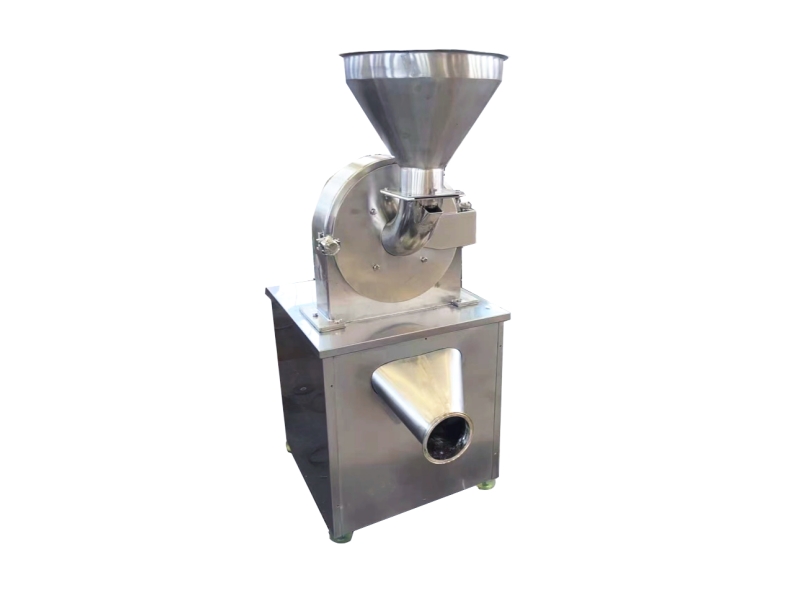
2)Traditional limitations: The original equipment was a screen type spice grinder. To prevent high oil content materials from sticking to the wall and blocking the screen, only a 20mesh screen is usually configured. The powder fineness fluctuates between 20-60 mesh and contains coarse particles.
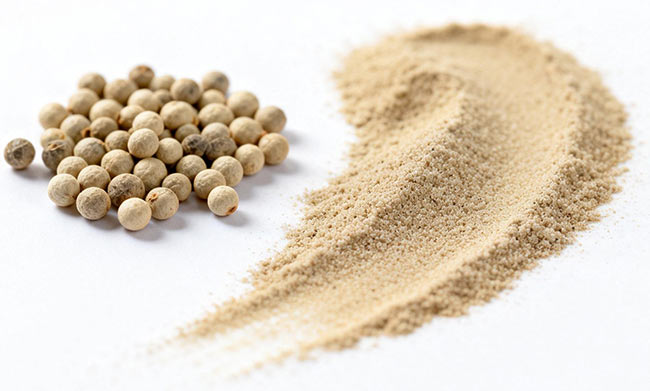
3)Physical characteristics: White pepper has an oil content of up to 8-12%. Under the heat generated by mechanical crushing, the oil easily seeps out, causing powder adhesion, machine blockage, and even burnt and odorless.
II. Technical Analysis: The Physical Dilemma of Grinding High Oil Spices
To understand the solution, it is necessary to first analyze the essence of the problem. There are two major physical barriers to ultrafine grinding of high oil content spices:
2.1 The vicious cycle of thermal sensitivity and oil precipitation
Ordinary mechanical crushing relies on high-speed impact and shear force to crush materials. This process generates a large amount of heat, and the temperature inside the chamber can quickly rise to over 60 ℃. For spices such as white pepper, heating up will:
● Promote internal oil liquefaction and leakage.
● Exuding oil and adhering fine powder, forming a paste that blocks the sieve and cavity.
● High temperature simultaneously leads to the loss of volatile flavor compounds, affecting the aroma of the product.
2.2 The contradiction between sieve dependence and fineness requirements
The traditional crusher controls the fineness through a sieve, and the denser the sieve, the higher the fineness. However, in the crushing of high oil content materials, the mixture of fine powder and oil will quickly clog the sieve holes, resulting in:
● Rapid decline in production.
● Frequent shutdown and cleaning are required.
● The fineness is still difficult to stabilize above 80 mesh.
III. Scheme Design and Comparison: Find a Balance between Ideal and Reality
Based on a deep understanding of white pepper characteristics, we have planned two technical paths for our customer and clearly presented their respective advantages and disadvantages.
3.1 Option A: High Cost Performance Combination - Ultra fine Mesh free Grinding+Low temperature Cold Air System
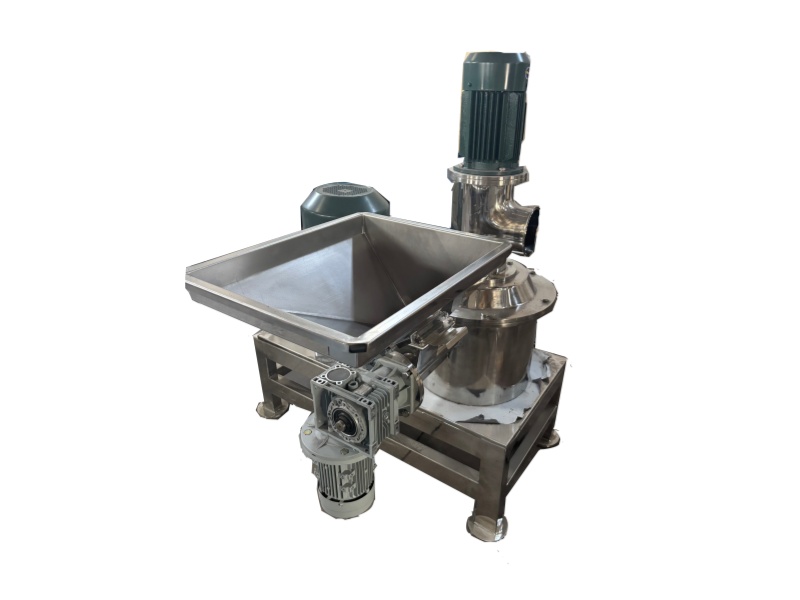
1)Core Equipment: SLA Series Ultra fine Mesh free Grinder
2)Principle: High speed grinding cutters work together with the air grading system, without physical screening, and the fineness is controlled by air flow classification.

3)Advantage: Reduce the possibility of direct clogging of the sieve mesh, theoretically achieving a fineness of 60-200 mesh.
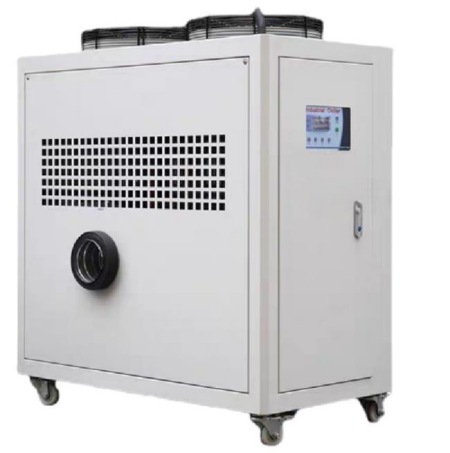
4)Key supporting equipment: customized low-temperature air cooling unit
5)Function: Continuously inject cold air with a minimum temperature close to 0 ℃ into the crushing chamber.
6)Effect: Control the working temperature of the chamber below 25 ℃, significantly inhibit oil leakage, and protect flavor.
7)Working logic: Under low temperature conditions, pepper cell walls are brittle and broken, reducing oil release and allowing fine powder to be smoothly carried out by airflow.
8)Realistic considerations: Although low temperature alleviates blockage, there is still a small amount of oil powder accumulation in the chamber after long-term operation, and it is necessary to stop the machine every 4-6 hours for simple cleaning.
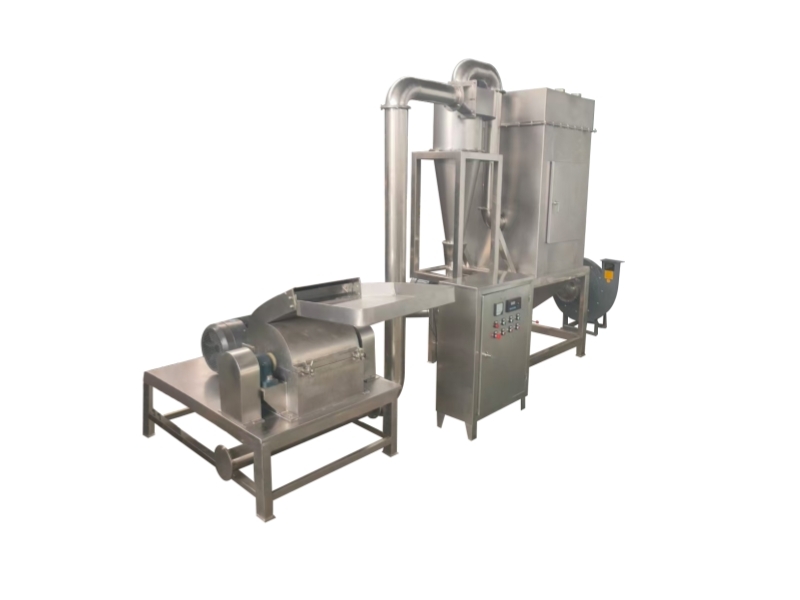
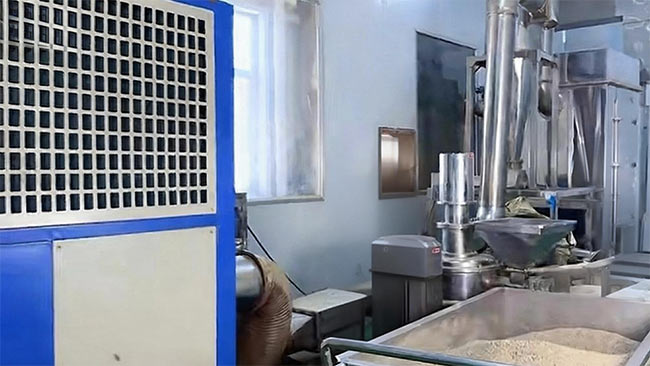
9)Final configuration: This solution is equipped with an additional high-efficiency screening machine to perform secondary screening on the discharged material, ensuring that 100% of the finished products meet the 80 mesh requirement, and returning a small amount of coarse powder that does not meet the standard for further crushing.
3.2 Option B: Ultimate Solution - Low Temperature Liquid Nitrogen Cryogenic Grinding System
1)Core technology: Cryogenic pulverization in liquid nitrogen (-196 ℃) environment
2)Fundamental advantages:
● Thoroughly solve the problem of oil sticking: The material is crushed at the brittleness temperature, and the oil is in a solid state throughout the process, with no risk of leakage.
● Ultimate fineness and particle size distribution: The final spice powders easily achieve a fineness of several hundred mesh and evenly distributed.
● Perfect flavor preservation: Ultra low temperature locking fragrance, minimal loss of volatile components.
3)Core constraint: High operating costs. According to calculations, crushing each kilogram of spice consumes approximately 1 liter of liquid nitrogen and requires a safe liquid nitrogen storage and supply system.
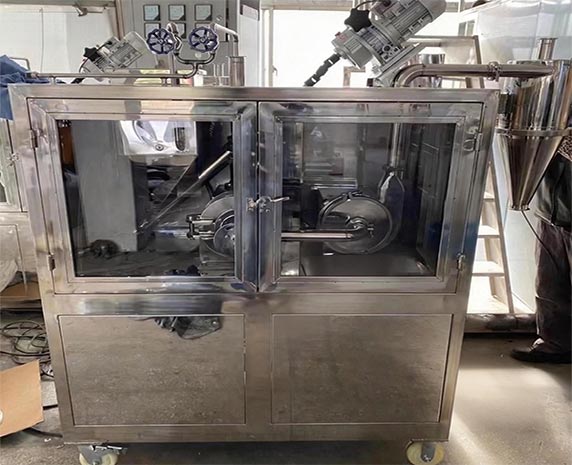
3.3 Decision making Moment: Balance Cost Performance and Efficiency
After multiple rounds of technical and economic evaluation, the customer finally chose option A. The decision was based on the following practical considerations:
1)Requirement matching degree: Scheme A can stably produce 80-100 mesh powder, fully meeting current and foreseeable future demands.
2)Investment and operating costs: The equipment and operating costs of option A are much lower than that of option B, and the investment payback period is short.
3)Production adaptability: The customer produces multiple varieties and batches, and the material replacement and cleaning in option A is more convenient and flexible.
4)Flavor verification: Past tests has shown that the aroma retention of pepper powder crushed by low-temperature cold air is significantly better than traditional processes. Meanwhile, the flavor difference from liquid nitrogen solution is huge, but it is not significant for most application scenarios.
IV. Usage effect: Stable Operation and Quality Improvement
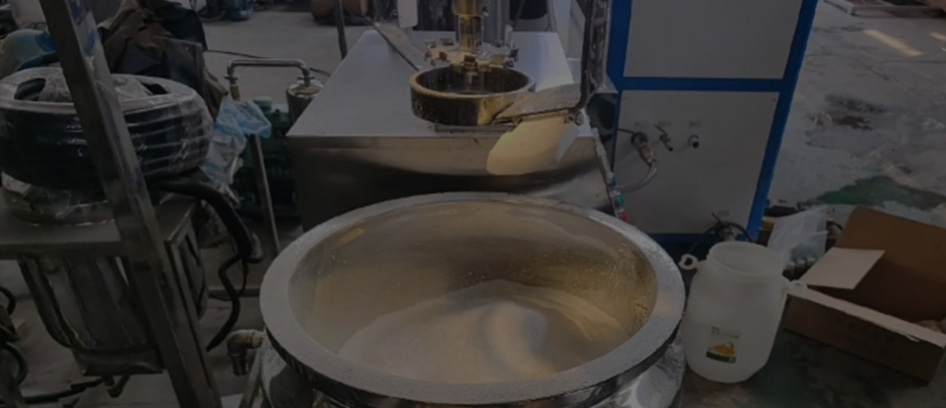
After installation and debugging, the equipment has been running stably for three months. Feedback from the production department of the spice factory with a using scene video of white pepper grinding:
1)Fineness meets the standard: After being processed by a powder sifting machine, the finished white pepper powder passes 100% through an 60 mesh sieve, with an average particle size of 80-100mesh.
2)Smooth operation: Within the set 4-hour cleaning cycle, there were no serious blockages and the production capacity remained stable at the design requirements.
3)Flavor enhancement: Compared to the old process products, the spicy aroma of the new process pepper powder is fresher and fuller, with positive customer feedback.
4)Extended application: This system has also been successfully used for the upgraded production of high oil spices such as black pepper and Sichuan peppercorn, demonstrating good versatility.
V. Summary and Inspiration: Customized Solutions to Address Specific Difficulties
The success of this collaboration in low temperature grinding for spices has provided us with a classic paradigm for handling similar materials:
1)Problem oriented rather than device oriented
Not simply promoting the most advanced equipment, but designing targeted solutions based on the customer's real pain points (insufficient fineness, blockage) and the core characteristics of the material (high oil content, heat sensitivity).
2)Technical combination punches are superior to single point breakthroughs
The ultra-fine sieve free crushing solves the problem of the upper limit of fineness, the low-temperature cold air alleviates the problem of oil leakage, and the back-end screening ensures the qualification rate of the finished product. The combination of the three achieved the optimal system at a reasonable cost.
3)Find a balance between perfect and feasible
The liquid nitrogen solution is technically more perfect", but its cost makes it a luxury. The low-temperature ultra fine grinding and sifting scheme achieves the best cost-effectiveness ratio while achieving the core goals (fineness above 80 mesh, flavor preservation), which is the wise choice for industrial production.
4)Provide replicable paths for industrial upgrading
This case clearly demonstrates that traditional spice processing enterprises do not need to invest huge amounts of money in one step, and can significantly enhance product competitiveness and enter the high-end market through key technological transformations (such as introducing low-temperature grinding).
If you would like to know more spice grinder solutions, you can read our article of how to grind spices - industrial guide.