


 English
 French
A ribbon mixer is usually selected according to mixing capacity, material characteristics and mixing uniformity. But once the mixer is integrated into a real production line, another question becomes equally important: How will operators feed the mixer and access the machine during daily operation and maintenance? This question becomes particularly important when the mixer is installed at an elevated position. Here we will present a practical equipment integration case to show you the necessity and advantages of the integrated system combined by vacuum feeder, ribbon mixer and working platform.
I. Powder Mixing Project Overview
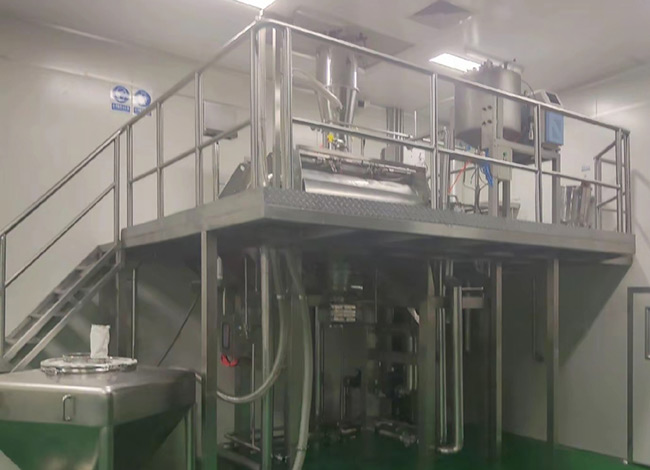
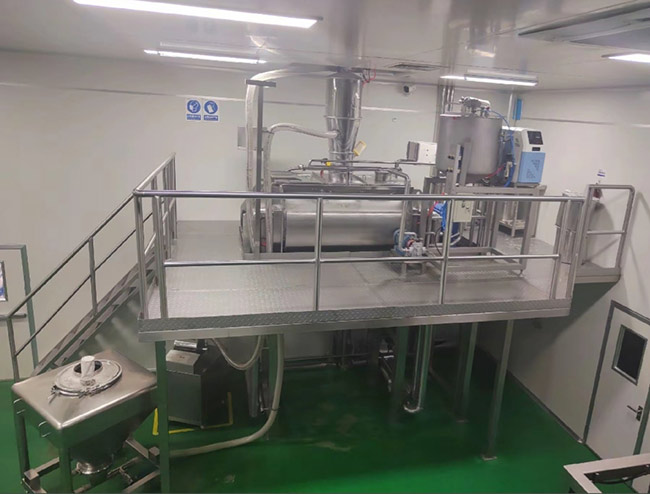
In a previous powder mixing project, a customer purchased a 1000L ribbon mixer from us. After their materials were mixed, they were transported through an automated pipeline conveying system. It was already stated during the inquiry stage that the discharge height of the mixer should be increased to about 1.2 meters.
This elevation was useful for the customer’s downstream material-handling arrangement, but it also created a practical problem. Manual feeding from floor level was inconvenient and inefficient for the feeding height over 2 meters. Instead of asking operators to repeatedly lift and manually charge material into the elevated mixer, we designed a vacuum feeding system to transfer the powder automatically. At the same time, we added a stainless-steel working platform with stairs around the mixer. The final equipment arrangement therefore combined: vacuum feeder + ribbon mixer + stainless steel working platform. The objective was not simply to connect several machines. It was to design the equipment around the complete operating workflow: material loading → vacuum feeding → mixing → discharge → cleaning & maintenance.

II. Real Problem Reflected in the Mixing Project
A ribbon mixer normally receives powder or granules through the top and discharges the mixed material through a bottom outlet. The discharge height can be customized according to the downstream process. This flexibility is useful when the mixer needs to discharge directly into:
• A storage bin
• A packaging machine
• An intermediate hopper/buffing silo
• A screw conveyor
• A vacuum conveying system
• Other downstream equipment
However, changing the mixer height also changes the way operators interact with the machine. This creates an important engineering principle: The height of a mixer should not be considered independently from the feeding method and operator-access design. For this project, the mixer was positioned with a discharge height of approximately 1.2 m. That created two different operational requirements as pointed below, which should be considered when designing the powder mixing solution:
1)During production: The operator needed an efficient way to feed powder into the elevated mixer.
2)During cleaning and maintenance: The operator needed safe and convenient access to the mixer and its operating areas.
III. Why Was a Vacuum Feeder Selected for This Elevated Ribbon Mixer
The vacuum feeder was not selected simply because the customer wanted an automated feeding system. In this project, manual feeding was first ruled out based on the batch size and the elevated feeding height. We then compared automatic feeding options and found that vacuum conveying offered a more practical balance of feeding efficiency, installation requirements and cost for this specific application.
3.1. Manual Feeding Was Not Practical
The ribbon mixer has a total volume of 1,000 L, with a maximum working load of approximately 600 L. At this loading volume, manually carrying and pouring powder into the mixer would already be time-consuming. A single batch could involve a considerable amount of material handling, particularly when the raw material is supplied in multiple bags or containers.
The situation became even more challenging because the mixer was elevated to meet the customer’s downstream discharge requirements. In this project, the mixer discharge height was increased by approximately 1.2 meters, which resulted in the feeding inlet being positioned at more than 2 meters above floor level. For an operator with an average height of around 1.7 meters, directly lifting and pouring bags into a feeding inlet above 2 meters would not be a practical routine operation without additional lifting or access equipment.
Therefore, manual feeding was eliminated for two straightforward reasons: high batch volume and over high feeding height.
3.2 Vacuum Feeder Chosen Instead of Screw Conveyor
A screw conveyor is another common solution for automatically feeding powders into a ribbon mixer. It can provide continuous mechanical conveying and is widely used in powder-processing systems. However, the conveying height was an important consideration in this particular project.
The mixer feeding inlet was positioned more than 2 meters above the floor, so the material needed to be lifted vertically from the loading point to the elevated mixer. A screw conveyor can certainly be designed for elevated or inclined conveying. However, for this application, the required lifting height made the screw-feeding arrangement less attractive when considering the overall equipment configuration. Compared with the screw conveyor option, the vacuum feeder provided several practical advantages for this project:
• Efficient transfer to a feeding point above 2 meters
• Less mechanical structure around the elevated mixer
• Flexible pipeline routing
• Suitable for automated powder transfer
• A more favorable overall equipment cost for this particular application
The cost comparison is also important. Although both systems can achieve automatic feeding, a screw conveying solution for this layout would generally require a dedicated mechanical conveying structure, together with the corresponding screw configuration, support structure and installation space. For this project, the resulting solution was less economical than the vacuum conveying arrangement.
IV. Why Was a Stainless-Steel Working Platform Added
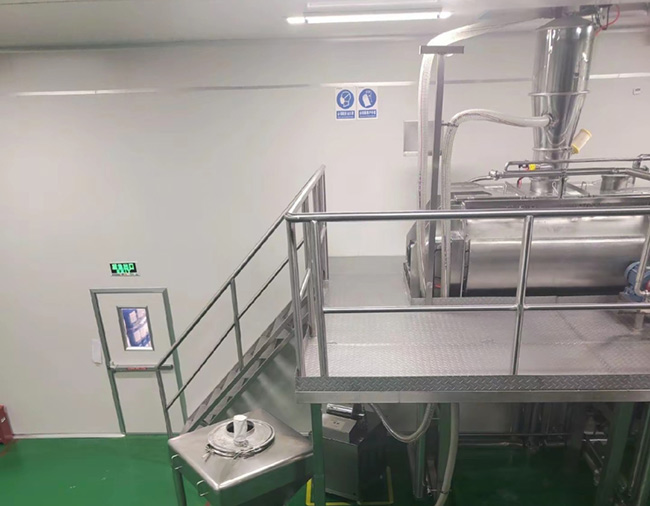
Once the ribbon mixer was elevated, solving the material-feeding problem was only half of the equipment-design challenge. The vacuum feeder solved how does the material reach a feeding point more than 2 meters above the floor. But another question remained: How does the operator safely reach the elevated mixer for routine operation, cleaning and maintenance?
Because the ribbon mixer was installed at an elevated position, some routine tasks could not be conveniently performed from floor level. Depending on the customer’s operating procedure, operators may need to access areas around the upper part of the mixer for:
• Routine inspection
• Checking the feeding inlet
• Observing the mixing process
• Cleaning
• Inspecting seals and connections
• Routine maintenance
• Troubleshooting
Without a dedicated access structure, operators may have to rely on temporary ladders or other improvised methods. That is not an ideal approach for equipment that is operated and cleaned repeatedly. The stainless-steel platform therefore provides a defined working area and access route around the elevated mixer. The basic access path becomes: floor → stairs → working platform → Mixer. This is much more practical than requiring operators to reach upward from the floor whenever they need to perform a routine task.
V. Summary for the Integrated Powder Mixing System
When a ribbon mixer is installed at an elevated position, it is not enough to consider only how the product will be discharged. The complete layout should consider three things together, which are how material enters the mixer, how product leaves the mixer, and how operators access the mixer. In this project, the vacuum feeder addressed the first challenge, while the stainless steel platform addressed the third. Together, they transformed an elevated ribbon mixer from simply a higher-installed machine into a more efficient and practical production system designed around both material flow and operator access.
If there is any interest in or actual need of the powder mixing system, welcome to consult with Salinovate team to get the customized mixing solution for you.