


 English
 French
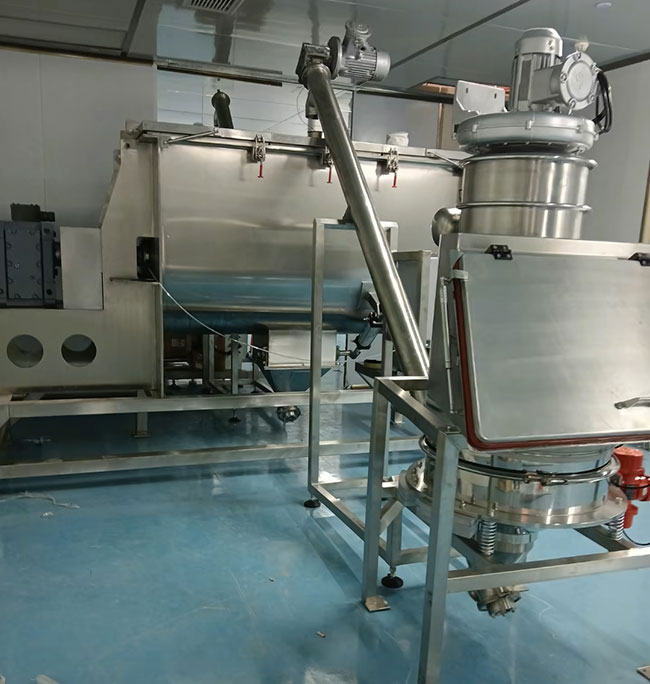
What is dust-free powder mixing equipment? This equipment does not refer solely to a mixer with built-in dust collection, but rather to a complete dust-free production system. Typically, it integrates a dust-free feeding station and automatic powder transfer device with the mixer, forming a fully enclosed operation from feeding to mixing to discharging, effectively controlling dust emissions.

I. Common Configurations of Dust-Free Powder Mixing Equipment
Dust during powder mixing is mainly generated in the feeding and discharging stages. Below are two common configurations for dust-free powder mixing.
1.1 Dust-Free Feeding Station + Powder Mixer
This is the basic solution for achieving "dust-free feeding" and is the most common configuration for dust-free mixing equipment.
1)Working Principle: The dust-free feeding station uses a built-in negative-pressure fan to create a slight vacuum inside the feeding hopper, drawing dust raised during feeding into the hopper and preventing it from escaping into the workshop. Meanwhile, the filter elements inside the station capture dust and are automatically cleaned via a pulse-jet blow back system, ensuring long-term stable operation.
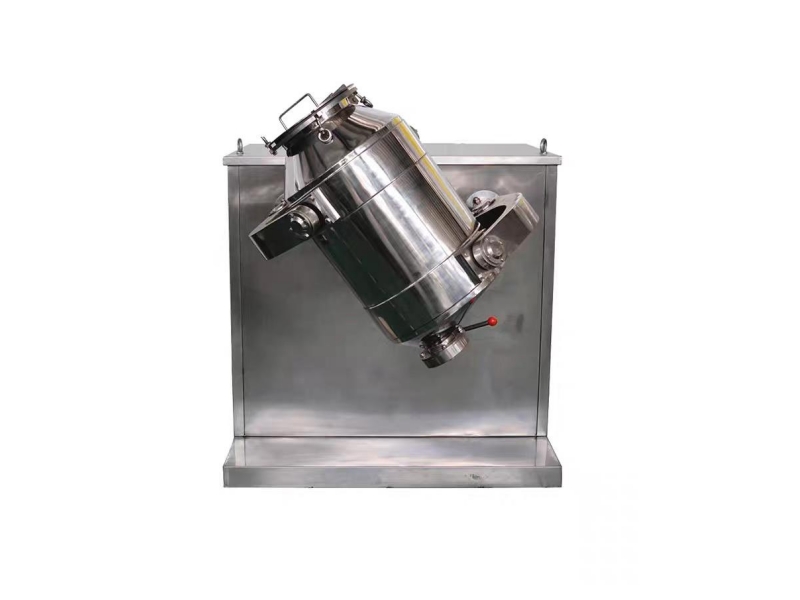
2)Feeding Method: The dust-free feeding station is typically paired with a vacuum feeder or screw feeder to automatically convey powder to the mixer. The vacuum feeder transports powder through sealed piping, eliminating dust leakage, and has been widely adopted in powder conveying applications. The connection between the dust-free feeding station and the mixer can be made airtight, preventing material contamination during transfer. You can watch the video below to see clearly the integrated work of our SLT series 3D powder mixer with the vacuum feeder.
3)Applicable Scenarios: Mixing processes requiring powder feeding in industries such as food, pharmaceuticals, and chemicals.
1.2 Dust-Free Feeding Station + Mixer + Automatic Conveying Device
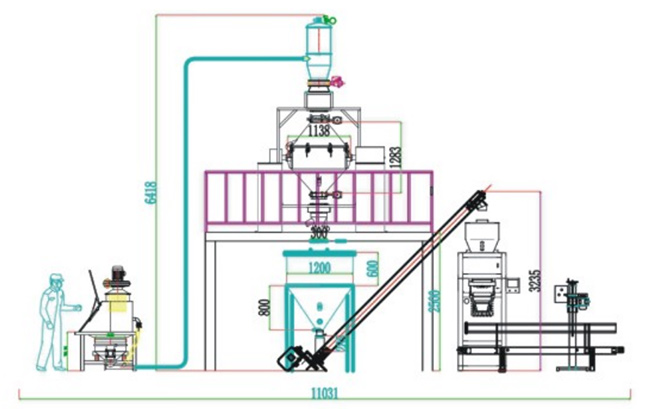
Building on the first configuration, this adds an automatic powder transfer device to achieve full-process dust-free operation from feeding to discharging. This option is currently the most comprehensive dust-free mixing solution.
1)Working Principle: After mixing is completed, materials are automatically conveyed through sealed piping to downstream storage hoppers or packaging stations. A vacuum feeder or screw feeder is used for powder transfer. The mixer discharge port is sealed to the hopper connection; upon starting the vacuum/auger scewing system, materials are drawn through the piping into the storage tank of the next process stage.
2)Discharge Control: The bottom discharge port of the mixer can be connected to a discharge hopper and sealed conveying piping, ensuring dust-free discharge while facilitating subsequent bagging and conveying operations.
3)Typical Case: An automated mixing production line incorporates a dust-free feeding station, vibrating screen, metering hopper, mixing stirrer, and storage silo to achieve fully enclosed automated production from feeding to finished product storage, effectively solving problems such as dust emission, inaccurate manual metering, and product contamination risks inherent in traditional processes.
II. Summary
In a nutshell: The essence of dust-free powder mixing equipment lies in sealed system integration. The purpose is to solve feeding dust via a dust-free feeding station, transfer dust via sealed piping and vacuum/screw feeding, and discharge dust via automatic discharge devices. These three interconnected steps achieve truly "dust-free mixing." For small to medium mixing batches, you can choose the option one; for medium to large mixing batches, the option 2 is more suggested. For any assistance in designing the dust-free powder mixing line, welcome to consult with Salinovate Team.