


 English
 French
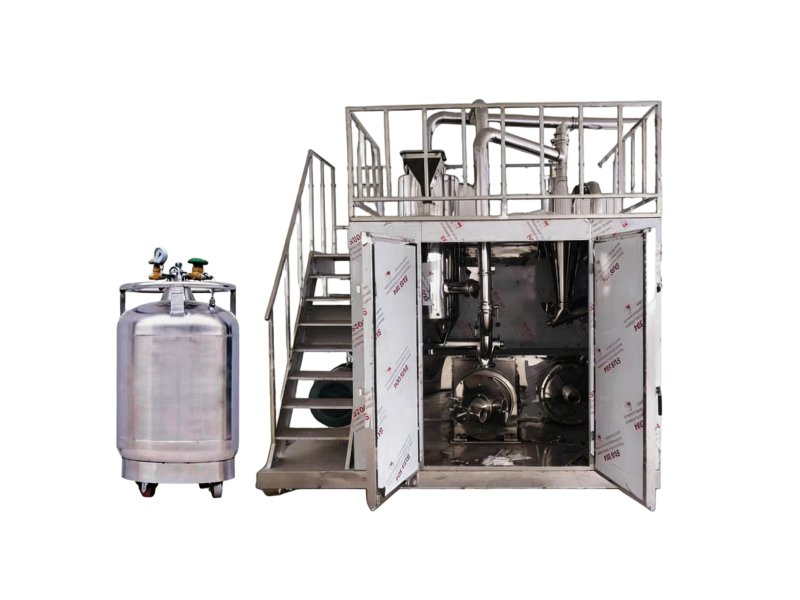
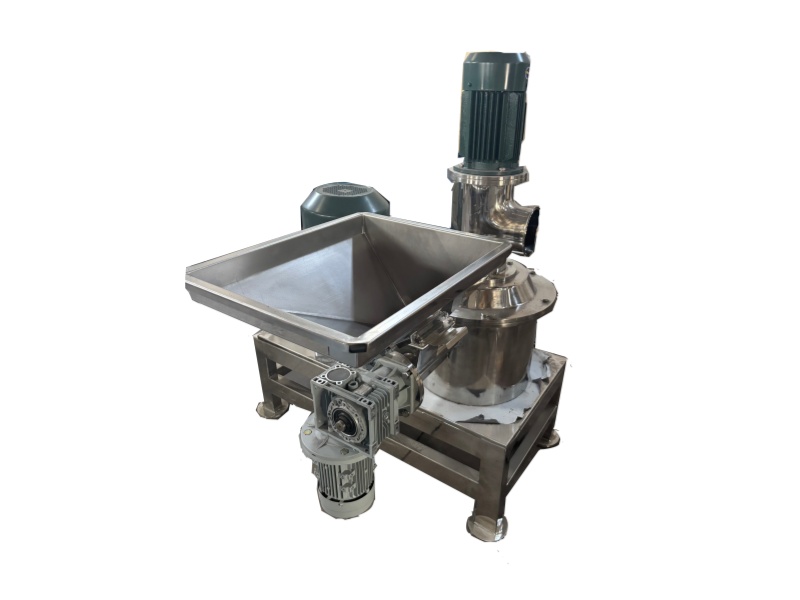
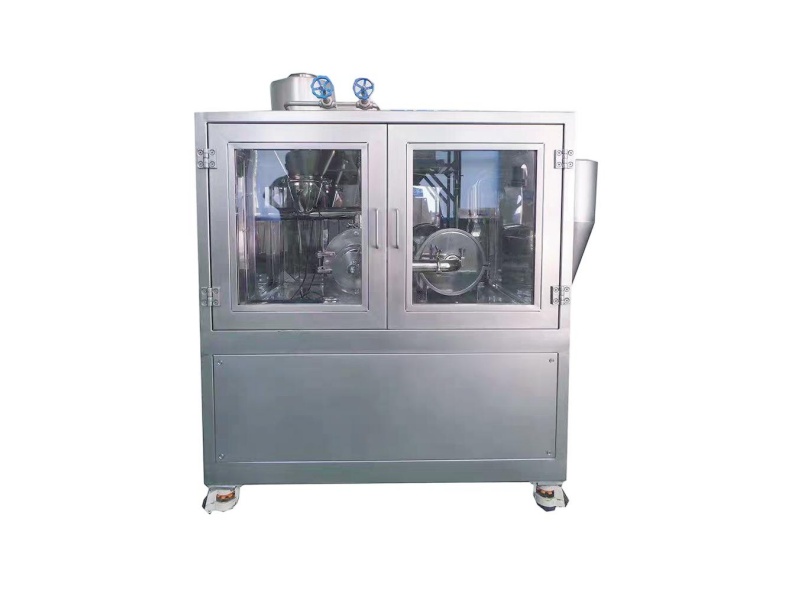
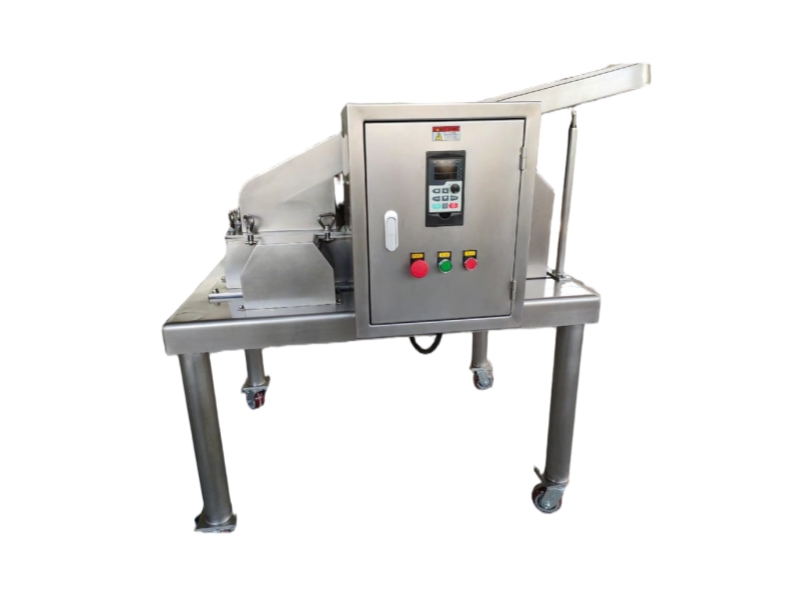
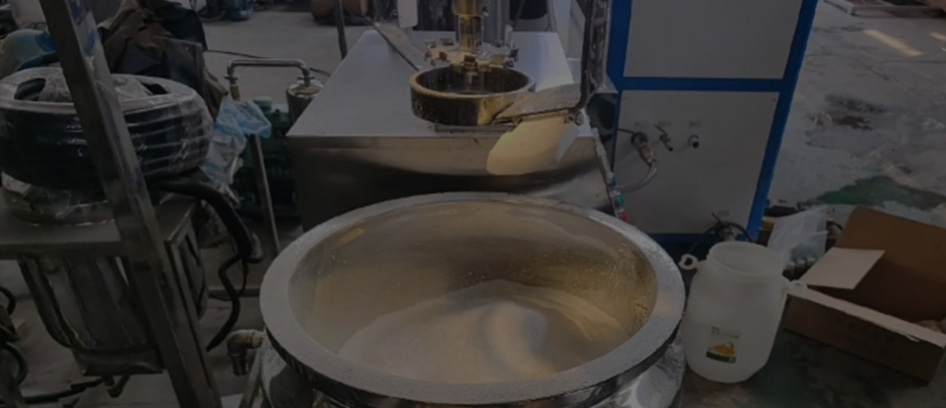
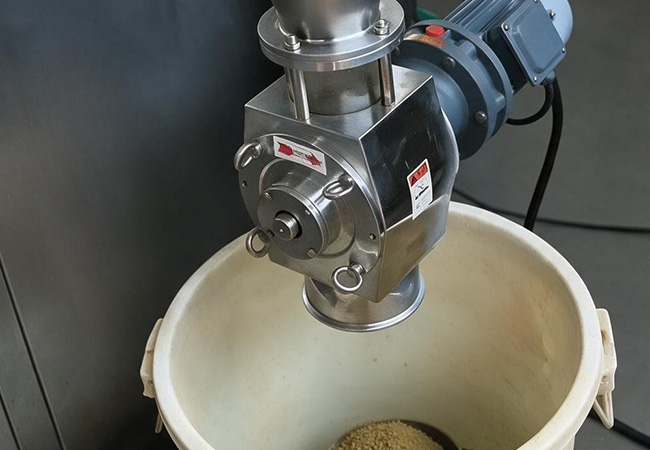
For cumin grinding, achieving the required particle size is only part of the process. Because cumin contains a meaningful amount of oil and volatile flavor compounds, grinding can generate considerable heat. As the material temperature rises, the powder can become more prone to oil release, sticking and blockage, making continuous grinding more difficult and potentially affecting the quality of the finished powder. For one recent customer project, Salinovate integrated a cold air machine with an SLU-300 powder grinder as shown in following video to address this problem.
I. Project Brief
The customer required high-quality medium-coarse(10-40 mesh) cumin powder, but had limited workshop space. Instead of purchasing two separate pieces of equipment and connecting them on site, the customer selected a compact integrated grinder and cold-air configuration.
The SLU-300 model powder grinder uses a 7.5 kw grinding motor, while the cold-air system supplies sub-zero cold air to the grinding process. The purpose of the integration is straightforward: control the temperature during grinding → reduce oil-related sticking and blockage → maintain a more stable grinding process → improve the consistency and quality of cumin powder.
II. Why Cumin Grinding Needs More Than a Conventional Grinder
Cumin is not simply another dry spice that can be evaluated by grinding capacity and mesh size alone. Its oil content and volatile components make temperature an important processing variable. Mechanical impact and friction during grinding generate heat, and continuous grinding can make this problem more noticeable.
When the temperature rises, several things can happen:
• Oil can become more mobile and migrate onto machine surfaces.
• Powder can become more prone to sticking and caking.
• Screen openings can become blocked in screen-type grinding systems.
• Cleaning and stopping frequency can increase.
• Heat-sensitive aroma components may be affected.
Published studies on cumin grinding have specifically reported temperature rise, caking and sieve clogging during conventional grinding, while low-temperature grinding has been investigated as a way of reducing these problems. This leads to an important equipment-selection principle: For oily spices such as cumin, the grinding temperature can be just as important as the grinding speed and particle size. That is the starting point of this equipment integration project.
III. The Customer’s Requirement: Medium-Coarse Cumin Powder in a Limited Space
The customer’s requirement was not simply “a cumin grinder.” The actual project involved three conditions that needed to be considered together:
1. High Quality Cumin Powder
The customer wanted to maintain the quality of the cumin powder rather than treating grinding as a simple size-reduction process.
2. Medium-coarse Particle Size
The target was medium-coarse cumin powder, so the process did not need to pursue ultra-fine powder. This is important because the most suitable grinding technology depends on the final particle-size requirement. There is no reason to select an ultra-fine grinding system simply because the material is cumin.
3. Limited Workshop Space
The customer’s available installation area was limited. This made equipment footprint an important part of the design. Instead of treating the grinder and cooling system as two unrelated machines, the solution was designed around their actual working relationship. The result was an integrated SLU-300 grinding and cold-air configuration.
IV. Why the Cold Air Machine Is Integrated with the Grinder
The main reason for adding the cold-air system is temperature management. The grinder generates heat as the cumin is broken down. The cold-air system introduces cooled air into the grinding process to help remove or offset part of this heat.
In this project, the cold-air outlet temperature is designed to be below 0℃, providing a much colder air source than ordinary ambient air. The principle is not to freeze the cumin like a liquid-nitrogen cryogenic system(very high using cost). Instead, it is a cold-air cooling process designed to control the temperature of the grinding environment and material. The integrated cold-air grinding system uses an air-cooling refrigeration principle and can provide cold air in approximately the -5℃ to -10℃ range, with the exact setting adjustable according to the application. The system can be integrated with SLU, SLA and SL series grinders. You can see the work flow below to distinguish the two different cooling grinding technologies:
• Cold-air grinding: cold air → reduce grinding temperature → help control heat-related problems
• Cryogenic grinding: liquid nitrogen → deep freezing → make the material much more brittle
For this customer, the requirement was not deep cryogenic grinding with very high cost. The objective was more practical: Keep the cumin grinding process sufficiently cool while maintaining a compact and manageable production system.
V. How Cooling Helps with Cumin Oil and Powder Blockage
The most direct benefit of cooling is controlling the temperature rise generated during grinding. Cumin contains both volatile oil and fixed oil. During conventional grinding, the combination of mechanical energy and friction can increase powder temperature. Studies of cumin grinding have associated this temperature rise with oil-related caking and sieve clogging.
When the grinding environment is cooled, the material has a better chance of remaining in a condition that is easier to pulverize and discharge. In practical terms, the cold-air system is intended to help:
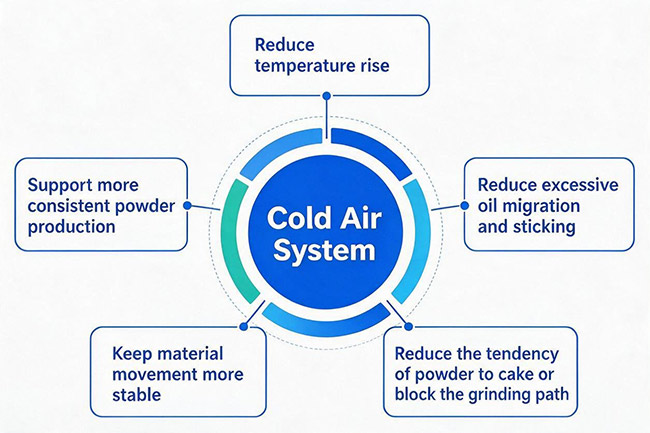
This does not mean that cooling completely eliminates clogging. Cumin quality, moisture, oil content, feed rate, grinding configuration and target particle size can all influence the result. The value of the cooling system is that it addresses one of the major variables behind the problem: temperature.
VI. Why Temperature Control Can Affect Powder Quality
For cumin, powder quality is not determined by particle size alone. A powder can meet a nominal mesh requirement but still have an unsatisfactory processing result if excessive heat affects its aroma, color or other quality characteristics.
Cumin is valued partly for its volatile flavor compounds. Research comparing conventional and low-temperature grinding has therefore paid particular attention to temperature and volatile-oil retention. One study reported improved volatile-oil retention under cryogenic grinding conditions compared with ambient grinding. The present project is not a cryogenic grinding system, so those cryogenic results should not be directly treated as performance data for the SLU-300. However, they support a broader processing principle: Temperature is a meaningful quality-control variable when grinding aromatic, oil-containing spices.
For an industrial cumin powder producer, this means that grinding machine selection should consider not only:
• Capacity
• Particle size
• Motor power
but also:
• Product temperature
• Oil behavior
• Powder flow
• Cleaning frequency
• Aroma and quality requirements
That is where the cold-air machine becomes part of the grinding solution rather than an independent accessory.
VII. Why the SLU-300 Was Used for This Application
The selected grinder is the SLU-300 powder grinder, equipped with a 7.5 kW grinding motor. The key point is that this project did not require ultra-fine cumin powder. The customer needed medium-coarse(10-40 mesh) cumin powder, so the equipment was selected according to the actual product requirement rather than simply choosing a more powerful or more sophisticated grinding technology.
The SLU series is an relatively universal powder grinder that can be used for a range of food materials with low purchase cost. Its grinding range and configuration can be adjusted according to material and target fineness. For this cumin application, the more important modification was not simply increasing grinding power. It was adding temperature control.
Therefore, the complete solution can be understood as:
• SLU-300 → provide the required grinding action
• Cold-air machine → manage grinding temperature
• Integrated configuration → make the two systems work together within limited workshop space
This is a good example of why equipment integration can be more useful than simply purchasing a larger standalone grinder.
VIII. Conclusion: For Cumin, Grinding and Cooling Should Be Considered Together
A high quality cumin powder system needs to control more than particle size. Cumin’s oil and volatile components make temperature an important consideration during grinding. Excessive temperature can contribute to oil migration, sticking, caking and blockage, while also creating concerns about powder quality.
For this customer, the solution was not to pursue ultra-fine grinding or simply select a large grinder. Instead, the process was designed around the actual requirement: medium-coarse cumin powder + temperature control + limited workshop space. The SLU-300 model powder grinder handles the grinding process, while the cold-air machine supplies sub-zero air to help control the temperature generated during pulverization. This combination is intended to reduce the tendency toward oil-related sticking and blockage and support more stable, higher-quality cumin powder production.
The project also illustrates a broader principle for spice-processing equipment: When the material itself creates a processing challenge, the solution may not be a different grinder. It may be a better-integrated grinding system.