


 English
 French
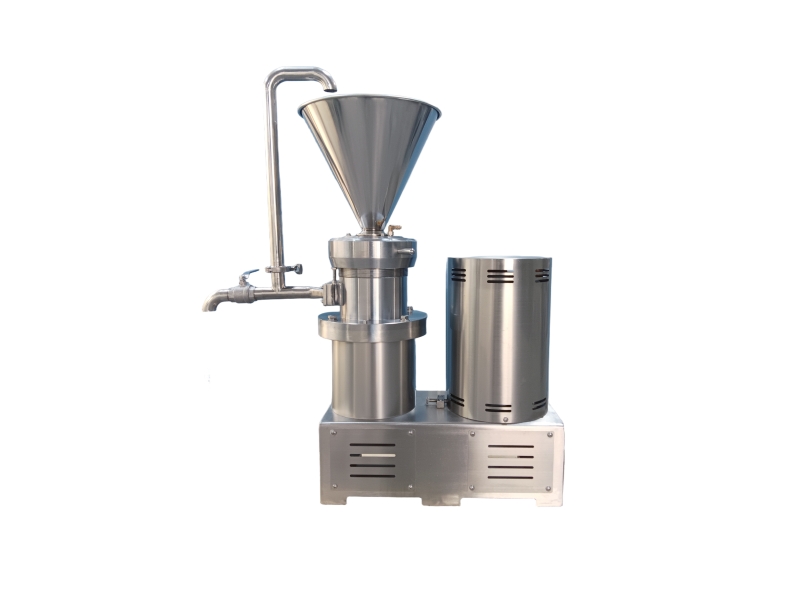
The working principle of a colloid mill is widely known, but do you know what is special for the feeding design of the colloid mill? This article will provide you with a scientific explanation of the feeding design.
I. Why Does A Colloid Mill Require Different Feeding Devices?
When processing certain special materials, conventional feeding devices can no longer meet the requirements due to the inherent properties of the materials. Slow discharge or even bridging and clogging often occur. The auxiliary feeding device primarily addresses the issue of poor material flow before entering the grinding chamber, forcibly delivering the material into the processing area through external force. This significantly enhances production efficiency and prevents machine idling.
II. Classification of Feeding Devices
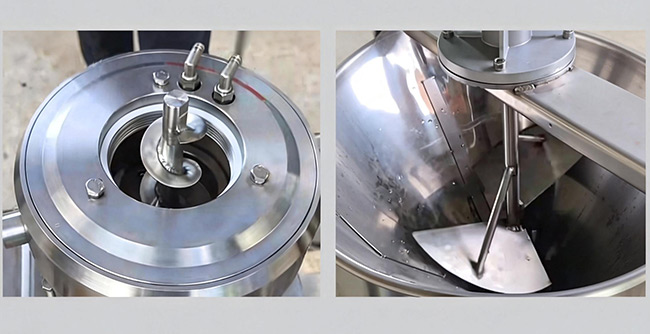
Ordinary colloid mills generally do not have dedicated feeding devices and rely on the gravity of the material itself to enter the crushing chamber. With the application and development of equipment, two main auxiliary feeding devices have been developed based on practical experience.
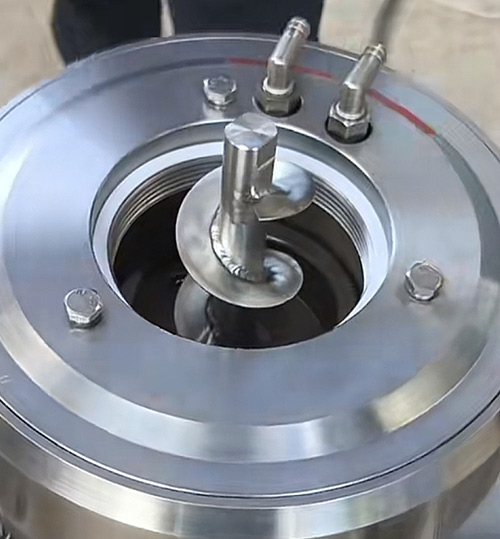
2.1 Device 1: Auger Screw
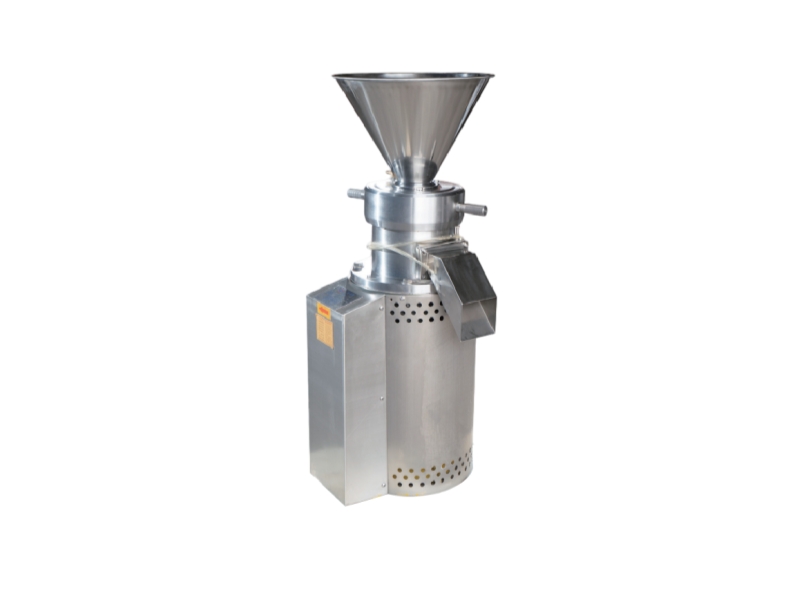
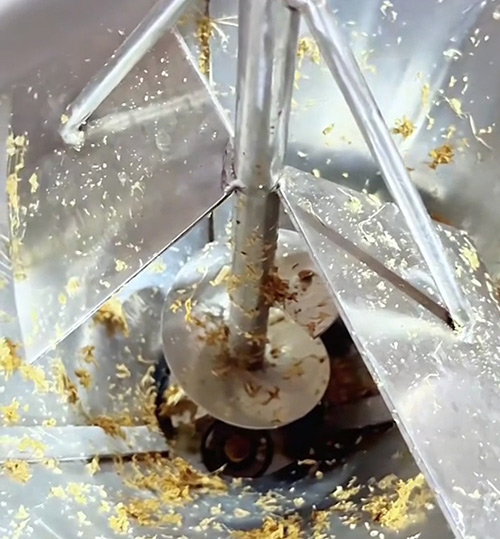
Although the screw is just a simple design, its role is not insignificant. The screw is usually installed vertically and rotates to drive fresh chili peppers, dried ginger, garlic cloves, or certain dried fruits with poor fluidity to quickly enter the crushing chamber. This can greatly improve the crushing efficiency and avoid equipment idling and poor feeding caused by slow feeding. You can watch the auger screw feeding video to see clearly.
Regarding this device, our company has currently upgraded it to standard configuration for free.
2.2 Device 2: Vertical Arch Breaking Mixer Device
Although the feeding screw plays a significant role, there is a systematic efficiency loss when processing high fiber, high viscosity fruit and vegetable materials such as pumpkin and sweet potato.
According to the research data on the feed efficiency of wet grinding equipment in the Handbook of Food Processing Machinery Engineering (3rd edition, 2021), it is shown that:
When the moisture content of the material is below 78% or the fiber content exceeds 12%, the volumetric efficiency of the single screw feeding device decreases by an average of 34% -47%. Unplanned downtime caused by material "bridging" or "shaft hugging" accounts for 41% of the total equipment downtime. When processing and steaming pumpkin (with a moisture content of about 82% and a fiber content of about 14%), the actual processing capacity of conventional hopper+single screw can only reach 53% -61% of the rated processing capacity.
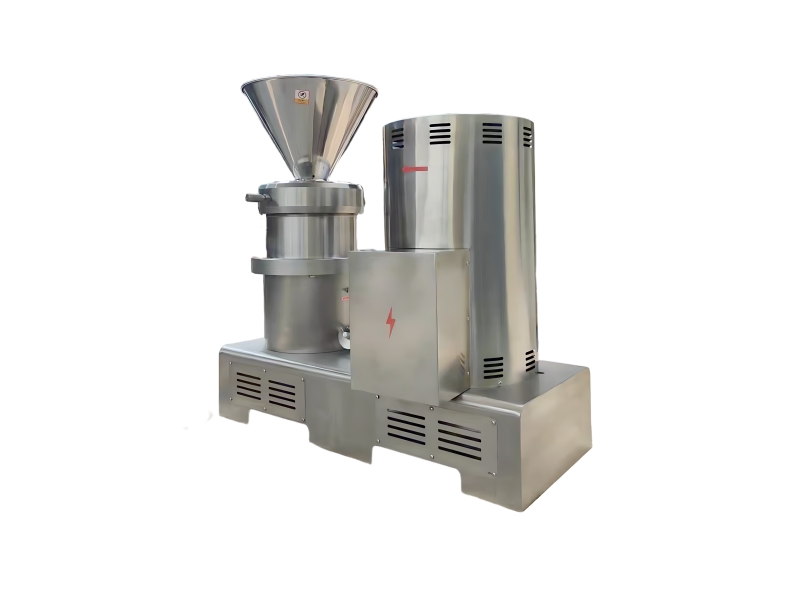
In this case, installing a vertical arch breaking mixer and a variable pitch screw is the mainstream improvement solution for block shaped and highly viscous materials. This vertical arch breaker can effectively prevent pumpkins, sweet potatoes, potatoes, and other items from sticking to the walls of the hopper on the soft couch. Force the material down and prevent it from running up again.
You can watch this video of colloid mill with combined feeding design to see the performance.

The above are ideas designed for the built-in feeding device of the colloid mill. Of course, there are also independent automatic conveying equipment used in conjunction with colloid mills, which will not be further explained here. If you have any other questions about the design of the colloid mill, you can consult us.