


 English
 French
Case Study - Upgrade Jam Jar Filling Machine Up to 7000 Bottles/Day
By:Salinovate Team
Recently there is a case of our company that a small jam production factory that needed to upgrade its filling line. We believe many small and medium-sized manufacturers will encounter similar problems, so we have specially made a case study to help everyone understand some ideas for selection when upgrading the jam jar or bottle filling machine.
I. Customer Background: Production Bottlenecks Amid Rapid Growth
1)Company type: Small Scale Jam Production Factory
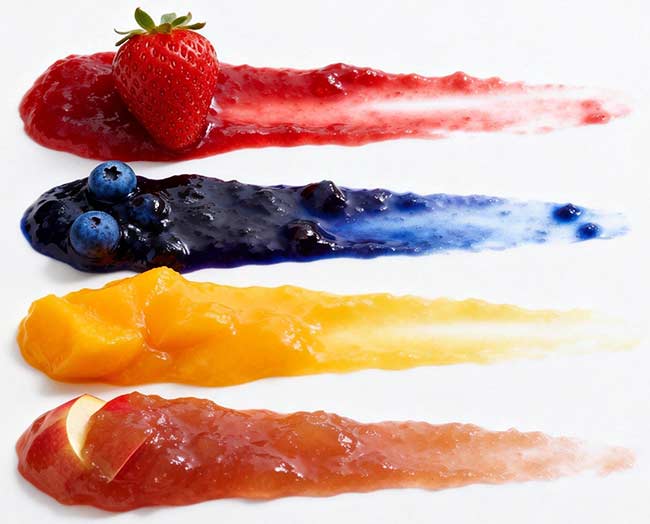
2)Core product: Fine-textured jam (particle-free)
3)Package type: Jar/Bottle package, 110g and 170g filling specifications
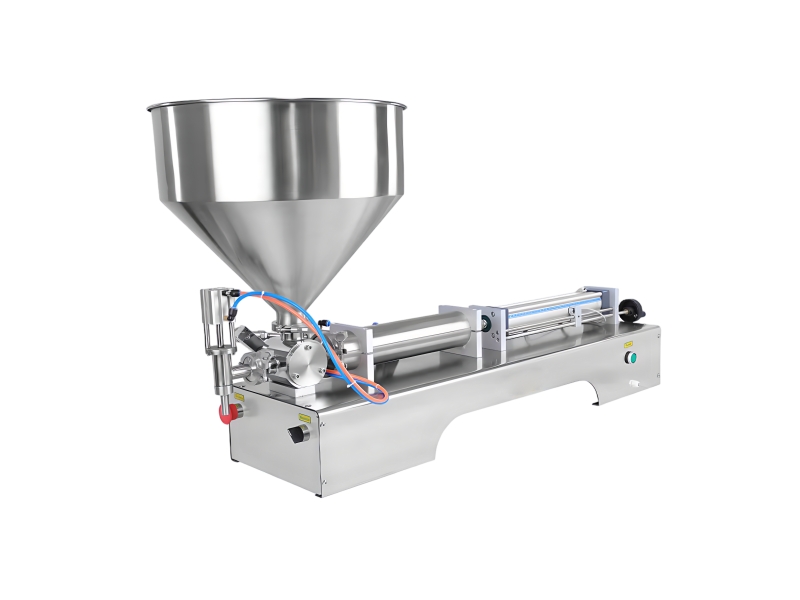
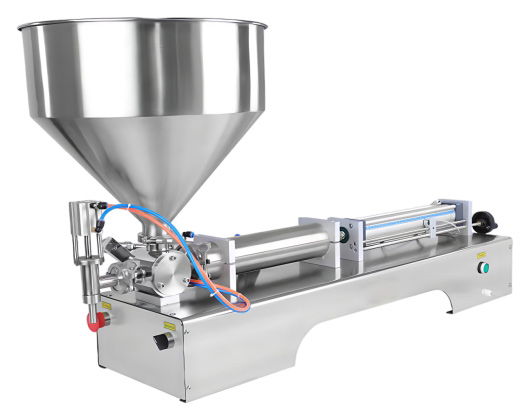
4)Original equipment: Desktop Version Small Pneumatic Filling Machine
5)Facing challenges: The surge in market demand has overwhelmed the existing semi-automated production line, which can no longer meet the daily selling requirement of 7,000 bottles.
6)High labor costs and inefficient independent operations across various stages further compound the issue.
7)Seeking a solution: Upgrade to automated jam filling to address both production capacity and labor issues.
II. Deep Analysis of Customer Pain Points
In three parts, we analyzed the pain points of the customer.
2.1 Serious Shortage of Production Capacity
1)Original pneumatic filling machine speed: 6-8bpm
2)Maximum daily production capacity: approximately 3000 bottles (calculated based on 8 hours)
3)Target demand: 7000 bottles per day
4)Capacity gap: 57%
2.2 High Dependence on Manual Labor
1)Independent operation of filling, capping, and labeling three links.
2)1 or 2 operators are required for each stage.
3)The manual filling accuracy fluctuates greatly, and the product consistency is poor.
4)Frequent material handling and high labor intensity.
2.3 Poor Production Continuity
1)Small hoppers have limited capacity and require frequent replenishment.
2)The connection between various devices is not smooth, and there is a waiting time.
3)Production data cannot be monitored in real-time.
III. Customized Solution: Accurately Match Customer Needs
Based on the customer need, we made the filling solution step by step.
3.1 Requirement Diagnosis Stage
After in-depth communication with the client, we have identified the core requirements:
1)Primary goal: Increase daily production capacity to 7000 bottles/day.
2)Accuracy requirement: Loading error of 170g and 110g ≤ ± 2g.
3)Degree of automation: Reduce manual intervention and improve production line continuity.
4)Compatibility: Require seamless integration with customer purchased vacuum capping machine and labeling machin.
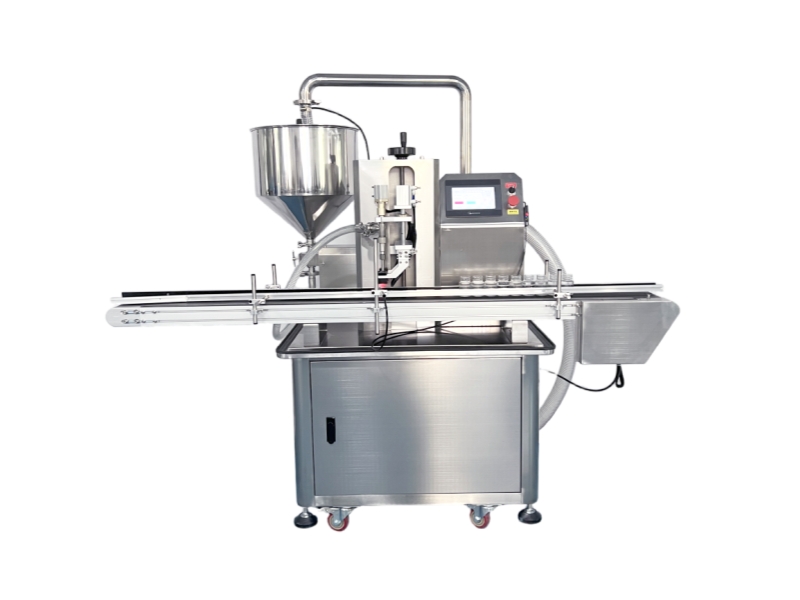
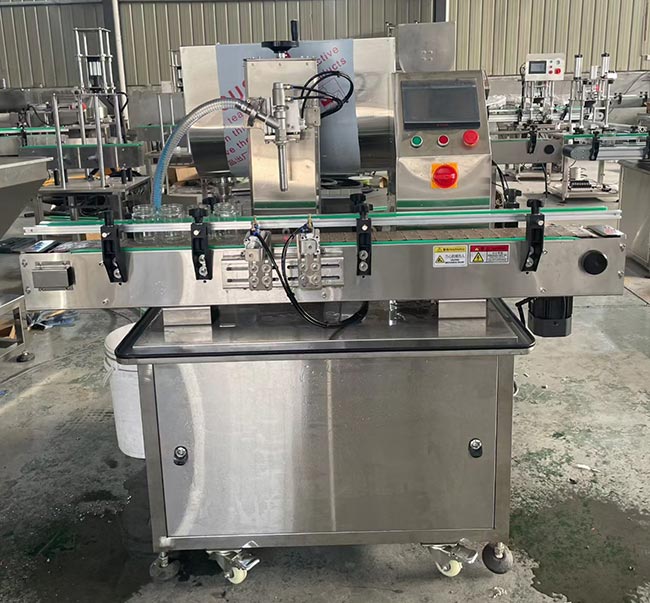
3.2 Recommended Solution: SLJF-1 Model Rotor Pump High-Speed Filling Machine

1)Filling System:
● Adopting high-precision single head rotary pump to ensure smooth filling of delicate jam (without particles).
● Filling speed: 15-20 bottles/minute (theoretical maximum production capacity of 9600 bottles/8 hours).
● Special Anti Drip Design Reduces Jam Waste
2)Innovative Design of Hopper:
● Horizontal large capacity hopper with a capacity of 80 kilograms
● One loading can continuously fill about 470 bottles (calculated at 170g)
● Up to 2 replenishment times per hour, significantly reducing manual intervention
3)Intelligent Control System:
● Material level sensing automatic start stop (reserved function).
● PLC touch screen control, one click parameter setting.
● Automatic recording and storage of production data.
4)Optional Configuration (customer ultimately chooses basic version):
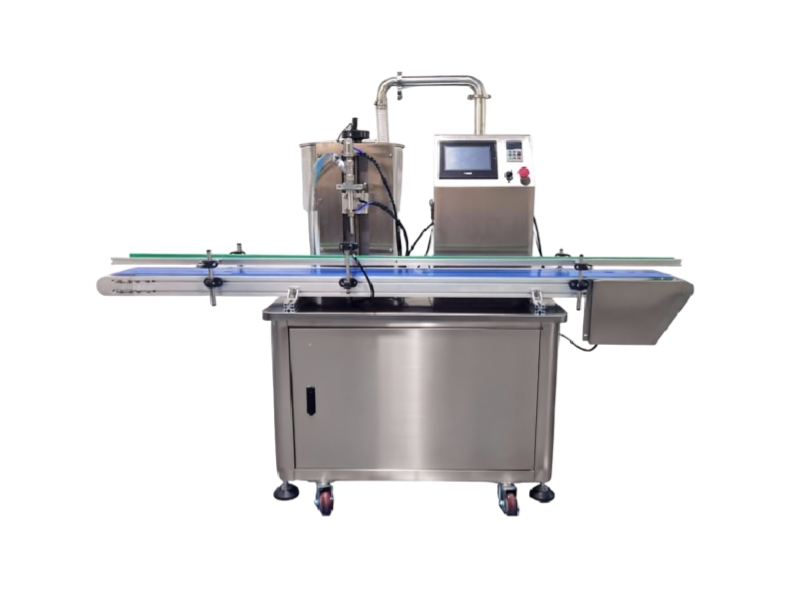
● Automatic feeding system: piston cylinder automatic feeding, achieving fully automatic feeding
● Automatic bottle delivery system: automatically connected with front and rear equipment
● Customer selection: Only purchase the main filling machine to maintain equipment flexibility
IV. Implementation and Testing: The Entire Process from Solution to Implementation
4.1 Equipment Customization and Production
1)Customization Cycle: 35 days
2)Key Customization Points:
● Interface Standardization: Reserve interfaces for docking with capping and labeling machines.
● Adjustable Height: There is a certain adjustable space for the foot height, which is convenient for balancing the height with the screw cap labeling machine behind.
4.2 Factory Testing and Validation
Before delivery, we conducted comprehensive testing:
1)Accuracy Test Results:Bottle testing quantity: 100 bottles, filling quantities: 170g and 110g, error value: 1-2g
2)Speed test: Use water for testing. The 170g specification is around 15 bottles, and the 110g specification is around 20 bottles.
4.3 Customer Acceptance Test Video
We have recorded a complete test video for the customer's reference. Due to customer confidentiality requirements, only a small portion of the test videos will be displayed. You can click on the bottle filling machine video to view.
Special presentation: Perhaps some of you are interested in the workflow with an automatic feeding system. Then you can click on our automatic jam bottle filling video.
V. Implementation Outcome: Quantitative Benefit Analysis
5.1 Comparison of Capacity Enhancement
Item | Before Upgrading | After Upgrading | Increase Ratio |
Filling Speed | 7BPM | 15BPM | Over 200% |
Daily Capacity | 3360BPM | 7200BPM | Over 200% |
Labor Need for complete line | at least 3 | At least 2 | -33% |
(Remark: All data comparisons are based on meeting the customer demand for improving production efficiency. If it is only an initial investment with low production capacity requirements, the reference value of this table is not significant.)
VI. Technical Details: Why Choose Rotor Pump Filling Technology
Firstly, we would like to list the comparison sheet for you to know more about the two main type pump filling system. From the sheet, you can learn that the rotor pump has better performance in filling speed meanwhile it is suitable for the smooth paste filling like the fine fruit jam in this case. Also, the rotor pump works better than piston type for handling high viscosity products. If there is any need for the customer in this case to expand other food sauce(often not low viscosity), the rotor pump type system has stronger universality.
Item | Rotor Pump | Piston Pump |
Applicable Product | Smooth Cream, Paste or Paste with very small soft granules | Liquid, Cream, Paste in Fine Texture State or with Granules |
Viscosity | Relatively High Level | Low to Medium Level |
Filling Speed | High Level | Medium Level |
Cost | High Level | Medium Level |
VII. Case Summary and Industry Value
Through this customer case, we can see the core achievements produced by the new jam jar filling machine. Meanwhile, we can have the industry insights in upgrading the jam production use equipment.
7.1 Core Achievements
1)Successfully resolve production capacity bottleneck: help customers achieve a leap in production capacity from 3000 bottles to 7000 bottles
2)Cost saving in working labors and higher working efficiency for the filling line.
2)Reserve space for future upgrades: Modular design supports the addition of automatic feeding and other functions in the future
7.2 Industry Insights
When upgrading equipment in jam production enterprises, special attention should be paid to:
1)Capacity matching degree: Select equipment with slightly higher capacity than current demand to reserve space for growth
2) Technical applicability: Choose filling technology based on product characteristics (presence or absence of particles, viscosity, etc.)
3)System compatibility: Ensure smooth integration of new equipment with existing production lines
4)Operating costs: Taking into account energy consumption, maintenance costs, and labor savings comprehensively