


 English
 French
Inline Emulsifying Sauce Mixer for Coconut Jam Case Study
By:Salinovate Team
Coconut jam are a widely used flavoring sauce in the baking industry, commonly used as a topping or filling for bread and cakes. This article conducts a case study on the application of inline sauce emulsifying mixer in coconut jam production.
I. Project Background
Firstly, let us introduce the project background to you, including the customer overview and customer needs.
1.1 Customer Overview
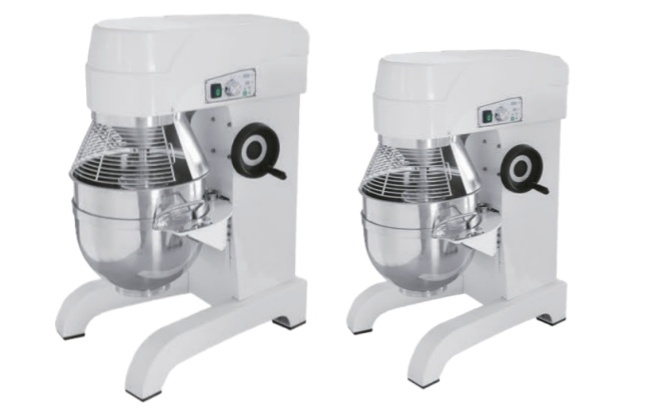
One baking sauce manufacturer supplies various baking sauces to bakeries and pastry factories. They previously used a commercial standing mixer to make their coconut jam, which resulted in a short shelf life and a less refined finish. Therefore, they needed to purchase an industrial emulsifying machine to thoroughly emulsify and homogenize the coconut jam and extend its shelf life.
1.2 Customer Needs
Item Name | Production Requirement |
Target production capacity | About 100kg/h |
Product quality | Fine and even, without layering |
Shelf life | Store at room temperature for 3 months |
Process matching | Adapt to the high viscosity of coconut paste |
II. Solution: The Golden Combination of Inline Emulsifying Pump and Rotary Pump
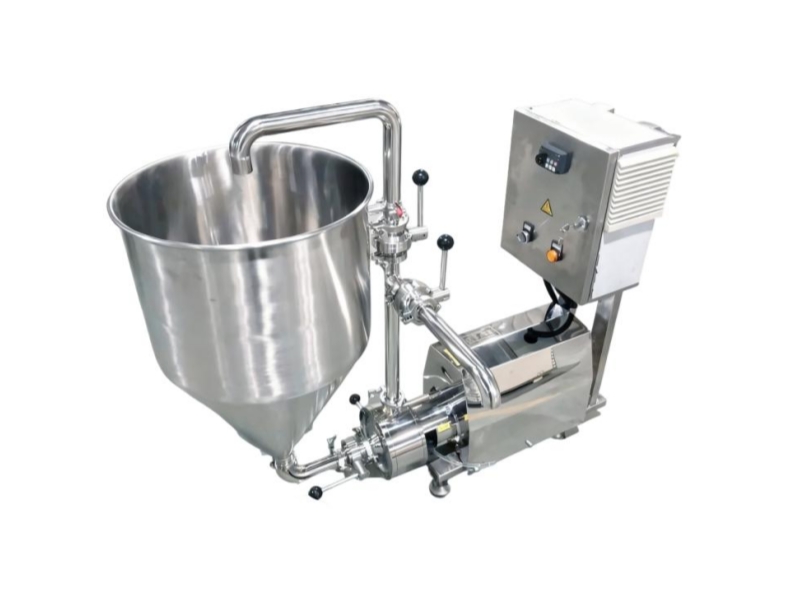
Coconut jam is made primarily from coconut flakes, oils, sugar, and milk. It is a typical water-oil emulsion system, which places high demands on the production process and emulsification equipment. To address the dual characteristics of coconut sauce emulsification and high-viscosity delivery, we customized a combination solution of an inline emulsifying mixer and a rotary pump for our customer.
2.1 Core Equipment Configuration
Device | Remark | Capacity | Function |
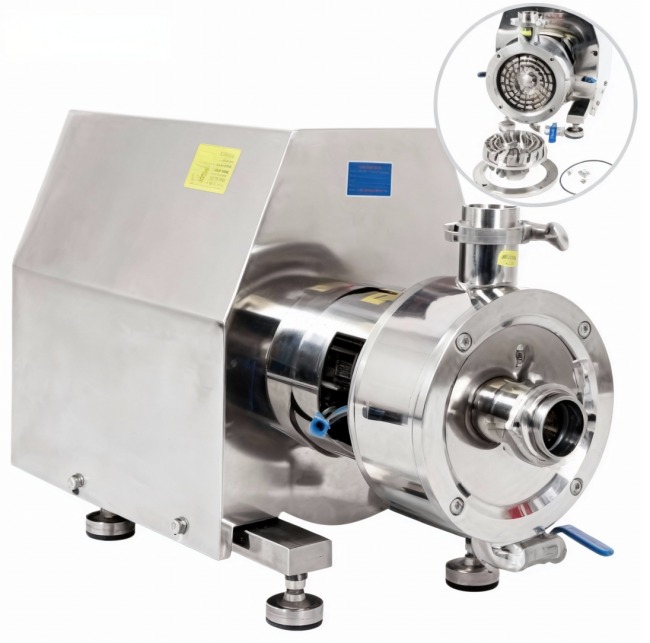
Inline emulsifying pump | 7.5kw | About 100kg/h | Mix, shear, emulsify |
Rotor pump | 2.2kw | Match the emulsifying pump | Convey sauce emulsion |
Control system | Button control | / | Control homogenize speed, time, on/off, etc |
2.2 Technical Parameters of Inline Emulsifying Pump
Item Name | Specification | Remark |
Motor power | 7.5kw | 380V, 50Hz, 3P |
Homogenize speed | 0-2800rpm | Inverter control, adjustable |
Working head | One set of inserted stator and rotor | Mix, homogenize, shear |
Main material | SS304 | Food grade |
Sealing method | Double-end water-cooled mechanical seal | Prevent leakage and has a long service life |
2.3 The Key Role of Rotary Pumps
Coconut sauce, after emulsification, can reach a viscosity of 10,000-30,000 cP. Rotary pumps, when used in conjunction with these pumps, provide efficient and unobstructed transport.
Feature | Advantage | Value for the Sauce Production |
Positive displacement pump | Flow rate is directly proportional to rotational speed and is not affected by back pressure. | Stable delivery to the filling machine. |
Fast conveying | Suitable for high-viscosity sauces, with fast delivery speed. | Improve production efficiency |
III. Solution Confirmation
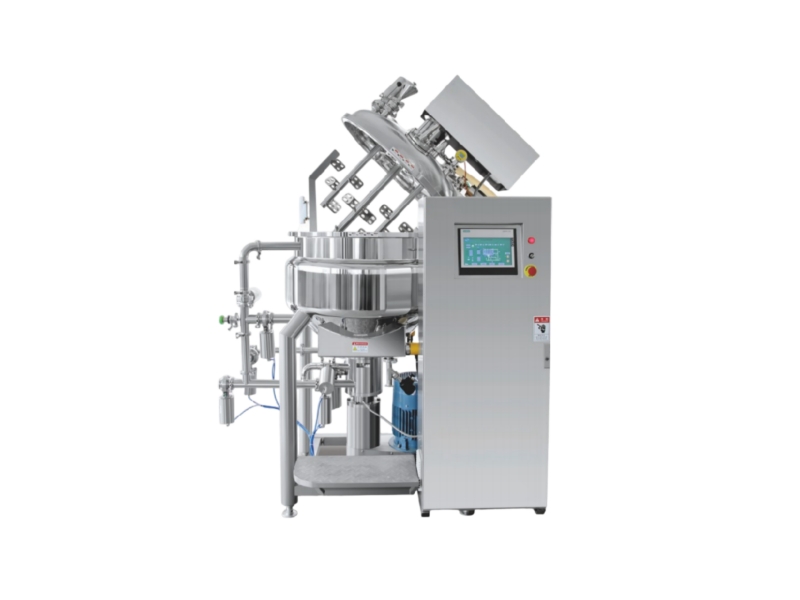
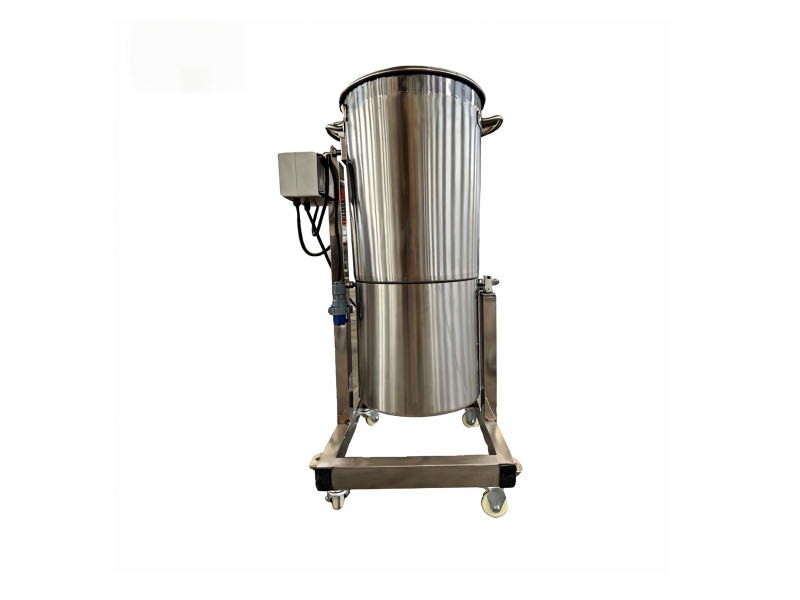
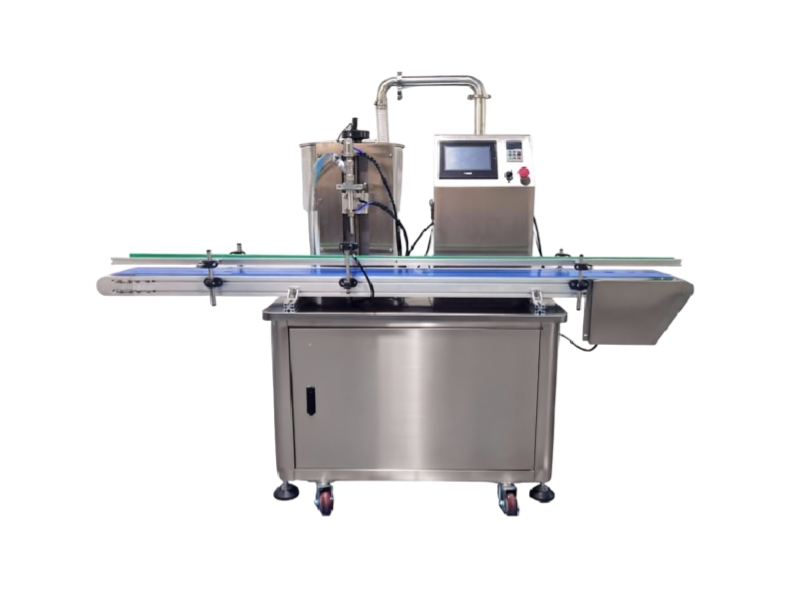
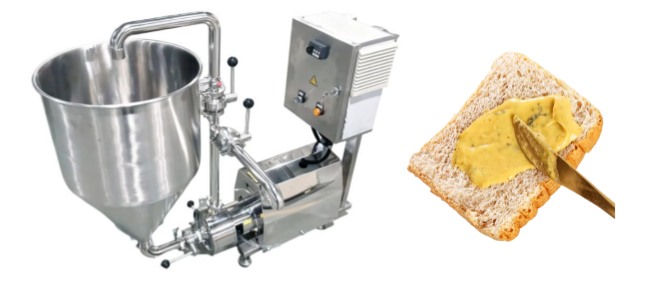
We presented two solutions to the customer. One was a single-stage emulsifying pump + rotor pump + separate mixing tank, which allows for large-scale material input at once, saving labor and improving efficiency. The other was a single-stage emulsifying pump + rotor pump + hopper design, with a small hopper for multiple feedings. After discussion, the customer only needed the small-scale emulsifying machine solution and chose the second option, which was more economical.
IV. Acceptance and Trial Run
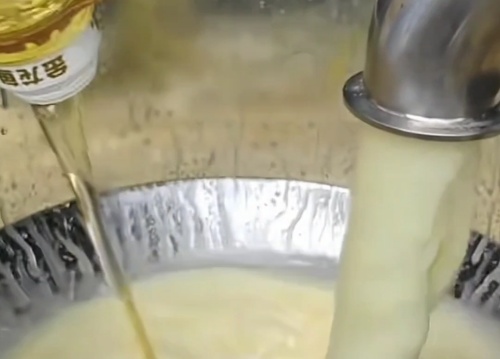
Trial run acceptance is an essential step in every shipment. This time, the customer personally mailed the materials for trial run. The materials mainly consist of edible oil, shredded coconut, and white sugar. You can view the video below to see the equipment in operation and the emulsification effect. The video has been sent to the customer and meets their requirements.
V. Technical Points Analysis
You can see the solution design process by reading the above information. In this chapter, we discuss deeply about the technical points in this case.
5.1 Why is an Inline Emulsifying Pump Needed?
Coconut sauce is an oil-in-water emulsion, and its stability depends on the oil droplet size. Ordinary mixing equipment only has a mixing function and cannot thoroughly and evenly mix the various ingredients together to form a stable emulsion. As mentioned in the article called Diverse Industrial Sauce Mixer Recommendations, this type of sauce production requires an emulsifying mixer.
An emulsifying mixer combines mixing and shear resonance, breaking down the oil and water phase materials into extremely small micro-droplets to form a stable emulsion. An inline emulsifying pump is a type of emulsifier, suitable for small to medium-sized customers with limited budgets. The emulsification effect can basically meet customer needs, and the price is relatively affordable.
5.2 Why is a Rotary Lobe Pump Needed?
Coconut sauce has a medium to high viscosity. Relying on the pump's self-priming capability for delivery is relatively inefficient. Using a rotary lobe pump allows for more efficient delivery before emulsification within the pump body.
VI. Call to Action
This type inline emulsifying sauce mixer solution is not only applicable to coconut jam/sauce, but also to the production of cream sauce, mung bean paste, salad dressing, mayonnaise, etc. Note that for high-oil-content sauces, the single-stage emulsification pump needs to be upgraded to a three-stage emulsification pump; other configurations are similar. If you are also looking for sauce emulsification equipment, we offer:
● Free Sample Testing: Send us your formula and raw materials, we will test and issue a detailed report.
● Process Parameter Optimization: Recommend suitable processes based on your product characteristics.
● Equipment Selection Advice: From small-scale trials to mass production, we recommend the most suitable emulsification pump + rotary pump combination.
Welcome to contact Salinovate to obtain sauce production solutions.