


 English
 French
How to properly emulsify mayonnaise? It is a question that likely crosses many people's minds. In essence, the key to proper emulsification lies in thoroughly breaking down the oil phase and dispersing it uniformly throughout the aqueous phase. Meanwhile, utilizing emulsifiers to form a stable inter-facial film that prevents the oil droplets from re-aggregating. The following detailed analysis aims to provide a deeper understanding of the underlying principles and methods of this emulsification process.

I. The Scientific Principles of Emulsification: From Interfaces to Stability
All things follow fundamental laws; to properly emulsify mayonnaise, one must first understand its composition.
1.1 The Emulsion Nature of Mayonnaise
According to food science research, mayonnaise is a classic oil-in-water (O/W) emulsion. From a microscopic perspective, oil droplets are dispersed as discrete particles within a continuous aqueous phase, forming a homogeneous dispersion system. Commercially available mayonnaise typically features a crude fat content ranging from 49.00% to 73.70%, with a pH level between 3.37 and 4.08.
1.2 The Inter-facial Role of Emulsifiers
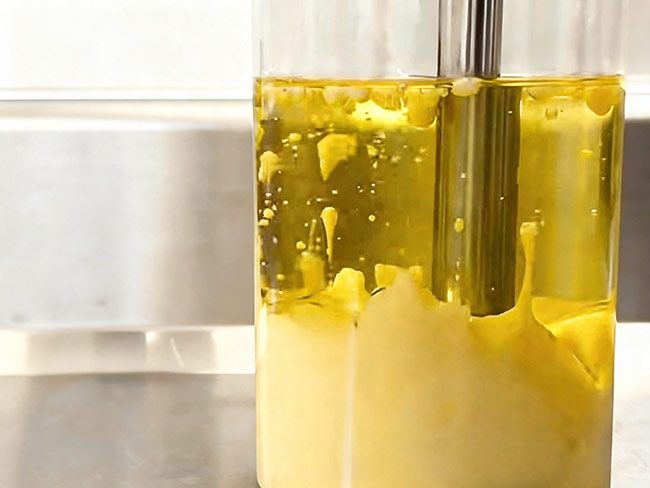
The lecithin found in egg yolks acts as a natural emulsifier. According to a study published in the Journal of Gansu Agricultural University, the mechanism by which lecithin facilitates food emulsification is as follows: Lecithin molecules possess an amphiphilic structure meaning they are both hydrophilic (water-loving) and lipophilic (oil-loving). This dual nature allows them to adsorb onto the oil-water interface, thereby reducing inter-facial tension, forming a stable inter-facial film, and preventing the oil droplets from coalescing.
When proteins or lecithin molecules adsorb onto the surface of oil droplets, they impart an electrical charge to the droplet surfaces. The resulting electrostatic repulsion between these charged droplets inhibits their aggregation, serving as a crucial mechanism for emulsion stability.
1.3 Why Ordinary Equipment Fails to Produce Quality Mayonnaise
Standard mixing equipment typically offers only basic stirring capabilities and lacks the capacity to generate sufficiently strong shear forces. According to emulsion science, in the absence of a protective emulsifier film of adequate strength, these relatively large droplets will continuously collide and coalesce. Ultimately, this leads to the separation of the oil and water phases. Research has confirmed that high emulsion stability and thermal stability are essential for the effective storage and practical application of mayonnaise. Crucially, achieving this level of stability is contingent upon the high shear forces provided by specialized emulsification equipment.
To learn more about mayonnaise production principle, please refer to Mayonnaise Production Technology - Evolution from Kitchen Handcraft to Three-Stage Emulsification System. It provides a detailed overview of the advancements in the development of mayonnaise production techniques.
II. Performance Differences Between Various Emulsification Equipment
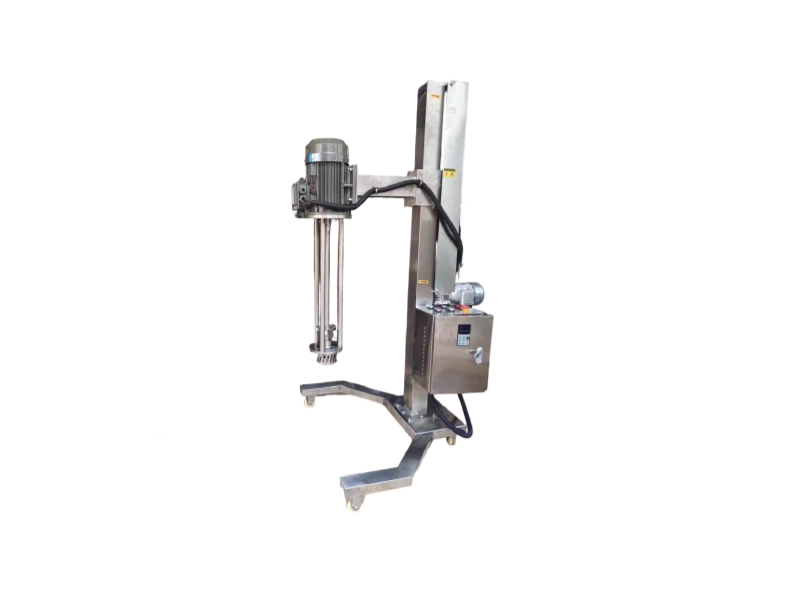
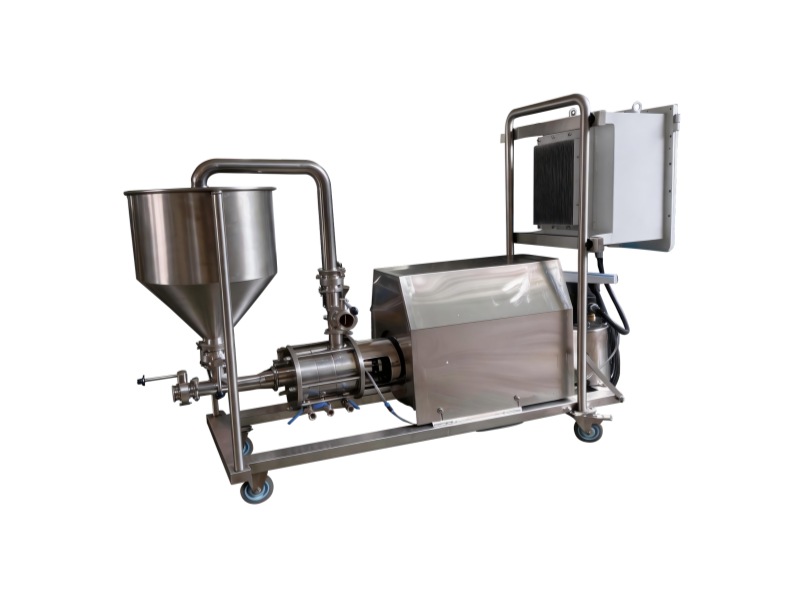
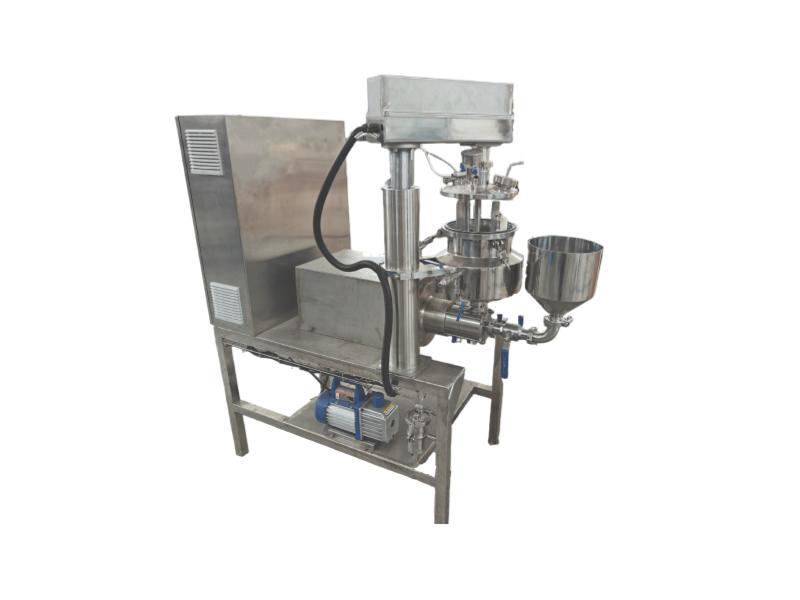
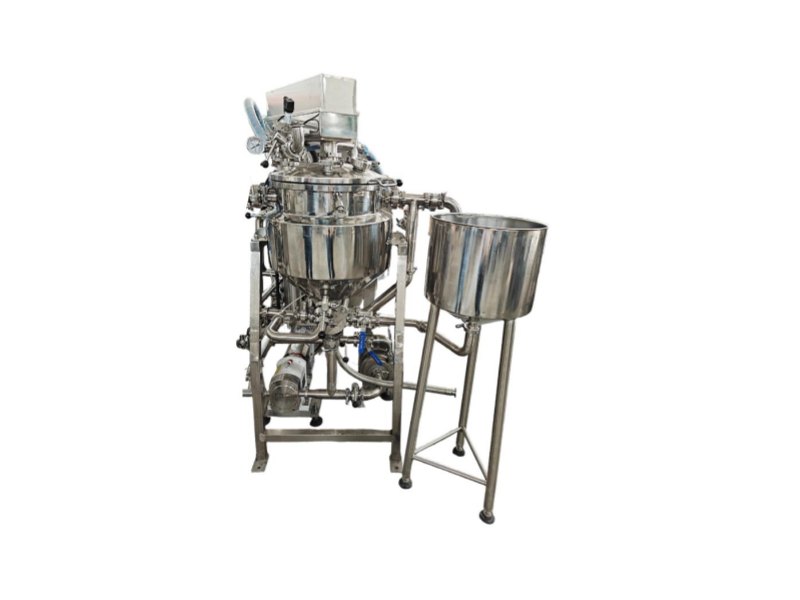
There are two primary categories of emulsification equipment(SLH, SLIM and SLFT series in below picture) available on the market for mayonnaise production: those equipped with a single-stage emulsification system and those with a three-stage emulsification system.
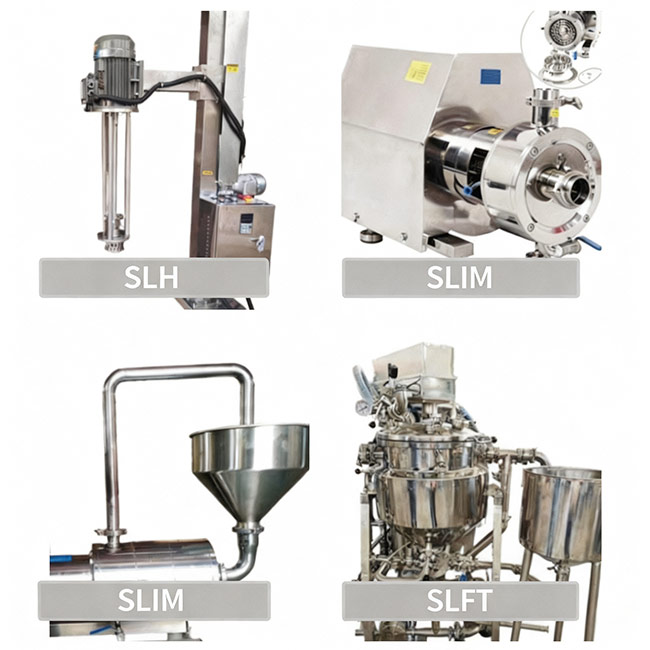
Remark: SLH series has only the single stage emulsifying system, SLIM series has both the single stage and three stage emulsifying system. The SLFT series has the advaned three emulsifying system.
2.1 Single-Stage Emulsification System
A single-stage emulsifier features only one set of rotor and stator; materials undergo a single shearing process within the gap between the stator and rotor. The broken oil droplet size typically ranges from 20 to 50um, which often results in insufficient stability during long-term storage.
● Shelf Life: Approximately 7 days under refrigerated conditions without significant phase separation.
● Applicable Scenarios: Food service outlets requiring fresh, on-demand preparation; products with a short shelf life.
2.2 Three-Stage Emulsification System
A three-stage emulsifier mixer employs a series-connected structure comprising three sets of stator-rotor components. Theoretically, this configuration can deliver high-frequency shearing at a rate of over one million cycles per minute. The oil droplet size in high-quality commercial mayonnaise is typically controlled within the 4-12um range, a standard that the three-stage emulsification system is capable of achieving.
● Emulsification Efficacy: Achieve an oil droplet size of 5-10um, meeting the standards for commercially available products.
● Shelf Life: Ensure product stability, free from phase separation for approximately 6 to 12 months.
● Applicable Scenarios: Large-scale industrial production; supermarket and retail distribution; export products.
In Emulsifying Mixer Selection Guide for Mayonnaise - One Week or One Year Shelf Life, you can see the specific comparison analysis of the two type emulsifying mixers listed here. If you feel interest, you can click to read.
III. Key Technical Points for the Emulsification Process
Once you have familiarized yourself with the mayonnaise emulsification equipment, it is equally crucial to add the ingredients in the correct sequence when commencing production.
3.1 The Correct Ingredient Addition Sequence
Mayonnaise is an oil-in-water (O/W) type emulsion; therefore, the order in which ingredients are added is of paramount importance:
Sequence | Operation | Result |
Correct | First prepare the aqueous phase, then add the oil phase | Form a stable O/W emulsion |
Incorrect | First add a large volume of oil, then add the aqueous phase | Tend to form an unstable W/O emulsion or undergo phase separation (demulsification) |
Scientific Basis: The factors influencing the emulsification efficacy of mayonnaise, listed in descending order of importance, are: Mustard > Egg Yolk > Vinegar > Salad Oil.
3.2 Oil Addition Rate Control
Given that mayonnaise has a high oil content ranging from 49% to 73%, the rate at which oil is added is a critical factor influencing the effectiveness of the emulsification process. If a large quantity of oil is introduced all at once, the localized oil concentration becomes excessively high; the emulsifier is then unable to coat the surfaces of the newly forming oil droplets quickly enough, making the mixture highly susceptible to demulsification.
Correct Procedure: Add the oil phase slowly and in a fine stream while maintaining the homogenizing head at high-speed operation.
3.3 Temperature Control
The proteins found in egg yolks act as natural emulsifiers and are extremely sensitive to temperature:
Temperature Range | Impact |
20–25°C | Optimal emulsification temperature |
40–50°C | Emulsification efficiency declines |
>60°C | Protein denaturation occurs; emulsifying capacity is lost |
IV. Troubleshooting Common Issues
Symptom | Cause Analysis | Solution |
Separation Occurs Immediately After Preparation | 1)Oil added too quickly 2)Insufficient shear force 3)Incorrect ingredient addition sequence | 1)Control the rate of oil addition 2)Upgrade emulsification equipment 3)Ensure the aqueous phase is added to the vessel first |
Oil Separation Occurs After One Week | Oil droplet size is too large | Utilize a three-stage emulsification system to control droplet size to fine level |
Sauce Consistency is Too Thin | 1)Incomplete emulsification 2)Temperature is too high | 1)Extend emulsification time 2)Activate the cooling system |
V. Summary
How to properly emulsify mayonnaise? The key to successfully emulsifying mayonnaise lies in the harmonious integration of three elements: scientific principles, equipment selection, and operational procedures:
1. Select Professional Emulsification Equipment: Choose a single-stage system (for a target shelf life of 7 days) or a three-stage system (for a shelf life exceeding 6 months), depending on your specific requirements.
2. Understand the Scientific Principles: Mayonnaise is an oil-in-water (O/W) emulsion; for stability, the droplet size of the oil phase must be controlled within the range of 4-12um.
3. Strictly Adhere to Processing Protocols:
● Prepare the aqueous phase first, followed by the addition of the oil phase.
● Add the oil slowly, particularly when working with high-oil-content formulations.
● Maintain strict temperature control to prevent the denaturation of the emulsifier.
References
1. The Effect of Lecithin on the Emulsifying Properties of Food. Journal of Gansu Agricultural University, 1993(3).
2. Research on the Processing Technology and Stability of Mayonnaise. China Condiment, 2016(3).