


 English
 French
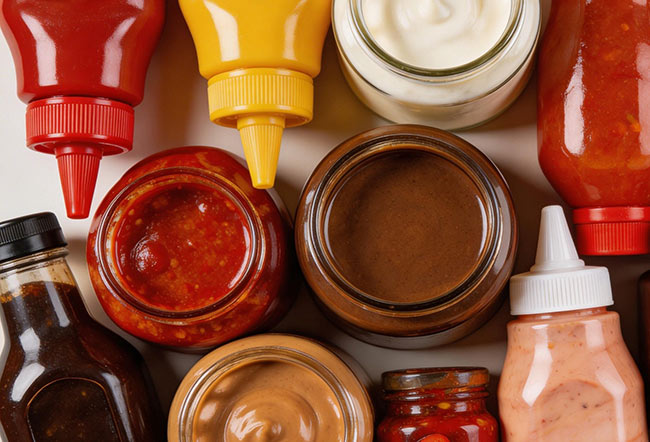
Food sauces are the important part of the global food industry. From traditional pastries like mung bean paste and custard fillings, to chili sauce and curry sauce, and to ketchup and mayonnaise in Western fast food, different sauces rely on vastly different processing techniques. Based on raw material characteristics and product form, sauce production technology can be mainly divided into four technical paths:
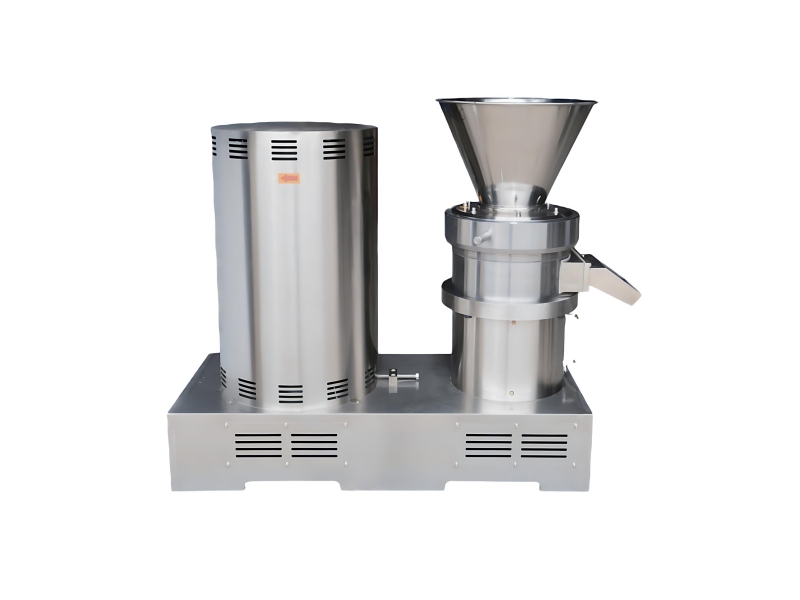
1)Grinding technology: Represented by nut butters and sesame paste, this process relies on mechanical shearing force to directly grind high-oil raw materials into a sauce.
2)Heating cooking technology: Represented by chili sauce and curry sauce, this process uses heating and cooking to achieve flavor fusion and concentration.
3)Heating, cooking, and grinding combined technology: Represented by tomato sauce, jam, and red bean paste, this process combines multiple steps of "heating + grinding + cooking".
4)Homogenization and emulsification technology: Represented by mayonnaise and salad dressing, this process uses high-shear emulsification to achieve the stable coexistence of water and oil systems.
This article will delve into the technical principles, key equipment, and process flow of these four production technologies, providing a scientific basis for sauce production companies to choose their technical routes.

I. Grinding Technology: The Subtraction Technique for Nut Butter and Sesame Paste
Grinding is the simplest method for producing food sauces, nut butter and sesame paste production often adopt such process technology. You can see the detailed introduction as followed.
1.1 Technical Principle and Applicable Scenarios
Grinding is primarily suitable for high-oil or high-water content food products. List nut-based raw materials as example, they often contain abundant oil. The oil can be released from the cells under mechanical shearing force and mixed with broken solids to form a homogeneous paste.
The classification system in the book named Flavored Sauce Production Technology explicitly categorizes peanut butter and sesame paste as flavored sauces, and their core process is grinding. These products do not require complex chemical reactions; they are formed solely through physical grinding.
1.2 Core Equipment: Colloid Mill or Stone Grinder
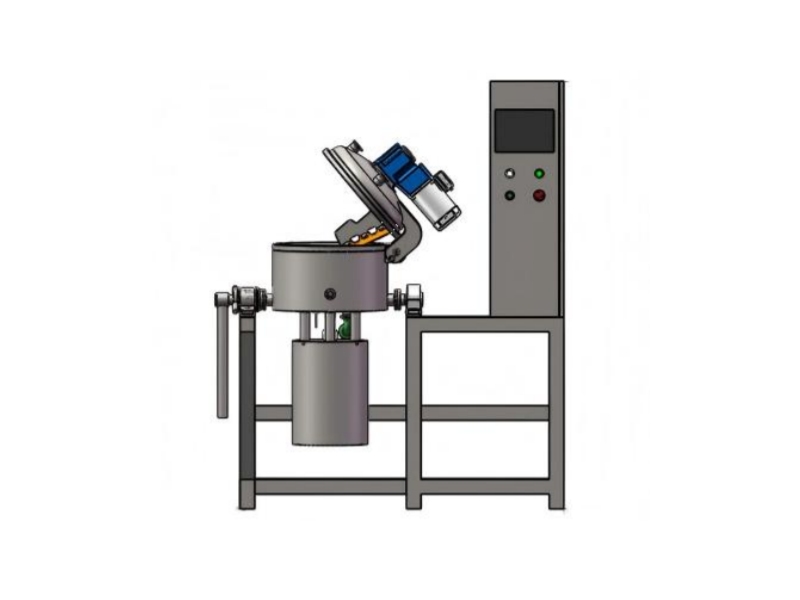
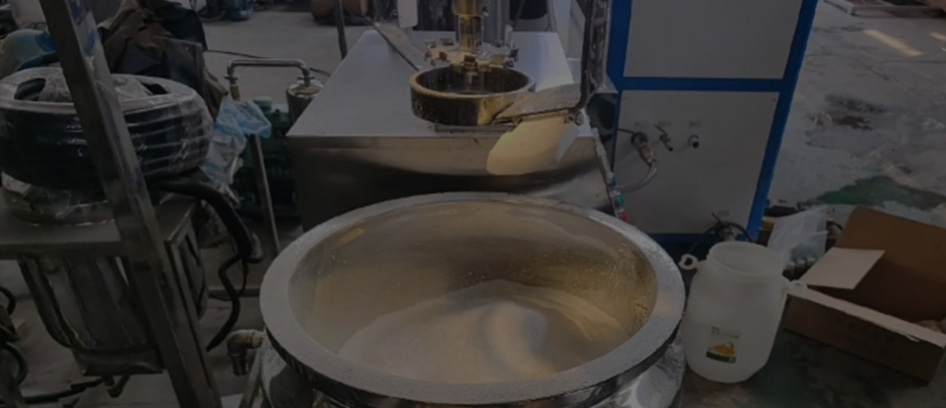
The colloid mill and stone grinder are the core equipment in the grinding process. You can watch the following video to see the grinding performance. In Stone Grinder VS Colloid Mill for Nut Butter, we have specified their working principle and differences. Here we skip this part, you can read the article if you would like to know more.
1.3 Process Flow
The main processing steps for nut butter and sesame paste are roasting, grinding and filling. You can read our article named Processing Technology Analysis - How to Make Nut Butter to know more about the processing technology.
II. Heating Cooking Technology: Fusion Technology for Chili Sauce and Curry Sauce
This is the commonly applied sauce production technology especially for the oil chili sauce, curry sauce, garlic sauce, etc. You can see the following for the details.
2.1 Technical Principle and Applicable Scenarios
Heating cooking is the simplest method in sauce production, primarily suitable for sauces such as chili sauce, curry sauce, garlic sauce, and XO sauce, where flavor fusion is the main objective. These products are characterized by:
1)Raw materials are mostly fresh or dried spices (chili peppers, garlic, ginger, curry powder).
2)Usually, edible oil, salt, sugar, and spices are added as auxiliary ingredients
3)The core processing lies in the release and fusion of flavor substances during the heating and stir-frying process.
4)It does not involve complex emulsification or ultra fine grinding requirements.
Research in Food Industry Technology shows that during the cooking process, capsaicin-like substances in chili peppers undergo thermal degradation and transformation. Appropriate heat treatment can enhance the aroma complexity of chili peppers, making the spiciness more rounded and mellow.
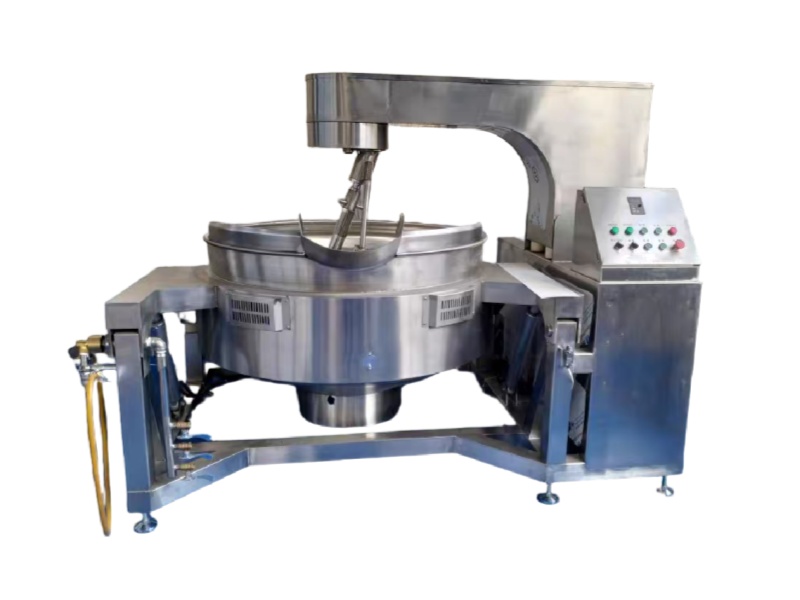
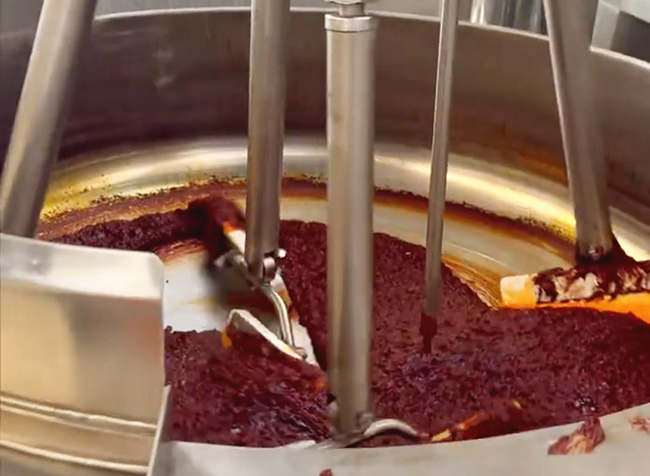
2.2 Core Equipment: Cooking Mixer
The cooking mixer is the core equipment in the heating and stirring process. Based on the heating method and stirring method, it can be divided into several types:
| Machine Type | Heating Method | Mixing System | Applicable Scenarios | Features |
SLBM series simple type cooking mixer | Electricity/Steam/Heat Transfer Oil | Bottom scraper mixer | Small and medium sized factories | Simple design, bottom scrapping |
SLPC series planetary cooking mixer | Electricity/Steam/Gas | Planetary scraper mixer | Small to large scale factories | Efficient and fast mixing and scrapping |
SLMT series heating tank | Electricity/Steam/Heat Transfer Oil | Frame type, I shaped mixer, etc | Small to large scale factories | Closed design with vacuum optional |
2.3 Process Flow
Typical chili sauce preparation process: Raw material pretreatment (chili washing and chopping) → Ingredients (oil, salt, sugar, spices) → Stir-fry in a wok → Cool → Bottling
Curry sauce preparation process is slightly different: Fry spices to enhance aroma → Add onions and minced garlic to fry → Add curry powder and flour to stir and mix → Add liquid (water/coconut milk) in batches → Simmer until thickened → Packaging
2.4 Scientific Principles
Physical and chemical Changes During the Stir-frying Process:
1)Maillard Reaction: Amino acids react with reducing sugars under heating conditions, producing a rich roasted aroma and brown substances.
2)Pyrolysis of Oils: Edible oils undergo pyrolysis during heating, producing characteristic aromas.
3)Capsaicin Conversion: Capsaicin partially degrades at high temperatures, reducing spiciness but enhancing aroma.
4)Moisture Evaporation: Concentrate the sauce, extending shelf life.
2.5 Relationship between Stir-frying and Other Processes
In the complete technological spectrum of sauce production, heating cooking process occupies a position of low to medium technological threshold:
Process Complexity | Representative Products | Core Equipment | Technical Features |
Low | Nut butter and sesame paste | Colloid mill, stone grinder | Pure physical grinding |
Low to medium | Chili sauce, curry sauce | Cooking mixer | Heating and stirring |
Medium to high | Bean paste, jam | Grinder + cooking pot + colloid mill | Multi-process combination |
High | Mayonnaise, salad dressing | Three-stage emulsifier mixer | Precision emulsification control |
III. Combined Technology: Grinding, Heating and Mixing Technology for Fruit Jam, Tomato Sauce and Bean Paste
The combined technology is the most complex sauce production method, involving a combination of multiple steps. Based on raw material characteristics and product requirements, it can be further divided into three subcategories: jam/tomato sauce type, bean paste filling type, and high-fineness fortified type.
3.1 Jam/Tomato Sauce Processing: Crushing Before Cooking
The core process for tomato sauce and jam products is grinding→heating. According to the technical document “Tomato Sauce Processing" from Science Popularization China, the process flow is: crushing and pulping, cooking and concentration, homogenization and emulsification (optional), and filling. For products requiring high fineness, a homogenization step can be added.
3.2 Red Bean Paste Filling Processing: Steaming, Grinding and Heating Mixing
The processing of bean fillings such as red beans, mung beans, and chickpeas must follow the sequence of steaming → grinding → heating mixing. The process flow is as follows: Steaming pot (high-temperature cooking) → Colloid mill (pulverization) → Cooking mixer (heating mixing) → Filling
3.3 High-Fineness Enhancement Process: Pulverization after Cooking
For products with extremely high fineness requirements, such as lotus seed paste and high-grade red bean paste, the grinding step can be repeated. This is because during the cooking process, sugar, oil, and red bean paste may form agglomerates; the second grinding process can achieve a more uniform and delicate texture.
3.4 Traditional Equipment Combinations and Integrated Innovation
For the heat processing sauces, we now have the new integrated design except the muti-step food processing machine. You can see the comparison analysis below between the traditional one and the updated one.
For Traditional Four-Piece Set:
Traditional cooking, grinding, and compounding processes require four types of core equipment:
1)Steaming Pot: Soften raw materials
2)Colloid Mill: Crush raw materials
3)Cooking Mixer: Dehydrate, concentrate, and blend flavors
4)Colloid Mill: Finely grind
For ntegrated Innovative Equipment:
Internationally renowned brands such as Stephan have developed multi-functional cooking pots that integrate cooking, crushing, and homogenizing functions, combining multiple processes into one. These devices employ an integrated design of jacketed heating and high-shear stirring, completing the entire cooking, crushing, and mixing process within a single tank. Salinovate can also customize and design similar equipment. Please contact us if needed.
Equipment Features:
● High integration, small footprint
● Closed processing, excellent hygiene
● Suitable for mass production of single products
You can watch the video below to understand the structure and working mode of this innovative cooking mixer with chopping and homogenizing functions:
Selection Recommendations: If the customer's product line is simple, mainly producing smooth sauces (such as red bean paste), this type of high-end integrated equipment can be recommended. However, if the customer's products are diversified, requiring the production of sauces with different particle sizes (such as both smooth and granular red bean paste), then the traditional four-piece set is more flexible, as different needs can be met by adjusting the process.
IV. Homogenized Emulsification: Emulsification Technology for Mayonnaise and Salad Dressing
It is a modern advanced technology for handling the oil and water based food sauces. The final sauce state is very fine smooth paste. Read the information below and you can find more information.
4.1 Technical Principles
Mayonnaise, salad dressing, and ketchup belong to oil-in-water emulsion systems. The core challenge lies in the stable coexistence of the oil and water phases. Ordinary stirring is insufficient to break the oil into sufficiently small droplets, leading to oil-water separation.
According to HJ Heinz's patent, "Storage-Stable Sprayable Salad Dressings," a stable emulsion needs to meet the following requirements:
● Oil phase content: 1-25%
● Aqueous phase content: 40-85%
● Emulsifier dosage: 0.1-3% (e.g., egg yolk powder)
● pH value: Below 4.5 (adjusted with acidic components such as vinegar)
Scientific Principle: The stability of an emulsion depends on the particle size of the dispersed phase. When the oil droplet size is less than 5 micrometers, Brownian motion is sufficient to overcome gravitational sedimentation, allowing the emulsion to remain stable over a long period. High-shear emulsifiers, by providing a high-intensity shear field, can break the oil phase down to below this critical size.
4.2 Sauce Emulsification Equipment Classification
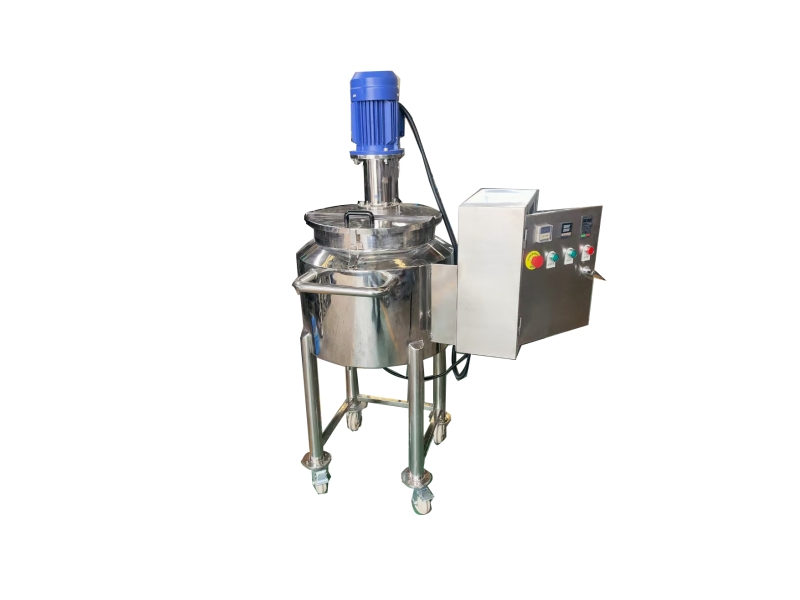
1)Ordinary Homogenizing Emulsifier Mixer
Such type is suitable for small-scale catering and on-the-go production scenarios:
● Working principle: Single-stage stator-rotor shearing
● Particle size control: 10-50 microns
● Stability: Can maintain stability for about one week
● Low investment
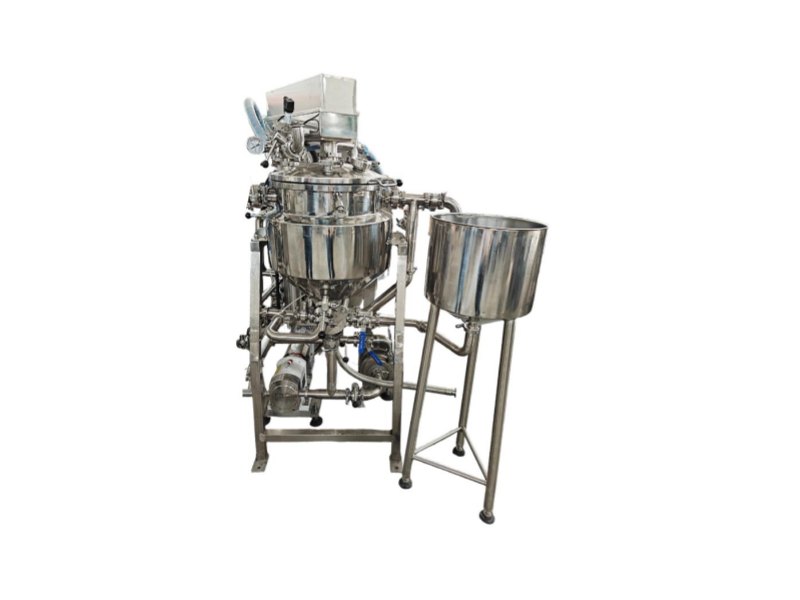
2)Three-Stage Emulsifying Pump Type Emulsifier Mixer
Such design is suitable for industrial production and long-shelf-life products:
1)Technical advantages: The shearing force generated by the stator and rotor system in the three-stage emulsifying pump increases the solute transfer rate, thereby accelerating the decomposition of single molecules and macromolecular media. The water-oil mixture can form fine particles under the three-stage pump structure, fully blending them together.
2)Equipment form: Split-type three-stage emulsifying pump + rotor pump + mixing tank, affordable price; Integrated three-stage emulsifying mixer, also known as our SLFT series, the price is high but very fast emulsifying performance. You can watch the following video to see the mayonnaise emulsifying performance.
4.3 Process Flow
The general manufacturing process for salad dressings and mayonnaise is: aqueous phase preparation (vinegar, salt, and sugar, etc.) → mixing → slow addition of oil phase → high-shear emulsification → filling
Key control points:
● Emulsification temperature: Most processes require cooling; the equipment has a jacketed design for introducing cold water.
● Addition sequence: The oil phase must be added slowly to the aqueous phase, emulsifying simultaneously.
● Emulsification time: Depending on the formula and equipment, 5-20 minutes per batch.
V. Comparison of the Four Major Process Technologies
We have introduced many different sauce production technologies above, brief comparison and analysis are made below to quickly let you see the difference and their applications.
5.1 Comparison of Process Applicability
Process Technology | Typical Product | Core Principle | Key Equipment | Investment Threshold | Technical Difficulty |
Grinding | Nut butter, sesame paste | Physical grinding | SLJM series colloid mill | Low | Low |
Heating Cooking | Chili sauce, curry sauce | Heating and stirring | SLBM, SLPC and SLMT series heating mixer | Not high | Low to medium |
Combined process | Bean paste, jam | Thermal softening and mechanical crushing | Grinder, steaming pot, colloid mill, cooking mixer | Medium to high | Medium/High |
Emulsification | Mayonnaise, salad dressing, chololate sauce | High shear emulsifying | SLH, SLIM, SLFT series emulsifying mixer | Low to High | Medium to high |
5.2 Matching of Raw Material Characteristics with Process
Material Characteristics | Typical Product | Recommended Process | Technical Points |
High-oil nuts | Nut butter, sesame paste | Grinding process | Control temperature |
Spices + Oil | Chili sauce, curry sauce | Heating cooking process | Control temperature |
Fruit | Fruit jam, tomato sauce | Combined process | High temperature sterilization |
Bean | Red bean paste, mung bean paste, hummus | Combined process | Steam first, then chop, then cook |
Oil + water system | Mayonnaise, salad dressing | Homogenized emulsification process | Particle size control determines stability |
VI. Conclusion
Food sauce processing is a systematic project based on raw material characteristics, product positioning, and shelf-life requirements. The four core different sauce production technologies discussed above each have their own scientific principles and applicable scenarios:
1)Grinding is the "best choice" for nut butters, using the shear force of a colloid mill to release oil and disperse solids.
2)Heating cooking is a "shortcut" for flavor-blending sauces such as chili sauce and curry sauce. While seemingly simple, it involves complex food chemical changes such as Maillard reactions and oil pyrolysis. A good stir-fry pan is essential for the quality of these products.
3)The combined steaming, cooking, and grinding process is the "standard path" for fruit, vegetable, and bean sauces. Different combinations of processes, such as "grinding before cooking," "steaming before grinding," or "heating mixing before grinding," need to be selected based on the product characteristics. Traditional four-piece sets (steamer, grinder, cooking mixer, colloid mill) can flexibly handle diverse needs; integrated high-end equipment is suitable for large-scale production of single products.
4)Homogenization emulsification is the "core technology" of water-oil system sauces. Ordinary emulsifier mixers are suitable for on-the-go applications, while three-stage emulsification pump-type emulsifier mixers are the inevitable choice for industrially produced products with long shelf lives.
Mastering the technical essence of these four processes and understanding the scientific principles behind them is essential for making correct process decisions when dealing with different sauce products—this is precisely where the professional value of food engineers lies.
References:
1. Lee Kum Kee China Official Website. (2025). How to Choose Good Sauces.
2. HJ Heinz Brand. (2023). Storage-Stable Sprayable Salad Dressing Manufacturing Technology. TechHigh.com.
3. Du Lianqi. (2006). Flavor Sauce Production Technology. Chemical Industry Press.
4. China Condiment Association. (2024). Technical Specifications for Compound Seasoning Production.