


 English
 French
1000KG Per Hour Industrial Hummus Production Line Machine Design
By:Salinovate Team
Recently, we just confirmed a production line equipment order with a customer. The equipment is used for industrial mass production of hummus. The following is the process of confirming the industrial hummus production line machine design plan, which will be shared with everyone.
I. Customer Background and Challenges
A large food production enterprise has decided to upgrade and transform its existing hummus production line in an increasingly competitive market environment. The original process was soaking → steaming → crushing → stirring tank boiling. The work flow has a long production process, high energy consumption, and the fineness of the finished product is difficult to meet the current high-end market demand. The core demand of the customer is to optimize the production process, improve efficiency, and control upgrade costs while ensuring the delicate taste of hummus.
II. Customized Solution Design
In response to customer needs, we have designed two complete production line upgrade plans. The plans are both with the core goal of simplifying processes and improving delicacy, but with emphasis on automation level, equipment investment, and manual operation.
2.1 Scheme 1: Step by Step High-Efficiency Grinding and Emulsification Scheme
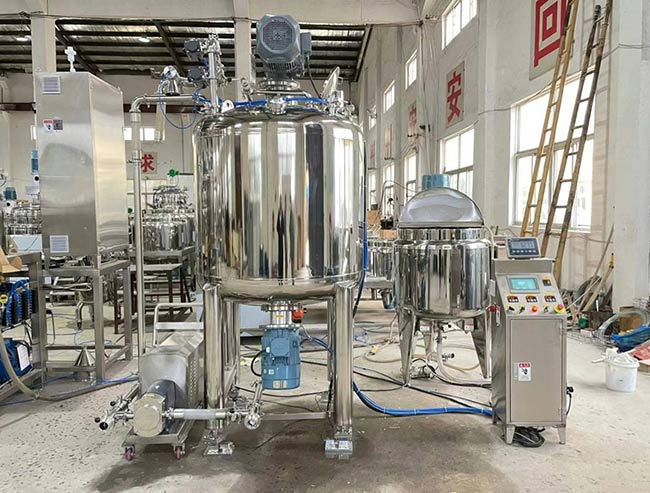
Process Design: Soaking → Colloid Mill Grinding → Temporary Storage Tank → Rotary Pump Transport → Steam Heating Emulsification Mixing Tank (Seasoning, Emulsification, Heating/Cooling Integrated)
Key Equipment and Process Highlights:
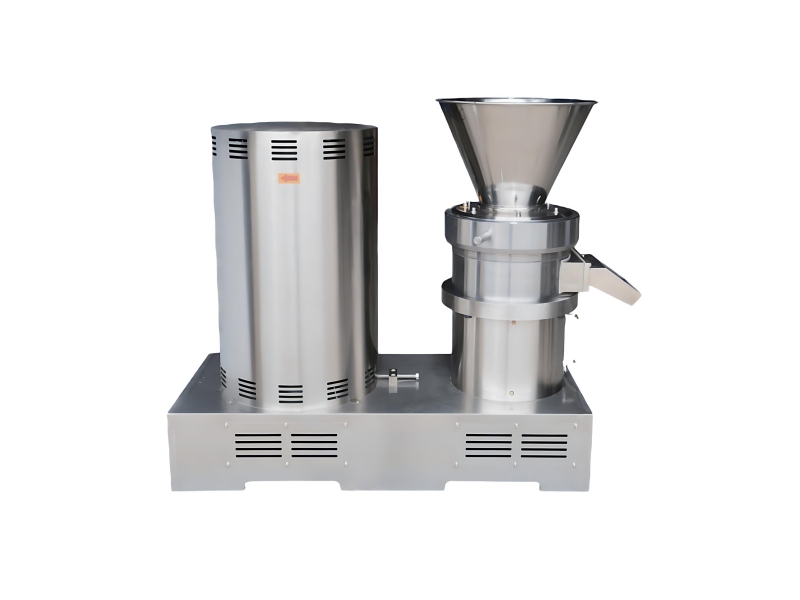
1)Fine Grinding with Colloid Mill:
After soaking, the soft chickpeas directly enter the colloid mill and are instantly crushed into a fine mud like texture, laying the foundation for a delicate texture.
You can watch the colloid mill working video to see the fine grinding performance.

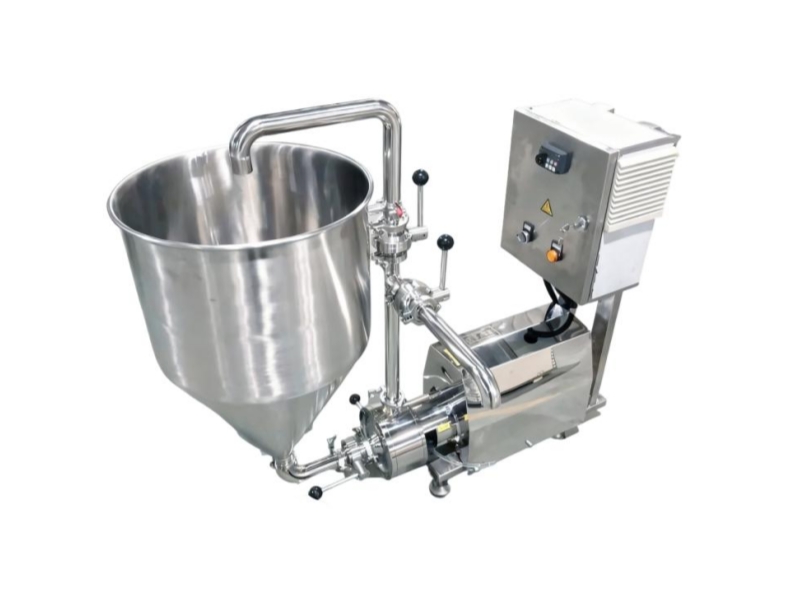
2)Modular Storage and Transportation System:
The temporary storage tank and rotor pump achieve smooth material transfer, reducing the risk of exposure pollution.
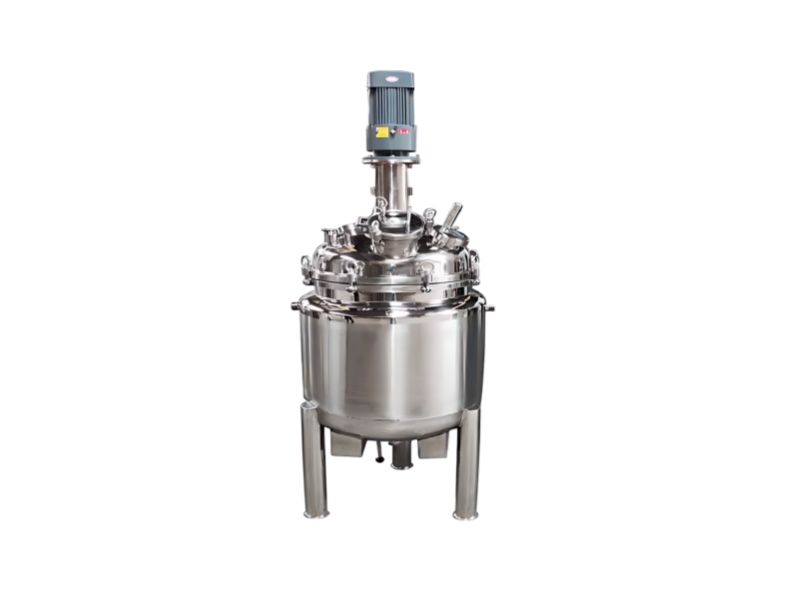
3)Multi Functional Emulsifying Mixing Tank:
● Accurate seasoning: The top cover of the mixer has the feeding port, which supports adding salt, sugar, edible oil, chili powder, etc. in batches, flexibly adapting to formula changes. The water and oil pots are optional for the customer, for dispersing the water and oil phase ingredients in advance.
● Efficient emulsification: with a bottom mounted homogenizer and a side wall mounted stirring system, the oil phase and water phase are fully fused under dual action, resulting in a uniform and dense texture.
● Accurate temperature control: The jacket supports steam heating and cooling water circulation, completing heating, boiling, and rapid cooling in the same container, shortening the production cycle.

The working process of this step is very similar to the emulsifying test by Silverson to make hummus. Difference, they directly put soaked chickpeas into the mixing tank without the grinding by the first colloid mill, which we recommend.
4)Humanized Operation:
The operating platform for convenient feeding and process monitoring is suggested.
5)Finished Product Effect:
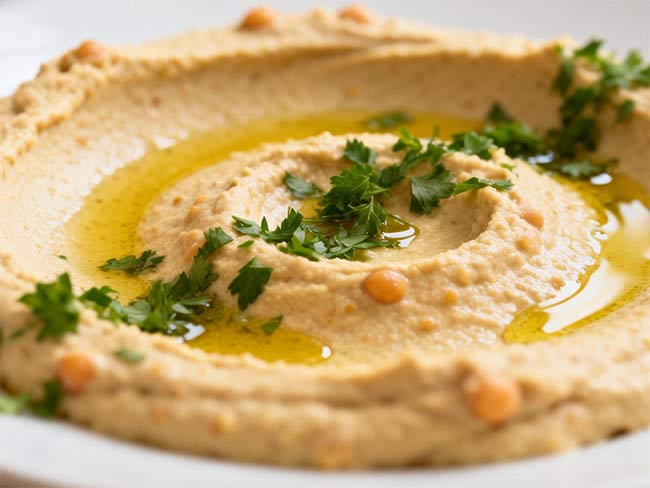
The delicacy of hummus(chickpea puree) is significantly improved, and the texture is uniform. Step one in colloid mill, soaked chickpeas have been transformed into paste. Through the high shear homogenizing and emulsifying by the emulsifying tank, the mixture becomes more finer.
2.2 Option 2: Integrated Automatic Cutting and Emulsifying Solution
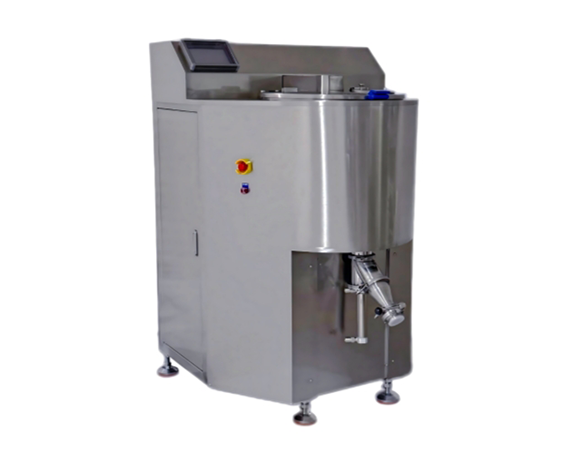
Process design: soaking → bottom cutter type emulsifying mixer (integrating crushing, homogenization, emulsification, and heating)
Core Equipment Advantages:
● Highly integrated: A single machine completes all key processes from crushing to emulsification, significantly reducing equipment footprint and connection links.
● Heating Cooling Jacket: Triple layer design with heating/cooling jacket and heat insulation layer.
● Efficient grinding: The bottom high-speed flying knife design improves the grinding efficiency of soaked chickpeas by 20% -30% compared to Scheme 1.
● High degree of automation: reduces manual transfer and operation processes, lower labor demand, and stronger consistency.
Applicable Scenarios:
It is suitable for enterprises pursuing ultimate automation, compact production capacity, and high initial investment budget.
III. Scheme Comparison and Customer Decision-Making
Comparison Dimension | Scheme 1 | Scheme 2 |
Process Characteristics | Step-by-step, modular operation | Integrated continuous processing |
Manual Participation | Moderate operation is required(feeding, transfer monitoring). | The manual participation is lower because less machine in the line. |
Production Efficiency | Stable and efficient | Increase by 20% -30% |
Production Flexibility | Support independent use for processing other raw materials under single function. | Dedicated for special aircraft, with centralized functions |
Function Updating | Weighing, formula storage function, etc. | Weighing, formula storage function, etc. |
IV. Customer's final choice: Option 1
After in-depth evaluation, the customer ultimately chose option one. The key points of decision-making are:
1)Cost benefit balance: While significantly improving product delicacy, equipment investment is more reasonable and the return cycle is shorter.
2)High production flexibility: Equipment such as colloid mills and emulsion mixing tanks can be flexibly used for the production of other categories of products (such as soy sauce and seasoning sauce) in enterprises, improving equipment utilization.
3)Stable finished product quality: The step-by-step process facilitates segmented quality control, and customer testing confirms that the finished product's fineness fully meets expectations, making it highly competitive in the market.
4)Low upgrade risk: Modular design facilitates phased transformation without affecting the normal operation of the original production line.
V. Summary of Upgrade Results and Value
After upgrading the hummus production line machine, the enterprise will achieve:
1)Quality upgrade: Hummus has a delicate taste and uniform texture, successfully entering high-end retail and catering channels.
2)Efficiency improvement: Simplify the steaming process and reduce energy consumption; The emulsion mixing tank integrates heating and cooling, shortening the production cycle.
3)Long term cost control: The multi-functionality of the equipment reduces investment in future product line expansion, makes maintenance simple, and has strong sustainability.
For food production enterprises, process upgrading does not necessarily mean pursuing fully automated integration. Choosing a suitable modular combination solution based on the characteristics of the product, production capacity planning, and investment budget can often find the best balance between quality, efficiency, and cost. Salinovate is always committed to providing customers with customizable, scalable, practical and efficient solutions, so that every investment can be transformed into market competitiveness.